What to Read Before the Critique of Pure Reason: How to Approach Kant, in Order
The Critique of Pure Reason is close to unreadable cold, and Kant knew it — he published the Prolegomena three years later specifically because nobody had understood the Critique. This is not a survey of Kant's philosophy; it is the preparation sequence that makes the first Critique attemptable: the rationalist and empiricist positions he is adjudicating between, his own short restatement, and the commentaries serious readers work through beside the text, with the Critique last. It assumes real philosophical patience. Readers who want Kant's ethics should go to the Groundwork instead, and readers who want the gist of transcendental idealism can stop after Scruton and lose nothing.
The two positions Kant is adjudicating
IntermediateUnderstand the rationalist and empiricist accounts of knowledge that the Critique exists to reconcile
▸ Study plan for this stage
Pace: Six to eight weeks. Descartes takes two of them: the Meditations are about eighty pages and should be read twice, once straight through and once with the Objections in mind. Hume's Treatise Book I is the longer job — four to six weeks at fifteen pages a day, and there is no shame in reading only Boo
- Descartes' method of doubt and the cogito as the rationalist claim that certainty can be reached by reason alone, independent of the senses
- Innate ideas and the guarantee of clear and distinct perception — the machinery Kant inherits and then denies he can use
- Hume's fork: relations of ideas versus matters of fact, and why nothing empirical can be known with the certainty of a demonstration
- The problem of induction and Hume's analysis of causation as constant conjunction plus habit, which is the specific argument Kant says woke him from his dogmatic slumber
- The bundle theory of the self in Book I of the Treatise, and Hume's own appended dissatisfaction with it — the honest admission that matters later
- Why the Critique needs both: it accepts Hume's demolition of rationalist metaphysics and refuses his conclusion that necessity is merely psychological
- What exactly does Descartes claim to establish before he reintroduces the external world, and which step do you find weakest?
- State Hume's argument about causation in premise-conclusion form. Which premise would a rationalist reject?
- Hume concedes in his appendix that his account of personal identity does not work. What is the problem he sees, and does it damage the rest of Book I?
- Both Descartes and Hume think mathematics is certain. For what different reasons, and which reason will Kant keep?
- What is left standing, on Hume's account, of the claim that every event has a cause? This is the question the Critique exists to answer.
- Summarise Hume's argument against necessary connection in 200 words with no examples of your own, using only his billiard-ball case. Keep it; you will check it against Kant's reply.
- List the propositions Descartes claims to know with certainty by the end of the Meditations, in the order he claims them, and mark each as one Hume would accept or deny.
- Read the Treatise's section on scepticism with regard to the senses, then write two paragraphs on what it costs Hume to hold that position consistently.
- Note that this path deliberately sends you to the Treatise rather than the shorter Enquiry, because the Enquiry is catalogued almost exclusively inside mixed Hume collections. If you already own an Enquiry, read Book I of the Treatise anyway — it is the fuller statement and Kant's target.
Next up: You now hold the two positions the Critique is arbitrating between, which is what makes the short introductions comprehensible rather than merely summary.
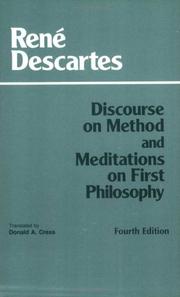
The rationalist starting point: certainty derived from reason alone. Kant's whole framework is a reply to the question Descartes opened. It is short, and this path assumes the standard combined edition that also prints the Discourse on Method.
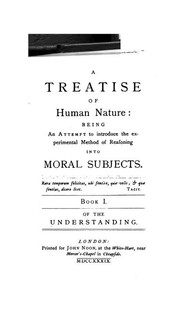
Hume's attack on causation and the self is the argument that, in Kant's own words, woke him from his dogmatic slumber; the Critique is unintelligible without it. Read book one on the understanding. Note that we send you to the Treatise rather than the shorter Enquiry deliberately — the Enquiry is catalogued almost exclusively inside mixed Hume collections, and the Treatise is the fuller statement anyway.
The shape of the argument, in short books
IntermediateLearn what the Critique claims and why it matters before meeting Kant's own prose
▸ Study plan for this stage
Pace: Three to four weeks. Scruton's Kant is around 150 pages and should be read twice — once quickly for the shape, once slowly with notes. Kuehn's biography is a full-length scholarly life and can be read at a relaxed pace across three weeks; it is background and does not need to be finished before movi
- The Copernican revolution in Scruton's framing: that objects conform to our knowledge rather than knowledge to objects, which is the single claim the whole Critique defends
- Synthetic a priori judgements — what they are supposed to be, why Hume's fork has no room for them, and why the possibility of them is the Critique's actual question
- Phenomena and noumena, and the limits Kant places on what can be known at all — the doctrine Scruton spends most of his hundred and fifty pages making palatable
- The distinction between transcendental and transcendent, which is the terminological trap that defeats most first readers
- Kuehn's correction of the caricature: Kant as a sociable, worldly Königsberg professor rather than a bloodless recluse, and why that changes how you read the prose
- The Prussian Enlightenment context — Pietism, Wolffian rationalism, censorship — which makes the Critique's stakes concrete rather than abstract
- State the Copernican revolution in one sentence. What is the alternative it rejects, and why did Kant think the alternative had failed?
- What is a synthetic a priori judgement, and why is arithmetic Kant's favourite example of one?
- After Scruton, can you say what transcendental idealism claims without using the word transcendental? If not, reread his chapter on it.
- Kuehn shows Kant embedded in the arguments of his century. Name one contemporary dispute that Kuehn makes visible and that changes how you read the Critique's ambitions.
- Scruton is short and clear; the Critique is long and not. What, on the evidence of Scruton alone, would you lose by stopping here?
- After Scruton, write the argument of the Critique in one page. Date it and keep it. Rewriting that page after the Critique itself is the single most useful thing in this path.
- Make a two-column glossary as you read Scruton: the term, and Scruton's gloss in your own words. Twenty entries is enough, and you will use it for months.
- Decide honestly, in writing, whether to continue. The overview means this: if Scruton has not persuaded you the project is worth months, stopping here is a legitimate outcome and you will have lost nothing.
- Use Kuehn to date the composition of the first Critique against Kant's silent decade, and note what he was doing during it.
Next up: With the shape of the argument in hand and the terminology no longer alien, you can meet Kant's own prose in the short form he wrote precisely for readers in your position.
Around a hundred and fifty pages, and the clearest short account of the critical philosophy in English. Read it first; if this does not persuade you the project is worth months of work, stop here honestly rather than buying the Critique.
The standard modern biography, and it corrects the caricature of Kant as a bloodless recluse. Included because knowing what the Prussian Enlightenment was arguing about makes the Critique's stakes legible rather than abstract.
Kant explaining himself
BeginnerRead Kant's own compressed restatement of the Critique, written because the first edition had failed to communicate
▸ Study plan for this stage
Pace: Six to eight weeks. The Prolegomena is about a hundred pages but is not a hundred pages of ordinary reading — three to four weeks, five pages a sitting, with the letter to Marcus Herz read first as context. Buroker's Cambridge introduction takes another three: read it straight through once here, the
- The analytic method of the Prolegomena — it starts from the fact that mathematics and natural science exist and asks what must be true for that, which is the reverse of the Critique's order and much easier to follow
- Kant's own framing of the central question: how are synthetic a priori judgements possible, split into the mathematical, natural-scientific and metaphysical cases
- Space and time as forms of intuition rather than things or relations among things, stated here more briefly than anywhere in the Critique
- The categories as the concepts any possible experience must be organised by, and the derivation Kant sketches here and labours in the Critique
- The letter to Marcus Herz as the document where Kant first states the problem to himself, years before the Critique — the best available evidence of what he thought he was doing
- Buroker's function: she follows the Critique's actual order and defines each term where it first appears, which is why she is read before rather than after
- The Prolegomena argues backwards from the existence of science; the Critique argues forwards. Which direction did you find more convincing, and is that a philosophical judgement or a pedagogical one?
- How does Kant answer Hume on causation here? Compare his answer with the summary of Hume you wrote in stage one.
- What does it mean to call space a form of intuition rather than a property of things? State it without metaphor.
- In the letter to Marcus Herz, what is the problem Kant says he cannot solve? How much of the Critique is an answer to it?
- Buroker walks through the Critique's structure in advance. Which section, on her account, are you most likely to founder in, and why?
- Read the letter to Marcus Herz first, then the Prolegomena. Write 200 words on what changed between the letter and the book.
- Take the Prolegomena's statement of the categories and write it out as a table. You will be checking that table against the Critique's Metaphysical Deduction for weeks.
- Find the passage in the Prolegomena where Kant complains about how the Critique was received. Note what he blames, and decide whether you agree after you have read it.
- Using Buroker, draw a one-page map of the Critique's parts with a sentence on the job of each. Pin it inside the front cover of the Critique when you get there.
Next up: You have the argument in Kant's own voice at a survivable length; what remains is the apparatus that lets you read the full text section by section without stalling.
Kant's own hundred-page summary, written after the Critique was received in silence and incomprehension. It works from the conclusions backwards, which is the easier direction, and it is the only place you get the argument in Kant's voice at a survivable length.

The Cambridge introduction, written for people about to read the text: it follows the Critique's actual order and explains the terminology as it arrives. Read it through once before starting, then section by section alongside.
The commentaries read beside the text
BeginnerAssemble the working apparatus for a section-by-section reading, including the interpretive dispute you will have to take a side in
▸ Study plan for this stage
Pace: Ten to twelve weeks, and this stage overlaps with the next by design. Read Gardner straight through first — three to four weeks — then keep it open beside the Critique. Strawson takes three weeks and is a demanding read in its own right. Allison is the longest and the most technical; give it four, a
- Gardner's running-commentary structure: he follows the Critique's sections in order, so his chapters can be read immediately after Kant's and function as translation
- Strawson's separation of what he takes to be Kant's durable achievement — the argument that experience requires an objective world — from transcendental idealism, which he rejects as incoherent
- The principle of significance, Strawson's device for stating what Kant can legitimately claim, and the reason his reading is called austere
- Allison's reply: that transcendental idealism is a claim about the conditions of knowledge, not a metaphysical two-worlds doctrine, and so is not the incoherence Strawson attacks
- The two-worlds versus two-aspects reading as the live interpretive fault line running through all modern Kant scholarship
- That this disagreement is genuinely unsettled — competent readers hold both positions, and the point of reading both is to acquire a question, not to be handed an answer
- How to use a commentary without being led by it: read Kant's section first, then the gloss, never the reverse
- What, on Strawson's account, survives in the Critique once transcendental idealism is removed? Is what survives still recognisably Kant's argument?
- How does Allison redescribe transcendental idealism so that Strawson's objection misses it? Does the redescription cost Kant anything?
- Where does Gardner decline to take a side between the two, and is his neutrality a strength or an evasion?
- Strawson and Allison read the same sentences and disagree. Pick one passage they both discuss and say what each is reading into it.
- Before starting the Critique, which reading do you provisionally expect to hold, and what would change your mind? Write the answer down now.
- Read Gardner's chapter on the Transcendental Deduction three times before you read Kant's. It is the section that ends most attempts at this book.
- Write a 400-word statement of the Strawson-Allison disagreement in neutral terms, giving each side its strongest form and adjudicating neither. This is the note you will reread while working through the text.
- Build a section-by-section reading plan on paper: Critique section, Gardner chapter, and where Strawson or Allison discuss it. Doing this now is why the next stage is finishable.
- For any one paragraph of Kant that Gardner glosses, try writing your own gloss first and then compare. The gap is a reliable measure of whether you are reading or skimming.
Next up: With a commentary keyed to every section and a live interpretive question to read against, the text itself becomes a months-long project rather than an impossible one.
The Routledge guidebook, and the most usable running commentary: keep it open and read its treatment of each section immediately after Kant's. Start here rather than with Strawson.
The famous analytic reading, which separates what Strawson thinks survives in Kant from the transcendental idealism he thinks does not. Read it after Gardner; it is a commentary and an attack at the same time, and it is why the next book exists.
The book-length reply to Strawson, defending transcendental idealism as coherent. Read it last: the Strawson–Allison disagreement is the central interpretive question about the Critique, and having both is what lets you read the text with a question in mind.
The Critique of Pure Reason
BeginnerRead the Critique itself, section by section with the commentaries, over months rather than weeks
▸ Study plan for this stage
Pace: Six to nine months, and treat that as a feature. Ten to fifteen pages a sitting, four sittings a week, always paired with the corresponding Gardner chapter. Budget three to four weeks for the Transcendental Deduction alone and expect to reread it. The Guyer and Wood edition prints both the A and B v
- The two prefaces and the introduction, where Kant states the project and the synthetic a priori question — the densest ten pages relative to length in the book
- The Transcendental Aesthetic: space and time as forms of sensibility, and the metaphysical and transcendental expositions of each
- The Metaphysical Deduction, deriving the table of categories from the forms of judgement — the step most commentators think is the weakest link
- The Transcendental Deduction, the argument that the categories necessarily apply to any object of experience, and the reason the A and B versions differ so much
- The Analytic of Principles and the Refutation of Idealism, where the argument turns outward against Cartesian doubt — the passage Strawson most admires
- The Antinomies and the Paralogisms: what happens when reason applies the categories beyond experience, which is Kant's diagnosis of traditional metaphysics
- The Transcendental Dialectic's positive result — that the ideas of God, freedom and the soul are legitimate regulative principles though not objects of knowledge
- Kant's own architectonic, which is genuinely load-bearing rather than ornamental: the structure tells you what each argument is supposed to be doing
- State the conclusion of the Transcendental Deduction in one sentence, then say what the argument for it is. Most readers can do the first and not the second.
- Why do the A and B Deductions differ, and which did Kant think was better? Which do you?
- Take the Refutation of Idealism and check it against the Descartes you read in stage one. Does it answer him?
- Pick one Antinomy and reconstruct both sides. What exactly is Kant's diagnosis of why both arguments seem sound?
- Reread the one-page summary of the Critique you wrote after Scruton. What was wrong in it, and what was merely thin?
- Read every section against its Gardner chapter, in that order, without exception. The readers who finish this book are the ones who never read Kant unaccompanied.
- Keep a terminology sheet from the Aesthetic onward and add every term at first use — intuition, appearance, manifold, synthesis, apperception, schema. Twenty pages in you will be glad of it.
- After the Deduction, write out its argument in numbered steps. If a step is missing, that is where to reread rather than where to push on.
- Do the Antinomies twice: once as Kant presents them and once by reconstructing each thesis and antithesis in your own words before reading his resolution.
- At the end, rewrite the one-page summary from stage two and set the two versions side by side. That comparison is the measure of what the last months bought you.
- If you stall — and the Deduction is where people stall — return to the Prolegomena's parallel passage rather than pressing forward. It is shorter, it is the same argument, and it was written for exactly this moment.
Next up: This is the end of the path. With the first Critique behind you the obvious next step is the Groundwork of the Metaphysics of Morals, which is short, and which the entire apparatus you have just built makes straightforward.
The destination. Read the Guyer and Wood translation, which prints both the A and B editions; take the prefaces and the Transcendental Aesthetic slowly, expect the Deduction to be the hardest thing you have read, and pair every section with Gardner. Nobody reads this straight through, and the ones who finish are the ones who did not try to.
Discussion
Keep reading
Paths that share books, cover the same subject, or open a related topic.