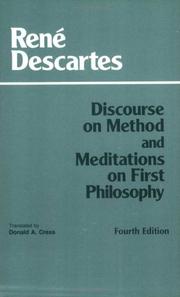
Start with Discourse on Method and Meditations on First Philosophy, 4th Ed, and specifically with the Meditations, which run to about sixty pages. Descartes sets the problem — what can I know with certainty, given that my access to the world runs entirely through my own mind — and the whole of Critique of Pure Reason is an attempt to answer it without either Descartes' confidence or the scepticism that followed him.
Say plainly what the destination costs. The Critique is around seven hundred pages of technical German philosophy in translation, with a vocabulary it invents as it goes: transcendental, apperception, the synthetic a priori, the thing in itself. There is no edition that makes it easy. It is also not where to go if you want Kant on ethics or on beauty — those are separate later works, and the Groundwork in particular is short and can be read on its own. Read the Critique because you want to know how Kant thought experience is possible at all, or do not read it.
The scepticism Kant is answering
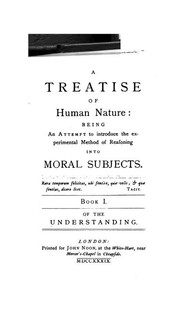
A treatise of human nature is David Hume dismantling causation, the self and inductive inference. It is the book Kant said woke him from his dogmatic slumber, though scholars note he probably knew Hume mainly through the shorter Enquiry and through secondary reports rather than the Treatise itself. The Treatise is long; Book One is the part that bears on Kant, and reading it alone is entirely respectable.
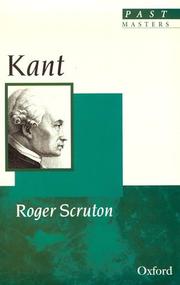
Roger Scruton's Kant is the very short introduction: a hundred-odd pages, dense for its length, and the fastest way to get the architecture of the critical philosophy in your head before you meet it in full. Manfred Kuehn's Kant is the biography, and it is a genuinely interesting book, quietly demolishing the caricature of a man with no life beyond his walking schedule. It is not preparation for the argument; read it because you want to.
Kant explaining himself
Prolegomena to Any Future Metaphysics is Kant's own short restatement, written after the Critique had been met with incomprehension, and it works backwards: it starts from the fact that mathematics and natural science exist and asks what must be true for that to be possible. It is about a fifth the length. Our catalogue carries it under an extremely long record title that also lists an appended letter to Marcus Herz — same book. Read it immediately before the Critique, or in parallel with the opening sections.
Commentaries, and how to use them
You will need one commentary open beside the text. Two here do that job and one is enough.
Kant's 'Critique of Pure Reason', by Jill Vance Buroker, is the more expository, going section by section and explaining the moves before evaluating them. Routledge Philosophy GuideBook to Kant and The Critique of Pure Reason, by Sebastian Gardner, is more philosophically demanding and better on the systematic motivation. Take Buroker if this is your first serious work of philosophy, Gardner if it is not.
The other two are arguments about the book rather than guides to it, and they disagree fundamentally. The bounds of sense is P. F. Strawson's attempt to rescue what he takes to be Kant's real achievement — an argument about the necessary conditions of any coherent experience — while discarding transcendental idealism as incoherent metaphysics. Kant's transcendental idealism is Henry Allison's direct answer: that transcendental idealism is not a metaphysical claim about two worlds at all, but a claim about the conditions under which objects can be known, and that Strawson's Kant is not Kant. This is a live disagreement among serious readers, and it will not be settled here. Read both, after the text, and pick your side.
Reading the Critique
Work through the Prefaces, the Aesthetic and the Analytic of Concepts slowly. The Transcendental Deduction is the hardest passage and exists in two versions, printed as A and B in good editions; most teachers now send students to the B version first. The Dialectic — the paralogisms, the antinomies, the critique of the proofs of God — is far more readable and is where the polemical energy is. If you stall in the Deduction, read the Dialectic, then come back. Readers who enjoy this kind of run-up often take the Capital sequence next, which is built the same way.
Follow the full ordered path here: What to Read Before the Critique of Pure Reason: How to Approach Kant, in Order.