What to Read Before Marx's Capital: The Preparation Sequence, in Order
Capital is abandoned in chapter one more reliably than almost any book in the canon, because it opens with a hundred pages of Hegelian argument about the commodity form before it reaches a single factory. That opening is a critique of classical political economy, which means it is addressed to readers who have read Smith and Ricardo — which almost nobody now has. This is a preparation sequence, not a survey of Marx: the political economy he is arguing with, his own short statements of the case, and the chapter-by-chapter guides, with volume one last. If you want Marx's politics rather than his economics, this is the wrong path.
The economists Marx is arguing with
IntermediateUnderstand the labour theory of value as Smith and Ricardo left it, which is the position Capital begins by criticising
▸ Study plan for this stage
Pace: Four to six weeks, and read selectively rather than completely — this stage is preparation, not a course in classical economics. From The Wealth of Nations, Book I is what you need: the division of labour, the distinction between natural and market price, and the chapters on the component parts of p
- Use value against exchange value, as Smith sets the distinction up in the water-and-diamonds passage — Marx opens Capital by reworking exactly this pair
- The division of labour as Smith's engine of productivity, and the pin factory as the founding image of the whole tradition
- Smith's separation of natural price from market price, and the idea that market prices oscillate around a centre determined by something other than demand
- Ricardo's labour theory of value in its strongest form — that the exchange value of a commodity is governed by the labour time required to produce it — which is the position Marx inherits rather than invents
- The Ricardian problem of profit: if goods exchange at their labour values, where does profit come from? This unanswered question is the hole Capital's theory of surplus value is built to fill
- Ricardo's differential theory of rent and his account of the falling rate of profit, both of which reappear transformed in Marx
- That classical political economy took the labour theory of value for granted as economics — a fact worth holding onto, because the modern reader meets it first as a Marxist doctrine and mis-hears it as a political claim
- State Ricardo's labour theory of value in three sentences. What does it explain well, and what does Ricardo himself admit it struggles with?
- Where does Smith's account of price and Ricardo's differ, and why does Marx take Ricardo as the serious opponent rather than Smith?
- In the classical framework, what is the source of profit? Follow the question as far as Ricardo takes it and note precisely where he stops.
- Both writers treat labour as the measure of value. What is the difference between saying labour measures value and saying labour creates it, and does either author consistently hold one of these?
- Smith is often read as a defender of markets and Ricardo as a technician. Having read them, which parts of that reputation survive contact with the text?
- Work Ricardo's numerical examples with a pencil rather than reading past them — particularly the corn and cloth cases in the chapter On Value. They are short, they are the argument, and skimming them is why people report Ricardo as impenetrable.
- Write 300 words stating the labour theory of value as Ricardo leaves it, using no Marxist vocabulary at all. You will want this document later: chapter one of Capital is a critique of the thing you have just written down.
- Make a one-page list of the terms Smith and Ricardo use in a technical sense that everyday English uses loosely — value, price, rent, profit, wages, capital, commodity. Note each definition. Marx uses the same words with a third set of meanings and does not always flag the shift.
- Find the passage in Smith closest to Marx's opening question about what makes two unlike goods commensurable. Mark it. When you reach Capital's first ten pages you will recognise the ground you are standing on.
Next up: You now hold the position Capital's first hundred pages are criticising, which is the whole reason those pages exist — and the next stage lets you hear where Marx thinks that position goes wrong, in fifty pages rather than nine hundred.

Capital's subtitle is A Critique of Political Economy, and Smith is the political economy in question. You do not need all five books — read book one on the division of labour, value and price, and you will recognise most of what Marx is answering.

Ricardo, not Smith, is the immediate target: he pushed the labour theory of value to the point where Marx picks it up. The first six chapters are the ones Capital's opening argument presupposes, and skipping this is the commonest reason chapter one reads as arbitrary.
Marx in short form, before the long form
BeginnerGet the argument of Capital in fifty pages, and the life that produced it, before attempting nine hundred
▸ Study plan for this stage
Pace: Two to three weeks. Read the Wage-Labour and Capital volume in a single evening — Wage-Labour and Capital first, then Value, Price and Profit, in that order, both being lecture-length. Singer's short introduction is about eighty pages and takes an afternoon. Berlin runs to 280 pages of real biograph
- Labour power as a commodity distinct from labour itself — what the worker actually sells, and the distinction on which the entire theory of exploitation turns
- Surplus value stated plainly: the difference between the value labour power costs and the value it creates, presented here as an arithmetic point before Capital presents it as a philosophical one
- Necessary and surplus labour time, and the working day divided between them — the simplest picture of the argument you will get anywhere
- Alienation, from Singer: the worker's estrangement from product, process, self and others, which is early Marx and is presupposed rather than restated in Capital
- The Hegelian vocabulary Capital uses without defining — dialectic, contradiction, negation, mode of production, forces and relations of production. Singer's chief use on this path is supplying these
- Berlin's context: what the 1848 defeats, the London exile and the reading-room years did to the shape of the project, and why the finished volume one looks the way it does
- That Berlin is a liberal writing about a thinker he disagrees with, which is why the book explains the argument's appeal without recruiting you to it — a genuinely useful vantage for a first reader
- Explain the difference between labour and labour power to someone who has not read Marx, in four sentences. If you cannot, reread the relevant pages — nothing later in the path works without it.
- Value, Price and Profit was written against a specific opponent arguing that wage rises simply raise prices. Reconstruct that opponent's case and Marx's reply. Where does each depend on an assumption the other does not share?
- Singer separates what Marx argued from what was later done in his name. Which of the distinctions he draws seem to you the most contested?
- Berlin's Marx is a nineteenth-century intellectual shaped by particular defeats. How does that framing change what you expect Capital to be doing?
- Having read the short statements, what is left for the nine hundred pages to add? Write your guess down — it is a good test of how well you understood the compressed version.
- Marx wrote these short pieces for working audiences and Capital for economists. What do you notice changing between the two registers besides length?
- Draw the working day as a single line divided into necessary and surplus labour time, as Marx does in the lectures. Annotate what happens to the line when the working day lengthens and when productivity rises. It is a five-minute diagram and it carries a third of volume one.
- Write a 400-word summary of the exploitation argument using only the short texts. Keep it. When you finish part three of Capital, write the same summary again and compare — the gap between the two is a fair measure of what the long book actually gave you.
- Take the glossary you started in the previous stage and add the Hegelian terms from Singer, each with a one-sentence definition in your own words. Capital will use every one of them without introduction.
- From Berlin, note the three or four arguments Marx believed he had definitively won. Reading Capital knowing which parts its author thought were settled tells you where he moves fast and where he labours.
Next up: You have the conclusion in compressed form and the vocabulary it is stated in; the next stage supplies the structure of the long argument, so that when you finally open Capital nothing about its shape is a surprise.
Marx's own lecture-length statement of exploitation and surplus value, written for workers rather than economists. This path assumes the common combined volume that also prints Value, Price and Profit, his other short statement of the same case — read both, in that order, in an evening.
A brief, unsentimental introduction that separates what Marx argued from what was later done in his name. Read it for the Hegelian vocabulary — alienation, dialectic, mode of production — that Capital uses without defining.

The classic short life, written by a liberal who disagreed with him, so it explains the intellectual context of Capital without recruiting you. Read it before the commentaries: it tells you which arguments Marx thought he was winning.
The primers written for exactly this problem
BeginnerWork through the structure of volume one in outline, so the opening chapters are familiar territory when you meet them in Marx's own prose
▸ Study plan for this stage
Pace: Four to five weeks, and this is the stage most readers are tempted to skip and should not. Fine and Saad-Filho is about 110 pages and can be read in a week, then reread in an afternoon later. Heinrich is 220 pages of genuinely demanding argument — three weeks, twelve to fifteen pages a sitting, with
- The architecture of volume one: commodities and money, the transformation of money into capital, absolute and relative surplus value, wages, accumulation, and primitive accumulation. Knowing the seven parts in order is most of what stops readers getting lost
- Value as a social relation rather than a property of a thing — the reading Heinrich insists on, and the point on which most first readings go wrong
- Abstract versus concrete labour, and why the reduction of one to the other is the hinge of chapter one rather than a preliminary definition
- Commodity fetishism as an argument about how a social relation comes to appear as a property of objects, not as a complaint about consumerism
- The distinction between capital as a process and capital as a stock of things, which Fine's primer is unusually clear on
- Heinrich's insistence that chapter one must be read rather than skipped, against the very common advice to start at chapter four — the disagreement is real and worth understanding before you choose
- Where Marx's argument is unfinished by his own lights: Heinrich is explicit about this, and knowing which problems Marx left open is more useful than a defence that pretends he did not
- Draw the argument of volume one as a chain: what does each part establish that the next one needs? If any link is vague, that is where you will stall in the text.
- What does it mean to say value is a social relation and not a property of a thing? Try to say it without using the word social.
- Heinrich argues chapter one is indispensable; a long tradition of teachers advises starting elsewhere and coming back. Set out the case for each. What is each side assuming about what a first reader can do?
- What is fetishism doing in the argument? It arrives at the end of chapter one — does it follow from what precedes it, or is it a separate claim?
- Which parts of the argument does Heinrich identify as unfinished or contested, and are those the parts you would have guessed?
- Fine's primer and Heinrich's introduction disagree in emphasis. Where, specifically, and does the difference matter for how you will read the text?
- Write the seven parts of volume one on a single card with one line each on what it argues. Carry it inside the book. This is the cheapest possible defence against the commonest failure mode, which is losing the thread and blaming the prose.
- After Fine, write a 500-word précis of Capital's argument as you currently understand it. You will be wrong about something; the point is to have a specific wrongness to correct rather than a vague fog.
- Take Heinrich's treatment of chapter one and mark every place he says a common reading is mistaken. Those passages are a map of the potholes and you will hit most of them.
- Reread Fine and Saad-Filho a second time immediately after the first, in one sitting. It is short enough that this costs an afternoon, and a compact primer read twice is worth more than a long one read once.
- Return to the 300-word Ricardo summary from the first stage. Annotate it with what Marx says is wrong with it, as the primers report him. That annotated page is effectively a précis of Capital's opening.
Next up: With the structure in hand you no longer need a book that tells you where the argument is going, which is precisely when a chapter-by-chapter companion — read alongside rather than instead of the text — becomes the right tool.
The short student primer that has kept being reissued because it works: a compact walk through value, surplus value and accumulation. Read it cover to cover before opening Capital, then again after part three.

The best modern introduction, and the one that takes chapter one seriously rather than advising you to skip it. Heinrich is also explicit about where Marx's argument is unfinished, which is more useful than a defence.
The chapter-by-chapter companions
BeginnerAssemble the guides that are read alongside the text rather than instead of it
▸ Study plan for this stage
Pace: These are not read before Capital; they are assembled before it and read with it. Skim Harvey's introduction and first chapter now, an evening, and shelve the rest for the final stage — his book is transcribed from a lecture course and is designed to be read one chapter behind you. Cleaver is genuin
- The companion-alongside method itself: read a part of Capital, then the corresponding chapter of Harvey, then reread the hardest passage of Marx. The order matters and reversing it turns the companion into a substitute
- Harvey's approach — close, patient, structural, treating volume one as a work of argument to be followed rather than a doctrine to be affirmed, and consistently pointing forward to how a passage is used later
- That Harvey's course exists as free video lectures following the same chapter sequence, so the book and the lectures can be used interchangeably as your attention allows
- Cleaver's autonomist reading, which takes chapter one as a text about class struggle rather than as a technical exposition of value — a genuinely different account of what the opening is for
- The disagreement between the two as a live interpretive dispute, not a matter of one being right: Harvey reads Capital as an analysis of a system, Cleaver as a weapon for a struggle, and each is candid about it
- Why a partisan companion is useful last rather than first — a reading you can argue with requires a reading of your own
- Read Harvey's opening chapter and Cleaver's on the same material. What does each think chapter one of Capital is for? State both positions in a sentence each.
- Harvey and Cleaver would give different answers to what a reader is supposed to do with the book. Set the two answers side by side — which does more work explaining the text, and which more work explaining the tradition?
- What does a companion legitimately do, and where does it start doing the reading for you? Where would you draw the line for yourself?
- Harvey emphasises the architecture and the forward references; Cleaver emphasises the antagonism. Is there a passage in chapter one where you can see both readings being available?
- If you had to read only one of these alongside the text, which would you choose, and what would you be giving up?
- Set up your reading system before you open Capital: text, companion, notebook, and a rule for the order. Write the rule down — read the Marx part first, unaided, then the companion, then reread. Readers who skip this end up reading Harvey and skimming Marx.
- Watch or read Harvey's first lecture and note the three things he says most often about how to approach the book. Those three habits are what the companion is really transmitting.
- After you have read chapter one of Capital in the next stage, come back to Cleaver and mark every place his reading conflicts with the one you formed. Do not resolve them yet — a list of live disagreements is the right state to be in for the rest of volume one.
- Keep a two-column log through the reading: what Marx says, what the companion says he says. Divergences are where the interesting questions are, and there will be more than you expect.
Next up: You have the argument Marx is answering, his own compressed version of the answer, the structure of the long form and the tools to read alongside it — which is everything the preparation can give you, and the only thing left is the book.

Harvey's transcribed lecture course, chapter by chapter through volume one, designed to be read one chapter behind you. This is the single most useful object on the path; his free lecture videos follow the same sequence.

A deliberately partisan companion to chapter one from the autonomist tradition, included because it disagrees with Harvey about what the opening is for. Read it last, as the argument rather than the map — it is most useful once you have a reading of your own to test.
Capital
BeginnerRead volume one with the companions in hand, at a pace that assumes months rather than weeks
▸ Study plan for this stage
Pace: Three to six months, and treat any faster plan with suspicion. Volume one runs past 1,100 pages in the standard editions. Ten to fifteen pages a day, five days a week, is a pace that finishes; thirty pages a day is a pace that stalls in part one. Specific advice: give chapter one a full week on its
- The commodity as the analytical starting point, and why Marx begins with the smallest unit rather than with the factory or the class — the method is as much the subject of chapter one as the content is
- The value form and the derivation of money, which is the densest stretch in the book and the part Heinrich prepared you for
- The transformation of money into capital, and the general formula M-C-M' with its apparent paradox: how can exchange of equivalents yield an increase?
- Labour power as the commodity whose consumption produces more value than it costs — the resolution of that paradox and the pivot of the whole volume
- Absolute versus relative surplus value: lengthening the working day against raising productivity, and the shift from one strategy to the other as the book's historical spine
- Cooperation, manufacture and machinery as successive reorganisations of the labour process, with the machinery chapter containing some of Marx's most concrete and best-known writing
- The general law of capitalist accumulation and the reserve army of labour, in part seven, which is where the theoretical apparatus finally does explanatory work on observed conditions
- So-called primitive accumulation in part eight — the historical account of enclosure and dispossession, deliberately placed at the end rather than the beginning, and worth asking why
- Why does Marx begin with the commodity? Answer it after finishing the book, not before — the justification is retrospective and that is deliberate.
- Reconstruct the M-C-M' paradox and its resolution in your own words. This is the single argument the book most needs you to be able to reproduce.
- Where does Marx shift from analysis to indictment? Mark the transitions. Does he signal them, and does the analysis stand independently of the indictment?
- The chapters on the working day rest heavily on the factory inspectors' reports. What kind of argument is that — evidence for the theory, illustration of it, or something else?
- Part eight puts the historical origin of capital at the end of the book. What does that placement claim about the relationship between the theory and the history?
- Compare your 400-word exploitation summary from the second stage with what you would write now. What did nine hundred pages add that fifty could not?
- Read chapter one three times: once straight through without stopping, once slowly with Heinrich open, once straight through again. Almost every reader who reports that chapter one is impossible has read it once. It is hard, not impossible, and the third pass is a different experience.
- Keep a running summary of one paragraph per chapter as you go. At 33 chapters this is a small daily cost and it is the only reliable defence against arriving at part seven having forgotten what part three established.
- When you reach the chapter on machinery and large-scale industry, read it alongside your notes from Smith's pin factory in the first stage. The two accounts of the division of labour are describing the same phenomenon and reaching opposite conclusions; write 300 words on where exactly they diverge.
- At the end of part three, go back to Cleaver and work through the disagreements you logged. You now have a reading of your own, which is the condition under which a partisan companion becomes useful rather than directive.
- When you finish, write down what you think the book proved, what it asserted and what it left open. Heinrich flagged some of the third category in advance; check your list against his and note where you disagree with him too.
Next up: This is the end of the path. Volume one is the only volume Marx finished and the only one most readers need — if you go further, the honest next step is not volume two but the modern arguments about whether the value theory holds, read now that you can state it accurately enough to see what is being contested.
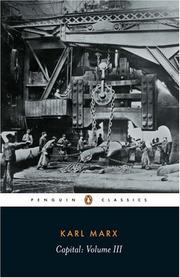
The destination: volume one, which is the only volume Marx finished and the only one most readers need. Read the Ben Fowkes translation if you can choose, do not skip chapter one, and read Harvey's corresponding chapter immediately after each part.
Discussion
Keep reading
Paths that share books, cover the same subject, or open a related topic.