Metaphysics: a reading path into the nature of reality and being
This curriculum takes you from accessible philosophical wonder all the way to rigorous analytic metaphysics, building in four carefully sequenced stages. Each stage introduces the vocabulary, questions, and thinkers you'll need before the next one demands more precision and abstraction — so by the end you'll be reading primary texts and cutting-edge arguments with genuine comprehension.
First Questions — Awakening Philosophical Curiosity
BeginnerGrasp what metaphysics is, why it matters, and develop an intuitive feel for its core questions: What exists? What is real? What is time? What am I?
▸ Study plan for this stage
Pace: 8–10 weeks, ~25–35 pages/day (accounting for philosophical density and reflection time)
- Wonder as the origin of philosophy: how questioning the familiar awakens philosophical thinking
- The distinction between appearance and reality: why things are not always as they seem
- Metaphysics as the study of what exists and what is fundamentally real
- Core metaphysical questions: What exists? What is time? What is consciousness? What am I?
- The relationship between knowledge and reality: how we can know anything about what is real
- The historical development of metaphysical thought from ancient to modern philosophy
- Intuition and reason as tools for exploring metaphysical questions
- The practical relevance of metaphysics to how we live and understand ourselves
- What is metaphysics, and why did Bertrand Russell argue it matters even if we cannot definitively answer its questions?
- How does Sophie's journey through philosophical history help illustrate why humans naturally ask metaphysical questions?
- What is the difference between appearance and reality, and why is this distinction central to metaphysical inquiry?
- What are the four core metaphysical questions (What exists? What is real? What is time? What am I?), and how do they relate to each other?
- How do different philosophical traditions (ancient, medieval, modern) approach the question of what is real?
- What role does wonder and curiosity play in the beginning of philosophical thinking, according to Russell and Gaarder?
- Write a personal 'metaphysical autobiography': identify 3–5 moments in your life when you questioned what is real or what you are. Reflect on how Russell's notion of wonder applies to these moments.
- Create a visual timeline mapping the metaphysical questions asked by philosophers from ancient Greece to the modern era, using examples from all three books. Annotate how each era's answers differ.
- Conduct a 'reality check' exercise: choose one everyday object (a chair, a thought, time passing) and write two pages exploring what it *appears* to be versus what it might *really* be, drawing on Russell's distinction.
- Engage in Socratic dialogue: choose a partner or write both sides of a conversation where you ask them the four core metaphysical questions (What exists? What is real? What is time? What am I?) and record their intuitive answers before and after reading.
- Annotate key passages from each book that best capture why metaphysics matters. Create a 'greatest hits' document with 8–12 quotes and your own explanation of why each one is pivotal.
- Write a letter to your pre-philosophical self explaining what metaphysics is and why it's worth caring about, using concrete examples from Sophie's world and Russell's arguments.
Next up: This stage awakens your capacity to ask metaphysical questions and recognize their depth; the next stage will equip you with specific philosophical frameworks and arguments to rigorously pursue answers to these questions.
A short, crystal-clear introduction by one of the 20th century's greatest minds; it frames the central questions of reality, appearance, and knowledge in plain language — the perfect on-ramp.

A narrative tour through the history of philosophy that makes abstract metaphysical ideas vivid and memorable, giving beginners a mental map of who asked what and why.

A visually rich, entry-level reference that introduces dozens of metaphysical thinkers and concepts in digestible snapshots — ideal for building vocabulary before deeper reading.
Foundations — Core Concepts and Classic Arguments
BeginnerUnderstand the foundational metaphysical concepts — substance, causation, identity, free will, and the nature of time — through accessible but rigorous introductory texts.
▸ Study plan for this stage
Pace: 4–5 weeks, ~25–30 pages/day. Start with Mumford's introduction (1 week), move through Baggini's thought experiments (2 weeks), then complete Harris's essay (1 week), with 3–4 days reserved for review and synthesis.
- Substance and properties: what it means for something to be a 'thing' with enduring characteristics
- Causation: how events relate to one another and whether causes necessitate effects
- Personal identity: what makes you 'you' over time despite physical and mental change
- Free will and determinism: whether human choices are truly free or determined by prior causes
- The nature of time: whether time is real, flowing, and whether past/future exist as the present does
- The role of intuition vs. logic in metaphysical reasoning: how thought experiments reveal hidden assumptions
- Metaphysical skepticism: recognizing the limits of what we can know about reality's deep structure
- What is the difference between substance and properties, and why does this distinction matter for understanding what exists?
- How do Mumford's examples of causation challenge the idea that causes always determine their effects?
- What is the 'Ship of Theseus' problem (or similar identity puzzles in Baggini), and what does it reveal about personal identity?
- According to Harris, what is the relationship between neuroscience, determinism, and the intuitive sense that we have free will?
- How can a thought experiment (like those in Baggini) help you discover your own metaphysical intuitions, and why might those intuitions be misleading?
- What is one major metaphysical question you still find genuinely uncertain about after completing these three books, and why?
- After reading Mumford's chapters on substance and causation, write a one-page analysis of a concrete example (e.g., a coffee cup, a friendship, a decision) identifying its substance, properties, and causal relations.
- Work through 3–4 of Baggini's thought experiments in detail: for each, write down your initial intuition, then identify the metaphysical assumption behind it, then consider an alternative answer.
- Create a personal identity timeline: map major changes in your body, beliefs, memories, and personality over the past 5–10 years, then argue whether 'you' are the same person—justify your answer using concepts from the readings.
- Read Harris's argument on free will and neuroscience, then write a 2–3 page response: do you find his case convincing? Where does intuition conflict with his logic?
- Conduct a thought experiment of your own: design a scenario that tests one of the metaphysical concepts (identity, causation, free will, or time) and predict how different people might answer it differently.
- Discuss with a peer or write a dialogue between Mumford's systematic approach and Baggini's intuition-testing approach: which method better reveals metaphysical truth, and why?
Next up: This stage equips you with the core vocabulary, classic puzzles, and competing intuitions needed to engage with more advanced metaphysical theories—such as different accounts of causation, rival theories of personal identity, and sophisticated arguments for and against free will—in the next stage.
A compact, authoritative overview of the discipline's main branches (ontology, causation, modality, time) that bridges popular reading and serious study.
100 thought experiments — many directly metaphysical — that sharpen intuitions about identity, free will, and existence through engaging puzzles before tackling formal arguments.
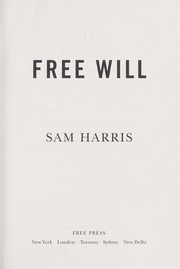
A short, provocative primer on one of metaphysics' most contested topics; it introduces compatibilism, determinism, and the problem of agency in an accessible, argument-driven style.
Going Deeper — Systematic Metaphysics
IntermediateEngage with full-length philosophical arguments about the structure of reality, the nature of time, causation, and possible worlds — developing the ability to follow and evaluate sustained metaphysical reasoning.
▸ Study plan for this stage
Pace: 8–10 weeks, ~40–50 pages/day (mix of primary text and secondary analysis)
- Metaphysics as systematic inquiry into the fundamental structure of reality—what exists and why
- Temporal metaphysics: the nature of time (A-theory vs. B-theory), temporal flow, and the direction of time
- Causation: regularity theories, counterfactual accounts, and the metaphysical foundations of cause-and-effect
- Possible worlds semantics and modal metaphysics—how necessity, possibility, and contingency structure reality
- Substance, properties, and composition—what counts as a fundamental entity
- The relationship between metaphysical claims and empirical evidence, especially in Hume's skeptical framework
- How to construct and evaluate sustained metaphysical arguments across multiple premises
- What is the difference between A-theory and B-theory accounts of time, and what are the main arguments for each?
- How does Ney distinguish between different theories of causation, and what are the strengths and weaknesses of each?
- What role do possible worlds play in contemporary metaphysical reasoning, and how do they help us understand modality?
- What is Hume's skeptical challenge to causation and induction, and how do modern metaphysicians respond to it?
- How do the essays in Hume's *Dialogues* and *Enquiry* sections challenge or constrain metaphysical theorizing about God, the soul, and miracles?
- Can you construct a multi-step metaphysical argument on a topic (e.g., the nature of time or causation) and identify potential objections?
- Read Ney's introduction and first chapters on the scope of metaphysics; write a 500-word summary of what metaphysics is and why it matters, using at least two examples from the text
- Create a comparison chart of A-theory vs. B-theory (from Ney and the Reads summary of *Order of Time*): list assumptions, key arguments, and implications for how we understand change and causation
- Work through Hume's argument against miracles in the *Enquiry* section; identify each premise, evaluate its strength, and write a 400-word response defending or critiquing his reasoning
- Construct a possible-worlds argument for or against the necessity of a particular metaphysical claim (e.g., 'abstract objects exist' or 'the future is real'); diagram the logical structure and test it against counterexamples
- Analyze one sustained causal argument from Ney; extract the premises, identify any hidden assumptions, and propose an alternative conclusion or objection
- Write a dialogue (in Hume's style, 2–3 pages) between two characters debating whether time is fundamental or derivative, incorporating at least three arguments from your reading
Next up: This stage equips you with the ability to follow and critique complex metaphysical reasoning on core topics (time, causation, modality), preparing you to engage with specialized debates and cutting-edge research in particular metaphysical domains in the next stage.

A rigorous yet accessible undergraduate-level text that covers ontology, persistence, causation, and modality with real arguments and counterarguments — the backbone of intermediate study.

A beautiful, scientifically grounded meditation on the nature of time that connects physics and metaphysics, deepening intuitions built in earlier stages with contemporary insight.

Hume's landmark analysis of causation, induction, and necessary connection is essential primary-source reading; it underpins virtually every modern debate in metaphysics.
Advanced Terrain — Analytic Metaphysics and Primary Texts
ExpertRead canonical primary texts and cutting-edge analytic philosophy; argue fluently about modality, possible worlds, ontological commitment, and the metaphysics of mind and causation.
▸ Study plan for this stage
Pace: 12–14 weeks, ~40–50 pages/day (with 2–3 days per week for reflection and written exercises)
- Cartesian dualism and the mind-body problem: how Descartes' substance dualism frames the metaphysical relationship between mind and matter
- The method of doubt and foundational metaphysics: using systematic skepticism to establish what can be known with certainty about reality
- Nagel's argument for agent causation and the irreducibility of reasons: how intentional action resists physicalist reduction and what this implies for metaphysical freedom
- The problem of altruism and moral metaphysics: reconciling egoism with genuine altruistic motivation through metaphysical analysis
- Possible worlds semantics and modal realism: Lewis's framework for understanding necessity, possibility, and counterfactual truth through concrete possible worlds
- Ontological commitment and parsimony: how to evaluate what entities a theory must posit and the trade-offs between simplicity and explanatory power
- Transworld identity and counterpart theory: how individuals persist across possible worlds and how to analyze identity claims in modal contexts
- The metaphysics of modality: comparing Lewisian realism about possible worlds with alternative accounts of what makes modal statements true
- What is Descartes' argument for substance dualism, and what metaphysical problems does it create for the interaction between mind and body?
- How does Descartes use the method of doubt to establish foundational truths, and what role does this play in his metaphysical system?
- According to Nagel, why is the fact of altruism incompatible with pure egoism, and what does this reveal about the metaphysics of human agency?
- What is Nagel's argument that reasons cannot be reduced to desires or physical causes, and how does this bear on the mind-body problem?
- What is modal realism, and how does Lewis use possible worlds to analyze statements about possibility, necessity, and counterfactuals?
- What is counterpart theory, and how does it solve the problem of transworld identity?
- How does Lewis argue for the ontological commitment to concrete possible worlds, and what are the main objections to this commitment?
- How do Descartes' dualism, Nagel's irreducibility thesis, and Lewis's modal realism each address the question of what kinds of entities must exist?
- Reconstruct Descartes' method of doubt step-by-step in writing: list each stage of skepticism and explain what each stage is designed to doubt and why it ultimately fails to doubt the cogito.
- Write a 2–3 page dialogue between Descartes and a physicalist opponent in which you defend dualism against the charge that it cannot explain mind-body interaction.
- Analyze Nagel's argument for altruism: identify the premises, the logical structure, and the metaphysical assumptions about agency and motivation that underpin it.
- Construct a counterargument to Nagel's irreducibility thesis using a specific example (e.g., a case of apparent altruism) and defend your position in 2–3 pages.
- Create a detailed possible-worlds model for a simple counterfactual (e.g., 'If I had studied harder, I would have passed the exam') using Lewis's framework, specifying which worlds are closest and why.
- Write out Lewis's argument for concrete possible worlds as a response to the question 'What makes modal statements true?', then identify the three strongest objections and draft replies to each.
- Apply counterpart theory to a transworld identity puzzle (e.g., 'Could I have been born in a different country?') and explain how counterpart theory differs from a strict identity account.
- Compose a comparative essay (4–5 pages) analyzing how Descartes, Nagel, and Lewis each approach the problem of what kinds of entities are metaphysically fundamental and why.
Next up: This stage equips you with fluency in three foundational frameworks—dualism, irreducibility of agency, and modal realism—that structure contemporary debates in metaphysics of mind, causation, and modality, preparing you to engage with current analytic work that either builds on or challenges these canonical positions.
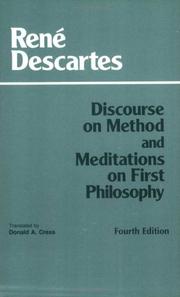
The foundational text for questions of substance, mind-body dualism, and the existence of God — indispensable primary reading that every serious metaphysician must engage with directly.
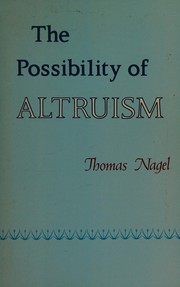
Nagel's rigorous exploration of objective reality and practical reason pushes into the hardest questions about what it means for something to exist from a subjective versus objective standpoint.

Lewis's bold, fully argued defense of modal realism — the view that all possible worlds are real — is the most influential and challenging work in 20th-century analytic metaphysics, the capstone of this curriculum.
Discussion
Keep reading
Paths that share books, cover the same subject, or open a related topic.