Epistemology explained: best books on the theory of knowledge
This curriculum builds a deep understanding of epistemology in four progressive stages, starting with accessible philosophical introductions and ending with landmark primary texts and cutting-edge debates. Each stage equips the reader with the conceptual vocabulary and analytical tools needed to tackle the next, moving from "what is knowledge?" all the way to contemporary challenges like reliabilism, contextualism, and radical skepticism.
Foundations: What Is Knowledge?
BeginnerGrasp the central questions of epistemology — knowledge, belief, justification, and truth — in plain, accessible language, and develop a feel for philosophical thinking before encountering technical arguments.
▸ Study plan for this stage
Pace: 8–10 weeks, ~25–30 pages/day (with reflection breaks)
- The distinction between knowledge and mere opinion or belief—why not all beliefs count as knowledge
- Justification as the bridge between belief and knowledge—what makes a belief rational or well-grounded
- The role of truth in knowledge—why a belief must correspond to reality to be knowledge
- Appearance versus reality—how philosophical doubt reveals gaps between what seems true and what is true
- The problem of the criterion—how we know our methods of knowing are reliable
- Foundationalism and basic beliefs—the idea that some beliefs need no further justification
- Gettier problems and counterexamples—cases where justified true belief falls short of knowledge
- The practical value of epistemology—how understanding knowledge matters beyond abstract theory
- What is the difference between knowledge and belief, and why does justification matter in bridging them?
- How does Russell use doubt and skepticism in *The Problems of Philosophy* to motivate epistemological inquiry?
- What is the relationship between truth, belief, and justification according to Russell's account in *Theory of Knowledge*?
- What is a Gettier case, and why does it show that justified true belief is not sufficient for knowledge?
- How does Pritchard's discussion in *What is This Thing Called Knowledge?* refine or challenge the traditional definition of knowledge?
- Can you explain the problem of the criterion and why it matters for epistemology?
- After reading Russell's *Problems of Philosophy*, write a one-page reflection on a belief you hold with confidence—is it knowledge? What would justify calling it knowledge rather than mere opinion?
- Create a table comparing Russell's account of knowledge in *The Problems of Philosophy* with his more detailed treatment in *Theory of Knowledge*—what shifts or develops?
- Construct your own Gettier-style counterexample: describe a scenario where someone has a justified true belief that intuitively does not count as knowledge, and explain why.
- Practice philosophical doubt: pick a everyday claim (e.g., 'I know my friend is honest') and systematically question what would make you certain of it—document the process.
- Summarize Pritchard's response to the Gettier problem in 2–3 paragraphs, then write a critical response: do you find his solution convincing?
- Engage in a dialogue (written or spoken) with a study partner: one person defends that justified true belief is enough for knowledge, the other uses counterexamples to challenge it.
Next up: This stage equips you with the core vocabulary and intuitions about knowledge, justification, and truth that the next stage will use to explore specific epistemological theories (rationalism, empiricism, reliabilism) and their competing answers to these foundational questions.
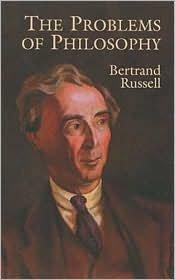
Russell's slim, lucid classic introduces the core epistemological puzzles — perception, appearance vs. reality, induction, and the nature of knowledge — in language any newcomer can follow. It sets the agenda for everything that comes after.

A natural companion that deepens Russell's own analysis of acquaintance and description, bridging the beginner-friendly Problems with more rigorous epistemological structure.
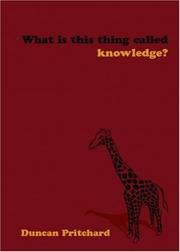
A purpose-built contemporary introduction that walks through justified true belief, Gettier problems, skepticism, and virtue epistemology in short, dialogue-driven chapters — perfect for consolidating the vocabulary Russell introduced.
The Classical Framework: JTB, Gettier, and the Analytic Tradition
BeginnerUnderstand the justified-true-belief (JTB) analysis of knowledge, why Edmund Gettier's counterexamples shattered it, and the major post-Gettier responses that defined 20th-century analytic epistemology.
▸ Study plan for this stage
Pace: 4–5 weeks, ~25–30 pages/day. Start with Crumley's introduction (approximately 150–180 pages on JTB and Gettier) over 2 weeks, then move to Sosa's treatment of post-Gettier responses and alternative frameworks (approximately 120–150 pages) over 2–3 weeks.
- The Justified-True-Belief (JTB) analysis: knowledge as justified true belief and its intuitive appeal
- Gettier cases and counterexamples: how Gettier showed JTB is insufficient for knowledge
- The problem of luck and epistemic luck: why true belief can fail to constitute knowledge even when justified
- Causal theories of knowledge: Sosa's and others' attempts to exclude Gettier cases by requiring causal connections between belief and truth
- Reliabilism: the view that knowledge requires beliefs formed by reliable processes, as discussed in Sosa
- Internalism vs. externalism: whether justification depends only on internal mental states or also on external factors
- The role of intuition in epistemology: how Gettier cases appeal to our intuitions about what counts as knowledge
- What is the Justified-True-Belief (JTB) analysis of knowledge, and why did it seem like a complete account before Gettier?
- Describe one of Gettier's original counterexamples in detail. Why does it show that JTB is insufficient for knowledge?
- What is the core problem that Gettier cases expose: why can someone have justified true belief without having knowledge?
- How do causal theories of knowledge (as discussed in Sosa) attempt to solve the Gettier problem, and what are their limitations?
- What is reliabilism, and how does it differ from the JTB analysis in accounting for knowledge?
- Explain the distinction between internalism and externalism in epistemology, and how this debate relates to post-Gettier theories.
- Construct your own Gettier-style counterexample: design a scenario where someone has justified true belief but intuitively lacks knowledge, and explain why it challenges JTB
- Compare two post-Gettier responses (e.g., causal theory vs. reliabilism) by applying each to the same Gettier case and evaluating which handles it better
- Analyze Crumley's presentation of the JTB analysis: identify the key premises and explain why each seemed necessary and sufficient before Gettier
- Read and annotate one of Sosa's discussions of a specific post-Gettier theory; summarize its core claim, its strengths, and its remaining problems
- Debate exercise: argue for and against the claim that 'reliabilism better captures our intuitions about knowledge than causal theories do'
- Create a concept map showing how JTB, Gettier cases, and three major post-Gettier responses (e.g., causal theory, reliabilism, safety/sensitivity conditions) relate to one another
Next up: This stage establishes the foundational problem that animates contemporary epistemology—the insufficiency of JTB and the search for necessary and sufficient conditions for knowledge—preparing you to explore more specialized responses such as virtue epistemology, contextualism, and social epistemology in subsequent stages.
Provides a thorough, textbook-style survey of JTB, foundationalism, coherentism, reliabilism, and externalism — building the systematic map needed before diving into primary sources.

This landmark anthology collects the actual primary papers — Gettier's original 1963 article, responses by Goldman, Lehrer, Nozick, and others — so the reader encounters the real arguments in sequence, not just summaries of them.
Skepticism, Truth, and Justification: Going Deeper
IntermediateEngage seriously with radical skepticism (Cartesian and Humean), theories of truth, and the internalism/externalism debate over justification, developing the ability to evaluate competing epistemological positions independently.
▸ Study plan for this stage
Pace: 10–12 weeks, ~40–50 pages/day (with 2–3 days per week for review and exercises). Weeks 1–3: Descartes; Weeks 4–6: Hume; Weeks 7–9: Williamson; Weeks 10–12: synthesis and review.
- Cartesian doubt and the method of systematic skepticism: using doubt as a tool to find indubitable foundations (Descartes' Meditations)
- The cogito, ergo sum as the first certainty and its role as the foundation for knowledge reconstruction
- Humean skepticism about causation, induction, and the limits of reason: the problem of the uniformity of nature and the gap between impressions and ideas
- Hume's empiricist epistemology: all knowledge derives from impressions and ideas, with radical implications for metaphysics and causation
- The internalism/externalism debate: whether justification depends only on internal mental states (internalism) or requires external facts about the world (externalism)
- Williamson's anti-luminosity thesis and the limits of introspective knowledge: we cannot always know what we know
- The distinction between knowledge and justified true belief, and Williamson's argument that knowledge is a fundamental, unanalyzable state
- How radical skepticism motivates epistemological theorizing and the criteria for evaluating competing responses to skeptical challenges
- What is Descartes' method of doubt, and why does he employ it? What does he conclude is indubitable, and how does he attempt to rebuild knowledge from that foundation?
- How does Hume's empiricism lead to skepticism about causation and induction? What is the problem of the uniformity of nature, and why does Hume think reason alone cannot solve it?
- What is the internalism/externalism debate in epistemology, and what are the main motivations for each position? How do Descartes and Hume's views relate to this debate?
- According to Williamson, what is wrong with the traditional analysis of knowledge as justified true belief? What does he propose instead, and what is the anti-luminosity thesis?
- How do Descartes' Meditations and Hume's Enquiry represent different responses to skeptical challenges? What are the strengths and weaknesses of each approach?
- Can you construct and evaluate a skeptical argument using the materials from these three authors? What resources does each author provide for responding to skepticism?
- Reconstruct Descartes' method of doubt step-by-step in your own words: list each stage of doubt (sensory deception, dreaming, evil demon) and explain why each is supposed to be possible. Then identify what survives each stage and why.
- Write a 2–3 page dialogue between Descartes and Hume on the question 'Can reason alone establish the uniformity of nature?' Use specific passages from both texts to ground their positions.
- Map the internalism/externalism debate by creating a chart: list key positions (e.g., foundationalism, coherentism, reliabilism), identify whether each is internalist or externalist, and note which author(s) anticipate or support each view.
- Analyze Hume's argument against induction (from the Enquiry): formalize the argument, identify its premises, and evaluate whether Williamson's framework for knowledge offers any resources for responding to it.
- Close-read a passage from Williamson on anti-luminosity (e.g., his discussion of the margin of error or the KK principle). Explain what he is arguing and construct a concrete example that illustrates his point.
- Design a thought experiment that tests the internalism/externalism distinction. Use it to evaluate whether Descartes' foundationalism or Hume's empiricism is more plausible as a response to skepticism.
Next up: This stage equips you with a sophisticated understanding of how radical skepticism arises, how different epistemological frameworks (foundationalism, empiricism, externalism) attempt to address it, and what the limits of knowledge actually are—preparing you to engage with contemporary epistemology's responses to these classical problems and to evaluate which positions best withstand scrutiny.
The original source of modern skeptical doubt — the evil demon, the cogito, and the rebuilding of knowledge from scratch. Reading it now, after the analytic framework, reveals exactly what later epistemologists were responding to.

Hume's devastating critique of induction and causation raises skeptical challenges that no epistemologist can ignore; reading it after Descartes shows how skepticism evolved from rationalist to empiricist grounds.
Williamson's influential 'knowledge-first' epistemology upends the traditional order of explanation, arguing knowledge is primitive rather than analyzed into belief + justification + truth — a bracing intermediate challenge that reframes everything learned so far.
Advanced Frontiers: Virtue, Context, and the Structure of Knowledge
ExpertMaster the leading contemporary positions — virtue epistemology, contextualism, and social/feminist epistemology — and be able to situate any epistemological argument within the full landscape of the field.
▸ Study plan for this stage
Pace: 12–14 weeks, ~40–50 pages/day (accounting for dense philosophical argumentation and note-taking)
- Epistemic injustice: testimonial injustice and hermeneutical injustice as systematic credibility deficits rooted in social power dynamics
- The social dimensions of knowledge: how identity prejudices, structural inequalities, and collective epistemic practices shape what counts as knowledge
- Virtue epistemology: knowledge as reliably produced by intellectual virtues (open-mindedness, intellectual humility, intellectual courage) rather than justified true belief alone
- The psychology of human judgment: cognitive biases, heuristics, and limitations in how we form and revise beliefs, and their epistemological implications
- Perceptual epistemology and the veil of perception: direct realism vs. representationalism, and how perception grounds knowledge of the external world
- Contextualism in epistemology: how the standards for knowledge, justification, and skeptical scenarios shift with conversational context
- Integration across frameworks: situating virtue, social, psychological, and perceptual approaches within a unified epistemological landscape
- What is the distinction between testimonial injustice and hermeneutical injustice, and how do both undermine epistemic agency?
- How does Fricker argue that epistemic injustice is fundamentally a matter of social power, and what role do identity prejudices play?
- What cognitive biases and heuristics does Bishop identify as central to human judgment, and what are their epistemological consequences?
- How does Bishop's psychological approach challenge or complement traditional epistemological theories of justification and rationality?
- What is the 'veil of perception' problem, and how does Huemer argue for direct realism as a solution?
- How do Huemer's arguments about perceptual knowledge relate to broader debates about foundationalism and the structure of justification?
- How can virtue epistemology, social epistemology, and perceptual epistemology be integrated to address contemporary epistemological challenges?
- Map epistemic injustice in a real-world case: identify a historical or contemporary example of testimonial or hermeneutical injustice, trace the identity prejudices involved, and analyze how social power structures enabled it
- Analyze your own cognitive biases: keep a 'belief formation journal' for one week, recording decisions where you relied on heuristics or were subject to confirmation bias, then evaluate how these affected your justification
- Reconstruct Fricker's argument: write a 2–3 page summary of her core thesis on epistemic injustice, then identify one potential objection and draft a response on her behalf
- Evaluate Bishop's psychological critiques: select one traditional epistemological theory (e.g., foundationalism or coherentism) and write a 2–3 page analysis of how Bishop's psychological findings challenge it
- Debate the veil of perception: prepare arguments for both direct realism (Huemer's position) and representationalism, then write a 2–3 page critical assessment of Huemer's response to the main objections
- Integrate frameworks: write a 4–5 page essay addressing a single epistemological problem (e.g., 'How should we respond to radical skepticism?') using insights from all three books
Next up: This stage equips you with the full contemporary toolkit—social, psychological, virtue-based, and perceptual approaches—positioning you to either specialize deeply in one framework, engage with emerging debates (e.g., applied epistemology, digital epistemology, or formal models of knowledge), or synthesize these positions into a coherent personal epistemological stance.
Fricker's groundbreaking work introduces the social and ethical dimensions of knowledge — who gets believed, whose testimony counts — expanding epistemology beyond the lone Cartesian knower into the real world of power and identity.
Bridges analytic epistemology and cognitive science, showing how empirical findings about human reasoning bear on normative questions about justification and rationality — essential for a fully modern picture.
A rigorous, advanced defense of phenomenal conservatism and a direct realist response to skepticism, synthesizing threads from across the curriculum and modeling how to argue carefully at the research frontier.
Discussion
Keep reading
Paths that share books, cover the same subject, or open a related topic.