Understanding Kant: the best books to grasp his critical philosophy
This curriculum takes a beginner from zero familiarity with Kant to a confident, deep engagement with his three Critiques and their legacy. Each stage builds the conceptual vocabulary needed for the next: you first get the historical and philosophical context, then tackle accessible Kant introductions, then confront the primary texts themselves, and finally engage with advanced scholarly interpretation and Kant's enduring influence.
Stage 1 — Philosophical Foundations & Historical Context
BeginnerUnderstand the philosophical landscape Kant was responding to — especially Hume's empiricism and Leibniz/Wolff's rationalism — and get comfortable with core philosophical vocabulary before touching Kant directly.
▸ Study plan for this stage
Pace: 4–5 weeks, ~40–50 pages/day (Sophie's World: 2–3 weeks; Hume selections: 1–2 weeks)
- Empiricism: the claim that knowledge comes from sensory experience, not innate ideas
- Rationalism: the claim that reason and innate ideas are the foundation of knowledge
- Impressions vs. ideas: Hume's distinction between vivid sensory experiences and fainter mental copies
- The problem of causation: Hume's argument that we never directly perceive cause-and-effect, only constant conjunction
- The limits of human understanding: skepticism about what we can truly know beyond experience
- Miracles and testimony: Hume's critique of miracle claims as violations of natural laws
- The design argument and theodicy: rational arguments for God's existence and the problem of evil
- Historical progression of Western philosophy: from ancient to medieval to early modern thought
- What is the core difference between empiricism and rationalism, and why did this debate matter in the 17th–18th centuries?
- Explain Hume's distinction between impressions and ideas. Why does this matter for understanding knowledge?
- According to Hume, why can't we directly perceive causation, and what does he say we actually perceive instead?
- What is Hume's main argument against the reliability of miracle testimony, and how does it depend on his philosophy of experience?
- What is the design argument for God's existence, and what are the main objections Hume raises in the Dialogues?
- How does Hume's skepticism about human understanding set the stage for a philosophical crisis that Kant will try to resolve?
- Create a timeline of Western philosophy (ancient Greece through 18th century) based on Sophie's World, marking where empiricism and rationalism emerge and how they differ
- Write a 1-page summary of Hume's distinction between impressions and ideas with 3–4 concrete examples from your own experience
- Diagram Hume's argument against miracles: list the premises and trace how each one follows from his empiricist philosophy
- Choose one of Hume's Dialogues passages on the design argument and write a 1-page response defending or critiquing the argument using Hume's own logic
- Create a comparison table: rationalist vs. empiricist answers to the questions 'Where does knowledge come from?' and 'What can we know with certainty?'
- Read a short passage from Sophie's World on Kant's life and write a 1-page prediction: what philosophical problem do you think Kant might be trying to solve, given what you now know about Hume and rationalism?
Next up: By mastering Hume's empiricist skepticism and understanding the rationalist tradition he challenges, you'll be prepared to see how Kant synthesizes both schools and proposes a revolutionary answer to the question: how is knowledge possible if experience alone cannot guarantee truth?

A narrative introduction to the entire history of Western philosophy, giving the beginner a vivid sense of the tradition Kant inherited. Reading this first means Hume, Descartes, and Leibniz will feel like familiar characters when Kant responds to them.
Kant famously said Hume 'woke him from his dogmatic slumber.' Reading this short, elegant text first makes Kant's central problem — how is synthetic a priori knowledge possible? — immediately urgent and personal.
Stage 2 — Accessible Introductions to Kant
BeginnerBuild a clear, reliable mental map of Kant's entire philosophical project — his theory of knowledge, his ethics, and his aesthetics — before opening a single page of Kant's own dense prose.
▸ Study plan for this stage
Pace: 8–10 weeks, ~40–50 pages/day (Scruton: 2–3 weeks; Gardner: 3–4 weeks; Groundwork: 2–3 weeks)
- Kant's Copernican Revolution: the mind structures experience rather than passively receiving it
- Synthetic a priori knowledge: how we can know things that are both informative and universally necessary
- The categories of understanding and the forms of intuition (space and time) as conditions for all possible experience
- The distinction between phenomena (things as they appear to us) and noumena (things-in-themselves)
- The categorical imperative as the supreme principle of morality: act only according to maxims you could will as universal laws
- The three formulations of the categorical imperative and their practical implications
- Autonomy as the foundation of human dignity and moral worth
- Kant's teleological view of nature and the role of aesthetic judgment in bridging reason and sensibility
- What is Kant's Copernican Revolution, and how does it differ from the traditional empiricist and rationalist approaches to knowledge?
- How does Kant distinguish between analytic and synthetic judgments, and why is the category of synthetic a priori knowledge central to his philosophy?
- What are the categories of understanding and the forms of intuition, and what role do they play in making experience possible?
- What is the distinction between phenomena and noumena, and what are the implications of this distinction for what we can know?
- What is the categorical imperative, and how do its three formulations (universal law, humanity as an end, kingdom of ends) relate to one another?
- How does Kant ground morality in autonomy rather than in consequences or divine command, and what makes this approach distinctive?
- After Scruton: Create a one-page visual diagram mapping Kant's three Critiques (Pure Reason, Practical Reason, Judgment) and how they address knowledge, morality, and aesthetics respectively.
- After Scruton: Write a 300-word explanation of the Copernican Revolution in your own words, using a concrete example (e.g., how we perceive color or time) to illustrate why the mind actively structures experience.
- After Gardner: Construct a detailed chart comparing Kant's synthetic a priori knowledge with analytic knowledge and empirical synthetic knowledge, with specific examples from Gardner's text.
- After Gardner: Work through Gardner's discussion of the Transcendental Deduction and write a summary explaining how the categories of understanding necessarily apply to all objects of experience.
- After Gardner: Create a two-column table: on one side, list phenomena with their characteristics; on the other, explain what we cannot know about the corresponding noumena and why.
- After Groundwork: Identify and analyze three different maxims from your own daily life, then test each against the categorical imperative's first formulation—could you rationally will each as a universal law?
- After Groundwork: Compare Kant's three formulations of the categorical imperative by writing a short scenario (e.g., a moral dilemma) and showing how each formulation yields the same moral conclusion.
- Synthesis exercise: Write a 500-word essay explaining how Kant's epistemology (from Gardner) grounds his ethics (from Groundwork)—specifically, how the structure of human cognition relates to human autonomy and moral agency.
Next up: This stage equips you with a comprehensive conceptual framework of Kant's system, preparing you to engage directly with the *Critique of Pure Reason* and other primary texts, where you will test, refine, and deepen your understanding against Kant's own arguments and language.
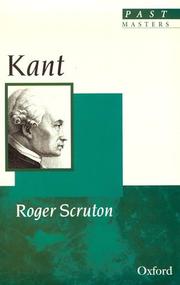
Scruton's concise guide covers the Critique of Pure Reason, the ethics, and the third Critique in plain language. It is the ideal first Kant book: short enough to finish quickly, accurate enough to trust.
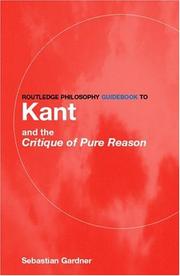
Gardner's Routledge guide goes deeper than Scruton, walking through the Critique of Pure Reason argument by argument. Reading it second gives you the structural scaffolding you need before tackling the primary text.
This is Kant's shortest and most accessible primary text, and the definitive statement of the categorical imperative. Placing it here — after two introductory guides — means the reader meets Kant's own voice for the first time on the most readable terrain.
Stage 3 — The Critique of Pure Reason
IntermediateRead and genuinely understand the Critique of Pure Reason — Kant's Copernican revolution in epistemology — with the help of a dedicated companion guide read in parallel.
▸ Study plan for this stage
Pace: 8–10 weeks, ~40–50 pages/day (Bennett first 2–3 weeks, then parallel reading of both texts for 5–7 weeks)
- The Copernican Revolution: the mind structures experience rather than passively receiving it
- Synthetic a priori knowledge: how knowledge can be both informative about the world and knowable independently of experience
- The transcendental distinction between phenomena (things as they appear) and noumena (things-in-themselves)
- Transcendental idealism: space and time are forms of human intuition, not properties of things-in-themselves
- The categories of the understanding: the twelve fundamental concepts (causality, substance, unity, etc.) that structure all possible experience
- The transcendental deduction: how the categories are necessarily valid for all possible experience
- The limits of reason: why metaphysical claims about God, the soul, and the world-as-a-whole cannot be known theoretically
- Kant's response to Hume: how synthetic a priori knowledge is possible through the structure of the mind
- What is the Copernican Revolution in epistemology, and how does it differ from the traditional view that the mind conforms to objects?
- How does Kant distinguish between analytic and synthetic judgments, and why is synthetic a priori knowledge central to his project?
- What is the difference between phenomena and noumena, and what are the implications of this distinction for human knowledge?
- What are the categories of the understanding, and why does Kant argue they must necessarily apply to all possible experience?
- What is the transcendental deduction, and what does it accomplish in Kant's critical philosophy?
- Why does Kant argue that traditional metaphysics (claims about God, the soul, and the nature of reality-in-itself) cannot be objects of theoretical knowledge?
- Create a visual diagram mapping the Copernican Revolution: show how the traditional view (mind conforms to objects) differs from Kant's view (objects conform to the mind), and annotate with specific examples from Bennett and the Critique
- Write a 2–3 page explanation of synthetic a priori knowledge using at least two concrete examples (e.g., mathematics, causality) drawn from both texts; explain why Hume's empiricism cannot account for it
- Construct a detailed chart of the twelve categories of the understanding, grouping them by the four headings (quantity, quality, relation, modality), and for each category write a one-sentence explanation of how it structures experience
- Work through one complete section of the Critique (e.g., the Transcendental Aesthetic or the Analytic of Concepts) by annotating it heavily, then write a 1–2 page summary in your own words, cross-referencing Bennett's explanation
- Debate the phenomena/noumena distinction: write two opposing positions—one defending Kant's view, one criticizing it—then evaluate which is stronger and why
- Create a study guide for a peer by explaining the transcendental deduction in plain language (500–750 words), using Bennett as your primary source but validating your explanation against the Critique itself
Next up: Mastery of the Critique of Pure Reason's theoretical framework establishes the foundation for examining Kant's practical philosophy—how reason operates in ethics, aesthetics, and religion—where the limits of theoretical knowledge become the opening for faith and moral agency.
Bennett's rigorous but reader-friendly analysis of the first half of the first Critique (the Transcendental Analytic) is the best preparation for reading Kant directly. It translates Kant's architecture into clear philosophical argument.
The central text of the entire curriculum and one of the most important books in Western philosophy. After two introductory books and Bennett's analytic guide, the reader now has the tools to engage with Kant's own words seriously and productively.
Stage 4 — Kant's Ethics & Aesthetic Philosophy
IntermediateComplete Kant's philosophical system by engaging with his mature ethics and his theory of beauty and teleology, rounding out the picture beyond pure epistemology.
▸ Study plan for this stage
Pace: 12–14 weeks, ~40–50 pages/day (with 2–3 days per week for review, exercises, and integration). Critique of Practical Reason (~250 pages): 6–7 weeks; Critique of Judgment (~400+ pages): 6–7 weeks.
- The categorical imperative as the supreme principle of morality: duty, universalizability, and the formula of humanity
- Freedom as autonomy and the will's capacity to act from reason alone, independent of inclination and desire
- The highest good: virtue and happiness as the two components of moral perfection, and the postulates of God and immortality
- Aesthetic judgment as disinterested pleasure: the distinction between the beautiful, the sublime, and the agreeable
- The purposiveness of nature without purpose: how we judge natural beauty and design without asserting teleology as metaphysically real
- The teleological principle: organisms as natural purposes and the limits of mechanistic explanation in biology
- The unity of the three Critiques: how ethics, aesthetics, and teleology complete the critical system and bridge theoretical and practical reason
- What is the categorical imperative, and how does Kant's formulation of it (particularly the formula of universal law and the formula of humanity) ground moral obligation?
- How does Kant distinguish between acting from duty and acting in accordance with duty, and why is this distinction central to his ethics?
- What role do the postulates of freedom, God, and immortality play in Kant's account of the highest good, and why are they necessary?
- What makes a judgment of beauty disinterested according to Kant, and how does this differ from judgments of the agreeable or the good?
- How does Kant explain our experience of the sublime, and what is its moral and philosophical significance?
- What does Kant mean by 'purposiveness without purpose,' and how does this concept allow us to judge nature as if it were designed without committing to metaphysical teleology?
- How do organisms exemplify natural purposes, and what are the limits Kant places on extending teleological explanation to all of nature?
- Formulate three maxims from your own daily life and test each against Kant's categorical imperative (universal law and humanity formulas). Document which pass and which fail, and explain why.
- Write a short dialogue between a Kantian moral agent and someone motivated purely by self-interest, showing how duty and inclination can diverge in a concrete scenario.
- Analyze a work of art or natural landscape you find beautiful: identify what makes it beautiful according to Kant's criteria (disinterestedness, universality, purposiveness without purpose) and distinguish it from mere agreeableness.
- Reflect on an experience of the sublime (vast mountain, storm, starry sky, etc.) and explain how Kant's account of the sublime as involving a moment of displeasure followed by rational respect illuminates that experience.
- Create a concept map showing how the three Critiques (pure reason, practical reason, judgment) are unified in Kant's system, with special attention to how aesthetics and teleology bridge theoretical and practical philosophy.
- Debate the following: Can Kant's teleological principle (organisms as natural purposes) be reconciled with modern evolutionary biology? Develop both a Kantian defense and a critical objection.
Next up: This stage completes Kant's critical system by integrating ethics, aesthetics, and teleology, establishing how reason operates across theoretical knowledge, practical action, and reflective judgment—preparing the reader to understand how later philosophers (Idealists, Romantics, and moderns) both built upon and challenged Kant's unified vision of human rationality and nature.

Kant's full systematic treatment of moral philosophy and the foundations of the categorical imperative. Having already read the Groundwork, the reader is ready for this deeper and more rigorous account.

The third Critique unifies Kant's system by bridging nature and freedom through aesthetic and teleological judgment. It is essential for understanding Kant's complete vision and his enormous influence on Romanticism and later philosophy.
Stage 5 — Advanced Scholarship & Kant's Legacy
ExpertEngage with the most influential scholarly interpretations of Kant and understand how his revolution shaped modern and contemporary philosophy, from German Idealism to analytic epistemology.
▸ Study plan for this stage
Pace: 8–10 weeks, ~40–50 pages/day (with 1–2 days per week for synthesis and note-taking)
- Guyer's reconstruction of Kant's epistemology: the role of sensibility, understanding, and the synthetic a priori in knowledge claims
- The problem of the thing-in-itself and how Kant's critical philosophy addresses (or fails to address) skepticism about transcendental realism
- Kant's influence on German Idealism: how Fichte, Schelling, and Hegel transformed Kant's system into absolute idealism
- The continuity and rupture between Kant and post-Kantian philosophy: necessity vs. contingency, reason vs. history
- Pinkard's narrative of German philosophy as a response to Kant's critical project and the Enlightenment legacy
- How Kant's revolution shaped modern epistemology, metaphysics, and the analytic/continental divide
- The reception and critique of Kant in 19th-century philosophy: idealism, materialism, and neo-Kantianism
- What is Guyer's central argument about how Kant justifies synthetic a priori knowledge, and what are the main objections he addresses?
- How does Pinkard characterize the relationship between Kant's critical philosophy and the emergence of German Idealism?
- What is the thing-in-itself problem, and how do Guyer and Pinkard differ in their assessment of Kant's solution?
- How did Fichte, Schelling, and Hegel each respond to perceived gaps or tensions in Kant's system?
- What does it mean to say that Kant's revolution 'shaped' modern philosophy, and what are the key philosophical consequences?
- How does understanding Kant's legacy help explain the split between analytic and continental philosophy?
- Create a detailed outline of Guyer's argument on synthetic a priori knowledge, mapping his response to skeptical objections point-by-point
- Write a 2–3 page comparative analysis: How do Fichte and Schelling each attempt to resolve tensions in Kant's critical philosophy? Use specific textual references from Pinkard
- Construct a genealogical chart showing how key Kantian concepts (transcendental idealism, categories, thing-in-itself) are transformed or rejected in Fichte, Schelling, Hegel, and 19th-century neo-Kantianism
- Engage in a structured debate: Defend Guyer's interpretation of Kant's epistemology against one major alternative interpretation (e.g., from Strawson or Allison); write both sides
- Read a primary text excerpt from Fichte's *Science of Knowledge* or Hegel's *Phenomenology* alongside Pinkard's analysis; write a 2–3 page reflection on how Pinkard's narrative illuminates the philosophical move
- Synthesize a final essay (4–5 pages): 'How does Kant's critical philosophy explain the emergence of German Idealism?' Use both Guyer and Pinkard to support your argument
Next up: This stage equips you with a sophisticated understanding of how Kant's revolution was received, critiqued, and transformed by his successors, positioning you to either specialize in a particular post-Kantian school, engage with contemporary Kant scholarship, or trace Kant's influence into 20th-century analytic and phenomenological philosophy.
Guyer's landmark scholarly study is the most thorough and rigorous English-language analysis of the Critique of Pure Reason. Reading it now — after the primary texts — allows the reader to test and deepen their own interpretation against the best in the field.

Pinkard traces how Kant's revolution ignited German Idealism — Fichte, Schelling, Hegel — showing exactly what problems Kant left open and how his successors tried to solve them. This is the ideal final book: it places everything learned in its full historical and philosophical arc.
Discussion
Keep reading
Paths that share books, cover the same subject, or open a related topic.