How to learn Philosophy
This curriculum takes you from your first encounter with philosophical thinking all the way to engaging with primary texts and advanced debates. Each stage builds the conceptual vocabulary, historical awareness, and analytical rigour needed for the next — so that by the end you can read original philosophers with confidence and think critically about the deepest questions.
First Steps: Learning to Think Philosophically
BeginnerUnderstand what philosophy is, why it matters, and how to engage with philosophical questions without prior training.
▸ Study plan for this stage
Pace: 10–12 weeks total. Week 1–4: Sophie's World (~25–30 pages/day, reading it as both a novel and a philosophy primer — pause at each philosopher's "letter" to reflect). Week 5–7: The Problems of Philosophy (~15–20 pages/day, slow and deliberate — Russell is dense; re-read paragraphs as needed). Week 8–
- The nature of philosophy itself: philosophy as the love of wisdom, the practice of questioning assumptions, and the pursuit of clarity over certainty
- The history of Western philosophy as a living conversation — from the Pre-Socratics through Descartes, Hume, and Kant, as traced through Sophie's World
- The problem of knowledge (epistemology): Russell's distinction between 'knowledge by acquaintance' and 'knowledge by description', and why we cannot take everyday perception for granted
- The problem of induction: Russell's argument that we have no logically airtight reason to believe the future will resemble the past
- The value of philosophy: Russell's case (in his final chapter) that philosophy's worth lies in the questions it opens, not the answers it closes
- Core branches of philosophy — epistemology, ethics, political philosophy, philosophy of mind, and logic — as introduced and mapped by Blackburn in Think
- The philosophical method: how to construct an argument, identify hidden assumptions, and steelman opposing views
- Wonder as a philosophical attitude: Gaarder's recurring theme that the ability to be astonished by existence is the starting point of all philosophical thinking
- In your own words, what is philosophy, and how does Sophie's World use the device of Alberto's letters to dramatize the act of philosophical awakening?
- What does Russell mean by 'the problem of matter', and why does he think the existence of the physical world outside our minds cannot simply be assumed?
- Explain Russell's problem of induction using a concrete everyday example of your own invention — why does past regularity not guarantee future regularity?
- According to Russell's closing chapter, what is the value of philosophy for the individual who studies it, even if it yields no definitive answers?
- Choose any one branch of philosophy covered by Blackburn in Think (e.g., ethics, philosophy of mind, or political philosophy) and explain the central question it asks and why that question is genuinely hard to answer.
- How do all three books, taken together, suggest that uncertainty and open questions are features rather than bugs of philosophical thinking?
- Philosophical journal: After each reading session, write 3–5 sentences in your own words summarizing the core idea encountered, plus one question it raises for you personally. By the end of the stage you will have a personal record of your thinking developing in real time.
- The 'Sophie Letter' exercise: Midway through Sophie's World, pause and write a one-page 'letter from Alberto' of your own — explain one philosophical problem (e.g., the nature of identity or free will) to an imaginary curious teenager, using no jargon.
- Russell close-reading drill: Pick any single chapter from The Problems of Philosophy, outline its argument in numbered steps (premise → premise → conclusion), then write one honest objection to the argument. This trains the core skill of philosophical reconstruction.
- Concept mapping: After finishing Think, draw a hand-drawn map connecting the six or seven branches of philosophy Blackburn covers. Draw arrows where one branch's questions bleed into another's (e.g., how philosophy of mind connects to ethics). Annotate each arrow with one sentence explaining the link.
- Socratic dialogue: Find a friend, family member, or study partner and spend 20 minutes discussing one question from Russell or Blackburn — one person defends a position, the other only asks clarifying questions (no counter-arguing). Then swap roles. Debrief on what the questioning revealed.
- Comparative reflection essay (500–700 words): Write an informal essay answering: 'All three books argue that philosophy begins with wonder and doubt. Using specific examples from Sophie's World, The Problems of Philosophy, and Think, explain what this means and why you agree or disagree.'
Next up: Mastering the beginner's toolkit — philosophical wonder, basic argument structure, and the landscape of philosophy's branches — equips the reader to move from orientation to depth, tackling primary texts and more rigorous argumentation in the next stage with confidence rather than bewilderment.

A narrative introduction to the entire history of Western philosophy, told as a novel — it makes abstract ideas vivid and memorable for absolute beginners.
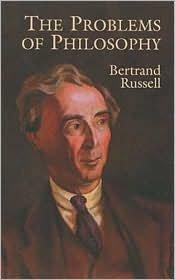
Russell's short, crystal-clear primer introduces core philosophical problems (knowledge, reality, truth) and models rigorous yet accessible philosophical reasoning.

A thematic survey of the major branches — mind, self, free will, ethics, God — that gives beginners a map of the whole discipline before diving deeper.
Historical Foundations: The Western Canon
BeginnerRead the foundational primary texts of Western philosophy and understand the historical arc from ancient Greece through the early modern period.
▸ Study plan for this stage
Pace: 10–12 weeks total, roughly 20–25 pages/day. Week 1–3: "The Last Days of Socrates" (Euthyphro, Apology, Crito, Phaedo); Week 4–7: "Nicomachean Ethics" (Books I–X, ~30 pages/day with slower re-reading of dense passages); Week 8–12: "Discourse on Method and Meditations on First Philosophy" (~15 pages/d
- The Socratic Method: elenchus as a tool for exposing ignorance and pursuing truth through dialogue
- Piety, Justice, and the examined life: Socrates' conviction that 'the unexamined life is not worth living' (Apology)
- The Theory of Forms: Plato's argument in the Phaedo that true knowledge concerns eternal, unchanging Forms rather than sensory particulars
- Eudaimonia (flourishing/happiness) as the highest human good in Aristotle's ethical framework
- Virtue as a mean: Aristotle's doctrine that moral virtues are stable dispositions (hexeis) hitting the mean between excess and deficiency
- Practical wisdom (phronesis): Aristotle's master virtue enabling correct deliberation about how to act well in particular situations
- Cartesian Doubt: Descartes' method of systematic hyperbolic doubt to strip away all uncertain beliefs and find an indubitable foundation
- The Cogito and Mind-Body Dualism: 'I think, therefore I am' as the first certain truth, and the resulting distinction between res cogitans (mind) and res extensa (body)
- In the Apology, why does Socrates argue that death is not to be feared, and how does this connect to his philosophical mission as described to the jury?
- Across Euthyphro and the Phaedo, what role do the Forms play — what problem are they meant to solve, and what is Socrates' argument for the soul's immortality based on them?
- According to the Nicomachean Ethics, why is eudaimonia the highest good, and why does Aristotle insist it cannot be identified with pleasure, wealth, or honor alone?
- How does Aristotle's concept of the virtuous mean work in practice? Give an example from the Nicomachean Ethics and explain why phronesis is necessary to apply it.
- What is the purpose of Descartes' method of doubt in the Discourse on Method, and which beliefs survive it — and why?
- How does Descartes establish the existence of God in the Meditations, and why does that proof matter to his broader epistemological project of rebuilding knowledge on certain foundations?
- Socratic Dialogue Journal: After each dialogue in 'The Last Days of Socrates,' write a one-page reconstruction of the argument in your own words, then steelman the position Socrates refutes — where does the opponent's view have genuine merit?
- Virtue Inventory (Nicomachean Ethics): Choose 3 virtues Aristotle discusses (e.g., courage, generosity, justice). For each, draw a three-column table labeling the deficiency, the mean, and the excess, then write a real-life scenario illustrating each column.
- Cartesian Doubt Experiment: Before reading the Meditations, spend 15 minutes writing down everything you believe you know with certainty. After finishing the Meditations, revisit the list and annotate each belief: would Descartes' doubt eliminate it? What survives and why?
- Comparative Essay (500–700 words): Compare Socrates' conception of the soul in the Phaedo with Descartes' conception of the mind in the Meditations. What do they share? Where do they fundamentally diverge?
- Timeline & Influence Map: Create a visual timeline placing Socrates/Plato, Aristotle, and Descartes in their historical contexts. Draw arrows showing which ideas Descartes explicitly inherits, rejects, or transforms from the ancient Greeks.
- Socratic Seminar Simulation: Find a study partner (or use written self-dialogue) and debate this prompt: 'Is Aristotle's eudaimonia or Descartes' rational certainty a better foundation for a good human life?' — using only textual evidence from the three books.
Next up: Mastering the Platonic, Aristotelian, and Cartesian frameworks — Forms, virtue ethics, and rationalist epistemology — gives the reader the essential vocabulary and historical reference points needed to critically engage with the modern and contemporary philosophical responses that build upon, challenge, and transform these very foundations.
Plato's dialogues (Euthyphro, Apology, Crito, Phaedo) introduce Socratic method and the central questions of ethics, knowledge, and the soul — the starting point of all Western philosophy.
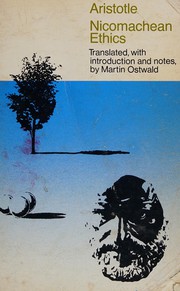
Aristotle's masterwork on virtue and the good life is essential reading; having Plato fresh in mind makes the contrast between the two giants immediately illuminating.
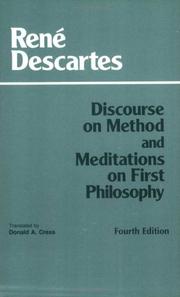
Descartes launches modern philosophy with radical doubt and the cogito; it is short, gripping, and the essential bridge between ancient and modern thought.
Core Branches: Epistemology, Ethics & Metaphysics
IntermediateDevelop a working understanding of the three central branches of philosophy through landmark texts, and begin to evaluate competing arguments.
▸ Study plan for this stage
Pace: 8–10 weeks total, reading roughly 15–20 pages per day. Week 1–2: Hume's Dialogues and essays (focus on the Dialogues first, then the two shorter posthumous essays and the section on miracles). Week 3–5: Kant's Groundwork (slow, careful reading — aim for 8–10 pages/day with re-reading; three passes r
- Hume's Dialogical Method & the Problem of Evil: how Philo, Cleanthes, and Pamphilus embody competing positions on natural theology, and why Hume uses dialogue form to avoid dogmatic conclusions
- Design Argument & Its Limits (Hume): the analogical argument from design, Hume's critique of teleological reasoning, and why empirical evidence cannot establish the nature or existence of God
- Skepticism about Miracles (Hume): the principle that testimony for a miracle must outweigh the uniform experience supporting natural law, and the epistemological standard this sets for extraordinary claims
- Immortality and Suicide as Philosophical Problems (Hume): how Hume applies empiricist and naturalist reasoning to dismantle traditional metaphysical and moral arguments for the soul's immortality and against self-destruction
- Kant's Moral Framework — The Good Will & Duty: why Kant argues the only unconditionally good thing is a good will, and how acting from duty (not merely in accordance with it) is the foundation of moral worth
- The Categorical Imperative (Kant): the three main formulations — Universal Law, Humanity as End-in-Itself, and the Kingdom of Ends — and how they are meant to be equivalent tests for the morality of a maxim
- Hypothetical vs. Categorical Imperatives (Kant): the distinction between conditional 'if…then' commands of prudence and the unconditional moral law, and why Kant insists morality must be categorical
- Mill's Principle of Utility & the Greatest Happiness Principle: the claim that actions are right in proportion as they tend to promote happiness, and wrong as they tend to produce the reverse
- Quality vs. Quantity of Pleasure (Mill): Mill's departure from Bentham in distinguishing higher and lower pleasures, and the 'competent judges' criterion used to rank them
- Mill's Proof of Utility and Its Critics: the structure and logical vulnerabilities of Mill's argument that happiness is the only thing desirable as an end, and how he responds to objections about justice and rights
- After reading Hume's Dialogues, can you identify which character best represents Hume's own views, and what textual evidence supports your interpretation? How does the dialogue form itself serve a philosophical function?
- Hume argues in 'Of Miracles' that a wise person proportions belief to evidence. How does this epistemological principle connect to the skeptical arguments made by Philo in the Dialogues about natural religion?
- What is a maxim in Kant's sense, and how does the Universal Law formulation of the Categorical Imperative test whether a maxim is morally permissible? Walk through one of Kant's own examples (e.g., the lying promise) step by step.
- Kant insists that moral worth comes from acting from duty, not from inclination. How would Kant evaluate a person who donates to charity because it makes them feel good? Does Mill's framework yield a different verdict, and why?
- Mill distinguishes higher from lower pleasures. Is this distinction consistent with a purely hedonistic foundation for utilitarianism, or does it smuggle in a non-hedonistic value judgment? Use Mill's own text to argue both sides.
- How do Hume, Kant, and Mill each approach the relationship between reason and morality? Construct a comparative answer that identifies at least one point of direct conflict between any two of the three authors.
- Argument Mapping: For each of the three books, draw a one-page argument map. Identify the main conclusion, the two or three premises that directly support it, and at least one objection the author anticipates. Compare the maps side by side to see structural similarities and differences.
- Maxim Testing Drill (Kant): Write down five everyday decisions (e.g., skipping a commitment, telling a white lie, free-riding on a group project). For each, formulate the maxim explicitly, then run it through all three formulations of the Categorical Imperative. Record whether each maxim passes or fails and why.
- Utilitarian Calculus Journal (Mill): Over one week, record three real or hypothetical moral dilemmas you encounter. Apply Mill's Greatest Happiness Principle to each, being explicit about whose happiness counts, how higher vs. lower pleasures factor in, and what action is prescribed. Note any cases where the verdict feels counterintuitive.
- Socratic Dialogue Writing (Hume): Write a short dialogue (600–900 words) in Hume's style featuring two characters — one defending the argument from design and one critiquing it — drawing only on arguments found in the Dialogues and the section on miracles. This forces active engagement with Hume's actual reasoning rather than paraphrase.
- Comparative Essay (500–700 words): Choose one moral dilemma (e.g., breaking a promise to prevent harm). Argue the case from Kant's deontological perspective using the Groundwork, then from Mill's consequentialist perspective using Utilitarianism. Conclude with a paragraph on which argument you find more persuasive and why.
- Vocabulary Glossary: Maintain a running glossary of technical terms encountered across all three books (e.g., 'a priori,' 'categorical,' 'maxim,' 'utility,' 'teleology,' 'empiricism,' 'deontology'). For each term, write the author's definition in your own words and a one-sentence example of the concept in action.
Next up: By having wrestled with Hume's skepticism, Kant's rationalist ethics, and Mill's consequentialism, the reader now has a concrete grasp of how foundational philosophical disagreements arise, which equips them to engage with more advanced and specialized texts — such as political philosophy, philosophy of mind, or 20th-century analytic and continental thought — where these same fault lines (reason v

Hume's empiricist challenge to knowledge and causation is a cornerstone of epistemology and directly sets up Kant — more accessible than the Treatise for this stage.
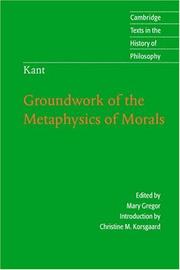
The concise statement of Kant's deontological ethics and the categorical imperative; reading Hume first makes Kant's response to empiricism click into place.
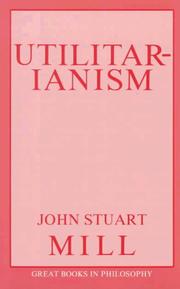
Mill's elegant defence of consequentialism provides a direct counterpoint to Kant, letting the reader weigh two of the most influential ethical frameworks against each other.
Modern Movements: Existentialism, Language & Mind
IntermediateEngage with 20th-century philosophy — existentialism, analytic philosophy of language, and philosophy of mind — and see how the discipline diversified.
▸ Study plan for this stage
Pace: 8–10 weeks total, reading ~20–25 pages per session, 4–5 sessions per week. Week 1–2: "Existentialism Is a Humanism" (short but dense — read slowly, re-read the lecture text once, then tackle the Q&A section). Weeks 3–5: "Preliminary Studies for the Philosophical Investigations" (the Blue and Brown B
- Existence precedes essence (Sartre): human beings have no pre-given nature; we define ourselves through choices and actions
- Radical freedom and responsibility: Sartre's claim that we are 'condemned to be free' and that bad faith is the denial of this freedom
- Anguish, abandonment, and despair: the three existentialist emotional responses to the human condition as described in Sartre's lecture
- Meaning-as-use (Wittgenstein): the meaning of a word is not a mental image or abstract object but its use in a form of life
- Language-games and family resemblance: Wittgenstein's method of dissolving philosophical puzzles by examining how language actually functions in practice
- The private language argument (Brown Book groundwork): the impossibility of a purely private ostensive definition, undermining Cartesian inner-object theories of mind
- The hard problem of consciousness (Chalmers): explaining why physical processes give rise to subjective experience (qualia) cannot be reduced to functional or behavioral explanation
- Property dualism and the conceivability argument: Chalmers' case that phenomenal consciousness is a non-physical property, supported by the logical conceivability of philosophical zombies
- According to Sartre in 'Existentialism Is a Humanism,' what does it mean that 'existence precedes essence,' and how does this distinguish humans from, say, a paper-knife?
- How does Sartre respond to the charge that existentialism leads to moral relativism or quietism, and is his response convincing?
- In the 'Preliminary Studies,' what is a language-game, and how does Wittgenstein use the concept to argue against the idea that words name inner mental objects?
- What is the private language argument as foreshadowed in the Brown Book, and what does it imply about the relationship between language and the mind?
- What exactly is Chalmers' 'hard problem of consciousness,' and why does he believe it cannot be dissolved by functional or neuroscientific explanation alone?
- How does Chalmers use the conceivability of philosophical zombies to argue for property dualism, and what are the strongest objections to this argument?
- Sartre's freedom audit: Choose three significant decisions you made this week. For each, write a short paragraph applying Sartre's framework — identify where you acted in good faith (owning your freedom) vs. bad faith (blaming circumstance or 'nature'). Use the vocabulary from 'Existentialism Is a Humanism' explicitly.
- Language-game mapping (Wittgenstein): Pick one philosophically loaded word — 'pain,' 'know,' 'game,' or 'understand' — and list 10 distinct contexts in which it is used. For each, describe what 'use' looks like. Then write a paragraph on whether a single definition could cover all cases, drawing on Wittgenstein's method in the Preliminary Studies.
- Private language thought experiment: Try to invent a word for a purely private sensation and write a diary entry using it for one week without any public criteria. Then write a reflection on whether the word retained stable meaning — use this as a test of Wittgenstein's argument.
- Zombie conceivability debate: Write a two-page dialogue between a property dualist (using Chalmers' arguments from 'The Conscious Mind') and a physicalist critic. The dualist must deploy the zombie argument; the critic must raise at least two objections (e.g., the conceivability-possibility gap, or the 'fading qualia' response).
- Cross-book concept map: Draw a large concept map linking at least six ideas across all three books. Suggested anchor nodes: 'consciousness,' 'freedom,' 'language,' 'the self,' 'meaning.' Annotate each link with one sentence explaining the connection or tension between the two thinkers.
- Synthesis essay (500–700 words): Answer the question — 'Do Sartre, Wittgenstein, and Chalmers share any common assumptions about the relationship between mind, language, and the world, or are they fundamentally at odds?' Cite specific passages or arguments from each book.
Next up: By grappling with existentialist freedom, the linguistic turn, and the hard problem of consciousness, the reader has now seen how 20th-century philosophy fractured into distinct but overlapping projects — a tension that sets up the next stage's engagement with contemporary and applied philosophy, where these threads (ethics, mind, language) are woven back together in debates about AI, personal ide
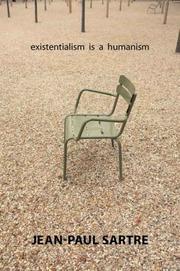
A short, punchy lecture that distils existentialist themes (freedom, responsibility, bad faith) and serves as an ideal gateway to continental 20th-century thought.

Wittgenstein's later work revolutionised philosophy of language and mind; placed here, after the historical canon, its critique of traditional philosophy lands with full force.
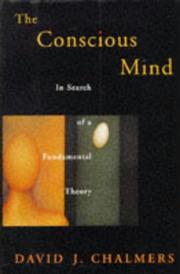
Chalmers' rigorous yet readable case for the 'hard problem' of consciousness brings philosophy of mind to the forefront and connects analytic method to enduring metaphysical mystery.
Advanced Synthesis: Doing Philosophy at the Frontier
ExpertRead advanced, research-level philosophy, synthesise across traditions, and engage with live debates in ethics, justice, and metaphysics.
▸ Study plan for this stage
Pace: 10–12 weeks total; ~6–8 weeks for A Theory of Justice (~30–35 pages/day, treating each section carefully with notes), followed by ~4 weeks for After Virtue (~20–25 pages/day with comparative annotation). Reserve the final week for synthesis, essay drafting, and debate preparation.
- The Original Position and the Veil of Ignorance (Rawls): the hypothetical contract device used to derive principles of justice free from bias or self-interest
- The Two Principles of Justice (Rawls): the equal basic liberties principle and the difference principle, and their lexical ordering as the foundation of a just society
- Reflective Equilibrium (Rawls): the method of moving back and forth between moral intuitions and general principles until coherence is achieved — Rawls's alternative to purely deductive ethics
- Primary Goods and the Basis of Equality (Rawls): what a just society must distribute and why these goods are the right metric for fairness
- The Emotivist Collapse of Moral Language (MacIntyre): MacIntyre's diagnosis that modern moral discourse has degenerated into disguised expressions of preference, making rational ethical argument impossible
- The Aristotelian Tradition and Telos (MacIntyre): MacIntyre's recovery of virtue ethics grounded in a teleological conception of human nature and the narrative structure of a human life
- Practices, Virtues, and Institutions (MacIntyre): how virtues are defined relative to the internal goods of social practices, and how institutions can corrupt or sustain those practices
- The Enlightenment Project and Its Failure (MacIntyre): MacIntyre's historical argument that Kant, Hume, and Diderot failed to ground morality because they abandoned Aristotelian teleology, setting the stage for the modern moral crisis
- How does Rawls use the Original Position and the Veil of Ignorance to justify the Two Principles of Justice, and what philosophical work does each element do in the argument?
- What is the difference principle, and how does Rawls argue it is both rational and fair? What are the strongest objections to it from within or outside the text?
- What does Rawls mean by 'reflective equilibrium,' and how does this method differ from foundationalist approaches to moral epistemology? Is it circular, or is it a genuine method?
- According to MacIntyre, why did the Enlightenment project of grounding morality in reason alone necessarily fail, and what historical and philosophical evidence does he marshal for this claim?
- How does MacIntyre define a 'practice,' and what is the relationship between practices, virtues, and institutions in After Virtue? Give a concrete example from the text.
- Where do Rawls and MacIntyre most fundamentally disagree — is it about method, metaphysics, the self, the role of community, or all of the above? Who has the stronger position, and why?
- Veil of Ignorance Simulation: Write a 600-word position paper as if you were behind the Veil of Ignorance deciding on one contemporary policy (e.g., healthcare allocation, tax structure). Identify which of Rawls's Two Principles your conclusion reflects and explain the lexical ordering at work.
- Difference Principle Stress Test: Choose a real-world inequality (wealth gap, educational disparity). Apply the difference principle rigorously: does the inequality benefit the least advantaged? Write a structured argument for and against, then reach a verdict using Rawls's own framework.
- Reflective Equilibrium Journal: Over two weeks, keep a running log of three moral intuitions you hold strongly. After finishing Rawls, attempt to bring each into reflective equilibrium with a general principle. Note where tension remains and why.
- MacIntyre's Diagnostic Applied: Select a contemporary moral debate (e.g., abortion, euthanasia, climate justice). Write a 500-word analysis using MacIntyre's emotivist critique — show how each side's rhetoric fits his diagnosis of modern moral discourse as masked preference, then assess whether his critique is fair.
- Tradition Mapping Exercise: Create a two-column comparative chart tracing how Rawls and MacIntyre each answer five core questions: (1) What is the self? (2) What grounds morality? (3) What is the role of community? (4) What is the proper method of ethics? (5) What does a just or good society look like?
- Synthesis Essay: Write a 1,000–1,500 word argumentative essay responding to the prompt: 'MacIntyre argues that Rawlsian liberalism is itself a tradition, not a neutral framework. Is he right, and does this undermine A Theory of Justice?' Use textual evidence from both books to build and defend your position.
Next up: Mastering the tension between Rawlsian liberal justice and MacIntyre's communitarian virtue ethics equips the reader with the two dominant poles of contemporary political philosophy, providing the conceptual vocabulary and critical tools needed to engage with frontier debates in metaethics, applied ethics, and political theory at the research level.
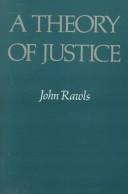
Rawls' monumental work in political philosophy demands everything learned so far — ethics, epistemology, and metaphysics — and models how to construct a rigorous philosophical system.
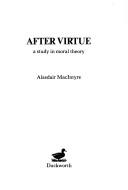
MacIntyre's sweeping critique of modern moral philosophy and revival of Aristotelian virtue ethics challenges the reader to synthesise the entire historical arc of the curriculum.
Discussion
Keep reading
Paths that share books, cover the same subject, or open a related topic.