Best Books on Whales and Dolphins, in Reading Order
The literature on cetaceans splits into three genres that are usually shelved together and should not be read together: popular natural history, which is where the good writing is; field guides, which exist to tell you what you are looking at and are not read but consulted; and the actual marine mammal science, which is technical and expensive. This path keeps them separate and labels each. It starts with narrative books that need no background, moves through identification, then into the biology and evolution, and ends with the research literature on whale culture and cognition — the most contested and most interesting part of the field. Only the last two stages assume any biology.
Popular natural history: the writing worth reading
BeginnerCome away knowing how whales became whales, what whaling did to them, and why they occupy the place they do in human imagination — with no technical background required.
▸ Study plan for this stage
Pace: Two to three months for 1,892 pages, all of it readable at 30-40 pages an evening with no technical background required. Pyenson's Spying on whales is 336 pages and opens the path: a working palaeontologist on the fossil record of the land-to-sea transition, written as fieldwork rather than summary,
- The land-to-sea transition and the fossil sequence that documents it
- What the fossil record can establish about behaviour, and where Pyenson says it runs out
- Baleen versus toothed whales as two fundamentally different feeding strategies
- Commercial whaling as the reason the populations now studied are the ones that survived
- Humpback song, its progressive change over seasons, and why that observation opened the culture question
- Contemporary threats: entanglement, ship strike, ocean noise, and ingested plastic
- The place cetaceans occupy in human imagination, and how that has shaped both protection and research funding
- What is the fossil sequence from terrestrial ancestor to fully aquatic whale, and which transitional forms carry the most weight?
- What does Pyenson say the fossil record cannot answer, and how does that shape what the later stages have to do instead?
- How did commercial whaling change which species and which populations survive today, and by how much?
- What did Payne observe about humpback song that made it a scientific question rather than a curiosity?
- Which threat does Giggs argue is most underestimated, and what evidence does she offer?
- What does the Essex story tell you about what whaling actually involved, on both sides?
- Build a timeline of the land-to-sea transition from Pyenson, marking each transitional genus with the anatomical change it documents
- Find a recording of humpback song across two seasons and listen for the changes Payne describes before reading his account of them
- Compare Hoare and Giggs on the same subject — a stranded whale — and note what the older literary approach and the newer ecological one each notice
- Look up historical catch statistics for one whaling ground and estimate the population reduction, then compare with the figure Philbrick or Giggs gives
- Write down every claim about whale intelligence you encounter across these five books, with its source, and set the list aside to test in the final stage
Next up: You now know what whaling did and what the fossils show; before the biology, you need to be able to tell one animal from another at sea.
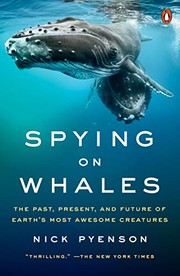
The best opening book on this path: a working palaeontologist on the fossil record of the land-to-sea transition, written as fieldwork rather than summary. Pyenson is also honest about what the fossils cannot tell us, which sets the right expectations for everything after.

The literary heart of the subject — Hoare on Moby-Dick, on Nantucket, and on his own obsession — and the book most likely to make you care. Note that this was published in Britain as Leviathan, and our catalogue holds a single record under the display title Leviathan, or, The Whale: one book, two titles, do not buy both.

The modern successor to Hoare, and a harder book: Giggs writes from a beached humpback outward into plastics, noise pollution and the industrial ocean. Read it after Hoare for the contemporary conservation picture the older books do not have.
The Essex disaster, and the whaling industry's own account of itself: what the hunt actually involved, and what the animals were to the people killing them. Included because whaling is not background to cetacean biology — it is the reason the populations we now study are the ones that survived.
By the biologist who identified humpback song and released the recording that changed public opinion about whaling. Part memoir, part science, and the natural bridge to the research stage, since almost every question about whale culture descends from Payne's observation that the song changes.
Identification: the field guides
IntermediateBe able to identify a cetacean at sea from blow, dorsal fin, surfacing behaviour and range — and know which reference to trust for distribution and taxonomy.
▸ Study plan for this stage
Pace: Not a reading stage at all — schedule it as reference. Neither of these books is read cover to cover, and a reader who tries will get very little from 848 pages of species accounts. Carwardine's Whales, Dolphins, and Porpoises is 256 pages, is the standard illustrated identification handbook, and is
- Blow shape, height and angle as a first-order identification cue at distance
- Dorsal fin position, shape and relative size, and the surfacing sequence that reveals them
- Body size estimation at sea, and why it is the least reliable cue
- Range maps and seasonal distribution as a prior on any identification
- Group size and behaviour as identification evidence
- The major families and the diagnostic features separating them
- Skull and dentition characters used for stranding identification, where the animal is in hand
- How does a sperm whale's blow differ from a fin whale's, and why?
- Which cetaceans can be reliably identified from the dorsal fin alone, and which cannot be separated at sea at all?
- How would you distinguish two similar beaked whale species, and what does that require you to see?
- Which characters do Jefferson, Webber and Pitman rely on that Carwardine's at-sea guide cannot use?
- How much should a range map shift your identification when the field marks are ambiguous?
- Take a whale-watching trip or work through recorded footage, and identify every animal to species using only Carwardine's at-sea features before checking
- Make a one-page crib sheet of blow and dorsal fin profiles for the ten species most likely in your region, drawn from both guides
- Test yourself on photographs with the captions covered, and record which characters you were relying on when you got one wrong
- Compare the two guides' accounts of a single confusing species pair and note where their advice differs
- Use the range maps to list which species you could plausibly see from your nearest coast, by season
Next up: You can now name what you are looking at; the next stage is what is going on inside it — how a mammal solves the problems of living in the sea.
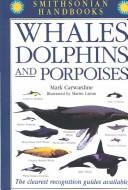
A field guide, not a book to read through: the standard illustrated identification handbook, organised by species with at-sea features and range maps. Carwardine has produced several volumes under near-identical titles and our record is the Smithsonian Handbooks edition; any current Carwardine guide serves the same purpose.
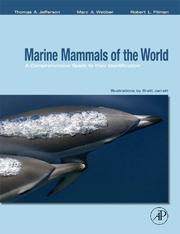
The other standard guide, by Jefferson, Webber and Pitman, and the more technical of the two — better on skull and stranding identification, and the one researchers tend to carry. Use it alongside Carwardine rather than instead of him.
The science: evolution, anatomy, physiology
IntermediateUnderstand the anatomical and physiological problems of being a mammal in the sea — diving, thermoregulation, osmoregulation, echolocation — and the fossil sequence that produced the solutions.
▸ Study plan for this stage
Pace: Four to five months for 1,369 pages, and this is where the reading becomes technical, though it still assumes only general biology. Berta's Return to the sea is 223 pages, written for general readers by one of the field's leading palaeobiologists, and is the right first technical book: it covers wha
- The dive response: bradycardia, peripheral vasoconstriction, and the oxygen stores that make long dives possible
- Myoglobin concentration and blood volume as the actual oxygen reservoir
- Decompression physiology, and why cetaceans mostly avoid a problem human divers cannot
- Thermoregulation: blubber, countercurrent heat exchange, and the surface-to-volume constraint on minimum body size
- Osmoregulation without fresh water, and the kidney structure that supports it
- Echolocation: click production in the nasal complex, the melon as an acoustic lens, and reception through the jaw
- Baleen filter feeding and lunge feeding energetics
- Convergent evolution across whales, seals and sirenians, and what the shared solutions reveal about the constraints
- What are the components of the dive response, and which contributes most to extending dive duration?
- Where is a diving cetacean's oxygen actually stored, and in what proportions across lungs, blood and muscle?
- Why does the smallest cetacean have the body size it does, and what sets that lower limit?
- How is an echolocation click produced, and by what route does the returning sound reach the ear?
- Which features of whales, seals and sirenians are convergent rather than inherited, and how would you tell?
- What does lunge feeding cost energetically, and what does that imply about where rorquals can feed?
- Calculate the aerobic dive limit for a species using body mass, oxygen stores and metabolic rate from the textbook's data, and compare with the recorded maximum dive
- Redraw the nasal complex and melon from the anatomy chapters and trace the sound path for both emission and reception
- Compare the surface area to volume ratio across three cetacean species of very different size and relate it to their thermal environments
- Read one specialist chapter in Reynolds on a system the textbook summarises, and list three things the chapter adds
- Build a table of convergent traits shared by cetaceans, pinnipeds and sirenians from Berta's account, with the ancestral condition beside each
Next up: The anatomy and physiology are solved problems; the last stage is the part of the field where the evidence is genuinely hard to get and the conclusions are still contested.

Berta's accessible account of marine mammal evolution, aimed at general readers but written by one of the field's leading palaeobiologists. The right first technical book: it covers whales, seals and sirenians together, which is what makes the convergences visible.
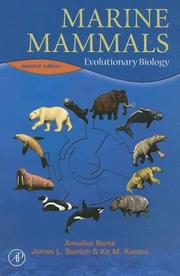
The textbook version, by Berta, Sumich and Kovacs, and the standard course text for the subject: systematics, functional anatomy, physiology, ecology. Our record displays under the bare title Marine mammals and is an earlier edition of a book since revised.
The complementary edited volume, with chapters written by specialists, and stronger than Berta on physiology and sensory systems in particular. Use it for depth on a single system once Berta has given you the map.
The research literature: society, culture and cognition
BeginnerEvaluate the evidence for social learning and culture in cetaceans on its merits, and understand why long-lived, wide-ranging, hard-to-observe animals make that evidence so difficult to get.
▸ Study plan for this stage
Pace: Five to seven months for 2,383 pages, though 1,302 of those are an encyclopaedia you will not read. Whitehead's Sperm Whales is 464 pages and is a research monograph on the species he spent decades following: photo-identification, acoustic tracking, and the statistics needed to say anything about a
- Photo-identification and mark-recapture as the basic method, and the assumptions it requires
- Social unit, clan and dialect as defined operationally in sperm whale research
- Social learning, and the criteria that distinguish it from independent individual learning
- The definition of culture in use here, and how much of the disagreement is definitional rather than empirical
- Vocal traditions: humpback song replacement, killer whale dialects, and their transmission patterns
- Foraging specialisations that persist within matrilines
- Brain size, encephalisation and the cortical structure Mann's contributors examine sceptically
- Why long-lived, wide-ranging, hard-to-observe animals make causal evidence so difficult to obtain
- What are the assumptions of mark-recapture, and which of them are most at risk in a wide-ranging cetacean population?
- How is a sperm whale clan defined operationally, and what would falsify the claim that clans are culturally rather than genetically distinct?
- What criteria does Whitehead and Rendell's argument require for social learning, and which cases meet all of them?
- Where do Mann's contributors say the data run out, and are their objections empirical, methodological or definitional?
- What alternative explanations exist for a foraging specialisation persisting in a matriline, and how would you distinguish them?
- What experiment or observation, realistically obtainable, would most advance the argument in either direction?
- Work through Whitehead's account of a photo-identification study and reconstruct the mark-recapture calculation on his data
- Take three culture claims from Whitehead and Rendell and grade each against their own criteria for social learning, noting which are strongest
- Read the corresponding chapter in Mann for each of those three claims and write down precisely which step of the argument each sceptic disputes
- Return to the list of intelligence claims you compiled in stage one and mark each as supported, disputed or unsupported by the evidence in this stage
- Look up one species in the Encyclopedia, follow two of its citations to the primary papers, and compare what the entry summarises with what the papers claim
Next up: This is the end of the path: from here the natural continuations are the primary journal literature the Encyclopedia indexes, the comparative animal cognition literature outside cetaceans, and the conservation and policy work that Giggs opened in the first stage.
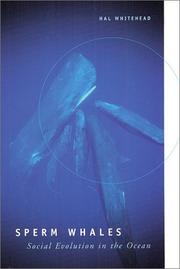
Whitehead's monograph on the species he spent decades following, and the single best demonstration of what cetacean fieldwork actually costs: photo-identification, acoustic tracking, and the statistics needed to say anything about a social unit you can only see for minutes at a time. Read it before the culture argument.

Whitehead and Rendell's case that cetaceans have culture — song traditions that spread, feeding techniques that pass between individuals, sperm whale clans with distinct dialects. The central argument of the modern field, and the reason this path builds toward it.

The counterweight: an edited volume in which specialists on brain anatomy, cognition and behaviour assess the same claims more sceptically, and are explicit about where the data run out. Read it directly after Whitehead and Rendell rather than separately.

The reference work the whole field defers to, edited by Wursig, Perrin and Thewissen, with signed entries on every species and topic. Not a book to read — the one to own once you are following citations. Our record is an early edition of a work now much expanded.
Discussion
Keep reading
Paths that share books, cover the same subject, or open a related topic.