Start with Dubliners. It is fifteen short stories in plain, exact prose, it takes a week, and it introduces the city, several of the minor characters and the technique of the epiphany that the later book runs on. The final story, The Dead, is among the best things in English and asks nothing difficult of you. Our catalogue credits it to James Joyce Joyce, a duplication artefact in the source record rather than a different writer. The destination is Ulysses.
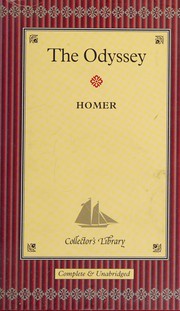
Deal with the Homer question straight away, because it stops people. The Odyssey is on this path and it is the least essential item on it. The correspondences between the two books are largely structural, Joyce assigned the episode titles privately and they do not appear in the text, and many readers get through perfectly well knowing only that Bloom is Odysseus, Stephen is Telemachus and Molly is Penelope. Read Homer if you want the pleasure of the echoes; do not treat it as a gate.
Joyce first
A Portrait of the Artist as a Young Man is the real prerequisite. Stephen Dedalus arrives in Ulysses already formed — grieving, arrogant, in flight from the church and the family — and the novel does not reintroduce him. It also trains you in the technique: the prose style changes to match the age and mind of its subject, which is exactly what the later book does eighteen times over.
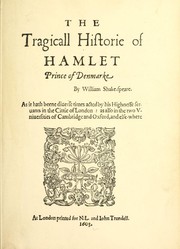
Hamlet earns its place for one episode. In the library scene Stephen delivers an elaborate theory about Shakespeare, fatherhood and the ghost, and the chapter is close to unreadable without the play in your head. A reread, or a good performance, is enough.
What you are actually facing
Ulysses is eighteen episodes and each is written in a different style. Some are conventional and funny. One is a parody history of English prose from Anglo-Saxon to Victorian slang. One is a hundred and fifty pages of hallucinatory stage directions. The last is eight unpunctuated sentences. The middle stretch, particularly the newspaper episode, the pastiche episode and the deliberately exhausted late chapters, is where most abandonments happen, and the reason is not stupidity but that Joyce is being tedious on purpose in places.
The workable strategy is to accept partial comprehension. Read each episode once at reading speed without stopping, then read the summary of it, then decide whether to go back. Trying to understand every line on first contact is how people spend four months on the first third and quit.
The apparatus, and which to buy
The new bloomsday book is Harry Blamires's episode-by-episode paraphrase of what literally happens, page by page. For most first-time readers this is the one to own. It answers the actual question — who is speaking, where are we, what just occurred — without a theory attached.
Ulysses annotated is Don Gifford and Robert Seidman's line-by-line glossary of the allusions, the Dublin street names, the songs and the Latin. It is a reference work, keyed to specific page and line numbers, and it is superb; it is also enormous and will slow you to a crawl if you consult it constantly. Get it if you are rereading, or if you want the second pass to be rich.
Re Joyce is Anthony Burgess on Joyce for the general reader, published in Britain as Here Comes Everybody. Burgess is a novelist writing about a novelist and is very good on the sound and the comedy, which criticism often misses. Read it before you start.
James Joyce, Richard Ellmann's biography, is frequently called the finest literary biography in English and it is a genuine pleasure, but it is long and full of the life. Ulysses on the Liffey is Ellmann again, this time a compact schematic reading of the novel episode by episode. Both are for afterwards.
One warning about editions
The text itself is contested. A heavily revised scholarly edition prepared in the 1980s was attacked at length by other scholars and the dispute was never fully resolved, so different paperbacks of Ulysses differ in wording and in line numbering. This matters mainly because Ulysses annotated is keyed to line numbers — check that your novel and your annotation agree before you start. Readers building this kind of run-up often want the Karamazov sequence as well.
Follow the full ordered path here: What to Read Before Ulysses: The Books That Make Joyce Readable, in Order.