International Trade and Tariffs: The Best Books, in Order
Trade is the subject where economists agree most and voters agree least, and a reading path that only presents the professional consensus teaches you nothing about why tariffs keep winning elections. This one runs in five movements: the basic case for open trade, the two-century history of the argument, the strongest dissenting tradition, how the modern rules-based system was actually built, and where the debate has moved since 2016. Read them in order — the dissent is only interesting once you can state the orthodox case properly, and the recent books assume you know what a most-favoured-nation clause is. Two notes. Trade policy dates faster than almost any economic subject, so specific tariff schedules and disputes in any book below will be out of date; read for the mechanisms, and check current rates against a primary source. And this is economics and policy history, not legal or trade-compliance advice — classification, duties and rules of origin are technical legal questions for a specialist.
The basic case
BeginnerUnderstand comparative advantage, why economists overwhelmingly favour open trade, and what the honest costs of it are — stated by people who support it.
▸ Study plan for this stage
Pace: 2–3 weeks, about 485 pages. The Choice (132) is a short novel in which the ghost of David Ricardo argues trade with an American television manufacturer — read it in an afternoon before anything technical; its catalogue record sits under a bare title shared with other books, and the one wanted here i
- Comparative advantage: why a country gains from trade even when it is worse at making everything
- Absolute versus comparative advantage, and the confusion between them that drives most bad trade commentary
- Gains from trade as aggregate, and the distinct question of who within a country wins and loses
- The tariff's incidence — who actually pays an import duty, and through what mechanism
- Deadweight loss, consumer surplus and producer surplus in the standard tariff diagram
- Trade adjustment: what happens to displaced workers empirically, and how badly the textbook story handled it
- The trade deficit as an accounting identity linked to saving and investment, not a scorecard
- The standard objections — jobs, wages, inequality, national security — and what Irwin concedes to each
- Explain comparative advantage using Ricardo's own two-country, two-good setup, with numbers.
- Who bears the cost of a tariff, and under what conditions does a foreign exporter bear part of it?
- What does Irwin concede about the labour-market effects of trade, and what does he still argue?
- Why is a bilateral trade deficit not evidence of unfair treatment?
- Which of the standard objections to open trade does Irwin think has the most force?
- Work Ricardo's numerical example from The Choice on paper — opportunity costs, the range of mutually beneficial terms of trade, and the gains to each side.
- Draw the tariff diagram from Irwin and label consumer loss, producer gain, government revenue and deadweight loss; then compute each for a specific ad valorem rate.
- Pick one product with a current US tariff, find the rate in the Harmonized Tariff Schedule, and estimate the price effect on a retail unit.
- Write down the strongest objection to free trade you personally hold, and check whether Irwin addresses it and how.
Next up: You have the orthodox case as its supporters state it; the next stage reads the original theory and two centuries of politics arguing about what to do with it.
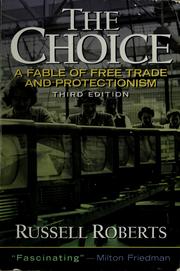
A short novel in which the ghost of David Ricardo argues trade with an American television manufacturer. It sounds unbearable and is instead the fastest way anyone has found to make comparative advantage and its distributional costs intuitive. Read it in two hours before anything technical. Note the catalogue record is filed under a bare title shared by other books; this is the trade parable, subtitled A Fable of Free Trade and Protectionism.

The best single introduction to the subject: what trade does to jobs, wages and inequality, what tariffs actually accomplish, and what the standard objections get right. Irwin is the field's leading historian and writes without either triumphalism or hedging. Regularly revised — get the newest edition, because the empirical material is the point.
How the argument got here
IntermediateRead the original statement of the theory and then two centuries of politics deciding what to do with it, so that today's debates stop looking new.
▸ Study plan for this stage
Pace: 7–8 weeks, and unevenly distributed. On the Principles of Political Economy and Taxation (450) is Ricardo's 1817 treatise — read chapter seven, where comparative advantage is set out in a handful of pages, properly and slowly, and return to the rest only if the classical framework interests you. Aga
- Ricardo's actual argument in chapter seven, including the labour theory of value it is embedded in
- The classical framework's assumptions — immobile capital, full employment — and which of them modern trade theory dropped
- The historical objections in sequence: mercantilism, the terms-of-trade argument, infant industry, the wage-differential argument, strategic trade policy
- How the profession answered each objection, and which answers were concessions rather than refutations
- Irwin's three Rs: tariffs for revenue, restriction and reciprocity, and the periods in which each dominated American policy
- The politics of the tariff schedule — logrolling, sectional interest, and why line-item tariff-setting by Congress produced Smoot-Hawley
- The 1934 Reciprocal Trade Agreements Act as the institutional turn that took tariff-setting out of Congress's hands
- Why an argument that was settled among economists remained live among voters
- State Ricardo's chapter seven argument in his own terms, including what he assumes about the mobility of capital.
- Which historical objection to free trade does Irwin regard as strongest, and what does the profession's answer to it concede?
- What are the three purposes tariffs have served in American history, and roughly when did each dominate?
- How did the 1934 Act change the political economy of tariff-setting, and why did that make lower tariffs durable?
- What does Clashing over Commerce explain about current American trade politics that a purely economic account cannot?
- Read Ricardo's chapter seven and rewrite his England-and-Portugal example in modern opportunity-cost notation, then state exactly which assumption does the work.
- Build a timeline of American average tariff rates from 1790 to the present from Clashing over Commerce, and annotate each major move with the political coalition behind it.
- For each objection catalogued in Against the Tide, write the objection and the profession's answer in two sentences each; keep the sheet for stage three.
- Take one nineteenth-century tariff debate from Irwin and write the case each side actually made, then find the same argument in a speech from the last five years.
Next up: You can now state the orthodox case and its history properly, which is the precondition for taking the dissent seriously rather than dismissing it.

The source. Chapter seven is where comparative advantage is set out, and it is a handful of pages — read that chapter properly rather than the whole treatise, then return to the rest if the classical framework interests you.
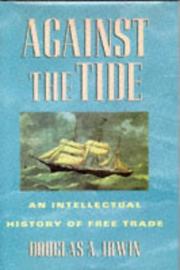
An intellectual history of free trade as a doctrine: every serious objection ever raised against it, from mercantilism through infant-industry protection to strategic trade policy, and how the profession answered each. The book that shows the consensus was argued into existence rather than assumed.
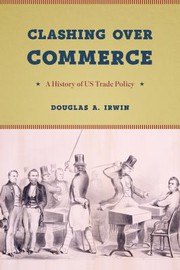
Eight hundred pages on the history of United States trade policy, organised around the three purposes tariffs have served — revenue, restriction, reciprocity. The definitive work, and the one that explains why American trade politics has the shape it has. Read it after the shorter Irwins, not instead of them.
The serious dissent
IntermediateTake the strongest arguments against trade orthodoxy — that today's rich countries protected their way up, and that hyperglobalization is politically unsustainable — on their own terms.
▸ Study plan for this stage
Pace: 3 weeks, about 590 pages: Kicking Away the Ladder (196), Bad Samaritans (288), Has Globalization Gone Too Far? (108). Chang is a heterodox development economist arguing a case, and Kicking Away the Ladder is the scholarly version while Bad Samaritans is the popular restatement aimed at trade and dev
- Chang's historical claim: that Britain, the United States and the East Asian tigers industrialised behind tariffs and subsidies before advocating free trade
- Infant-industry protection restated as historical fact rather than as theoretical possibility
- 'Kicking away the ladder' — the charge that development advice is inconsistent with developed countries' own histories
- The counterarguments: selection on success, protection alongside other policies, and the difficulty of attributing growth to any single instrument
- Rodrik's trilemma-adjacent argument: open trade strains the social bargains that make it politically survivable
- Distributional strain falling on those least able to absorb it, and why compensation schemes have consistently underdelivered
- The difference between arguing that trade is bad and arguing that hyperglobalisation is politically unsustainable — Rodrik is making the second claim
- Why an argument from inside the profession landed differently from the same argument made outside it
- What is Chang's historical evidence, and what is the strongest objection to inferring causation from it?
- Which of the objections you catalogued from Against the Tide does Chang revive, and does his historical material answer the profession's reply?
- What exactly did Rodrik predict in 1997, and which parts of it happened?
- What does Rodrik say governments would have to do for open trade to remain politically sustainable?
- State the strongest version of Chang's case and the strongest reply Irwin could make from his own books.
- Take Chang's central historical claim and check it against one country's actual tariff history using Clashing over Commerce for the United States.
- Set Chang's argument beside the infant-industry entry on your objections sheet from stage two and mark what is new and what is restated.
- Read Rodrik's 1997 essay and list each prediction, then score each against what has happened since.
- Write a one-page development policy recommendation for a specific country that takes both Irwin's and Chang's evidence seriously, and name the point where you had to choose.
Next up: The argument is now two-sided; the next stage covers the actual institutional machinery through which any of these positions has to operate.
The core heterodox claim, argued from history: Britain, the United States and the East Asian tigers all industrialised behind tariffs and subsidies, then advocated free trade to countries that had not. Whether or not it persuades you, this is the case a serious reader has to answer.
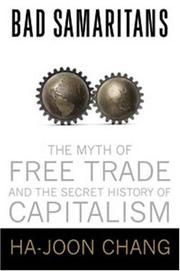
The popular version of the same argument aimed at trade and development policy, and much easier going than the scholarly volume above. Read it second, as the applied restatement; the catalogue's year on this record is wrong, but the book is Chang's.
The short 1997 essay that predicted the political backlash two decades early: open trade strains the social bargains that make it survivable, and the strain falls on people with the least ability to absorb it. From an economist inside the profession rather than outside it, which is precisely why it landed.
The system and its machinery
IntermediateLearn how the postwar rules actually work — GATT, the WTO, dispute settlement, preferential agreements — and how supply chains changed what trade even means.
▸ Study plan for this stage
Pace: 4–5 weeks, about 950 pages. The Political Economy of the World Trading System (320) is the standard reference on the multilateral system — the agreements, the negotiating rounds, dispute settlement, and the political-economy logic of why states bind themselves; The Great Convergence (329) is Baldwin
- GATT to WTO: what the 1995 transition actually changed institutionally
- Most-favoured-nation and national treatment as the two non-discrimination pillars, and their permitted exceptions
- Bound versus applied tariff rates, and the negotiating slack the difference creates
- Dispute settlement: panels, the Appellate Body, retaliation authorisation, and why compliance happens without an enforcer
- Non-tariff barriers — quotas, standards, rules of origin, subsidies, antidumping — and why they now matter more than tariffs
- Preferential and regional agreements, trade diversion versus creation, and the spaghetti-bowl problem
- Baldwin's first and second unbundling, and why cheap information let production stages separate across borders
- What a supply chain does to tariff policy: value added crossing a border repeatedly, and why a headline tariff rate no longer tells you the burden
- What does MFN require, and what are the recognised exceptions to it?
- Walk through a WTO dispute from consultation request to authorised retaliation, naming each step.
- Why is the difference between bound and applied rates important in a negotiation?
- What is Baldwin's second unbundling, and what does it change about the standard trade model?
- How does a tariff behave differently when the good crosses the same border three times before final assembly?
- Take one of Hochberg's six products and trace its actual supply chain across borders, marking each crossing and the applicable duty.
- Read one complete WTO dispute settlement report and identify the legal claim, the panel's finding and the remedy.
- Look up the bound and applied rates for three products in your country's WTO schedule and explain the gap.
- Compute the effective rate of protection for a good with imported inputs, and compare it to the nominal tariff — the divergence is Baldwin's point in arithmetic.
Next up: You know how the machinery works; the last stage covers the post-2016 reframing that treats the whole debate differently.
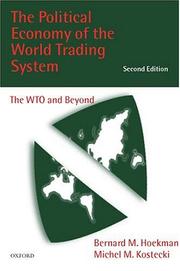
The standard account of the multilateral system: what the agreements cover, how negotiating rounds and dispute settlement function, and the political-economy logic of why states bind themselves at all. The reference work for this stage.

The argument that the second unbundling — cheap information letting production stages separate across borders — made twenty-first-century trade a fundamentally different phenomenon from the goods trade the theory was built on. Essential for understanding why tariff policy behaves unpredictably in a supply-chain economy.

The former head of the US Export-Import Bank explaining trade through six products, including the avocado and the Honda Odyssey. The lightest book here, and the one that makes the abstract machinery of the previous two concrete.
Where the argument is now
IntermediateRead the post-2016 reframing, in which trade imbalances are treated as symptoms of domestic distribution and the whole debate is re-sorted into competing narratives.
▸ Study plan for this stage
Pace: 5–6 weeks, about 1,020 pages: Trade Wars Are Class Wars (288), Straight Talk on Trade (336), Six Faces of Globalization (400). Klein and Pettis argue a strong thesis and their macroeconomic accounting is the hardest reasoning on this path — read it slowly and reconstruct the identities yourself. Rod
- Klein and Pettis's core claim: persistent trade imbalances follow from domestic policies that suppress household consumption, not from tariffs or cheating
- The saving-investment identity, and how a surplus in one country requires a deficit somewhere
- Suppressed household income share as a policy choice, and the distributional conflict inside each country that produces it
- Why, on this account, a trade conflict between nations is really a conflict between classes within them
- The China shock literature: what the profession got wrong about adjustment costs and how long they persisted
- Rodrik's account of what a defensible trade policy would look like now, including policy space for domestic bargains
- Roberts and Lamp's six narratives — establishment, left-wing populist, right-wing populist, corporate power, geoeconomic, global threats — and what each sees and misses
- Using a narrative map to locate your own position rather than to escape having one
- Reconstruct Klein and Pettis's accounting: how does suppressed consumption in one country produce a deficit in another?
- If they are right, what would a tariff actually accomplish, and what would it not?
- What does Rodrik say the profession got wrong about the China shock, and what evidence changed his view?
- Place each earlier book on this path into one of Roberts and Lamp's six narratives; which narrative is overrepresented on the list?
- Which narrative is yours, what does it let you see, and what does Roberts and Lamp say it will cause you to miss?
- Work through the current account identity with real figures for two countries — one surplus, one deficit — and show where the saving gap sits.
- Take one current trade dispute and write it up four times, once from each of four of Roberts and Lamp's narratives.
- Set Rodrik's 2017 recommendations against his 1997 essay from stage three and list what he changed his mind about.
- Write a final two-page policy position on tariffs that cites at least one book from each stage, and mark explicitly which claims are contested and by whom.
Next up: From here the subject continues in current sources — WTO and national tariff schedules, trade dispute filings, and the empirical literature on the China shock — and this path has given you the mechanisms and the narratives needed to read them without being captured by either.
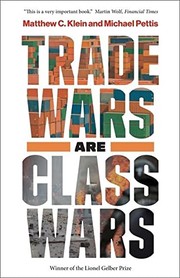
Klein and Pettis argue that persistent trade imbalances are not caused by tariffs or cheating but by domestic policies that suppress household consumption, so a trade conflict between countries is really a conflict between classes within them. The most important reframing of the subject in a decade, and it requires everything above to appreciate.

Rodrik twenty years after the essay in stage three, setting out what the profession got wrong about the costs of the China shock and what a defensible trade policy would look like now. The bridge between the orthodox and dissenting halves of this path.

Roberts and Lamp map the debate itself into six competing narratives — establishment, left-wing populist, right-wing populist, corporate power, geoeconomic, global threats — and show what each one sees and misses. The right book to finish on, because it gives you a way to place every other book on this path, including the ones you agreed with.
Discussion
Keep reading
Paths that share books, cover the same subject, or open a related topic.