Understanding Socialism: Best Books to Read in Order
This curriculum builds a rigorous, fair-minded understanding of socialism by moving from its historical origins and core ideas, through its major thinkers and traditions, to critical debates and real-world applications. Starting at an intermediate level, each stage deepens the reader's conceptual vocabulary and historical grounding before introducing more complex theory and critique.
Origins & Historical Context
IntermediateUnderstand where socialism came from, the conditions that produced it, and its early development as a political and economic movement.

The unavoidable starting point: short, foundational, and the single most influential socialist text ever written. Reading it first gives you the core vocabulary — class struggle, bourgeoisie, proletariat — that every subsequent thinker responds to.
Engels distills the difference between early 'utopian' socialism (Owen, Saint-Simon, Fourier) and the materialist 'scientific' socialism Marx and he developed. It bridges the pre-Marxist world to Marxism cleanly and concisely.

A sweeping, scholarly survey of socialist ideas from the early 19th century onward. Read after the primary texts to place them in their full historical and intellectual context.
Core Thinkers & Competing Traditions
IntermediateEngage directly with the major intellectual traditions within socialism — Marxism, democratic socialism, anarchism, and revisionism — and understand how they differ.
▸ Study plan for this stage
Pace: 12–14 weeks, ~40–50 pages/day (with intensive note-taking and re-reading of dense passages). Week 1–5: Capital (selections); Week 6–8: Reform or Revolution; Week 9–12: The State and Revolution; Week 13–14: synthesis and review.
- Historical materialism and the materialist conception of history as the framework for understanding social change
- Surplus value, labor exploitation, and capital accumulation as the mechanisms driving capitalist production
- The role of class struggle and proletarian revolution in Marx's theory of historical transformation
- Democratic socialism and the critique of both capitalism and Marxist revolutionary dogmatism in Luxemburg's work
- The distinction between reform and revolution: whether incremental change or rupture is necessary for socialism
- The Leninist theory of the vanguard party and its role in leading the proletariat toward revolution
- The state as a tool of class domination and the necessity of its destruction in achieving communism
- Competing visions of the transition to socialism: revolutionary rupture vs. democratic evolution vs. anarchist abolition
- How does Marx's concept of historical materialism explain the rise and inevitable fall of capitalism?
- What is surplus value, and how does Marx argue it is extracted from workers under capitalism?
- What are the key differences between Luxemburg's democratic socialism and Marx's revolutionary theory?
- Why does Luxemburg argue that both reformism and dogmatic Marxism are inadequate responses to capitalism?
- According to Lenin, what is the role of the vanguard party in leading a socialist revolution?
- How does Lenin's theory of the state differ from Marx's, and what does he propose should happen to the state after revolution?
- What are the three competing traditions represented in these texts, and what does each propose as the path to socialism?
- Create a detailed outline of Marx's theory of surplus value (Part 7 of Capital), then explain it in plain language to someone unfamiliar with Marxism
- Construct a comparative chart showing how Marx, Luxemburg, and Lenin each answer the question: 'How should socialism be achieved?'
- Write a 2–3 page dialogue between a Luxemburgist and a Leninist debating the necessity and dangers of the vanguard party
- Identify and annotate 5–10 key passages from each text that best represent the author's core argument; write a one-sentence summary of each
- Trace the concept of 'class struggle' through all three texts, noting how each author builds on, modifies, or rejects Marx's original formulation
- Debate exercise: argue the case for reform (Luxemburg's position) against revolution (Lenin's position) using only evidence from these three texts
- Create a timeline showing how each author's ideas relate to actual historical events (the Paris Commune, Russian Revolution, etc.) mentioned in the texts
Next up: This stage equips you to understand the major fault lines within socialist thought, preparing you to examine how these competing traditions played out in 20th-century practice and to evaluate their successes and failures in actual revolutionary movements.
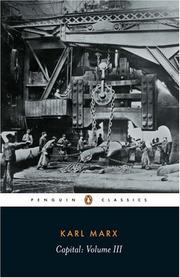
Marx's masterwork laying out the full critique of capitalism — surplus value, exploitation, and the logic of capital accumulation. Volume I is the essential read; it rewards the effort with the deepest theoretical foundation in socialist thought.

Luxemburg's brilliant polemic against Eduard Bernstein's revisionism sharpens the central debate within socialism: gradual reform vs. revolutionary transformation. It introduces democratic socialist and revolutionary socialist positions side by side.
Lenin's theory of the state and how socialists should relate to political power is essential for understanding 20th-century socialist movements. Read after Luxemburg to see how revolutionary theory evolved into practice.
Democratic Socialism & Social Democracy
IntermediateUnderstand the non-revolutionary, parliamentary strand of socialism that shaped welfare states and remains the dominant form of socialist politics in the democratic world today.
▸ Study plan for this stage
Pace: 2–3 weeks, ~40–50 pages/day (the book is ~150–160 pages; read in 3–4 sittings with reflection days between)
- The feasibility of socialism as a real-world system, not just an ideal—Cohen's central argument that socialism is practically achievable in principle
- The camping trip analogy as a model for socialist distribution and reciprocity—how it reveals what socialism requires of human motivation and behavior
- The distinction between socialism and capitalism as systems of resource distribution and decision-making, beyond mere ownership
- Market socialism and non-market socialism as alternative institutional arrangements within a socialist framework
- The role of incentives, self-interest, and moral motivation in sustaining socialist economies—why people would cooperate without profit motive
- Objections to socialism (efficiency, innovation, information problems) and Cohen's responses—understanding the strongest counterarguments
- Why democratic socialism differs from revolutionary socialism—the parliamentary, gradualist approach to achieving socialist goals
- What is Cohen's main thesis about socialism, and how does the camping trip analogy support it?
- How does Cohen distinguish between socialism as an ideal and socialism as a practically achievable system?
- What are the key differences between market socialism and non-market socialism, and what are the trade-offs of each?
- What objections to socialism does Cohen address, and what are his main responses to the efficiency and innovation arguments?
- How does Cohen's conception of socialism relate to human motivation and reciprocity rather than coercion?
- Why does Cohen believe capitalism, not human nature, is the obstacle to socialism?
- Map out the camping trip analogy in detail: identify the principles of distribution, decision-making, and motivation at work, then compare them explicitly to capitalist and socialist economies
- Write a 500-word response to one major objection Cohen addresses (e.g., the efficiency problem or the innovation problem)—strengthen his argument or identify genuine weaknesses
- Create a comparative table: list the features of market socialism vs. non-market socialism vs. capitalism across dimensions like incentives, distribution, decision-making, and efficiency
- Debate exercise: argue both for and against the feasibility of Cohen's socialism in a modern economy (healthcare, tech, manufacturing)—identify where his logic holds and where it strains
- Analyze a real-world social democratic or democratic socialist policy (e.g., Nordic welfare state, worker cooperatives, universal healthcare) through Cohen's framework—does it embody his principles?
- Write a critical dialogue between Cohen and a market-socialist or libertarian critic on the role of self-interest in sustaining an economy
Next up: This stage establishes the philosophical and practical foundations of democratic socialism, preparing you to examine how specific historical movements and contemporary parties have attempted to implement or approximate these principles in real political contexts.

A short, rigorous philosophical argument for socialism's moral core — equality and community — by one of the 20th century's leading political philosophers. It refreshes the normative case for socialism in clear, modern language.
Critical Perspectives & Real-World Socialism
ExpertEvaluate socialism critically — its achievements, failures, and ongoing debates — through the lens of 20th-century history and contemporary political economy.
▸ Study plan for this stage
Pace: 8–10 weeks, ~40–50 pages/day, with 1–2 weeks per book for deep engagement and reflection
- The knowledge problem and central planning: how dispersed information and price signals are essential to efficient resource allocation, and why centralized socialist planning cannot replicate market coordination
- Economic calculation debate: Mises's argument that socialism cannot perform rational economic calculation without market prices, and its implications for socialist economies
- The road to totalitarianism: Hayek's thesis that centralized economic planning inevitably leads to political authoritarianism and loss of individual freedom
- Kornai's soft budget constraint: how socialist enterprises' lack of financial discipline and state subsidies create inefficiency, shortage economies, and systemic stagnation
- The socialist system as a coherent institutional structure: understanding socialism not as a failed attempt at capitalism, but as a distinct mode of production with its own internal logic and contradictions
- Comparative institutional analysis: evaluating socialism's actual performance against both its theoretical promises and capitalist alternatives in 20th-century practice
- The role of ideology, power, and bureaucracy: how political structures and incentive systems shape economic outcomes in socialist systems, beyond pure economic theory
- What is the 'knowledge problem' as articulated by Hayek, and how does it challenge the feasibility of centralized socialist planning?
- According to Mises, why is economic calculation impossible under socialism, and what does this imply for resource allocation and efficiency?
- How does Hayek argue that economic centralization leads to political totalitarianism? What is the causal mechanism he proposes?
- What is Kornai's concept of the 'soft budget constraint,' and how does it explain chronic shortages and inefficiency in socialist economies?
- How do Hayek, Mises, and Kornai differ in their diagnoses of socialism's failures—are they emphasizing the same problems or different ones?
- What evidence from 20th-century socialist economies (USSR, Eastern Europe, etc.) supports or challenges the arguments made by these three authors?
- Can the criticisms raised by Hayek, Mises, and Kornai be addressed through institutional reforms, or do they point to fundamental, irreparable flaws in socialist organization?
- Comparative reading chart: Create a three-column table comparing how Hayek, Mises, and Kornai each diagnose socialism's core problems. Identify overlaps and unique contributions from each author.
- Knowledge problem case study: Select a specific historical socialist economy (USSR, East Germany, Cuba, or Vietnam) and analyze how the knowledge problem manifested in its planning failures, using concrete examples from the books and external historical sources.
- Debate simulation: Prepare arguments for both a socialist defender and a critic (using Hayek/Mises/Kornai) on a specific policy question (e.g., 'Can central planning efficiently allocate housing?'). Write or record a 10–15 minute dialogue.
- Soft budget constraint analysis: Identify and document 2–3 examples from Kornai of how soft budget constraints led to specific economic pathologies (shortages, waste, stagnation). Trace the causal chain from institutional incentives to outcomes.
- Historical timeline and argument mapping: Create a timeline of key 20th-century socialist economies' major crises or reforms (1930s purges, 1956 Hungarian uprising, 1968 Prague Spring, 1980s stagnation, 1989–91 collapse). For each, identify which of the three authors' critiques best explains it.
- Thought experiment: Design a hypothetical 'reformed socialist system' that attempts to address one major criticism from each author (e.g., market socialism, worker councils, decentralized planning). Write 2–3 pages analyzing whether it would succeed or fail, and why.
Next up: By mastering these critical perspectives and understanding socialism's structural contradictions through rigorous economic and historical analysis, you are now equipped to evaluate contemporary debates about socialism's revival, alternative economic models, and the ongoing tension between market efficiency and egalitarian goals in modern political economy.

The most important liberal-conservative critique of socialist planning. Reading it here, after absorbing the socialist case, allows for genuine intellectual engagement with its strongest objections rather than dismissal.
Mises's comprehensive critique, including the famous 'economic calculation problem,' is the most rigorous challenge to socialist economics. Essential for understanding why socialist thinkers had to respond and how the debate evolved.
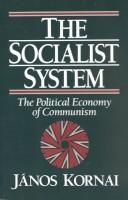
Written by a Hungarian economist who lived under actually-existing socialism, this is the definitive empirical and theoretical analysis of how socialist economies actually functioned — and why they struggled. It closes the curriculum by grounding theory in historical reality.
Discussion
Keep reading
Paths that share books, cover the same subject, or open a related topic.