Best Books on Wealth Management, in Reading Order
This curriculum is designed for practitioners and serious learners who already understand basic investing and want to master the full wealth management stack: portfolio construction for real clients, tax-aware strategies, estate planning and trusts, and running an advisory business. The four stages move from the integrated wealth management framework, through portfolio and tax mechanics, into estate and transfer planning, and finally to the business and client-relationship craft that separates great advisors from good ones.
The Wealth Management Framework
IntermediateUnderstand how the distinct disciplines of wealth management (investments, tax, estate, risk, and planning) fit together into a single client-centric process, and establish the vocabulary used throughout the rest of the curriculum.
▸ Study plan for this stage
Pace: 4–5 weeks, ~40–50 pages/day (approximately 280–350 pages total across both books)
- The five pillars of wealth management: investments, tax planning, estate planning, risk management, and financial planning, and how they integrate into a unified client-centric framework
- The distinction between wealth accumulation, wealth preservation, and wealth transfer phases, and how wealth management strategies shift across these phases
- The role of the wealth manager as a coordinator and synthesizer of specialized disciplines rather than a siloed expert
- Client-centric planning methodology: defining client goals, constraints, and values before recommending specific solutions
- The evolution of wealth management practice from product-focused to process-focused and client-focused approaches (as presented in Evensky's progression between the two books)
- Vocabulary and terminology specific to wealth management: liquidity needs, time horizons, risk tolerance, asset allocation, tax-loss harvesting, and fiduciary responsibility
- The importance of behavioral finance and psychology in wealth management decision-making
- How regulatory, tax, and market environments shape the wealth management framework and require continuous adaptation
- What are the five core disciplines of wealth management, and how do they interact with each other in a comprehensive wealth management plan?
- How does the wealth management framework differ depending on whether a client is in the accumulation, preservation, or transfer phase of wealth?
- What is the role of the wealth manager in coordinating across investments, tax, estate, and risk management, and why is this coordination critical?
- How should a wealth manager approach a client engagement: what information must be gathered, and in what order should decisions be made?
- What key vocabulary and concepts from Evensky's framework would you need to explain to a new client to help them understand your wealth management process?
- How do behavioral biases and client psychology influence wealth management recommendations, and what strategies can mitigate these challenges?
- Create a one-page visual map or diagram showing the five pillars of wealth management and how they interconnect; label at least three specific ways each pillar influences the others
- Write a 2–3 page case study of a hypothetical client (e.g., a 45-year-old executive with $2M in assets, significant stock concentration, and two children). Identify their phase of wealth (accumulation/preservation/transfer), list their likely goals and constraints, and outline which of the five disciplines should take priority and why
- Develop a client intake questionnaire (10–15 questions) that a wealth manager would use to gather the information necessary to begin a comprehensive wealth management engagement, organized by the five disciplines
- Compare and contrast the wealth management approach described in 'Wealth Management' with that in 'The New Wealth Management.' Write a 2–3 page reflection on how Evensky's thinking evolved and what this evolution reveals about the profession
- Role-play or write a dialogue: a wealth manager explains the integrated wealth management framework to a prospective client who initially believes they only need investment advice. How would you address their misconceptions and demonstrate the value of the broader framework?
- Create a glossary of 20–25 key terms from the two books (e.g., asset allocation, tax-loss harvesting, fiduciary duty, time horizon, liquidity needs, risk tolerance) with clear, client-friendly definitions
Next up: This stage establishes the conceptual architecture and shared language of wealth management, enabling you to dive into the specialized disciplines (investments, tax planning, estate planning, risk management) with a clear understanding of how each piece serves the integrated whole and the client's overarching goals.
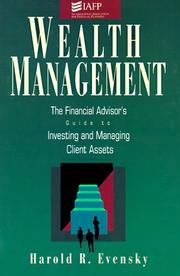
The canonical practitioner text that defines the wealth management process end-to-end. Reading it first gives you the integrating framework every subsequent book plugs into.

The updated edition co-authored with Deena Katz and others modernizes the framework with behavioral finance and planning integration — read immediately after the original to see how the field evolved.
Portfolio Construction for Real Clients
IntermediateBuild rigorous, client-appropriate portfolios using asset allocation theory, factor investing, and practical implementation — moving from theory to the realities of client constraints and behavior.
▸ Study plan for this stage
Pace: 12–14 weeks, ~40–50 pages/day. Bernstein (400 pp): 2–3 weeks; Swensen's Pioneering (350 pp): 3–4 weeks; Swensen's Unconventional Success (400 pp): 4–5 weeks. Include 1–2 weeks for integration and case-study work.
- Asset allocation as the primary driver of portfolio returns and risk, with diversification across uncorrelated asset classes reducing volatility without sacrificing expected returns
- The efficient frontier and mean-variance optimization: how to construct portfolios that maximize return for a given level of risk based on historical correlations and volatility
- Rebalancing discipline and its behavioral benefits: systematic rebalancing forces a contrarian approach, buying low and selling high while maintaining target allocations
- Factor investing and alternative assets: understanding equity risk premiums, real estate, commodities, and inflation-hedging strategies beyond traditional stock/bond splits
- Institutional portfolio construction: endowment model principles (Yale model), governance structures, and how professional investors differ from retail in implementation and constraints
- Client constraints and behavioral reality: tailoring allocations to time horizon, liquidity needs, tax situation, and psychological tolerance for volatility—theory meets practice
- Implementation and cost discipline: the impact of fees, taxes, and trading costs on net returns; why low-cost, passive implementation often outperforms active management
- Unconventional success framework: building portfolios that work for individual investors by combining diversification, low costs, and realistic expectations about manager skill
- How does asset allocation determine portfolio risk and return, and why does it matter more than individual security selection?
- What is the efficient frontier, and how do you use historical correlations and volatility to construct a portfolio that aligns with a client's risk tolerance?
- Explain the rebalancing discipline: how does systematic rebalancing improve returns and manage risk, and what are the behavioral and tax implications?
- What is the endowment model, and how do institutional investors (like Yale) use alternative assets and factor investing to enhance returns while managing risk?
- How do client constraints—time horizon, liquidity needs, tax situation, and behavioral biases—force you to modify theoretical allocations into practical portfolios?
- Why do fees, taxes, and trading costs matter so much, and how should cost discipline shape your implementation decisions?
- What is the case for passive, diversified, low-cost investing, and when (if ever) is active management justified for individual investors?
- Build a three-asset-class portfolio (stocks, bonds, alternatives) using Bernstein's framework: calculate expected returns, volatility, and correlations from historical data; plot the efficient frontier and identify the optimal allocation for a moderate-risk client.
- Create a detailed asset allocation policy statement for a real or hypothetical client: define objectives, constraints (time horizon, liquidity, taxes, behavioral tolerance), and a specific target allocation with rebalancing rules and monitoring frequency.
- Implement a rebalancing simulation: start with a target allocation, simulate 10 years of monthly returns across asset classes, and track how drift occurs; compare buy-and-hold vs. annual rebalancing in terms of returns, volatility, and tax impact.
- Analyze the Yale endowment model: map its allocation across domestic equity, international equity, fixed income, real assets, and alternatives; calculate the expected return and risk profile; discuss how this model differs from a typical 60/40 portfolio.
- Conduct a fee and cost impact analysis: model a $1 million portfolio over 20 years with different fee structures (0.25% passive, 1% active, 2% hedge funds); calculate the cumulative drag on returns and discuss when (if ever) higher fees are justified.
- Design a portfolio for three different client personas (young professional, pre-retiree, retiree) using Swensen's principles: specify allocations, rebalancing frequency, implementation vehicles (index funds, ETFs, mutual funds), and explain how constraints shaped each design.
- Read and critique a real institutional investment policy statement (e.g., from a foundation or pension plan); identify how it reflects the principles from Swensen and Bernstein, and suggest improvements based on cost and behavioral insights.
- Build a low-cost, diversified portfolio for an individual investor using Swensen's Unconventional Success framework: select specific index funds or ETFs, calculate total costs (expense ratios + trading), and document the rationale for each holding.
Next up: This stage grounds you in rigorous portfolio theory and institutional best practices, equipping you to construct evidence-based allocations that balance theory with real-world constraints; the next stage will deepen your ability to manage these portfolios over time—addressing performance monitoring, rebalancing execution, tax optimization, and adapting to changing client circumstances and market c
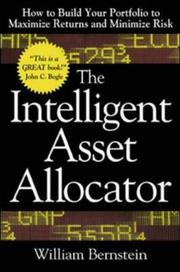
Provides the quantitative and historical intuition for asset allocation in plain language — the essential bridge between theory and practice before tackling more advanced portfolio texts.

Swensen's institutional framework for asset allocation and alternative assets is the gold standard; reading it here teaches you the rigorous thinking behind portfolio construction before applying it to individual clients.
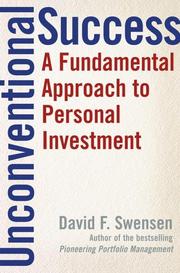
Swensen's companion book translates the institutional framework to individual investors, directly addressing the constraints and behavioral challenges real clients bring — a natural follow-on.
Tax-Aware Investing
IntermediateMaster the tax dimensions of portfolio management — asset location, tax-loss harvesting, withdrawal sequencing, and the after-tax return framework that should govern every client decision.
▸ Study plan for this stage
Pace: 6–7 weeks, ~40–50 pages/day, with 2–3 days per week reserved for exercises and case study work
- Asset location strategy: matching investment types to account structures (taxable, tax-deferred, tax-free) to minimize lifetime tax drag
- Tax-loss harvesting mechanics: identifying, executing, and tracking harvesting opportunities while avoiding wash-sale violations
- Tax-efficient withdrawal sequencing: determining optimal order of account drawdowns (taxable, traditional IRA, Roth, HSA) to minimize lifetime tax liability
- After-tax return framework: calculating and comparing portfolio performance on an after-tax basis rather than pre-tax, as the true measure of client wealth creation
- Jurisdiction and entity structure considerations: how business structure, state residency, and legal entity choice (S-corp, LLC, C-corp) impact investment tax efficiency
- Charitable giving and tax-deductible strategies: leveraging donor-advised funds, appreciated securities, and charitable remainder trusts for tax optimization
- Rebalancing tax-efficiently: maintaining target allocations while minimizing realized gains through strategic use of new contributions and withdrawals
- Documentation and compliance: maintaining records for tax reporting, substantiating basis, and defending tax positions to the IRS
- How would you construct an optimal asset location strategy for a client with $500K in taxable accounts, $800K in a traditional IRA, and $200K in a Roth IRA, holding a diversified portfolio of stocks, bonds, and REITs?
- Walk through a tax-loss harvesting opportunity: a client holds 100 shares of Fund A (cost basis $10K, current value $8K). How would you execute the harvest, avoid wash sales, and document the transaction?
- A 62-year-old client needs $60K annually in retirement income from a portfolio of $1.2M (split: $600K taxable, $400K traditional IRA, $200K Roth). In what order should withdrawals be sequenced, and why?
- Explain the difference between pre-tax and after-tax returns. Why should after-tax returns be the primary metric for evaluating portfolio performance and client decisions?
- How would you advise a high-income business owner on entity structure (S-corp vs. LLC vs. C-corp) to minimize investment-related taxes while maintaining liability protection?
- What are the key compliance and documentation requirements when executing a tax-loss harvesting program, and what records must be maintained?
- Build a three-account asset location model: assign a diversified portfolio (stocks, bonds, REITs, alternatives) across taxable, traditional IRA, and Roth accounts to minimize lifetime tax drag. Document your rationale for each placement.
- Conduct a tax-loss harvesting audit on a real or hypothetical portfolio: identify all positions with unrealized losses, calculate the tax benefit at your client's marginal rate, and draft a harvesting plan that avoids wash sales.
- Model a withdrawal sequencing scenario: given a client's age, portfolio size, account breakdown, and annual income need, calculate the tax liability under three different withdrawal orders and recommend the optimal sequence.
- Calculate after-tax returns for a sample portfolio over a 5-year period: track all realized gains, losses, dividends, and interest; apply your client's tax rate; and compare the after-tax return to the pre-tax return.
- Research and document the tax implications of your client's business entity structure (or a hypothetical structure). Identify opportunities to optimize investment taxation through entity choice or restructuring.
- Create a rebalancing plan for a client whose portfolio has drifted from target allocations: show how to rebalance using new contributions and strategic withdrawals to minimize realized gains, rather than selling appreciated positions.
Next up: This stage equips you with the technical and strategic tools to embed tax efficiency into every portfolio decision; the next stage will expand your perspective to holistic wealth planning, integrating tax-aware investing with estate planning, risk management, and multi-generational wealth transfer strategies.
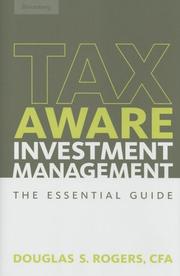
The most comprehensive practitioner guide to after-tax portfolio management; establishes the full vocabulary of tax alpha, asset location, and tax-efficient rebalancing that advisors must command.

Grounds abstract tax strategy in the real-world structures (entities, retirement accounts, real estate) that clients actually use, bridging investment tax theory to planning practice.
Trusts, Estate Planning & Wealth Transfer
ExpertUnderstand the legal and financial mechanics of trusts, estate planning, and intergenerational wealth transfer well enough to collaborate effectively with attorneys and lead client conversations.
▸ Study plan for this stage
Pace: 8–10 weeks, ~40–50 pages/day. Week 1–5: "The Tools and Techniques of Estate Planning" (primary focus on chapters covering trust structures, tax implications, and planning strategies). Week 6–10: "Beyond the Grave" (case studies and practical application of estate planning principles).
- Trust structures (revocable, irrevocable, testamentary) and their tax and control implications
- Estate tax fundamentals: exemptions, stepped-up basis, portability, and minimization strategies
- Probate avoidance mechanisms and the role of trusts in asset transfer
- Fiduciary duties and trustee responsibilities in managing and distributing assets
- Coordination of wills, trusts, and beneficiary designations to avoid conflicts and unintended consequences
- Specialized trusts (QTIP, ILIT, dynasty trusts) and their strategic applications
- Intergenerational wealth transfer planning and communication with heirs
- Common estate planning pitfalls and how to identify and correct them in client situations
- What are the key differences between revocable and irrevocable trusts, and when should each be recommended to a client?
- How does the stepped-up basis work, and what role does it play in estate tax planning decisions?
- What fiduciary duties does a trustee have, and how do these duties differ from those of an executor?
- How can a coordinated estate plan (will, trust, and beneficiary designations) prevent probate delays and unintended wealth distribution?
- What are the advantages and disadvantages of specialized trusts like QTIP or ILIT trusts in high-net-worth scenarios?
- What are the most common estate planning mistakes that lead to family conflict or unintended tax consequences, and how would you identify them in a client review?
- Map a hypothetical client's assets (real estate, investments, retirement accounts, business interests) and design a trust structure that minimizes probate and estate taxes while maintaining client control during lifetime.
- Draft a comparison chart of revocable vs. irrevocable trusts, including tax treatment, control, creditor protection, and Medicaid planning implications.
- Review a sample will and trust document (provided in the books or from public sources) and identify coordination gaps, beneficiary designation conflicts, and potential tax inefficiencies.
- Calculate estate tax exposure for a multi-million dollar estate using current exemption limits and portability rules, then propose tax minimization strategies.
- Create a trustee instruction memo that clearly outlines fiduciary duties, distribution standards, and decision-making authority for a complex trust scenario.
- Conduct a mock client conversation where you explain the benefits of a revocable living trust vs. probate to a client unfamiliar with estate planning concepts.
Next up: This stage equips you with the technical and legal foundation to understand wealth transfer mechanisms; the next stage will likely focus on implementation strategies, client communication frameworks, and how to integrate estate planning with broader financial and tax planning to create comprehensive wealth management solutions.

The definitive reference on estate planning tools — wills, trusts, GRATs, FLPs, charitable vehicles — organized for practitioners. Reading it here gives you the technical vocabulary for advanced transfer strategies.

Covers the human and legal realities of inheritance and wealth transfer from a client perspective, making it an ideal complement to Leimberg's technical depth by grounding strategy in family dynamics.
The Advisory Business & Client Mastery
ExpertDevelop the business, communication, and behavioral skills to build a thriving advisory practice — attracting and retaining clients, managing relationships through volatility, and delivering advice that actually gets implemented.
▸ Study plan for this stage
Pace: 8–10 weeks, ~40–50 pages/day. Start with "The Excellent Investment Advisor" (weeks 1–5, ~300 pages), then move to "Deena Katz on Practice Management" (weeks 6–10, ~250 pages). Allocate 1–2 days per week for reflection and exercise completion.
- The psychology of client behavior and how advisors must become behavioral coaches, not just investment technicians
- Building trust and credibility through authentic communication, transparency, and consistent follow-through on promises
- The business model of advisory practices: pricing strategies, fee structures, and profitability drivers that sustain growth
- Client lifecycle management: acquisition, onboarding, relationship deepening, and retention through market cycles
- Practice operations and systems: delegation, team building, technology, and scalable processes that free the advisor to focus on high-value client work
- Handling difficult conversations: managing expectations during volatility, addressing performance concerns, and keeping clients invested during downturns
- The advisor's personal brand and positioning: differentiating yourself in a crowded market through specialization and value clarity
- Implementation discipline: why clients fail to follow advice and how advisors can increase adoption rates through better communication and accountability structures
- What is the core difference between an investment advisor and a behavioral coach, and why does Murray argue this distinction is essential to client success?
- How do the pricing and fee models discussed in Katz's work directly impact your ability to deliver the behavioral coaching that Murray emphasizes?
- What are the primary reasons clients fail to implement advice, and what specific communication or accountability techniques can you use to overcome these barriers?
- How should you structure your practice operations and delegate tasks to create time for the high-touch, relationship-focused work that builds client loyalty?
- What does it mean to have a clear personal brand and positioning as an advisor, and how does this help you attract and retain the right clients?
- How do you manage client expectations and maintain trust during market downturns, and what systems or communication protocols should be in place before volatility strikes?
- Write a personal positioning statement (150–200 words) that articulates your unique value proposition as an advisor. Use Murray's framework on what clients actually need vs. what they think they want.
- Conduct a 'client behavior audit': review 3–5 recent client interactions where advice was not implemented. Identify the communication gap or behavioral barrier in each case, and draft an improved approach using Murray's behavioral coaching principles.
- Design a fee structure proposal for a hypothetical practice segment (e.g., high-net-worth, young professionals, business owners). Justify your pricing using Katz's profitability and scalability frameworks.
- Create a client onboarding and expectation-setting checklist that incorporates both Murray's emphasis on behavioral alignment and Katz's operational best practices. Include pre-engagement, initial meeting, and post-engagement touchpoints.
- Develop a 'volatility communication plan': write 3–4 template emails or talking points you would use to proactively contact clients during a 15%+ market correction. Focus on behavioral reassurance and reaffirming the investment plan.
- Map out your current practice operations (or a hypothetical practice) using Katz's framework: identify which tasks you personally do, which are delegated, and which should be systematized or eliminated. Create a 12-month delegation roadmap.
Next up: This stage equips you with the client-facing and business-building skills to run a thriving advisory practice; the next stage will likely deepen your expertise in specialized areas—whether advanced portfolio construction, tax optimization, estate planning, or niche market mastery—allowing you to command premium fees and deliver differentiated value to the clients you've learned to attract and reta
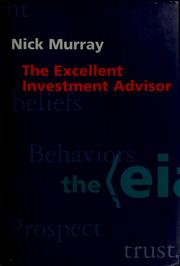
The most influential book on the craft of financial advising — covers client communication, behavioral coaching, and the philosophy of long-term advice. Essential reading for any advisor who wants to be truly client-centric.
A practical, experience-rich guide to building and running an advisory firm — operations, staffing, client service models, and growth. Caps the curriculum by connecting all the technical knowledge to a sustainable business.
Discussion
Keep reading
Paths that share books, cover the same subject, or open a related topic.