The Best Books on Hedge Funds and Alternative Investments
This curriculum builds from a solid conceptual foundation in how hedge funds operate, through the strategies and risk frameworks that define the industry, and finally into the war stories, forensic case studies, and advanced portfolio thinking that separate practitioners from observers. Starting at an intermediate level, each stage assumes the vocabulary and mental models established by the previous one, creating a coherent arc from "how the industry works" to "how the best (and worst) in the business actually think."
How the Industry Works
IntermediateUnderstand the structure, business model, and culture of the hedge fund industry — who the players are, how funds are organized, how they raise capital, and what distinguishes them from traditional asset management.
▸ Study plan for this stage
Pace: 6–8 weeks, ~40–50 pages/day (Mallaby first: ~3–4 weeks for ~550 pages; Lo second: ~3–4 weeks for ~400 pages)
- Hedge fund structure and legal organization: limited partnerships, lockup periods, redemption terms, and fee arrangements (2/20 model and variations)
- Capital raising and investor base: institutional investors, high-net-worth individuals, and the role of placement agents and fund-of-funds
- Historical evolution of the hedge fund industry: from A.W. Jones's innovation through major crises (LTCM, 2008) and how funds adapted
- Risk management frameworks: Value-at-Risk (VaR), stress testing, leverage constraints, and operational due diligence
- Hedge fund strategies and their business models: long/short equity, arbitrage, macro, event-driven, and how strategy drives organizational structure
- Regulatory environment and compliance: SEC registration, CFTC oversight, Dodd-Frank implications, and fiduciary responsibilities
- Compensation culture and incentive alignment: performance fees, clawbacks, and how compensation shapes risk-taking behavior
- Operational infrastructure: prime brokerage relationships, custodians, administrators, and technology systems that enable hedge fund operations
- What is the 2/20 fee structure, how has it evolved, and what are the economic incentives it creates for fund managers and investors?
- How do hedge funds differ from mutual funds and traditional asset managers in terms of legal structure, investor base, and regulatory constraints?
- What role did LTCM's collapse and the 2008 financial crisis play in shaping modern hedge fund risk management and regulatory oversight?
- Describe the capital-raising process: who are the typical investors, what due diligence do they conduct, and how do placement agents facilitate this process?
- How do different hedge fund strategies (e.g., long/short equity vs. macro) require different organizational structures, risk controls, and operational capabilities?
- What are the key operational counterparties (prime brokers, custodians, administrators) and why is operational due diligence critical to hedge fund investing?
- Create a detailed organizational chart for a hypothetical hedge fund, including roles (PM, traders, risk officer, compliance, operations) and explain how each function supports the fund's strategy
- Analyze a real hedge fund's offering memorandum (or a redacted template): identify fee structure, lockup terms, redemption gates, and investor eligibility criteria; compare to another fund's terms
- Build a simple Value-at-Risk (VaR) model for a small portfolio using historical data; stress-test it under scenarios similar to those described in Mallaby's LTCM chapter
- Interview or research a placement agent or fund-of-funds manager: document how they source deals, conduct due diligence, and structure their own fees
- Write a 2–3 page case study on one historical hedge fund crisis (LTCM, Amaranth, or 2008 redemption waves): identify the structural vulnerabilities and how the industry responded
- Compare the regulatory filings (Form ADV, if available) of two hedge funds with different strategies; note differences in leverage, liquidity management, and risk disclosures
Next up: This stage equips you with the institutional and operational foundations of hedge funds, preparing you to analyze specific investment strategies, portfolio construction techniques, and performance evaluation methods in the next stage.

The definitive narrative history of the hedge fund industry from A.W. Jones to the 2008 crisis. Read this first to get the full arc of the industry's evolution, its key personalities, and why hedge funds exist at all.
Provides the rigorous analytical framework — risk, return, liquidity, and performance measurement — that you need to move beyond storytelling and start evaluating funds systematically.
Core Strategies Decoded
IntermediateDevelop a working understanding of the major hedge fund strategies — long/short equity, global macro, arbitrage, event-driven, and quantitative — and the logic behind each.
▸ Study plan for this stage
Pace: 8–10 weeks, ~40–50 pages/day. Allocate 3–4 weeks per book to allow time for reflection and exercises between titles.
- Long/short equity strategy: mechanics of shorting, hedging market risk, and constructing balanced portfolios across bull and bear positions
- Global macro investing: top-down macroeconomic analysis, currency and commodity positioning, and leveraging broad market dislocations
- Arbitrage and relative value: identifying mispricings, statistical relationships, and convergence trades across securities and markets
- Event-driven strategies: merger arbitrage, distressed investing, and special situations—extracting value from corporate actions and market inefficiencies
- Quantitative and systematic approaches: factor models, backtesting, risk management, and the discipline of rules-based investing
- Risk management and position sizing: how professional investors control drawdowns, diversify across strategies, and scale positions
- Manager psychology and decision-making: behavioral biases, conviction, and the human element behind strategy execution
- What are the core mechanics of a long/short equity strategy, and how does it differ from traditional long-only investing in terms of risk and return profile?
- How do global macro investors use macroeconomic analysis and currency/commodity markets to generate returns, and what are the key risks?
- Explain the logic behind merger arbitrage as described in 'Merger Masters'—what is the spread, what drives it, and what can go wrong?
- What is the relationship between quantitative models and discretionary judgment in hedge fund investing, and how do successful managers balance the two?
- How do event-driven and arbitrage strategies differ in their approach to identifying opportunities and managing risk?
- What role does position sizing and portfolio construction play in controlling risk across multiple hedge fund strategies?
- Build a mock long/short equity portfolio: identify 3 long positions and 3 short positions in a sector of your choice, document your thesis for each, and track the spread between long and short returns over 2 weeks.
- Conduct a macro scenario analysis: pick a current geopolitical or economic event, map out the likely impact on currencies, commodities, and equity indices, and sketch a hypothetical global macro trade.
- Analyze a recent merger announcement: calculate the merger arbitrage spread, identify the key risks (regulatory, financing, timing), and estimate the probability-weighted return.
- Backtest a simple quantitative factor: using publicly available data (e.g., price-to-book, momentum), construct a ranking system, simulate a portfolio, and compare its historical performance to a benchmark.
- Write a one-page investment thesis for a distressed company or special situation: identify the catalyst, the margin of safety, and the exit scenario.
- Create a risk dashboard: track the correlation, volatility, and drawdown of 3–4 different hedge fund strategy indices (or proxies) over the past 3 years and discuss diversification benefits.
Next up: This stage equips you with a concrete taxonomy of hedge fund strategies and the reasoning behind each, preparing you to evaluate real-world hedge fund managers, assess their skill and risk management, and understand how they combine multiple strategies into a coherent portfolio.

A series of interviews with elite global macro managers that reveals how top practitioners actually think about markets, positioning, and risk — ideal for internalizing macro strategy intuitively before studying it formally.

Bridges the gap between fundamental long/short equity thinking and the quantitative, systematic approaches that now dominate the industry, giving you fluency in both languages.

Interviews with the leading event-driven and merger arbitrage investors, filling in the event-driven strategy pillar with real practitioner insight and deal-by-deal reasoning.
Risk, Blowups, and What Can Go Wrong
IntermediateUnderstand how leverage, liquidity, and model risk combine to create catastrophic failures, and why even brilliant strategies can implode — building a healthy respect for tail risk.
▸ Study plan for this stage
Pace: 8–10 weeks, ~40–50 pages/day (alternating between both books; ~2 weeks per book with overlap for synthesis)
- Leverage as a double-edged sword: how borrowed capital amplifies returns but also catastrophically amplifies losses when markets move against you
- Liquidity illusion and liquidity crises: the difference between theoretical liquidity and actual liquidity when everyone needs to exit simultaneously
- Model risk and the gap between theory and reality: how elegant mathematical models fail to account for tail events, correlation breakdown, and unprecedented market conditions
- Interconnectedness and systemic risk: how the failure of one major player (LTCM) can trigger cascading failures across markets and institutions
- Volatility clustering and tail risk: why normal distributions fail to predict market behavior during crises, and why tail events are far more common than models suggest
- Overconfidence and the illusion of control: how brilliant minds (Nobel laureates, PhDs) can become blind to risks they don't measure or refuse to acknowledge
- Counterparty risk and contagion: how credit relationships and interconnected bets create hidden vulnerabilities across the financial system
- The cost of being right too early: why even correct theses can blow up if leverage, liquidity, and timing work against you
- What were the specific leverage ratios and funding structures that made LTCM vulnerable, and how did they amplify losses during the 1998 crisis?
- How did the convergence trades in 'When Genius Failed' rely on liquidity assumptions that broke down, and what does this reveal about liquidity risk?
- Explain the role of model risk in both LTCM's collapse and the quant blowups described in 'The Quants'—what assumptions did the models share, and why did they fail simultaneously?
- How did the interconnectedness of major financial institutions turn LTCM's losses into a systemic threat, and what does this tell us about counterparty risk?
- Compare the 1998 LTCM crisis with the 2007–2008 quant crisis: what were the similarities in how leverage, liquidity, and model risk combined, and what was different?
- Why did brilliant quants and Nobel laureates in both books fail to anticipate or manage tail risk, and what psychological and institutional factors contributed to this blind spot?
- Create a detailed timeline of LTCM's leverage and funding from 1994–1998: plot the fund's size, leverage ratio, and major positions quarter by quarter, then mark the inflection points where liquidity dried up and losses accelerated.
- Analyze one specific convergence trade from 'When Genius Failed' (e.g., on-the-run vs. off-the-run Treasury spreads): calculate what spread compression was needed to profit, estimate the leverage required, and model what happens if the spread widens instead.
- Build a simple correlation matrix for the assets LTCM held (Treasuries, corporate bonds, emerging market debt, equity volatility) and show how correlations spiked to 1.0 during the 1998 crisis—then discuss why models trained on normal times failed.
- Read the key chapters on specific quant blowups in 'The Quants' (e.g., Amaranth, Renaissance, the 2007 quant meltdown) and create a case study template: What was the strategy? What was the leverage? What was the liquidity assumption? What broke?
- Write a 2–3 page memo from the perspective of a LTCM partner in July 1998 to the fund's investors, explaining the fund's positions, leverage, and liquidity situation—then write a second memo from September 1998 explaining what went wrong and why.
- Interview or survey 3–5 people working in hedge funds, risk management, or finance about their experience with or knowledge of tail risk events; ask them what surprised them most about 'When Genius Failed' or 'The Quants' and what lessons they apply today.
Next up: This stage builds a visceral understanding of how leverage, liquidity, and model risk create catastrophic failures, preparing you to evaluate hedge fund strategies, risk frameworks, and operational safeguards in the next stage with a healthy skepticism and respect for tail risk.
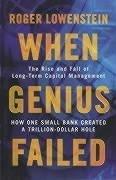
The forensic account of Long-Term Capital Management's collapse is the essential case study in hedge fund risk — read it to understand how leverage, correlation, and hubris interact under stress.
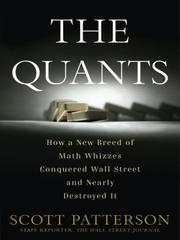
Follows the rise of quantitative hedge funds through the 2007 'quant quake,' showing how crowding and model risk can devastate even the most sophisticated strategies — a natural follow-on to LTCM.
Alternative Investments & Portfolio Construction
ExpertUnderstand how institutional investors allocate to hedge funds and alternatives, evaluate manager selection, and think about alternatives as a portfolio construction tool rather than isolated strategies.
▸ Study plan for this stage
Pace: 8–10 weeks, ~40–50 pages/day. Swensen's "Pioneering Portfolio Management" (4–5 weeks, ~30 pages/day) followed by Huber's "Allocator's Edge" (3–4 weeks, ~50 pages/day). Include 1–2 weeks for synthesis and portfolio modeling exercises.
- Swensen's endowment model: the strategic asset allocation framework that prioritizes alternatives (hedge funds, private equity, real assets) as core portfolio components rather than satellite positions
- Liability-driven investing and time horizon matching: how institutional investors structure allocations based on spending needs and long-term return requirements rather than benchmark-chasing
- Manager selection and due diligence: quantitative and qualitative criteria for evaluating hedge fund managers, including track record analysis, risk management, and organizational stability
- Alternative return drivers: understanding alpha generation, market-neutral strategies, and how alternatives provide diversification benefits beyond traditional stocks and bonds
- Portfolio construction with alternatives: correlation analysis, risk budgeting, and how to size positions in illiquid and liquid alternatives to optimize risk-adjusted returns
- Allocator's edge: the competitive advantage institutional investors gain through superior manager selection, negotiation power, and portfolio construction discipline
- Fee structures and net-of-fees analysis: evaluating hedge fund economics (2/20 model, high-water marks) and their impact on long-term wealth accumulation
- Behavioral and organizational factors: how institutional governance, investment committees, and long-term thinking create sustainable competitive advantage in alternatives
- How does Swensen's endowment model differ from traditional 60/40 stock-bond portfolios, and what role do alternatives play in achieving higher returns with acceptable risk?
- What are the key criteria for evaluating hedge fund managers, and how would you conduct due diligence on a manager's risk management and operational infrastructure?
- How should an institutional investor think about correlation and diversification when constructing a portfolio with hedge funds, private equity, and real assets?
- What is the 'allocator's edge,' and how do superior manager selection and negotiation power translate into outperformance for institutional investors?
- How do fee structures (including 2/20 models and high-water marks) impact net-of-fees returns, and when might hedge fund allocations still be justified despite high fees?
- How should liability-driven investing and time horizons inform the sizing and selection of alternative investments in a portfolio?
- Build a simplified endowment-style asset allocation model: design a strategic allocation across stocks, bonds, hedge funds, private equity, and real assets for a $1B institutional portfolio with a 5% annual spending requirement and 30-year horizon. Document your return assumptions, risk targets, and rebalancing rules.
- Conduct a mock hedge fund manager due diligence: select a real hedge fund (or use a case study), and create a 5–10 page evaluation covering track record analysis, strategy consistency, risk metrics (Sharpe ratio, max drawdown, correlation to benchmarks), fee structure, and organizational health.
- Perform a correlation and diversification analysis: gather 5 years of monthly returns for a traditional 60/40 portfolio, a hedge fund index, and a private equity index. Calculate correlations, construct an efficient frontier, and show how alternatives improve the risk-return profile.
- Analyze fee impact on long-term wealth: model the difference between a 0.5% all-in fee portfolio vs. a 2/20 hedge fund allocation over 20 years, assuming 8% gross returns. Calculate the net-of-fees wealth gap and break-even scenarios where hedge fund alpha justifies the fees.
- Create a portfolio construction case study: given a specific institutional mandate (e.g., pension fund, endowment, insurance company), design a multi-asset portfolio with hedge funds and alternatives. Justify your allocation decisions using Swensen's framework and Huber's allocator's edge principles.
- Develop a manager selection scorecard: build a quantitative and qualitative evaluation framework for hedge fund managers, including return metrics, risk metrics, operational due diligence, and fee negotiation criteria. Apply it to 3–5 real or hypothetical managers.
Next up: This stage equips you with the institutional mindset and portfolio construction toolkit to evaluate alternatives strategically; the next stage will likely deepen your expertise in specific alternative strategies (e.g., long/short equity, distressed, macro) or advanced risk management and performance attribution techniques.

The canonical text on institutional alternative investing, written by the Yale endowment's legendary CIO. Establishes the framework for why and how institutions allocate to hedge funds, private equity, and real assets.

A modern, practical update to Swensen's framework that addresses liquid alternatives, factor investing, and the current opportunity set — bridges classic endowment thinking to today's market.
Master-Class: How the Greatest Investors Think
ExpertInternalize the mental models, investment philosophies, and decision-making processes of the most successful hedge fund managers in history.
▸ Study plan for this stage
Pace: 8–10 weeks, ~40–50 pages/day (accounting for dense biographical and philosophical content requiring reflection)
- Jim Simons' quantitative revolution: how systematic, data-driven approaches displaced intuition-based investing
- The Renaissance Technologies model: building repeatable, edge-based systems that work across market regimes
- Market wizards' core philosophies: risk management, position sizing, and psychological discipline as competitive advantages
- Pattern recognition and adaptive thinking: how top investors identify market inefficiencies and adjust when conditions change
- The role of conviction, contrarianism, and independent thinking in outperformance
- Capital preservation and drawdown management as the foundation of long-term wealth creation
- Translating personal psychology and decision-making frameworks into systematic investment processes
- What were the key differences between Jim Simons' quantitative approach and the traditional fundamental investing methods that dominated before Renaissance Technologies?
- How did Renaissance Technologies maintain consistent returns across different market environments, and what role did systematic risk management play?
- What common psychological traits and decision-making patterns do the market wizards profiled in Schwager's book share, and how do they differ from average investors?
- Describe at least three specific risk management or position-sizing rules used by the hedge fund managers discussed, and explain why they were effective
- How do the investment philosophies in both books address the tension between following a system/rules and adapting to changing market conditions?
- What lessons from Simons' and the market wizards' approaches are directly applicable to your own investment decision-making process?
- Create a detailed profile of Jim Simons' investment philosophy and Renaissance Technologies' operating model, then compare it point-by-point with one market wizard from Schwager's book—identify what they share and where they diverge
- Document 5–7 specific decision-making rules or heuristics mentioned in the books (e.g., position sizing limits, stop-loss protocols, conviction thresholds) and write a one-page explanation of why each one works psychologically and mathematically
- Conduct a mock portfolio review: select a recent market drawdown or regime shift and analyze how the risk management frameworks from both books would have performed—what would they have done differently than the market?
- Write a personal investment manifesto (2–3 pages) that synthesizes the mental models from both books into your own decision-making framework, including specific rules for entry, sizing, and exit
- Interview or case-study analysis: pick one market wizard from Schwager's book and trace their biggest loss or mistake—what does it reveal about their risk management philosophy and how it evolved?
- Comparative timeline exercise: create a visual timeline showing how market conditions changed across the periods covered in both books and annotate how Simons' and the wizards' approaches would have adapted
Next up: This stage establishes the foundational mental models and systematic thinking of elite investors, preparing you to apply these frameworks to real-world portfolio construction, risk management implementation, and your own investment decision-making in the next stage.

The definitive account of Jim Simons and Renaissance Technologies — the most successful hedge fund ever — revealing how a purely quantitative, data-driven approach redefined what is possible in investing.
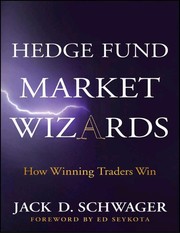
Interviews with 15 of the top hedge fund managers across every major strategy, synthesizing the wisdom of the entire curriculum into the mindsets and habits that separate elite performers from the rest.
Discussion
Keep reading
Paths that share books, cover the same subject, or open a related topic.