Walter Isaacson Reading Order: Where to Start
Isaacson's books are not a series and there is no chronology to obey — the useful order is by how well each one works as your first. He writes two kinds of book: the single-subject life of a difficult genius, and the group biography that argues innovation is collaborative rather than solitary, and those two kinds contradict each other in interesting ways. Start with the tech biographies he had unusual access for, take the two great-genius books next, then the group histories, and leave the older political volumes for when you already like his method.
Start Here: The Ones He Was in the Room For
BeginnerRead the two biographies written with the subject's cooperation, and learn Isaacson's central move — scene, then anecdote, then a flat statement of the pattern the anecdote proves.
▸ Study plan for this stage
Pace: Six to seven weeks for about 1,350 pages. Steve Jobs is 665 pages and Elon Musk 688, but both are built out of short scene-driven chapters, so 30 to 40 pages an evening is comfortable and most readers move faster than they expect. Read them consecutively rather than months apart — the comparison bet
- Isaacson's method is consistent enough to name: a reconstructed scene, then a corroborating anecdote from an interview, then a flat declarative sentence stating the pattern the anecdote proves. Once you can see the three-beat structure you can read him very fast, and you can also see where the third
- Steve Jobs came out of roughly forty interviews with Jobs himself, at Jobs's own request, and was published weeks after his death in 2011. Jobs waived editorial control, and the book is unusually willing to make him look cruel.
- The standing criticism of the Jobs book, made by several people who worked with him, is that it over-weights the humiliations and the tantrums and under-weights the actual design work. Read it aware of that charge and judge how much of the book is about products.
- The reality distortion field is the book's central idea: Jobs's ability to make people believe a deadline or a specification was achievable, which produced both impossible products and serious human damage. Isaacson refuses to separate the two.
- Elon Musk, from 2023, is the same experiment run again — two years shadowing the subject, near-total access — with a much less settled verdict, because the story had not finished and arguably still has not.
- Reading Musk second, while the Jobs template is fresh, is the point of this stage. The books share a thesis about intensity and cruelty as inseparable from achievement, and the second one is far more interesting as a rerun than as a standalone.
- Access biography has a structural cost. The subject supplies the anecdotes, the framing and much of the cast, and the biographer's independence is the thing under permanent pressure. Both books are worth reading partly as evidence about that trade.
- Isaacson's background is journalism rather than history — he ran Time and CNN before this — which explains both the readability and the preference for scene over analysis.
- What are the three moves in a typical Isaacson chapter, and can you find a chapter where the concluding claim outruns the evidence offered for it?
- What did Jobs gain by giving up editorial control, and what did Isaacson gain by taking the access?
- How much of Steve Jobs is about what Apple made, as against how Jobs behaved? Is the criticism that the ratio is wrong a fair one?
- What does Isaacson mean by the reality distortion field, and does the book treat it as a technique, a pathology, or both?
- Where does the Musk book withhold judgement that the Jobs book delivers, and is that a difference in the subjects or in the moment each was written?
- What are the specific dangers of a biography written with the subject in the room, and where can you see them operating in these two books?
- Pick one chapter in Steve Jobs and mark its sources in the margin — Jobs, a colleague, a document, or unattributed. It takes twenty minutes and it shows you exactly how the access is being spent.
- Write the thesis of each book in a single sentence before reading the other. Comparing the two sentences afterwards is the whole payoff of the pairing.
- After Musk, find one contemporaneous news account of an event the book narrates and compare them. Access biography and reporting differ in interesting ways and one comparison makes the difference concrete.
- Keep a list of the recurring Isaacson words — perfectionist, reality distortion, connecting the humanities to the sciences. They recur across every book in his catalogue and spotting them now makes the later volumes read faster.
Next up: Having seen what Isaacson does with a subject who can answer back, you are positioned to see what changes when the subject has been dead for fifty or five hundred years.
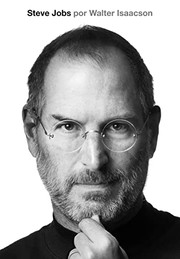
The right first Isaacson. Forty interviews with Jobs himself, published weeks after his death, and unusually willing to make its subject look monstrous. It is also the book that defined his method for everything after it.
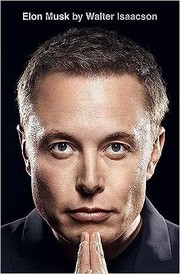
Two years shadowing Musk, and effectively a rerun of the Jobs experiment with a less settled verdict. Read it second while the Jobs template is fresh, because the comparison is the most interesting thing about it.
The Great-Genius Books
BeginnerMove to the two lives he had to reconstruct from archives rather than access, and see what he does with a subject who cannot answer back.
▸ Study plan for this stage
Pace: Six to seven weeks for about 1,300 pages. Einstein: His Life and Universe is 704 pages and contains the hardest technical writing in his catalogue — give the relativity chapters a slower gear, perhaps 20 pages a sitting, and the biographical chapters the usual 35. Leonardo da Vinci is 599 pages, hea
- The full published title of the Einstein book is Einstein: His Life and Universe, from 2007. Our catalogue lists it under the bare title Einstein, so ask for the full title in a bookshop.
- It was the first major biography written after Einstein's personal correspondence was released, and the private letters change the book substantially — the first marriage, the children, and the distance he kept are all documented rather than inferred.
- The physics chapters are the best technical exposition Isaacson has written. He explains special and then general relativity for a reader with no mathematics, and does it without the usual trains-and-lightning cliché doing all the work.
- The book's thesis is that Einstein's rebelliousness and his physics were the same trait: the willingness to disbelieve an authority, including Newton, is what made the 1905 papers possible and what made him politically awkward for the rest of his life.
- Leonardo da Vinci, from 2017, is built out of the surviving notebooks rather than the paintings, which is the decision that makes the book distinctive. Leonardo finished very little; the notebooks are where the mind is.
- Its argument is that curiosity is a discipline rather than a temperament — Leonardo taught himself to observe by writing down absurdly specific questions and then pursuing them, and the book reproduces the lists.
- Read it after Einstein because both are making the same claim: that the significant thinkers work by seeing a pattern across fields nobody had connected. That claim is Isaacson's signature and this is where it is most explicit.
- Without access, Isaacson's method changes. The scene-anecdote-lesson structure survives, but the scenes now come from documents, and the difference in texture between these two books and the previous stage is worth noticing directly.
- How does Isaacson explain the difference between special and general relativity, and could you now give that explanation to someone else?
- What do the released personal letters reveal about Einstein's first marriage and his children, and how does the book handle the gap between the public saint and the private record?
- What is the connection Isaacson draws between Einstein's scepticism of authority and his physics? Is it argued or asserted?
- Why build a Leonardo biography from notebooks rather than paintings, and what does that choice cost as well as gain?
- What does Isaacson mean by curiosity as a discipline, and what practices does he identify in Leonardo's notebooks to support it?
- How does his method change when the subject cannot be interviewed? Point to a specific difference in how a scene is constructed.
- Write out Isaacson's explanation of general relativity in your own words, in a paragraph, without looking. If you cannot, reread the chapter — this is the one place in his catalogue where the writing is genuinely doing technical work and skimming it wastes the book.
- Copy three of Leonardo's to-do list items out of the book. They are the most quoted thing in it for a reason, and having them written down is more useful than remembering that they exist.
- Look at the plates in the Leonardo alongside the relevant chapter rather than separately. The book is designed for that and reading the text alone halves it.
- For each book, note one place where the absence of the subject forces Isaacson to speculate, and how he signals the speculation. Comparing that signalling with the Jobs book is a good test of his honesty as a biographer.
- Write one sentence on what Einstein and Leonardo are supposed to have in common, according to Isaacson. That sentence is the great-man thesis the next stage sets out to contradict.
Next up: You now have Isaacson's strongest statement of the solitary-genius case, which is precisely what his two group biographies were written to argue against.
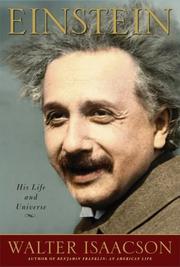
Written after the personal letters were released, and the best thing he has done. It also explains relativity clearly enough for a reader with no physics, which is the hardest technical writing in his catalogue.

Built out of the notebooks rather than the paintings, and the most enjoyable to hold — it is a book about curiosity as a discipline. Read it after Einstein for the same argument about pattern-seeing across fields.
The Group Biographies
IntermediateRead the books that argue against the great-man premise of the previous stage, and notice Isaacson's own ambivalence about it.
▸ Study plan for this stage
Pace: Five to six weeks for about 1,140 pages. The Innovators is 583 pages and moves quickly because it is really a linked series of short profiles; The Code Breaker is 560 pages with more scientific and ethical argument and deserves a slower pass. Read The Innovators first — it is the direct rebuttal of
- The full title is The Innovators: How a Group of Hackers, Geniuses, and Geeks Created the Digital Revolution, from 2014. Our catalogue lists it as The Innovators.
- It runs from Ada Lovelace in the 1840s to Google, and its thesis is a direct contradiction of the great-genius framing: the digital revolution came from teams, funding structures and collaborations, and the eureka-moment story is almost always false.
- Read it as an argument with Steve Jobs, because that is what it is. The same author who spent 665 pages on a singular difficult visionary now spends 583 arguing that singular visionaries are a narrative artefact.
- The chain is the structure: each chapter hands something to the next, and the book's claim is that the handoffs matter more than the people. Watching whether Isaacson actually sustains that against his own instinct for the charismatic individual is the most interesting thing about reading it.
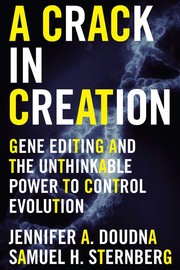
- The full title of the second is The Code Breaker: Jennifer Doudna, Gene Editing, and the Future of the Human Race, from 2021. Our catalogue lists it as The Code Breaker.
- It combines both his modes: one central figure, Jennifer Doudna, inside a crowded and competitive race. The CRISPR story has a collaborator in Emmanuelle Charpentier, a rival in Feng Zhang, a patent fight, and a Nobel.
- It is also the most consequential subject he has taken on, because it ends in ethics rather than in achievement — the germline editing of human embryos, and what it would mean to make heritable changes to people. Isaacson does not resolve it and says so.
- Together these two books make Isaacson's ambivalence visible. He believes the collaborative account and keeps writing books shaped around one compelling person, and the tension is more honest than a settled position would be.
- What is the collaboration thesis of The Innovators, and where in the book does Isaacson's own narrative instinct pull against it?
- Trace one handoff in the chain — a specific idea passing from one group to the next. Does the book show the mechanism, or assert the continuity?
- How does The Code Breaker handle the priority dispute over CRISPR, and does Doudna's cooperation with the author affect the balance?
- What is the difference between somatic and germline gene editing, and why does the book treat the second as a different kind of decision?
- Where does Isaacson stand on He Jiankui's edited babies, and does he take a position or narrate the controversy?
- Having read four Isaacson books, is he a great-man biographer who writes occasional group histories, or a collaboration theorist who keeps choosing charismatic subjects?
- Read The Innovators immediately after finishing anything in stage one, or reread the Jobs book's final chapter first. The rebuttal only lands if the thing being rebutted is fresh.
- Draw the chain from The Innovators as an actual diagram — Lovelace, Turing, the transistor, the integrated circuit, the personal computer, the network, the browser. Isaacson's argument is structural and a diagram tests whether it holds.
- After The Code Breaker, write down where you personally draw the line on heritable human gene editing. The book is built to force that and reading it without answering is reading it passively.
- Compare how The Code Breaker treats Doudna with how Steve Jobs treats Jobs. Both had the author's attention and access; the difference in warmth is instructive about what access does.
- Note every point at which The Innovators describes a woman being written out of a story that later credits a man. It is one of the book's sustained threads and easy to read past.
Next up: With his mature method and its internal contradiction fully in view, the early political volumes stop looking like a different writer and start looking like the apprenticeship for all of it.
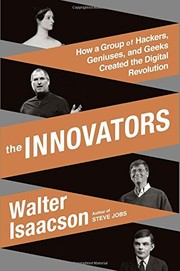
The history of computing from Ada Lovelace to Google, told as a chain of collaborations rather than eureka moments. It is the direct rebuttal of the Jobs book, which is why it belongs after it rather than before.
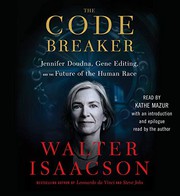
Jennifer Doudna, CRISPR and the ethics of editing the human germline. It combines both his modes — one central figure inside a crowded race — and is the most consequential subject he has taken on.
The Earlier, More Political Isaacson
IntermediateGo back to the books he wrote as a working journalist, which are drier, longer and closer to conventional history.
▸ Study plan for this stage
Pace: Ten to twelve weeks for roughly 2,330 pages, and be honest with yourself about that number. Benjamin Franklin at 590 pages reads like the modern books; Kissinger at 893 and The Wise Men at 853 do not — they are dense, heavily reported political history and 20 to 25 pages a sitting is realistic. This
- The full title is Benjamin Franklin: An American Life, from 2003; our catalogue lists it as Benjamin Franklin. It is the bridge between his political books and his innovation books, because Franklin is both a founder and an inventor.
- Its Franklin is a self-inventing pragmatist — the man who wrote his own character into being through habits, lists and public projects — and he is the figure Isaacson's entire catalogue keeps circling back to. Read after The Innovators, the resemblance to how Isaacson describes modern founders is un
- The full title is Kissinger: A Biography, from 1992; our catalogue lists it as Kissinger. It was his first major solo book and predates the style entirely.
- Kissinger is reported journalism rather than the anecdote-driven method of the tech books: longer, drier, closer to conventional diplomatic history, and considerably tougher on its subject than the book's reputation suggests. It was written with interviews but without the subject's control.
- The Wise Men: Six Friends and the World They Made, from 1986, was co-written with Evan Thomas and is the earliest book here. It follows the six American officials who built postwar foreign policy — Acheson, Bohlen, Harriman, Kennan, Lovett and McCloy — as a single interlocking group.
- The Wise Men is the origin of the form. It is a group biography arguing that a policy emerged from a network of friendships rather than from any one mind, which is exactly the argument The Innovators makes about technology nearly thirty years later.
- Reading it last, as the seed rather than as an early work, is the point of putting it here. Everything Isaacson later does with groups is visible in it in a rougher and more heavily reported form.
- These books also show what his method sacrificed for readability. The early volumes have more documentation and less momentum, and deciding which you prefer is a reasonable thing to come out of this path with.
- What does Isaacson identify as Franklin's central technique for making himself into the person he wanted to be, and how does that connect to the modern subjects?
- How does Kissinger: A Biography assess its subject's record, and where is it hardest on him?
- What does the 1992 Kissinger do that the 2011 Steve Jobs does not, and vice versa? What is gained and lost between the two styles?
- What is the collective argument of The Wise Men about how postwar American foreign policy was made?
- In what specific ways is The Wise Men the template for The Innovators? Name at least two structural similarities.
- Having read all nine, which Isaacson do you prefer — the reported historian of 1986 to 1992, or the access biographer of 2011 onward — and what does each get right?
- Read the Franklin immediately before or after The Innovators. It is the clearest demonstration that Isaacson has been writing one book about American ingenuity for twenty years.
- Take one chapter of Kissinger and one of Elon Musk and compare paragraph length, sourcing density and how much narration is scene. It is a precise measurement of what changed in his prose across thirty years.
- For The Wise Men, keep a card for each of the six. The book braids them and the first two hundred pages are much easier with names to hand.
- Write a final page ranking all nine books, with one line each on who you would hand it to. That page is the useful artefact of reading a whole catalogue rather than a few highlights.
- Decide, in writing, whether access biography is worth its costs. Nine books of evidence is more than most readers ever have on that question, and it is the most transferable thing this path leaves you with.
Next up: This completes the catalogue as it stands, from the 1986 group biography to the most recent access portrait, leaving you able to place whatever Isaacson publishes next before you open it.
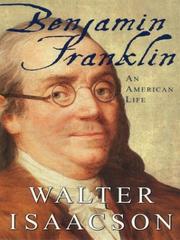
The founder as self-inventing pragmatist, and the bridge between his political and his innovation books. Franklin is the figure his whole catalogue keeps circling back to, so this reads differently once you have the later work.
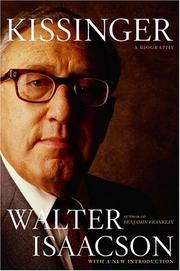
His first major biography, from 1992, and much tougher on its subject than the reputation suggests. Read it knowing it predates the style — it is reported journalism rather than the anecdote-driven method of the tech books.

Co-written early in his career, about the six friends who built American foreign policy after 1945. The first group biography he ever attempted, and the seed of everything The Innovators later did — worth reading last, as the origin of the form.
Discussion
Keep reading
Paths that share books, cover the same subject, or open a related topic.