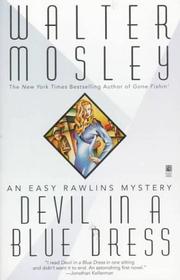
Start with DEVIL IN A BLUE DRESS (Easy Rawlins Mysteries), listed in our catalogue in that capitalised form and sold everywhere as Devil in a Blue Dress. It is the first Easy Rawlins novel, and it beats the obvious alternative — picking whichever Mosley title a shop happens to stock — because it establishes both the voice and the historical method that everything else in his catalogue is measured against.
This guide is not an Easy Rawlins reading order. There are fifteen Rawlins novels and they have their own path here; this one takes three of them as a single stage and then goes where most guides do not, into the three other kinds of book Mosley writes.
The Rawlins opening
Easy Rawlins is Ezekiel Rawlins: born in Louisiana, a veteran of the fighting in Europe, living in Watts because the war ended and Los Angeles was where the work was. He is not a licensed investigator; people come to him because he knows everybody and the police are not an option.
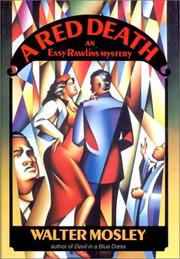
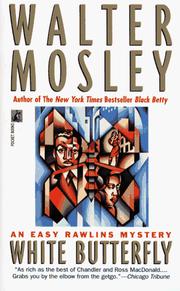
The historical project is the real subject. Each novel is pinned to a specific year, and the sequence walks postwar Black Los Angeles forward decade by decade — 1948 in the first book, 1953 in A red death, 1956 in White Butterfly (Easy Rawlins Mysteries). The first opens with Easy laid off from an aircraft plant and unable to make his mortgage, which is the engine of the whole series: property, not curiosity, is his motive. A red death moves into the McCarthy period, with an IRS agent and the FBI leaning on him at once. White Butterfly (Easy Rawlins Mysteries) is where Mosley stops protecting his hero, and it is the book that decides whether you want the rest.
The other Mosley: Socrates Fortlow
Always outnumbered, always outgunned is fourteen linked stories about a man who killed two people, served a very long sentence, and now lives alone in a converted shed in Watts collecting bottles. He is fifty-eight, enormously strong, and terrified of his own hands. Read one or two stories a sitting rather than straight through; they are built to sit separately.
The question is not whether he can be forgiven but what a moral life actually costs a man with his record. Dropping the detective armature exposes what Mosley is really interested in — there is no case, no client and no resolution, only ethical reasoning conducted by a man with almost no power. Mosley has said this is his own favourite among his books. Walkin' the dog follows Socrates further and is less consoling; read it within days of the first.
Leonid McGill, Mosley in the present
The long fall introduces a licensed New York private investigator, a former boxer who spent years being paid to frame innocent people for organised crime and has decided to stop. That premise is the inverse of Easy's: Easy is a decent man pushed into bad situations, and McGill is a man who did real harm and is trying to work out what restitution would even look like.
Read The long fall first without exception; the later books assume the debt, the marriage and the children and re-explain none of it. Known to Evil deepens the domestic plot alongside the case, and When the thrill is gone is where the series settles into its real theme. These carry their continuity more heavily than the Rawlins books, so do not leave long gaps.
The books that are not detective novels
RL's dream is about a dying bluesman in New York who claims he once played with Robert Johnson, and the young white Southern woman who takes him in. No crime, no case, no series — this is the novel Mosley wrote to prove he could, and its subject is the blues as a form of knowledge.
The man in my basement is a two-hander: a broke Black man on Long Island rents his basement to a wealthy white businessman who wants to be locked in a cage there and pays handsomely for it. It owes more to Dostoevsky than to Chandler, and it is the most formally daring thing Mosley has written and the most likely to divide readers.
Down the River unto the Sea returns to the detective form with everything the previous decades taught him, and won the Edgar Award for best novel. Read it last: it reads as a summary of all his modes at once.
Where to go next
Mosley has published more than sixty books across crime, science fiction, plays and non-fiction, so no single path is a survey. If the opening stage is the one that landed, the full fifteen-novel Rawlins sequence is the obvious continuation and is the most popular route through his work.
Follow the full ordered path here: Walter Mosley Reading Order: Where to Start.