Walter Mosley Reading Order: Where to Start
Walter Mosley has published more than sixty books and readers almost always meet him through one of them, Devil in a Blue Dress, which is both the right door and a slightly misleading one. He runs several detective series at once, and around them sits a body of stranger work — a blues novel, a philosophical hostage story, a science-fiction book — that the crime shelf hides. This path opens the Easy Rawlins door, then deliberately walks you out of it into the three other Mosleys, so you finish knowing which of them you actually want more of.
Start Here: Easy Rawlins, Los Angeles
BeginnerRead the opening of his most famous series and get the historical project — post-war Black Los Angeles, decade by decade, told as detective fiction.
▸ Study plan for this stage
Pace: Three to four weeks for about 790 pages across three short novels. Each is a week at 40 to 45 pages an evening, and they read faster than that once the voice takes. Read them in order and close together — they are set five and then three years apart, and the point of the stage is to feel the neighbo
- Easy Rawlins is Ezekiel Rawlins: born in Louisiana, a veteran of the fighting in Europe, and living in Watts because the war ended and Los Angeles was where the work was. He is not a licensed investigator. People come to him because he knows everybody and because the police are not an option.
- The historical project is the series' real subject. Each novel is set in a specific year and the sequence walks postwar Black Los Angeles forward decade by decade — 1948 in Devil in a Blue Dress, 1953 in A Red Death, 1956 in White Butterfly.
- Devil in a Blue Dress opens with Easy laid off from an aircraft plant and unable to make the mortgage, which is the engine of the whole series: he takes the job because a man who owns a house cannot say no to money. Property, not curiosity, is his motive.
- Mouse — Raymond Alexander — is the most important figure around him and the most alarming. He is Easy's oldest friend, entirely without conscience, and the books use him to ask what it costs to have someone like that on your side.
- A Red Death moves into the McCarthy period, with an IRS agent and the FBI leaning on Easy at once and a church at the centre of the case. Political surveillance and tax pressure are the weapons, which is a very different kind of threat from the previous book's.
- White Butterfly is where Mosley stops protecting his hero. The case turns on the police caring about a dead white woman and not about the dead Black women who preceded her, and Easy's marriage and self-image both come apart. It is the book that decides whether you want the whole series.
- The prose is the reason people stay. Mosley writes first-person American with an economy that stands comparison with Chandler, and he uses it to describe a city Chandler never wrote about.
- This path treats Rawlins as one stage on purpose. There are fifteen novels and this site has a separate Easy Rawlins reading path that takes them in full — go there if these three land, and come back here for the rest of Mosley.
- Why does Easy take the job in Devil in a Blue Dress, and what does that reason establish about every case that follows?
- How does the specific year of each novel change what Easy can and cannot do? Name a concrete constraint in each of the three.
- What does Mouse do that Easy will not, and what does the friendship cost Easy across the three books?
- In White Butterfly, what does the police response to the murders reveal, and how does Mosley make that a plot mechanism rather than a stated theme?
- What is Easy's relationship to property — the house, the buildings, the money — and why does Mosley keep returning to it?
- How does Easy get information? The methods are specific to who he is and where he lives, and they are not the methods of a licensed detective.
- Note the year at the head of each book and read one short account of what was happening in Los Angeles then. Ten minutes each and the series stops being period colour and becomes history.
- Track Easy's finances across the three novels — what he owns, what he owes, what each job pays. Mosley keeps that ledger deliberately and it is the clearest thread in the early books.
- Write one line on Mouse after each novel. He changes less than Easy does, which is exactly the problem, and watching Easy's tolerance of him shift is the emotional spine of the run.
- At the end of White Butterfly, decide whether you want the remaining twelve Rawlins novels. If you do, follow the dedicated Easy Rawlins path on this site rather than continuing here — this path is about the writer, not the series.
- Read the first page of Devil in a Blue Dress aloud. The voice is established in about six sentences and hearing it is the fastest way to understand what Mosley did to the American detective novel.
Next up: You have Mosley's best-known register and his historical method, which is precisely the equipment needed to see what he does when he strips the detective machinery out entirely.
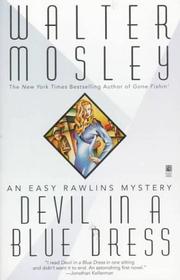
The first Easy Rawlins and the right first Mosley for nearly everyone. A laid-off aircraft worker in 1948 Watts takes a job finding a white woman who frequents Black jazz clubs, and needs the money badly enough not to ask why.
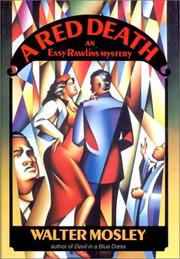
1953, the IRS and the FBI both leaning on Easy at once. Read it second: the series is a decade-by-decade history of the neighbourhood, so its power comes entirely from taking the books in sequence.
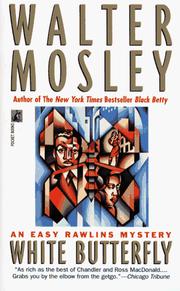
1956, and the book where Mosley stops protecting his hero — Easy's marriage and his self-image both come apart. This is where you will know whether you want all fifteen Rawlins novels, which have their own path on this site.
The Other Mosley: Socrates Fortlow
IntermediateRead the linked stories that show what Mosley does when he drops the detective armature entirely.
▸ Study plan for this stage
Pace: Two to three weeks for about 470 pages. Always Outnumbered, Always Outgunned is fourteen linked stories in 208 pages — read one or two a sitting rather than straight through, because they are built to sit separately and the cumulative weight is lost at speed. Walkin' the Dog can be read faster, and
- Socrates Fortlow killed two people, served a very long sentence, and now lives alone in a converted shed in Watts collecting bottles and taking whatever work he can get. He is fifty-eight, enormously strong, and terrified of his own hands.
- The question the stories ask is not whether he can be forgiven but what a moral life actually costs a man with his record — whether decency is available to someone who has done what he has done, and what he owes.
- The form matters. These are linked stories, not a novel: each is a self-contained moral problem, usually small — a stolen chicken, a boy who needs advice, a job application — and the accumulation is the argument.
- Dropping the detective armature exposes what Mosley is really interested in. There is no case, no client and no resolution, and what remains is ethical reasoning conducted by a man with almost no power.
- Mosley has said this is his own favourite among his books, and it is the strongest single argument that he is a novelist who works in genre rather than a genre writer.
- Walkin' the Dog follows Socrates further, including a confrontation with a brutal police officer, and is less consoling than the first book. Read it straight on — same voice, same form, harder conclusions.
- Read against the Rawlins books, the contrast is instructive: Easy has a house, a network and a measure of leverage, and Socrates has none of those. Same city, same era of aftermath, radically different amount of room to manoeuvre.
- The prose gets plainer here. Mosley strips out the noir cadence and writes something closer to parable, which is a deliberate change of instrument rather than a lapse.
- What does Socrates believe he owes, and to whom? Is the answer consistent across the fourteen stories?
- Why does the linked-story form suit this material better than a novel would?
- In which story does Socrates come closest to violence, and what stops him? What does the book think stopped him?
- How does Mosley's sentence-level style differ here from Devil in a Blue Dress, and what does the change buy him?
- What does Walkin' the Dog conclude about the police that the first book left open?
- Set Socrates against Easy: what does each man have that the other does not, and what does the comparison say about how Mosley sees power?
- Read one story a night with a gap. These are designed to be sat with, and reading fourteen in two sittings genuinely flattens them.
- After each story, write the moral problem in one sentence, stripped of plot. The list you end up with is a short course in applied ethics and is the best evidence of what Mosley is doing here.
- Pick the story you found hardest to accept and argue the other side in a paragraph. Several of them are constructed to make the reader uncomfortable with Socrates's judgement, and that discomfort is intended.
- Compare the opening paragraph of Always Outnumbered, Always Outgunned with the opening of Devil in a Blue Dress. Two entirely different instruments, same writer, seven years apart.
Next up: Having seen Mosley without a detective, you can now watch him rebuild one from scratch in a different city and a different century.
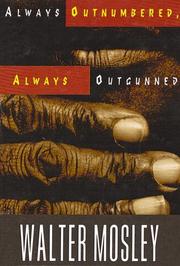
Fourteen linked stories about an ex-convict who killed two people, now living in a Watts shed and trying to work out what a moral life costs a man with his record. Mosley's own favourite among his books, and the best single argument that he is not a genre writer.
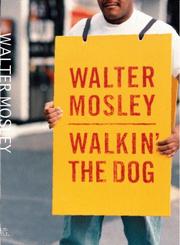
The sequel, following Socrates into a confrontation with a brutal police officer. Read it straight on — it is the same form and the same voice, taking the first book's ethical questions somewhere less consoling.
Leonid McGill: Mosley in the Present
IntermediateSee what changes when he moves the detective novel from historical Los Angeles to contemporary New York.
▸ Study plan for this stage
Pace: Four to five weeks for about 1,000 pages across three novels of 300 to 370 pages. A book every ten days to two weeks. These carry their continuity more heavily than the Rawlins novels, so do not leave long gaps between them — the family plot runs across all three and picking it up cold is genuinely
- Leonid McGill is a licensed New York private investigator, a former boxer, and a man who spent years being paid to frame innocent people for organised crime. The series begins after he has decided to stop, and the whole arc is the debt he is trying to work off.
- That premise is the opposite of Easy Rawlins's. Easy is a decent man pushed into bad situations; McGill is a man who did real harm and is now trying to compute what restitution would even look like. The detective plot is the delivery mechanism for that calculation.
- The Long Fall establishes the setup and should be read first without exception. The later books assume the debt, the marriage and the children, and none of it is re-explained.
- The family is the actual subject. Katrina, the wife; Twill, the son who is not biologically his and is the most competent criminal in the family; Dimitri; the rest of a household McGill cannot control and will not abandon.
- Known to Evil deepens the domestic plot alongside the case, and When the Thrill Is Gone is where the series settles into its real theme — a man trying to be decent inside institutions that reward the opposite.
- The contemporary setting changes the texture. There are phones, databases and surveillance, and Mosley uses modern New York money — hedge funds, real estate, art — where the Rawlins books used the racial geography of Los Angeles.
- Note the concession in the naming: Leonid Trotter McGill was named by a communist father who then vanished, which is Mosley's compact way of putting twentieth-century politics in the character's own name.
- Compare the two detectives directly. Both are Black men working outside institutions that will not protect them, forty years and a continent apart, and reading the McGill books after the Rawlins ones is the clearest way to see what Mosley thinks has and has not changed.
- What did McGill do before the series starts, and what would count as making it right? Does he ever articulate a standard?
- Why does Mosley give him a family he cannot control, and what does the household do for the books that the cases cannot?
- How does Twill function — as comic relief, as a moral test, or as McGill's own past being repeated?
- What is different about being a Black investigator in twenty-first-century New York, as these books present it, compared with Easy Rawlins's Los Angeles?
- Which of the three books works best, and is that a judgement about the case or about the family plot?
- Does McGill hold you the way Easy does? Being able to say why or why not is the real question this stage is asking.
- Keep a family tree for the McGill household from the first book. It is small but tangled, and the continuity across the three novels rests on it.
- After The Long Fall, write down what you think McGill's restitution would have to consist of. Then check your answer against where the third book leaves him.
- Take one case and one Rawlins case and compare who the client is, who the victim is and who ends up protected. The changes across sixty fictional years are the point of reading both series.
- Note where the modern technology actually changes the investigation and where it does not. Mosley is careful about this and it is one of the better things about the McGill books.
- Decide at the end whether you want the remaining McGill novels. The three here are enough to judge the series fairly, and stopping is a legitimate outcome.
Next up: With three detective registers behind you — historical, contemporary and none at all — the last stage is where the crime-fiction shelving stops describing what Mosley writes.
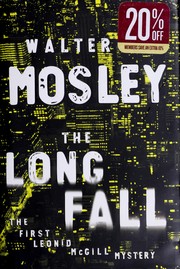
The first Leonid McGill: a Manhattan private investigator who spent years framing innocent men for the mob and is now trying to balance the books. Start the series here — the whole arc is the debt he is working off.
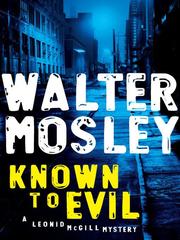
Second in the series, deepening the family plot that runs alongside the cases. The McGill books carry their continuity more heavily than the Rawlins ones, so order matters more here, not less.
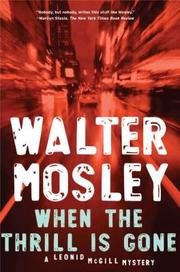
The third, and the one where the series settles into its real subject — a man trying to be decent inside institutions that reward the opposite. A good place to judge whether McGill holds you the way Easy does.
The Books That Are Not Detective Novels
BeginnerRead the standalone work that the crime-fiction shelving hides, and see the full range.
▸ Study plan for this stage
Pace: Four to five weeks for about 860 pages. RL's Dream at 272 pages and The Man in My Basement at 249 are both short and both slow — they resist being read quickly and 25 to 30 pages a sitting is right. Down the River Unto the Sea is a proper crime novel again at 336 pages and can be read at the pace of
- RL's Dream is about Soupspoon Wise, a dying bluesman in New York who claims he once played with Robert Johnson, and the young white Southern woman who takes him in. There is no crime, no case and no series — this is the novel Mosley wrote to prove he could.
- Its subject is the blues as a form of knowledge, and it is the book his admirers hand to people who assume he only writes mysteries. The prose is looser and more lyrical than anything in the detective novels.
- The Man in My Basement is a two-hander: a broke Black man on Long Island, Charles Blakey, rents his basement to a wealthy white businessman who wants to be locked in a cage there and pays handsomely for it. The reason is the book.
- It owes more to Dostoevsky than to Chandler — a philosophical novel about guilt, complicity, and whether a man can buy absolution from someone he has never met. It is the most formally daring thing Mosley has written and the most likely to divide readers.
- Read those two together and Mosley's actual preoccupations become visible: the price of a moral life, the ownership of property as the ownership of self, and what one person can legitimately ask of another.
- Down the River Unto the Sea returns to the detective form with everything the previous decades taught him. Joe King Oliver is an ex-police detective who was framed and imprisoned, now working as an investigator, taking on the case of a journalist on death row.
- It won the Edgar Award for best novel, and it reads as a summary of all his modes at once — the wrongful-conviction anger of the McGill books, the moral accounting of Socrates, the historical grievance of Rawlins.
- Mosley has published more than sixty books across crime, science fiction, plays and non-fiction. This stage is not a survey of the outliers; it is the three that most reward a reader who has come through the detective work first.
- What does RL's Dream claim the blues is for, and how does the novel's own structure imitate that claim?
- Why does Anniston Bennet want to be imprisoned in The Man in My Basement, and does the novel accept his reasoning?
- What does Charles Blakey's house mean to him, and how does the arrangement change his relationship to it?
- What connects the moral logic of The Man in My Basement to the ethical problems Socrates Fortlow faces? They are closer than the plots suggest.
- In what specific ways does Down the River Unto the Sea combine the Rawlins, Fortlow and McGill modes? Name one element from each.
- Having read across all four stages, what is Walter Mosley's recurring subject — the thing that is present in the blues novel, the story collection and the detective series alike?
- Listen to a Robert Johnson recording before starting RL's Dream. The book assumes the sound and the twenty minutes changes how the prose reads.
- After The Man in My Basement, write a paragraph on whether the arrangement is a transaction between equals. The novel is engineered around that question and refuses to answer it for you.
- Reread the last page of Devil in a Blue Dress immediately after finishing Down the River Unto the Sea. Twenty-eight years separate them and the continuity of anger is the point.
- Write one page on which Mosley you want more of — the historical detective, the moral fabulist, the philosophical novelist, or the contemporary crime writer. He has written enough of all four that the answer is genuinely actionable.
- If the Rawlins stage was the one that held you, go to the dedicated Easy Rawlins path on this site now rather than casting around his other sixty books. That is the right next move and this path was designed to make it obvious.
Next up: This closes the survey of the four Mosleys, leaving you able to choose which of them to follow at length — most readers go to the full Easy Rawlins sequence, which has its own path here.
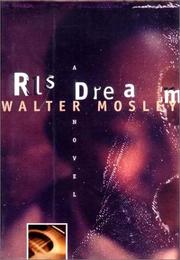
A dying bluesman in New York who claims he once played with Robert Johnson. No crime, no case, no series — this is the novel Mosley wrote to prove he could, and it is the one his admirers press on people.

A broke Black man on Long Island rents his basement to a wealthy white businessman who wants to be locked in a cage there. A two-hander about guilt and complicity that owes more to Dostoevsky than to Chandler.

A late Edgar-winning novel about a disgraced ex-cop and a journalist on death row — Mosley returning to the detective form with everything the previous forty books taught him. The right last stop, because it reads as a summary of all his modes at once.
Discussion
Keep reading
Paths that share books, cover the same subject, or open a related topic.