Biotech & synthetic biology: engineering life
This curriculum takes a complete beginner from the basic language of life — DNA, genes, and cells — all the way to the cutting edge of synthetic biology, CRISPR engineering, and the profound ethical questions that follow. Each stage builds the conceptual vocabulary needed for the next, moving from vivid narrative science writing through technical understanding and finally into critical, philosophical engagement with what it means to rewrite life itself.
Foundations: The Language of Life
BeginnerUnderstand what DNA, genes, and cells are, and how the discovery of genetics shaped modern biology — told through compelling human stories.
▸ Study plan for this stage
Pace: 6–8 weeks total. Week 1–4: "The Gene" by Mukherjee (~30–35 pages/day, reading in thematic parts — pause after each of the book's six parts to reflect before moving on). Week 5–7: "The Immortal Life of Henrietta Lacks" by Skloot (~25–30 pages/day — a faster narrative read, but slow down during the sc
- DNA as the molecule of heredity: how Mukherjee traces the discovery that DNA — not protein — carries genetic information, from Mendel's peas through Avery, Watson, and Crick
- Genes, chromosomes, and inheritance: the logic of dominant/recessive traits, alleles, and how genes are physically organized on chromosomes, as explained through family histories in 'The Gene'
- The Central Dogma of molecular biology: DNA → RNA → Protein, and why this one-way flow of information is the operating system of all living cells
- Mutation and variation: how small changes in DNA sequence can alter traits, cause disease (e.g., Mukherjee's family history of mental illness), or drive evolution
- Cells as the basic unit of life: what a cell is, what it needs to survive, and why Henrietta Lacks's cervical cancer cells were uniquely 'immortal' — able to divide indefinitely outside the body
- Cell culture and the HeLa cell line: how Skloot explains the science of growing human cells in a lab, and why HeLa cells became the workhorse of 20th-century biology and medicine
- The ethics of biological material: consent, ownership, race, and exploitation — Henrietta's cells were taken without her knowledge, raising questions that run through all of biotechnology
- Science as a human enterprise: both books show that discoveries are made by flawed, ambitious, sometimes exploitative people embedded in social and political contexts — not by neutral automatons
- In your own words, what is a gene, and how did scientists in the early 20th century figure out that DNA — rather than protein — was the molecule that carried hereditary information? (Draw on Mukherjee's historical narrative.)
- What does the Central Dogma mean, and why does the direction of information flow (DNA → RNA → Protein) matter for understanding how traits are expressed?
- What made Henrietta Lacks's cancer cells biologically unusual, and why did that property make HeLa cells so scientifically valuable? What diseases or vaccines were developed using them?
- Skloot describes the Lacks family's long struggle to understand what happened to Henrietta's cells. What ethical failures occurred, and how do those failures connect to broader issues of race, class, and informed consent in medicine?
- Mukherjee weaves his own family's history of psychiatric illness into the story of genetics. How does this personal thread illuminate the difference between a gene 'causing' a disease and a gene 'predisposing' someone to it?
- After reading both books, how would you explain to a friend why a single cell — and the DNA inside it — contains enough information to build and run an entire human body?
- **Genetics family tree:** After reading the inheritance chapters of 'The Gene,' draw a simple Punnett square for one trait Mukherjee discusses (e.g., a dominant/recessive disease). Then sketch your own family's known traits (eye color, height, any heritable conditions) and try to infer dominant vs. recessive patterns.
- **HeLa timeline:** As you read 'The Immortal Life of Henrietta Lacks,' build a two-column timeline — one column for events in Henrietta's/the Lacks family's life, one column for scientific breakthroughs made using HeLa cells. This makes the human cost and scientific gain tangible and parallel.
- **Concept glossary:** Keep a running glossary of 15–20 terms (gene, allele, chromosome, mutation, cell culture, informed consent, etc.) defined in your own words — no copying from the text. Revisit and refine each definition after finishing both books.
- **Ethical position paper (1 page):** After finishing Skloot's book, write a short personal response: Should the Lacks family have been compensated? Who owns biological material once it leaves your body? Take a clear position and support it with specific evidence from the book.
- **'Explain it to a 12-year-old' challenge:** Pick one concept from each book — e.g., 'what a gene does' from Mukherjee and 'why HeLa cells don't die' from Skloot — and write a 3–5 sentence plain-language explanation of each. Read them aloud; if you stumble, you've found a gap to revisit.
- **Connecting the two books:** Write a one-page reflection answering: 'Both Mukherjee and Skloot argue that biology cannot be separated from ethics and society. What is one specific moment in each book that best proves this claim?' Use direct evidence from the texts.
Next up: By internalizing how DNA encodes life and how human cells can be manipulated in a lab — and by grappling with the ethical stakes that come with that power — the reader is now ready to explore the next stage, where scientists stopped merely reading the genome and began deliberately rewriting it through genetic engineering and synthetic biology.
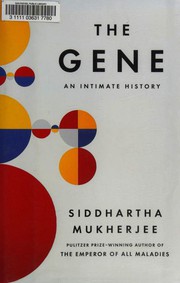
A sweeping, beautifully written history of genetics from Mendel to CRISPR. It builds essential vocabulary — genes, mutations, heredity, expression — through narrative, making abstract concepts viscerally real before any technical reading begins.
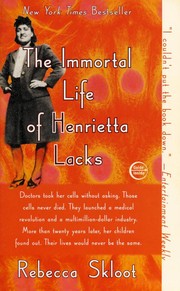
Grounds the science of cell biology and tissue culture in a powerful human story. It introduces how cells are grown and used in research while raising early ethical questions about consent and ownership that will recur throughout the curriculum.
The Biotechnology Revolution
BeginnerGrasp how scientists learned to read, cut, and copy DNA — and how that gave birth to the biotechnology industry.
▸ Study plan for this stage
Pace: 6–8 weeks total: Weeks 1–3 cover "The Demon in the Freezer" (~25–30 pages/day, including pause days for reflection); Weeks 4–8 cover "The Innovators" (~30–35 pages/day). Allow one rest/review day per week.
- The nature of DNA and viruses as biological 'code' — Preston's vivid portrayal of variola (smallpox) illustrates how a pathogen's genetic blueprint determines its lethality and behavior, grounding the reader in why reading and controlling DNA matters.
- Biosafety, biosecurity, and dual-use research — 'The Demon in the Freezer' forces a reckoning with the ethical razor's edge: the same tools that let scientists sequence and reconstruct a virus for defensive research can be weaponized.
- The interplay of government, military, and science — Preston shows how Cold War politics shaped virology research, foreshadowing how institutional forces drive (and distort) biotechnology development.
- The transistor and the microchip as an analogy for biotech — Isaacson's account of Bell Labs and Silicon Valley establishes the template of collaborative, interdisciplinary innovation that the biotech industry would later mirror.
- Convergence of biology and information technology — Isaacson traces how computing pioneers conceived of information as a universal substrate, a worldview that directly enabled the idea of DNA as programmable code.
- Collaborative vs. lone-genius innovation — Both books collectively debunk the myth of the solitary inventor; breakthroughs in virology, computing, and eventually synthetic biology emerge from teams, institutions, and serendipitous networks.
- From discovery to industry — Isaacson's narrative of how garage tinkerers and corporate labs turned theoretical breakthroughs into products mirrors the path from recombinant DNA research to the founding of biotech companies like Genentech.
- The role of government funding and policy in shaping technology — Across both books, DARPA, the NIH, and Cold War defense spending appear as hidden engines of innovation, a pattern that defines biotechnology's origins.
- After reading 'The Demon in the Freezer,' can you explain in plain language what makes a virus's genetic material so dangerous — and why the ability to sequence or reconstruct it is both a scientific triumph and a biosecurity nightmare?
- How does Preston's account of the smallpox eradication campaign and the subsequent debate over the remaining viral stocks illustrate the tension between open scientific inquiry and the need to control dangerous biological information?
- Drawing on Isaacson's 'The Innovators,' what structural conditions (institutional, cultural, financial) made Bell Labs and later Silicon Valley such fertile ground for breakthrough innovation — and how might those same conditions apply to a biotechnology startup?
- Isaacson argues that the most transformative innovations came from people who could bridge the humanities and the sciences. How does this 'bilingual' thinking show up in the stories he tells, and why is it especially relevant to synthetic biology?
- Taken together, what do both books suggest about the relationship between information technology and biology — and how does framing DNA as 'code' change the way scientists (and society) think about life itself?
- What ethical frameworks do Preston and Isaacson (implicitly or explicitly) offer for governing powerful dual-use technologies, and where do those frameworks fall short?
- **DNA-as-code mapping exercise:** After finishing 'The Demon in the Freezer,' write a one-page analogy comparing the smallpox genome to a software program. Identify the 'functions' (genes/proteins) and explain what 'editing the code' would mean biologically. This concretizes the information-theory framing Isaacson later develops.
- **Innovation timeline:** While reading 'The Innovators,' build a running timeline (paper or digital) that tracks each major breakthrough Isaacson describes. Add a parallel column noting what was happening in biology/medicine at the same time. At the end, look for moments where the two timelines intersect or could have intersected.
- **Dual-use debate:** Stage a written debate with yourself (or a study partner). Using evidence from 'The Demon in the Freezer,' write a 300-word argument FOR destroying the last smallpox stocks, then a 300-word argument AGAINST. Conclude with your own reasoned position.
- **Innovator profile:** Choose one figure from 'The Innovators' (e.g., Ada Lovelace, Claude Shannon, or Robert Noyce) and write a one-page profile answering: What problem were they solving? Who did they collaborate with? What would their equivalent role look like in a modern biotech company?
- **Concept glossary:** Maintain a running glossary of 15–20 terms encountered across both books (e.g., virus, genome, transistor, algorithm, recombinant DNA, CRISPR precursor concepts). Write each definition in your own words and note which book introduced it.
- **Reflection journal — convergence entry:** After completing both books, write a 500-word journal entry answering: 'In what ways is biotechnology the child of both biology and computing?' Use at least two specific scenes or anecdotes from each book as evidence.
Next up: By understanding how DNA was first recognized as readable, cuttable information — and how the innovation culture of computing provided both tools and mindset — the reader is now primed to explore the specific molecular techniques (recombinant DNA, PCR, gene sequencing) and the companies that turned those techniques into a global industry.
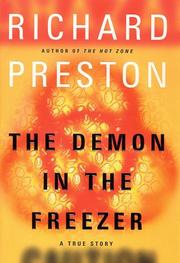
A gripping account of dangerous pathogens and the early power of genetic manipulation. It makes the stakes of biotechnology concrete and urgent, bridging the gap between abstract genetics and real-world application.
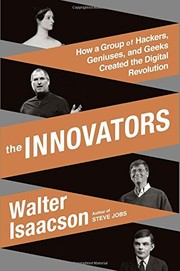
While focused on computing, its treatment of how collaborative, iterative science produces transformative technology directly parallels the biotech story and builds intuition for how synthetic biology emerged from engineering thinking.
CRISPR & Synthetic Biology: Engineering Life
IntermediateUnderstand how CRISPR-Cas9 works, how synthetic biology treats cells as programmable systems, and what is now possible in the lab.
▸ Study plan for this stage
Pace: 10–12 weeks total. Week 1–4: "The Code Breaker" (~30 pages/day, ~380 pages); Week 5–8: "Regenesis" (~25 pages/day, ~320 pages); Week 9–12: "A Crack in Creation" (~25 pages/day, ~300 pages). Set aside one weekend review session per book to consolidate notes before moving on.
- CRISPR-Cas9 mechanism: how guide RNA directs Cas9 to a precise DNA sequence and creates a double-strand break, enabling targeted edits
- The competitive scientific race to decode and weaponize CRISPR, as chronicled in The Code Breaker — understanding how discovery actually happens in modern biology
- Base editing and prime editing as next-generation refinements beyond the original cut-and-repair CRISPR mechanism
- Synthetic biology's core design paradigm from Regenesis: cells as programmable systems built from standardized genetic 'parts' (promoters, terminators, toggle switches, oscillators)
- Multiplexed genome engineering — editing many genes simultaneously — and its role in Church's vision for radical organism redesign (e.g., woolly mammoth de-extinction, pig-to-human organ transplants)
- Doudna's ethical framework in A Crack in Creation: the distinction between somatic vs. germline editing, and why heritable edits raise categorically different moral stakes
- Off-target effects, delivery mechanisms (viral vectors, lipid nanoparticles), and the practical engineering challenges that separate lab proof-of-concept from clinical application
- The governance landscape: moratoriums, the He Jiankui affair, and the ongoing debate over who should decide the boundaries of engineering life
- How does the CRISPR-Cas9 system achieve sequence specificity, and what cellular repair pathways (NHEJ vs. HDR) determine the outcome of a cut?
- Based on The Code Breaker, what institutional and personal dynamics shaped the patent dispute between the Broad Institute and UC Berkeley, and what does this reveal about incentives in modern science?
- According to Church's framework in Regenesis, what are the key engineering principles that make a cell 'programmable,' and what is the significance of recoding an entire genome with a reduced codon set?
- What applications does Doudna highlight in A Crack in Creation as most promising in the near term (e.g., sickle-cell disease, cancer immunotherapy), and what technical hurdles remain for each?
- How do Doudna and Church differ in their posture toward germline editing and de-extinction — and what underlying values or assumptions drive that difference?
- What is the distinction between somatic and germline gene editing, and why does Doudna argue the latter demands a different level of societal deliberation?
- Diagram the CRISPR-Cas9 molecular mechanism from scratch — draw the guide RNA, the PAM sequence, the Cas9 conformational change, the DSB, and both NHEJ and HDR repair outcomes — without looking at references, then check your diagram against primary sources.
- After finishing The Code Breaker, write a one-page 'scientific priority memo' arguing either for the Broad Institute or UC Berkeley in the CRISPR patent dispute, citing specific events Isaacson describes. This forces you to engage with the evidence rather than passively absorb the narrative.
- Read one primary research paper that Church's lab published on multiplex genome engineering (e.g., the 2012 Science paper on 13-gene E. coli edits) and annotate it using concepts from Regenesis — identify the 'parts,' the design logic, and the validation strategy.
- Create a two-column comparison table contrasting at least five CRISPR applications discussed across all three books: for each, note the target organism, the edit type, the delivery method, the current stage of development, and the key ethical concern raised.
- Simulate a synthetic biology design challenge: using the BioBricks Registry (parts.igem.org), sketch a genetic circuit on paper that solves a simple problem (e.g., a bacterial biosensor for a pollutant). Map your design choices back to the engineering vocabulary Church introduces in Regenesis.
- Host or join a structured debate (even asynchronously in a study group or forum) on the He Jiankui case using Doudna's ethical criteria from A Crack in Creation as the evaluative framework — assign someone to steelman He's position and someone to argue Doudna's response.
Next up: By internalizing how CRISPR works mechanistically and how synthetic biology frames cells as engineerable systems, the reader is now equipped to engage with the downstream applications — including therapeutic pipelines, agricultural biotech, and biosecurity — that form the focus of more advanced or applied stages in the curriculum.
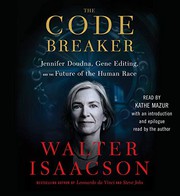
The definitive account of Jennifer Doudna, CRISPR, and the race to rewrite the genome. After the foundations stages, readers now have the vocabulary to follow the science deeply while also engaging with the competitive and ethical drama.

Written by one of synthetic biology's pioneers, this book explains how DNA synthesis, genome engineering, and biological design are converging — providing a technical yet accessible insider view of what synthetic biology actually does.
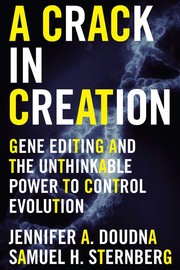
Doudna's own account of discovering CRISPR's potential and her growing alarm about its implications. Reading this after Isaacson's biography adds the scientist's first-person perspective and deepens understanding of the mechanism and its applications.
Ethics, Risk & the Future of Bioengineering
ExpertCritically evaluate the promises and perils of synthetic biology — designer babies, bioweapons, ecological engineering — and develop a personal ethical framework.
▸ Study plan for this stage
Pace: 6–8 weeks total: Weeks 1–3 cover "How to Create a Mind" (~25–30 pages/day, ~300 pages), focusing on annotating passages about intelligence amplification and the ethical weight of engineering cognition; Weeks 4–7 cover "The Precipice" (~20–25 pages/day, ~480 pages), reading slowly and journaling on e
- Pattern Recognition Theory of Mind (PRTM) and its implications for engineering biological and artificial cognition — from Kurzweil's model of the neocortex as a hierarchy of pattern recognizers
- The 'Law of Accelerating Returns' (Kurzweil) and how exponential biotechnological progress compresses the timeline for both breakthroughs and catastrophic misuse
- The distinction between existential risks and merely catastrophic risks — Ord's framework of 'scope, severity, and probability' applied specifically to engineered pandemics and ecological bioengineering
- Engineered pandemics as a near-term existential risk: Ord's analysis of how synthetic biology lowers the barrier to creating novel pathogens, and the asymmetry between offense and defense in bioweapons
- Ecological engineering and 'galaxy-brained' reasoning — the danger of sophisticated but flawed ethical arguments justifying irreversible interventions (gene drives, terraforming microbiomes)
- The concept of 'moral responsibility across time' from The Precipice — obligations to future generations as a constraint on present biotechnological choices, including designer babies and germline editing
- Differential technological development — Ord's argument for deliberately slowing dangerous capabilities while accelerating safety research, and how this applies to CRISPR and synthetic genome design
- Building a personal ethical framework: integrating Kurzweil's techno-optimism with Ord's precautionary existential-risk thinking to produce a nuanced, defensible position on bioengineering governance
- According to Kurzweil's PRTM, what happens when the same pattern-recognition architecture that underlies the human mind is deliberately re-engineered — and what ethical obligations does that engineering capacity create?
- Ord ranks engineered pandemics as one of the highest near-term existential risks. What specific features of synthetic biology — as described in The Precipice — make bioweapons uniquely dangerous compared to nuclear or chemical threats?
- How does Kurzweil's 'Law of Accelerating Returns' interact with Ord's concept of 'the precipice'? Does accelerating progress make existential catastrophe more or less likely, and what evidence from both books supports your answer?
- The Precipice introduces the idea that we may be living in an unusually influential period of history. How should this 'hinge of history' framing change the ethical calculus around germline editing and designer babies?
- Ord argues for 'differential technological development.' Using concrete examples from both books (e.g., AI-designed organisms, cognitive enhancement), construct an argument for which biotechnologies should be accelerated and which should be deliberately slowed.
- After reading both books, where do you locate yourself on the spectrum between Kurzweil's techno-optimism and Ord's precautionary framework — and what is the strongest objection to your own position?
- Risk Matrix Exercise: Draw a 2×2 matrix (probability vs. severity) and place at least 8 specific biotechnologies discussed across both books (e.g., engineered pandemics, cognitive enhancement, gene drives, synthetic organisms). Write 2–3 sentences justifying each placement using evidence from the texts.
- Steel-Man Debate: Write two 400-word position papers — one channeling Kurzweil's optimism to argue that accelerating synthetic biology is a moral imperative, and one channeling Ord's precautionary view to argue for a global moratorium on certain applications. Then write a 200-word personal rebuttal to whichever position you find weaker.
- Personal Ethical Framework Document: Draft a 1–2 page 'Bioengineering Ethics Charter' that states your principles on at least four topics: germline editing, ecological engineering, cognitive bioenhancement, and dual-use research. Each principle must cite a specific argument or passage from Kurzweil or Ord.
- Scenario Analysis — The Designer Baby Case: Using Ord's 'scope, severity, probability' risk framework and Kurzweil's model of cognitive architecture, write a structured 500-word analysis of whether germline cognitive enhancement should be permitted, regulated, or banned. Identify at least one irreversible consequence and one recoverable one.
- Annotated Timeline: Create a visual timeline projecting the next 50 years of biotechnology milestones implied by Kurzweil's accelerating returns curve. Overlay Ord's existential risk 'danger zones' onto the same timeline. Annotate at least five points where the two authors' predictions converge or conflict.
- Governance Proposal: Draft a one-page policy memo addressed to a fictional international biosafety body. Drawing on The Precipice's discussion of institutional safeguards and Kurzweil's capability forecasts, propose three specific, enforceable regulations for synthetic biology research. Justify each regulation with a risk-benefit argument grounded in the books.
Next up: By crystallizing a personal ethical framework and stress-testing it against both accelerationist and precautionary arguments, the reader is now equipped to engage with the practical governance, policy, and institutional design questions that form the natural next stage of an advanced biotechnology curriculum.
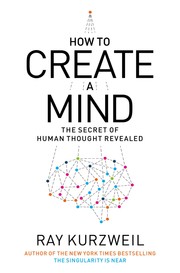
Introduces the broader transhumanist context in which synthetic biology sits, helping readers understand the philosophical stakes of merging engineering with biology at the level of intelligence and identity.

A rigorous philosophical treatment of existential risk that dedicates serious attention to engineered pandemics and biotechnology threats. It equips the reader to think clearly about catastrophic risk and governance at the frontier of synthetic biology.
Discussion
Keep reading
Paths that share books, cover the same subject, or open a related topic.