How medicine got good: a history of healing
This four-stage curriculum traces the full arc of medicine — from ancient ritual and superstition through the scientific revolution, the germ theory era, and finally the molecular age of genetics and bioethics. Each stage builds the conceptual vocabulary and historical context needed for the next, moving from broad narrative surveys to focused, morally complex deep-dives that reveal how healing became a science — and how that science has sometimes gone terribly wrong.
Foundations: The Grand Sweep
BeginnerGain a confident, chronological overview of medical history — key figures, pivotal turning points, and the slow shift from superstition to evidence — so every later book has a map to hang on.
▸ Study plan for this stage
Pace: 8–10 weeks total. Weeks 1–7: "The Greatest Benefit to Mankind" (~800 pages) at roughly 25–30 pages/day, reading thematically by chapter clusters rather than pushing straight through. Weeks 8–10: "The Butchering Art" (~300 pages) at a more relaxed 20–25 pages/day, pausing to cross-reference Porter's
- The arc from supernatural/religious explanations of disease toward empirical, evidence-based medicine — Porter's central thesis running from antiquity through the 20th century
- Humoral theory (Hippocrates, Galen) as the dominant framework for nearly two millennia, and why it was so durable despite being wrong
- The Scientific Revolution's delayed impact on medicine: how anatomy (Vesalius), circulation (Harvey), and germ theory (Pasteur, Koch) each broke a major conceptual logjam
- The hospital as a social and scientific institution — its transformation from a place of charity and death into a site of diagnosis, surgery, and research
- Joseph Lister's antiseptic system as the pivot point in Fitzharris: how Pasteur's laboratory germ theory was translated into a life-saving surgical practice against fierce professional resistance
- The human cost of ignorance: Fitzharris's visceral portrait of pre-Listerian surgery (wound fever, gangrene, 'laudable pus') as the concrete stakes behind Porter's abstract history
- Medical heroism vs. medical culture — both books show that individual breakthroughs mean little without institutional adoption, and that resistance to change is a structural feature of medicine, not an anomaly
- The interplay of social context and medical progress: war, poverty, colonialism, and professional gatekeeping all shape which discoveries get made, funded, and accepted
- According to Porter, what were the core assumptions of humoral medicine, and what social and intellectual forces allowed it to persist from ancient Greece into the 19th century?
- How does Porter characterize the relationship between the Scientific Revolution (roughly 1543–1700) and practical improvements in patient outcomes — did new knowledge quickly save lives?
- In 'The Butchering Art,' what specific conditions in mid-19th-century surgical wards made post-operative infection so catastrophic, and how did Lister's carbolic acid protocol address each of them?
- Both books depict fierce resistance to transformative ideas (germ theory, antisepsis, vaccination). What patterns of resistance recur, and what finally tips the balance toward acceptance?
- Porter covers roughly 2,500 years; Fitzharris focuses on one decade. What does the tight focus of 'The Butchering Art' reveal about medical change that Porter's grand sweep necessarily obscures?
- By the end of both books, what does 'progress' in medicine actually mean — is it linear, cumulative, accidental, or something more complicated?
- Build a one-page visual timeline as you read Porter: mark every major figure, discovery, and institutional shift. When you start Fitzharris, pin Lister's work precisely on that timeline and draw arrows to the Porter chapters it connects to — this makes the macro/micro relationship tangible.
- Keep a 'resistance log': each time either book describes a new idea being rejected or ignored, write one sentence on who resisted, why, and what eventually changed their minds. Review the log after finishing both books and look for the repeating pattern.
- After finishing Porter's ancient and medieval chapters, write a one-paragraph 'patient letter' from the perspective of a sick person in each era (Greek, Roman, medieval European) explaining what they believe is wrong with them and what treatment they expect. This forces active engagement with humoral logic on its own terms.
- Choose any single disease Porter traces across multiple centuries (plague, tuberculosis, syphilis, or cholera work well). Write a two-page 'disease biography' — its shifting explanations, treatments, and social meanings from first mention to the book's end. Then check whether Fitzharris's surgical patients suffered from any of its complications.
- After completing 'The Butchering Art,' stage a brief mock debate (written or spoken, alone or with a study partner): one side argues Lister's position using only evidence available in the 1860s; the other argues the skeptics' position. This reveals why resistance was rational, not merely stubborn.
- Write a 400-word comparative reflection: What is the single most important thing each book taught you that the other could not have taught you alone? This consolidates the complementary value of grand-sweep vs. close-focus history.
Next up: By the end of this stage the reader has a confident chronological skeleton — key eras, figures, and turning points — and has felt, through Fitzharris's close focus, what it actually cost patients and practitioners to live inside that history; the next stage can now zoom into specific themes, diseases, or periods with a map already in hand rather than building one from scratch.
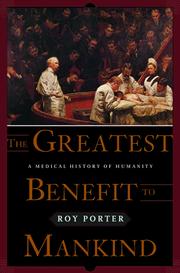
The definitive one-volume history of medicine from antiquity to the 20th century. Reading this first gives the learner a complete chronological skeleton — every later book fills in the flesh.

A vivid, accessible narrative of Joseph Lister and the birth of antiseptic surgery. It makes the pre-germ-theory world viscerally real and shows exactly what was at stake when medicine began to turn scientific.
Plagues, Pandemics, and Public Health
BeginnerUnderstand how epidemic disease shaped societies, forced medical innovation, and revealed the deep links between poverty, politics, and health — the public dimension of medicine's history.
▸ Study plan for this stage
Pace: 10–12 weeks total, reading ~25–35 pages per day on weekdays with lighter reading on weekends. Allocate roughly 4 weeks for "Plagues and Peoples" (it is the densest and most conceptually ambitious), 3 weeks for "The Ghost Map" (a tighter narrative), and 3–4 weeks for "Pale Rider" (rich in social and
- Disease as a historical actor: McNeill's core argument that epidemic disease — not just armies or ideas — has been one of the primary drivers of civilizational rise and fall, reshaping demographics, power structures, and cultures across millennia.
- Macro-parasitism vs. micro-parasitism: McNeill's paired framework distinguishing the biological exploitation of human bodies by pathogens from the social exploitation of populations by ruling elites, and how the two systems interact and co-evolve.
- Virgin-soil epidemics and differential immunity: The catastrophic mortality that results when a disease meets a population with no prior exposure, as seen in the conquest of the Americas — a concept introduced in 'Plagues and Peoples' and echoed throughout the stage.
- Epidemiology as detective work: Johnson's 'The Ghost Map' demonstrates how John Snow and Henry Whitehead used spatial mapping, shoe-leather investigation, and probabilistic reasoning to identify the Broad Street pump as the source of the 1854 Soho cholera outbreak, founding modern epidemiology.
- The germ theory revolution and resistance to paradigm shifts: 'The Ghost Map' shows how entrenched miasma theory — the belief that disease spread through 'bad air' — delayed acceptance of Snow's waterborne transmission evidence, illustrating how social and institutional authority can obstruct scient
- Pandemic as social X-ray: Laura Spinney's 'Pale Rider' reveals how the 1918 influenza pandemic exposed and amplified pre-existing inequalities of class, race, gender, and colonial power, killing disproportionately among the poor and the colonized.
- The politics of public health: Across all three books, governments suppress information, misattribute causes, and prioritize economic or military interests over population health — demonstrating that public health is never purely scientific but always political.
- Memory, forgetting, and historical silence: Spinney's central puzzle — why the deadliest pandemic in recorded history was so thoroughly forgotten — introduces the concept of collective memory and the social forces (wartime censorship, shame, scale of grief) that cause societies to repress traumatic
- According to McNeill in 'Plagues and Peoples,' how did the Columbian Exchange of diseases — particularly smallpox — function as a military and political weapon in the Spanish conquest of the Americas, and what does this reveal about the relationship between biological and political power?
- How did John Snow's methodology in 'The Ghost Map' differ from the dominant miasma framework of his era, and what combination of social, scientific, and geographic factors allowed him to finally persuade the Soho parish authorities to remove the Broad Street pump handle?
- Spinney argues in 'Pale Rider' that the 1918 influenza killed in a 'W-shaped' mortality curve, striking young adults hardest — an anomaly compared to typical flu seasons. What hypotheses does she explore to explain this, and what does it suggest about the limits of medical knowledge even a century later?
- All three books show governments and institutions resisting or distorting the truth about epidemics. Compare one example from each book: how did the nature of the cover-up or denial differ across the three cases, and what common political logic underlies all three?
- How does McNeill's concept of 'disease pools' — the idea that civilizations develop shared reservoirs of endemic disease through trade and contact — help explain why urban centers historically had higher mortality than rural areas, and how does this connect to Johnson's portrait of Victorian London?
- Spinney documents wildly unequal death tolls across different countries and communities during the 1918 pandemic. Drawing on all three books, construct an argument for why poverty is not merely correlated with epidemic mortality but is itself a pathological condition that amplifies disease.
- Map-making exercise (tied to 'The Ghost Map'): Recreate John Snow's dot map using a modern tool (even pen and paper works). Choose a real or hypothetical disease cluster in your own city or neighborhood, plot fictional cases by address, and practice identifying a plausible point source. Reflect on what spatial reasoning reveals that statistics alone cannot.
- Comparative timeline: Build a three-column timeline spanning 1300–1920 with columns for (1) major epidemic events drawn from 'Plagues and Peoples,' (2) corresponding political or military upheavals McNeill links to them, and (3) any medical or public-health responses. Add the 1854 cholera outbreak and the 1918 flu at the appropriate points. Look for patterns across centuries.
- Paradigm-shift analysis (tied to 'The Ghost Map'): Research one other historical case where a correct but heterodox medical theory faced institutional resistance (e.g., Semmelweis and handwashing, or Barry Marshall and H. pylori). Write a one-page comparison with Snow's experience, identifying the common social and professional mechanisms that delay acceptance of new evidence.
- Forgotten pandemic investigation (tied to 'Pale Rider'): Ask three to five older relatives, neighbors, or community members whether they know any family stories about the 1918 flu. Document what they know or don't know. Then write a short reflection using Spinney's arguments about collective forgetting to interpret your findings.
- Policy brief exercise: After finishing all three books, write a one-to-two-page mock public-health advisory as if you were advising a government at the start of a new epidemic. Draw explicitly on lessons from McNeill (long-term ecological thinking), Snow (local data and mapping), and Spinney (equity, transparency, and the dangers of wartime censorship). Identify the three biggest political temptat
- Vocabulary and concept journal: Keep a running glossary as you read, defining terms such as endemic, epidemic, pandemic, zoonosis, miasma theory, germ theory, epidemiology, herd immunity, and virgin-soil epidemic in your own words — then add a real example from each book next to each term. Review and self-quiz at the end of each book.
Next up: By establishing that epidemic disease is inseparable from politics, poverty, and power, this stage sets the stage for examining how medicine itself became institutionalized — how hospitals, medical schools, professional licensing, and eventually the pharmaceutical industry emerged as organized responses to the public health crises these books document.

The classic macro-history of infectious disease and civilization. Reading it here shows how plague drove medical thinking long before anyone understood germs, providing essential context for germ theory's arrival.
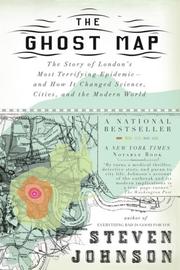
A gripping case study of John Snow's 1854 cholera investigation — the birth of epidemiology. It concretely illustrates how careful observation, without yet knowing the pathogen, could still save lives.

The definitive account of the 1918 influenza pandemic. Placed here, it shows how even a post-germ-theory world could be overwhelmed, and how public health infrastructure — or its absence — determines survival.
The Making of Modern Medicine: Cells, Germs, and Drugs
IntermediateTrace the specific scientific revolutions — germ theory, pharmacology, surgery, and the rise of the research hospital — that transformed medicine from craft into discipline, and meet the flawed humans who drove them.
▸ Study plan for this stage
Pace: 10–12 weeks total. Week 1–3: "The Demon Under the Microscope" (~25–30 pages/day, including re-reading key chapters on sulfa drug trials). Weeks 4–8: "The Emperor of All Maladies" (~30–35 pages/day; the book is long — budget extra time for the chemotherapy and clinical-trial chapters). Weeks 9–11: "D
- Germ theory and the bacteriological revolution: how identifying microbial causation restructured both diagnosis and treatment, setting the stage for targeted drug development as seen in Hager's account of the sulfa era
- The birth of modern pharmacology and the randomized drug trial: Hager traces how sulfa drugs forced medicine to develop systematic testing, moving therapy from empiricism to evidence
- The research hospital and academic medicine: across all three books, the hospital transforms from a place of last resort into a site of scientific production — Mukherjee's Sidney Farber and Marsh's neurosurgical unit both exemplify this shift
- Cancer as a lens on medical progress: Mukherjee uses oncology's history to show how disease categories are socially and scientifically constructed, and how 'cure' is a moving, contested target
- The clinical trial as ethical and epistemological battleground: 'The Emperor of All Maladies' details how randomized controlled trials, informed consent, and patient advocacy reshaped the doctor–patient relationship and the meaning of evidence
- Surgical craft versus surgical science: Marsh's memoir reveals that even in the modern era, surgery retains irreducible elements of judgment, risk, and moral weight that resist full systematization
- The flawed, driven individual as engine of medical change: Domagk (Hager), Farber and Frei (Mukherjee), and Marsh himself all illustrate how ambition, obsession, and error are inseparable from discovery
- Iatrogenesis and the limits of intervention: Marsh's unflinching account of surgical harm forces a reckoning with the costs embedded in every medical advance celebrated in the earlier two books
- How did the discovery and mass production of sulfa drugs (as narrated by Hager) change the institutional relationship between chemistry, industry, and clinical medicine — and what precedents did it set for the pharmaceutical industry we know today?
- Mukherjee calls cancer 'the emperor of all maladies' — what does he mean by that framing, and how does the history of chemotherapy illustrate both the power and the hubris of the 'war on cancer' metaphor?
- Across all three books, how does the figure of the patient evolve — from passive recipient of craft (Hager's pre-antibiotic era) to political actor (Mukherjee's AIDS and breast-cancer activists) to vulnerable individual on the table (Marsh's memoir)?
- What does Henry Marsh's 'Do No Harm' reveal about the gap between medicine as a scientific discipline and medicine as it is actually practiced moment-to-moment, and how does this complicate the triumphalist narrative in the other two books?
- How did the randomized controlled trial become the gold standard of medical evidence, and what human and ethical costs — visible in Mukherjee's account of early cancer trials — did that ascent involve?
- In what ways do all three books suggest that medical 'revolutions' are never clean breaks — that older craft knowledge, intuition, and uncertainty persist even inside the most modern scientific frameworks?
- Timeline construction: After finishing each book, add its key events to a single master timeline (e.g., sulfa synthesis 1932 → first cancer chemotherapy trials 1948 → Marsh's contemporary OR). Look for overlaps and gaps — where do the three narratives speak to the same moment in medical history from different angles?
- Character dossiers: Choose one scientist or physician from each book (e.g., Gerhard Domagk from Hager, Sidney Farber from Mukherjee, Marsh himself) and write a one-page profile: their driving motivation, their greatest error, and what their story reveals about how medicine actually changes.
- Comparative close reading: Find one passage in 'The Demon Under the Microscope' and one in 'The Emperor of All Maladies' that each describe a clinical trial or experiment. Write a 400-word comparison of how the authors frame risk, consent, and the relationship between researcher and patient.
- The 'Do No Harm' reflection journal: While reading Marsh's memoir, keep a running log of every moment he describes uncertainty, regret, or a decision he cannot fully justify scientifically. At the end, write a short essay: does this uncertainty make him a worse doctor or a more honest one?
- Concept mapping: Draw a visual map linking the following terms as they appear across all three books — germ theory, drug trial, research hospital, informed consent, iatrogenesis, patient advocacy. Draw arrows showing causal or historical relationships and annotate each arrow with a specific example from the texts.
- Debate preparation: Formulate the strongest possible argument for the following proposition — 'The scientific revolution in medicine has caused as much harm as it has prevented' — drawing only on evidence from these three books. Then write the strongest counter-argument. This forces engagement with Marsh's critique alongside Hager's and Mukherjee's more celebratory arcs.
Next up: By grounding the reader in the specific scientific revolutions and their human costs, this stage creates the critical vocabulary — evidence, iatrogenesis, patient agency, institutional power — needed to examine how modern medicine is organized, financed, and contested at a systemic and global level in the next stage.
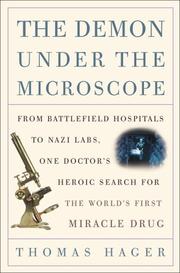
The story of sulfa drugs — the first antibiotics — and the German dye industry that accidentally created them. It introduces the reader to the laboratory-to-bedside pipeline and the industrial scale of modern drug discovery.
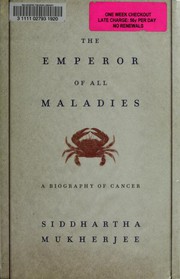
A Pulitzer-winning biography of cancer that doubles as a history of oncology, clinical trials, and the modern research enterprise. Its depth requires the prior stages' context and rewards the reader with a full picture of 20th-century medicine.
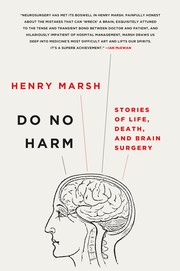
A practicing neurosurgeon's memoir that grounds all the preceding history in the lived reality of modern clinical medicine — the uncertainty, the stakes, and the limits that remain despite centuries of progress.
Ethics, Power, and the Frontiers of Healing
ExpertConfront the ethical failures, racial injustices, and philosophical dilemmas woven into medical history, and then look forward to gene therapy and genomics — understanding both the promise and the peril of medicine's next chapter.
▸ Study plan for this stage
Pace: 10–12 weeks total: ~3–4 weeks per book at roughly 25–35 pages/day. Suggested breakdown — Weeks 1–3: "Medical Apartheid" (~400 pages); Weeks 4–6: "The Immortal Life of Henrietta Lacks" (~370 pages); Weeks 7–11: "The Code Breaker" (~560 pages). Reserve Week 12 for cross-book synthesis, reflection, and
- Systemic racism and exploitation in American medical research — from antebellum experimentation on enslaved people through 20th-century abuses documented in 'Medical Apartheid'
- Informed consent: its historical absence, its legal and ethical evolution, and why it remains contested — illustrated by the Lacks family's experience in 'The Immortal Life of Henrietta Lacks'
- The commodification of human biological material: how HeLa cells became a global scientific commodity without the knowledge or compensation of their source
- Intersectionality of race, class, and gender in determining whose bodies are deemed expendable or exploitable for medical 'progress'
- CRISPR-Cas9 as a transformative gene-editing technology: its discovery, mechanisms, and the scientists (Jennifer Doudna, Emmanuelle Charpentier, Feng Zhang) at the center of 'The Code Breaker'
- The patent race and commercialization of science: how intellectual property disputes over CRISPR reveal tensions between open science, profit, and the public good
- Germline editing and heritable genetic modification: the ethical red lines raised by He Jiankui's gene-edited babies and the global scientific community's response in 'The Code Breaker'
- Continuity of ethical failure and promise: how the injustices in Washington's and Skloot's books must inform the governance frameworks being built around genomic technologies
- According to 'Medical Apartheid,' what specific historical patterns of medical experimentation on Black Americans created a legacy of distrust toward the healthcare system, and how did institutional structures enable these abuses?
- How does Rebecca Skloot use the parallel narratives of HeLa cell science and the Lacks family's lived experience to expose the gap between medical progress and medical justice in 'The Immortal Life of Henrietta Lacks'?
- What does the informed-consent framework look like today, and in what ways does the story of Henrietta Lacks reveal its original inadequacy — and its ongoing limitations for marginalized communities?
- In 'The Code Breaker,' how did the competitive race to claim CRISPR patents shape the direction of research, and what does this reveal about the relationship between scientific discovery and commercial incentive?
- What ethical distinctions does 'The Code Breaker' draw between somatic gene editing (affecting only the individual) and germline editing (heritable changes), and why does He Jiankui's experiment represent a crossing of a widely recognized ethical boundary?
- Taken together, what through-line connects the exploitation documented in 'Medical Apartheid' and 'The Immortal Life of Henrietta Lacks' to the governance challenges of CRISPR described in 'The Code Breaker' — and what does that continuity demand of future medical practice?
- Exploitation timeline: Build a chronological timeline spanning all three books, mapping specific incidents of medical exploitation or ethical controversy (e.g., J. Marion Sims's experiments, the Tuskegee study, HeLa commercialization, He Jiankui's CRISPR babies). Annotate each entry with: who was harmed, who benefited, and what oversight — if any — existed.
- Consent audit: Draft a one-page 'informed consent' document as it might have been written for Henrietta Lacks in 1951, then rewrite it using modern bioethical standards. Compare the two versions and write a short reflection on what changed — and what structural conditions would still need to change for true equity.
- Stakeholder debate: Assign yourself (or a study group) the roles of a CRISPR patent holder, a bioethicist, a patient advocate from a community historically harmed by medical research, and a regulator. Stage a mock policy hearing on whether germline editing should be permitted for heritable disease prevention, drawing arguments directly from 'The Code Breaker' and 'Medical Apartheid'.
- Annotated bibliography of harm: Select five cases from 'Medical Apartheid' and write a structured annotation for each: the population targeted, the scientific rationale offered at the time, the actual outcome, and the long-term institutional consequence. Then identify which, if any, safeguards introduced afterward would have prevented the abuse.
- Comparative ethics essay (800–1,000 words): Argue whether the scientific community's self-regulation response to He Jiankui (as described in 'The Code Breaker') represents meaningful progress over the institutional failures documented in 'Medical Apartheid' and 'The Immortal Life of Henrietta Lacks,' or whether it repeats the same structural patterns.
- Community impact reflection: Research a present-day genomics initiative (e.g., a national biobank or a direct-to-consumer DNA company) and evaluate it through the lens of all three books. Write a two-page memo identifying potential ethical risks, which communities bear the greatest risk, and what consent and equity safeguards you would recommend.
Next up: By confronting medicine's deepest ethical failures and its most powerful emerging technologies side by side, this stage equips the reader to engage the next chapter of the curriculum — whether that concerns global health systems, policy reform, or the future of biotechnology — with both critical vigilance and an informed sense of what responsible medical progress must look like.
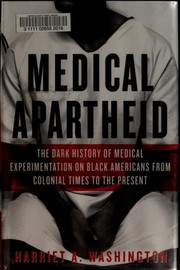
A meticulously documented history of unethical medical experimentation on Black Americans. Placed here, after the scientific triumphs, it forces a reckoning with who medicine has served and who it has exploited.
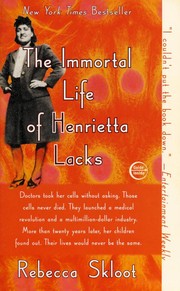
The story of HeLa cells — taken without consent and used in countless medical breakthroughs — weaves together race, class, consent, and the commercialization of the human body into a single unforgettable narrative.

Isaacson's account of Jennifer Doudna and the CRISPR revolution brings the curriculum to its frontier: gene editing, the promise of curing genetic disease, and the urgent ethical questions that echo every failure covered in the previous books.
Discussion
Keep reading
Paths that share books, cover the same subject, or open a related topic.