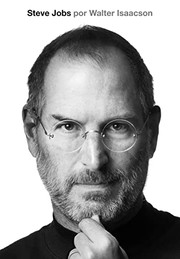
Start with Steve Jobs. It is not his first book and not his best-argued one, but it is where his method is clearest and it is the book the rest of the catalogue argues with. Read it and you can place everything else he has written.
The alternative would be to start chronologically with the 1986 political books, and that is a mistake for most readers: they are long, dense, heavily reported diplomatic history written before he developed the style people come to him for. Read those last, if at all.
Isaacson's method, named once
A reconstructed scene, then a corroborating anecdote from an interview, then a flat declarative sentence stating the pattern the anecdote proves. Once you can see the three beats you can read him very fast — and you can also see where the third beat asserts more than the first two have earned. His background is journalism rather than history, which explains both the readability and the preference for scene over analysis.
The two he was in the room for
Steve Jobs came out of roughly forty interviews with Jobs himself, at Jobs's own request, and appeared weeks after his death in 2011. Jobs waived editorial control, and the book is unusually willing to make him look cruel. The standing criticism, made by several people who worked with him, is that it over-weights the humiliations and under-weights the design work; read it aware of that charge and judge how much of the book is actually about products.
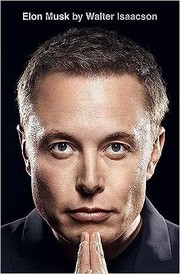
Read Elon Musk second, while the template is fresh. It is the same experiment run again with near-total access and a far less settled verdict, because the story had not finished. The two books share a thesis about intensity and cruelty being inseparable from achievement, and the second is more interesting as a rerun than as a standalone. Access biography carries a structural cost worth noticing as you read: the subject supplies the anecdotes, the framing and much of the cast.
The great-genius books
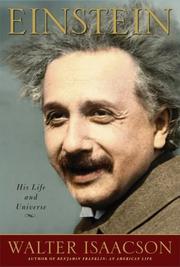
Einstein, published as Einstein: His Life and Universe in 2007, is listed in our catalogue under the bare title, so ask for the full one in a shop. It was the first major biography written after Einstein's personal correspondence was released, and the private letters change it substantially. The physics chapters are the best technical exposition Isaacson has written, explaining special and then general relativity without mathematics. Its thesis is that the rebelliousness and the physics were the same trait.
Leonardo da Vinci, from 2017, is built out of the surviving notebooks rather than the paintings, which is what makes it distinctive — Leonardo finished very little, and the notebooks are where the mind is. Its argument is that curiosity is a discipline rather than a temperament. Read it somewhere you can look at the plates properly.
The group biographies
The Innovators, published as The Innovators: How a Group of Hackers, Geniuses, and Geeks Created the Digital Revolution, runs from Ada Lovelace in the 1840s to Google, and its thesis directly contradicts the great-genius framing: the digital revolution came from teams, funding structures and collaborations, and the eureka moment is almost always a narrative artefact. Read it as an argument with Steve Jobs, because that is what it is.
The Code Breaker, published as The Code Breaker: Jennifer Doudna, Gene Editing, and the Future of the Human Race, combines both modes — one central figure inside a crowded, competitive race, with a collaborator, a rival, a patent fight and a Nobel. It is the most consequential subject he has taken on, because it ends in ethics rather than achievement, and he does not resolve the germline-editing question and says so. Together these two make his ambivalence visible: he believes the collaborative account and keeps writing books shaped around one compelling person.
The earlier, more political Isaacson
Be honest about the page count here — roughly 2,300 pages, and this stage is for readers who already like his method. Benjamin Franklin, published as Benjamin Franklin: An American Life, is the bridge between his political and his innovation books, and its self-inventing pragmatist is the figure his whole catalogue circles back to.
Kissinger, published as Kissinger: A Biography in 1992, was his first major solo book and predates the style entirely: longer, drier, closer to conventional diplomatic history, and tougher on its subject than its reputation suggests. The wise men: Six friends and the world they made, co-written with Evan Thomas in 1986, is the origin of the form — a group biography arguing that postwar American foreign policy emerged from a network of friendships rather than any one mind, which is the argument The Innovators makes about technology nearly thirty years later.
Stopping after the group biographies is entirely reasonable. The early volumes have more documentation and less momentum, and deciding which you prefer is a fair thing to take away. More biography paths are on Discover.
Follow the full ordered path here: Walter Isaacson Reading Order: Where to Start.