Genetics from Mendel to CRISPR
This four-stage curriculum takes a complete beginner from the basic language of DNA and heredity all the way to the cutting-edge science and ethics of genome editing. Each stage builds on the last: first you learn the vocabulary and wonder of genetics, then the molecular mechanics, then the full sweep of genomics and human variation, and finally the CRISPR revolution and its profound societal implications.
Foundations — The Language of Life
BeginnerGrasp what DNA is, how genes work, and why heredity matters — with no prior science background required.
▸ Study plan for this stage
Pace: 8–10 weeks, ~25–30 pages/day (5 days/week) — "The Gene" is ~500 pages of main text; a relaxed pace allows time to pause on dense historical and scientific passages, re-read key chapters, and complete exercises without burnout.
- The gene as the fundamental unit of heredity — Mukherjee's central thesis that the gene is to biology what the atom is to physics or the byte is to computing
- Mendel's laws of inheritance: dominance, segregation, and independent assortment as the mathematical backbone of genetics
- The structure of DNA — the double helix, base-pair complementarity (A-T, G-C), and why the sequence of bases encodes biological information
- The Central Dogma: DNA → RNA → Protein, and how genes are 'expressed' to build and run an organism
- Mutation as the engine of both disease and evolution — how changes in the sequence of bases can alter traits, cause illness, or drive adaptation
- The interplay of nature and nurture — Mukherjee's recurring argument that genes set possibilities, not destinies, and that environment shapes expression
- The historical arc of genetics: from Mendel's monastery garden through Morgan's fruit flies, Watson & Crick's double helix, to the Human Genome Project
- Ethical dimensions of genetic knowledge — eugenics as a cautionary history, and the moral weight of reading and editing the human genome
- In your own words, what is a gene, and why does Mukherjee compare it to an 'atom of information'?
- How do Mendel's three laws explain why two brown-eyed parents can have a blue-eyed child?
- Trace the path from a single gene to a physical trait: what molecular steps happen between a DNA sequence and, say, eye color or sickle-cell anemia?
- What does Mukherjee mean when he says genes encode 'instructions' rather than 'blueprints,' and why does the distinction matter?
- How did the eugenics movement of the early 20th century misuse early genetic science, and what lessons does Mukherjee draw for today's era of gene editing?
- Why is the discovery of the double helix considered a turning point not just in biology but in human self-understanding, according to the book?
- Mendel Coin-Flip Lab: Simulate a monohybrid cross by flipping two coins (heads = dominant allele, tails = recessive). Run 40 trials, record your results in a Punnett square, and compare your observed ratios to Mendel's predicted 3:1 ratio.
- DNA Extraction at Home: Extract DNA from a strawberry using dish soap, salt, and cold rubbing alcohol. While watching the white strands precipitate, re-read Mukherjee's Chapter 3 description of DNA's physical structure and write a one-paragraph connection between what you see and what he describes.
- Timeline Poster: After finishing the book, create a visual timeline (paper or digital) of the 10 most pivotal moments in genetics history that Mukherjee covers — annotate each with one sentence on why it mattered.
- Gene-to-Trait Flowchart: Draw a flowchart for one specific example from the book (e.g., sickle-cell anemia or Huntington's disease) mapping: gene sequence → mutation → altered protein → cellular effect → observable symptom.
- Nature vs. Nurture Reflection Journal: Choose a trait in yourself or a family member (height, a health condition, a temperament). Write 300–400 words applying Mukherjee's framework — what might be genetic, what might be environmental, and where the line blurs.
- Ethics Debate Prep: Write a one-page position paper on a question Mukherjee raises: 'Should prospective parents have the right to screen embryos for non-disease genetic traits?' Use at least three specific examples or arguments drawn directly from the book.
Next up: Mastering the foundational vocabulary and historical narrative in "The Gene" — what DNA is, how it encodes instructions, and how those instructions are inherited — equips the reader with the conceptual scaffolding needed to engage with more mechanistic or applied topics in genetics at the next stage, such as how genes are regulated, how genomes are sequenced, or how CRISPR-based editing actually w
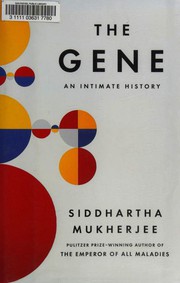
A masterfully written narrative history of genetics from Mendel to the present — it builds vocabulary, context, and genuine excitement before any technical detail is introduced. The perfect first book.
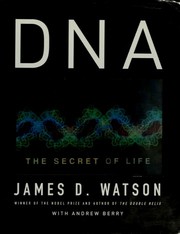
Written by the co-discoverer of the double helix, this accessible overview explains the structure of DNA and how the field grew from that discovery, cementing the foundational concepts introduced by Mukherjee.
How Genes Actually Work
BeginnerUnderstand the molecular mechanics of genes — how DNA is read, copied, and expressed — and what genes do and do not determine about living things.
▸ Study plan for this stage
Pace: 10–12 weeks total. Week 1–4: "Genome" by Matt Ridley (~25–30 pages/day, reading 1–2 chapters per sitting — one chromosome chapter at a time, pausing to reflect on each gene's story). Week 5–8: "The Selfish Gene" by Richard Dawkins (~20–25 pages/day, slower pace to wrestle with the gene's-eye-view lo
- The Central Dogma: how DNA is transcribed into RNA and translated into protein, forming the molecular basis of gene expression (introduced concretely through Ridley's chromosome-by-chromosome tour)
- Genes as information units: Ridley's framing of each chromosome chapter as a 'story' a gene tells — genes don't determine outcomes rigidly, they encode possibilities and interact with environment
- The replicator concept: Dawkins' argument in 'The Selfish Gene' that the gene, not the organism, is the fundamental unit of natural selection — genes 'use' bodies as survival machines
- Selfish Gene logic vs. genetic determinism: understanding that 'selfish' is a metaphor for replication bias, NOT a claim that genes mechanically dictate behavior or traits
- Gene regulation and switching: genes are turned on and off — expression is conditional, context-dependent, and dynamic, not a simple read-out of a fixed blueprint
- Epigenetic mechanisms (Francis): how chemical tags (methylation, histone modification) alter gene expression without changing DNA sequence — the molecular layer above the genome
- Transgenerational epigenetic inheritance: Francis's evidence that some epigenetic states can be passed to offspring, challenging a strict gene-only view of heredity
- Nature vs. nurture is a false dichotomy: all three books converge on the idea that genes and environment are inseparable — genes respond to the world, and the world shapes how genes are read
- After reading Ridley's 'Genome,' can you explain — using at least two specific chromosome chapters as examples — how a single gene can have dramatically different effects depending on context, timing, or interaction with other genes?
- In your own words, what does Dawkins mean by calling a gene 'selfish,' and why is this a statement about replication dynamics rather than a claim about genetic determinism or behavior?
- How does the concept of the 'survival machine' in 'The Selfish Gene' relate to Ridley's description of what genes actually do at the molecular level — and where do the two framings complement or tension each other?
- According to Francis's 'Epigenetics,' what is the difference between a genetic mutation and an epigenetic change, and why does that distinction matter for understanding inheritance and disease?
- How do epigenetic mechanisms (as described by Francis) challenge or refine the 'selfish gene' model proposed by Dawkins — does epigenetics break the model, or extend it?
- Across all three books, what is the most accurate beginner-level answer to the question: 'Do genes determine who we are?'
- Genome Chapter Map: As you read Ridley, keep a running one-page 'gene dossier' for each chromosome chapter — note the gene discussed, what it does, what happens when it malfunctions, and one environmental or contextual factor that modifies its effect. Review the full map when you finish the book.
- Selfish Gene Metaphor Journal: Each time Dawkins uses an anthropomorphic metaphor ('selfish,' 'cooperate,' 'strategy'), write it down and then immediately restate the same idea in purely mechanistic, non-metaphorical language. This builds the habit of separating vivid framing from literal claim.
- Ridley–Dawkins Dialogue Exercise: Pick any one gene or trait discussed in 'Genome' and write a short (1-page) imaginary dialogue between Ridley and Dawkins explaining that gene — Ridley from the molecular/historical angle, Dawkins from the replicator/selection angle. Where do they agree? Where do they emphasize different things?
- Epigenetics Case Study: After finishing Francis's 'Epigenetics,' choose one of the real-world case studies he presents (e.g., Dutch Hunger Winter, maternal behavior in rats, or genomic imprinting) and draw a simple diagram showing: (1) the environmental trigger, (2) the epigenetic mechanism, (3) the change in gene expression, and (4) the outcome. No biology background required — boxes and arrows w
- The False Dichotomy Audit: Write a list of 5–10 common 'nature vs. nurture' claims you've heard (e.g., 'addiction is genetic,' 'intelligence is inherited'). After finishing all three books, revisit each claim and annotate it with what you now know — which part is oversimplified, what the gene actually does, and what environmental/epigenetic factors are involved.
- Synthesis Essay (500–700 words): Write a response to this prompt — 'What does a gene actually do?' — drawing on specific evidence, examples, or arguments from all three books. Aim to mention at least one idea from Ridley, one from Dawkins, and one from Francis that genuinely surprised or changed your thinking.
Next up: By mastering how genes are read, expressed, regulated, and even silenced across these three books, the reader has built the molecular and conceptual foundation needed to explore how genetic variation, mutation, and inheritance drive evolution, disease, and human diversity at the population level — the natural next frontier of the curriculum.

Ridley takes one gene from each human chromosome to illustrate how genes function in practice — disease, behavior, evolution — making molecular biology concrete and story-driven.
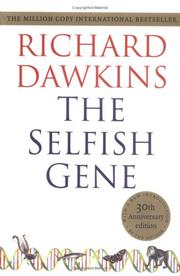
Introduces the gene-centered view of evolution and natural selection, deepening understanding of why genes exist and how they propagate — essential for grasping heredity at a conceptual level.

Corrects the common misconception that genes are destiny by explaining epigenetics — how gene expression is regulated by environment and experience — a crucial nuance before moving to advanced genomics.
The Genomics Revolution
IntermediateUnderstand the Human Genome Project and what reading the full genome revealed about human identity, ancestry, disease, and variation.
▸ Study plan for this stage
Pace: 6–8 weeks total: Weeks 1–3 cover "The Language of God" (~25–30 pages/day, including time to reflect on Collins's dual scientific/ethical arguments); Weeks 4–7 cover "She Has Her Mother's Laugh" (~20–25 pages/day, given its denser narrative range across heredity topics); Week 8 is a synthesis and rev
- The Human Genome Project: its scope, methodology, and the landmark 2003 completion — as narrated by Collins as one of its lead architects
- The genome as 'the language of God' — Collins's argument that science and faith are compatible lenses for interpreting the same biological text
- Single nucleotide polymorphisms (SNPs) and copy number variants as the primary sources of genetic variation between individual humans
- The surprisingly small number of protein-coding genes (~20,000–25,000) and what that reveals about the complexity of gene regulation versus raw gene count
- Heredity beyond Mendelian genetics — Zimmer's expansive redefinition of inheritance to include epigenetics, microbiomes, culture, and horizontal gene transfer
- Human ancestry and migration: how genomic data rewrites the story of Homo sapiens, including interbreeding with Neanderthals and Denisovans
- Genomics and disease: the shift from single-gene disorders (e.g., cystic fibrosis, sickle-cell) to the polygenic, probabilistic architecture of common diseases
- The ethical, legal, and social implications (ELSI) of reading the genome — privacy, genetic determinism, race as a social vs. biological construct, and the history of eugenics
- According to Collins in 'The Language of God,' what were the most surprising findings of the Human Genome Project, and how did they challenge prior assumptions about genome size and complexity?
- How does Zimmer use the concept of 'heredity' in 'She Has Her Mother's Laugh' to argue that inheritance is far broader than DNA sequence alone — and what examples does he use to support this?
- Both books touch on the relationship between genomics and human identity. Where do Collins and Zimmer agree, and where do their emphases diverge?
- What does the genomic evidence for interbreeding between Homo sapiens and archaic humans (Neanderthals, Denisovans) tell us about the concept of 'species,' and how does Zimmer frame its implications for human self-understanding?
- How do Collins and Zimmer each address the dangers of genetic determinism and the misuse of hereditary science (e.g., eugenics), and what safeguards or frameworks do they propose?
- After reading both books, how would you explain to a non-scientist why two people who look very different can share 99.9% of their DNA, and why that remaining 0.1% matters enormously for medicine and ancestry?
- Genome annotation walk: Visit the free UCSC Genome Browser (genome.ucsc.edu) or Ensembl and look up one gene Collins discusses (e.g., CFTR for cystic fibrosis). Identify its chromosomal location, exon/intron structure, and known disease variants — connecting the abstract text to a live database.
- Dual-author comparison journal: After finishing each book, write a 1-page 'position statement' summarizing how that author defines heredity and human identity. Then write a 500-word synthesis comparing the two — noting where Collins's HGP insider perspective and Zimmer's science-journalist breadth complement or tension each other.
- Ancestry thought experiment: Using the concepts from Zimmer's chapters on migration and ancient DNA, sketch a diagram of your own (or a hypothetical person's) ancestry layers — Neanderthal admixture, continental migration routes, epigenetic inheritance, microbiome — to visualize how many 'channels' of heredity converge in one individual.
- ELSI debate prep: Choose one ethical issue raised in either book (genetic privacy, direct-to-consumer testing, race and genomics, or gene editing) and write a structured pro/con outline of at least 4 arguments per side, drawing specific evidence from Collins's ELSI discussions and Zimmer's historical eugenics chapters.
- Polygenic risk score explainer: Research one common polygenic condition discussed in the books (e.g., Type 2 diabetes or heart disease) and write a plain-language explainer (300–400 words) describing why genomics can predict risk probabilistically but not deterministically — using Collins's framing of the genome as a 'probabilistic' rather than 'deterministic' script.
- Vocabulary mastery flashcards: Build a deck of 20–25 terms encountered across both books (e.g., SNP, epigenome, intron, horizontal gene transfer, admixture, GWAS, telomere, retrovirus). For each card, write the definition in your own words and cite the specific context in which Collins or Zimmer used it.
Next up: By internalizing how the full human genome was decoded and what it reveals about variation, ancestry, and disease, the reader has the foundational vocabulary and conceptual framework needed to explore the next frontier: how genomic knowledge is being actively applied and manipulated through technologies like CRISPR, gene therapy, and synthetic biology.

Written by the director of the Human Genome Project, this book provides an insider account of sequencing the human genome and what it means for medicine and our understanding of ourselves.
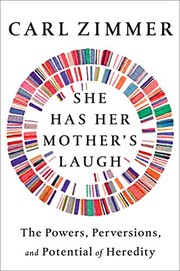
A sweeping, rigorous exploration of heredity — covering genetics, epigenetics, and genomics together — that challenges simplistic ideas about inheritance and brings the science fully up to date.
The CRISPR Era — Science, Power & Ethics
ExpertUnderstand how CRISPR-Cas9 works, how it was discovered, and how to think critically about the ethical, social, and political stakes of rewriting the genome.
▸ Study plan for this stage
Pace: 8–10 weeks total: Weeks 1–5 for "The Code Breaker" (~35–40 pages/day, ~560 pages), Weeks 6–10 for "A Crack in Creation" (~25–30 pages/day, ~300 pages). Reserve the final 3–4 days of each book for review, note consolidation, and reflection before moving on.
- The CRISPR-Cas9 mechanism: how guide RNA directs Cas9 to a precise DNA sequence and introduces a double-strand break, enabling gene editing
- The competitive race to characterize and patent CRISPR — Doudna/Charpentier vs. Broad Institute (Zhang) — as chronicled in The Code Breaker, and what it reveals about science, credit, and intellectual property
- Doudna's first-person account in A Crack in Creation of moving from basic biochemistry to therapeutic application, illustrating the scientist-as-stakeholder dynamic
- Off-target effects, delivery challenges, and current technical limitations of CRISPR as a clinical tool
- The spectrum of CRISPR applications: somatic gene therapy (affecting only the patient) vs. germline editing (heritable changes passed to future generations)
- The He Jiankui affair — the birth of CRISPR-edited babies — as a case study in rogue science, regulatory failure, and global governance gaps
- Bioethical frameworks for evaluating genome editing: beneficence, non-maleficence, justice, autonomy, and the distinction between treatment and enhancement
- The role of scientific institutions, government bodies, and public discourse in shaping the norms and policies that govern powerful biotechnologies
- How does the CRISPR-Cas9 system achieve sequence-specific DNA cutting, and what cellular repair pathways (NHEJ vs. HDR) determine the editing outcome?
- Based on The Code Breaker, what were the key scientific contributions of Doudna, Charpentier, and Zhang respectively, and why did the patent dispute between their institutions become so consequential for the field?
- In A Crack in Creation, how does Doudna describe her own evolving moral position on CRISPR — what events shifted her thinking, and what governance steps did she help initiate?
- What distinguishes somatic cell editing from germline editing in terms of technical risk, ethical weight, and regulatory treatment, and why does this distinction matter so much to both authors?
- Using He Jiankui's case as examined across both books, what systemic failures — scientific, institutional, and regulatory — allowed germline editing of human embryos to proceed, and what reforms have been proposed in response?
- How do both books together frame the tension between the democratizing potential of CRISPR (cheaper, faster, more accessible science) and the risks of unequal access, misuse, or a new form of genetic inequality?
- Mechanism diagram: Draw and annotate the full CRISPR-Cas9 editing cycle from scratch — including guide RNA design, Cas9 binding, DNA cleavage, and both NHEJ and HDR repair outcomes. Use only your notes from the books, then verify against a peer-reviewed primer.
- Patent timeline: Build a chronological timeline of the key CRISPR discoveries, publications, and patent filings described in The Code Breaker. Annotate each entry with the institution, the scientific claim, and the legal/commercial implication.
- Ethical position paper: Write a 600–900 word structured argument either defending or opposing heritable germline editing for a serious monogenic disease (e.g., sickle-cell). Explicitly engage with at least two counterarguments Doudna raises in A Crack in Creation.
- Comparative author analysis: Write a one-page reflection comparing Isaacson's third-person journalistic lens in The Code Breaker with Doudna's first-person scientist-narrator voice in A Crack in Creation. How does each perspective shape what you trust, question, or feel about CRISPR?
- Policy brief: Draft a one-page mock policy recommendation addressed to a national bioethics committee on whether germline editing research should be permitted under a moratorium, a regulated pathway, or a full ban — citing specific arguments and events from both books.
- Discussion or journal prompt: Identify one moment in each book where a scientist made a decision that was primarily ethical rather than scientific. Analyze what values drove that decision and whether you think it was the right call.
Next up: By mastering both the molecular mechanics and the ethical architecture of CRISPR through these two books, the reader is now equipped to engage with the broader genomic and evolutionary questions that arise when humanity gains the power to deliberately direct its own biological future.
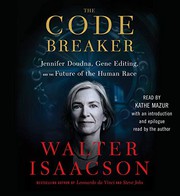
Isaacson's biography of Jennifer Doudna tells the full story of CRISPR's discovery with scientific clarity and human drama — the ideal entry point into genome editing after mastering the foundations.
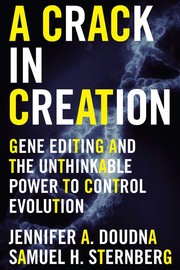
Written by CRISPR's co-inventor herself, this book explains the science from the inside and then pivots to a frank, urgent discussion of the ethical responsibilities that come with the power to edit life.
Discussion
Keep reading
Paths that share books, cover the same subject, or open a related topic.