Understanding W.E.B. Du Bois: Best Books to Read in Order
This curriculum builds a deep, layered understanding of W.E.B. Du Bois — his ideas, his life, and his lasting impact on race and civil rights in America. Starting with Du Bois's own foundational writings, the path moves through his major intellectual works, then into critical biography and historical context, and finally into advanced scholarly analysis of his legacy. Because the learner begins at an intermediate level, we skip surface-level introductions and dive straight into Du Bois's own voice before layering in the richest secondary literature.
Du Bois in His Own Words — The Core Texts
IntermediateRead Du Bois's most essential primary works to internalize his core concepts — double consciousness, the Veil, the color line, and Black political thought — directly from the source.
▸ Study plan for this stage
Pace: 8–10 weeks, ~40–50 pages/day (accounting for dense philosophical prose and note-taking)
- Double consciousness: the psychological experience of viewing oneself through the eyes of a hostile white society, creating a fractured sense of identity
- The Veil: the metaphorical and material barrier separating Black Americans from full participation in American life and self-knowledge
- The color line: the fundamental social, political, and economic division organizing American society along racial boundaries
- The talented tenth: Du Bois's theory that educated Black leadership is essential for racial progress and uplift
- Black political agency and self-determination: the necessity for Black Americans to define their own future rather than accept white-imposed solutions
- The spiritual and cultural contributions of Black Americans: how Black folk culture, music, and religion represent unique American achievements
- Reconstruction as a democratic experiment: the brief historical moment when Black political participation was possible, and its violent suppression
- Critique of accommodation: Du Bois's rejection of Booker T. Washington's gradualism in favor of immediate civil and political rights
- What does Du Bois mean by 'double consciousness' and how does it shape the Black American experience according to *Souls of Black Folk*?
- How does Du Bois use the metaphor of the Veil, and what does it represent in terms of both psychological and social separation?
- What is the color line, and how does Du Bois argue it structures American society across his three texts?
- Why does Du Bois advocate for the talented tenth, and how does this concept relate to his vision of Black leadership and progress?
- How does Du Bois's account of Reconstruction in *Black Reconstruction in America* challenge the dominant historical narrative of that era?
- What is Du Bois's critique of accommodation, and how does it emerge in his disagreement with Booker T. Washington?
- How do the spiritual and cultural contributions of Black Americans—particularly in music and religion—function in Du Bois's argument about Black identity and value?
- How does Du Bois's thinking evolve across these three texts regarding Black political agency and self-determination?
- Close-read the Preface and Chapter 1 ('Of Our Spiritual Strivings') of *Souls of Black Folk* twice—first for comprehension, second to annotate every instance of the Veil and double consciousness metaphors; write a 500-word reflection on how these concepts interconnect
- Create a visual map or concept diagram showing how the color line operates across different domains (political, economic, social, spiritual) as presented in *Souls of Black Folk*; add examples from the text for each domain
- Write a comparative essay (800–1000 words) analyzing Du Bois's implicit critique of Booker T. Washington in *Souls of Black Folk* (particularly 'Of Mr. Booker T. Washington and Others') against Du Bois's own vision of Black political participation
- Read *Dusk of Dawn* as intellectual autobiography: create a timeline of Du Bois's evolving political thought, noting how his understanding of the color line and Black agency shifts from *Souls* to *Dusk of Dawn*
- Analyze the opening chapters of *Black Reconstruction in America* that reframe Reconstruction as a democratic experiment; write a 600-word essay on how this reframing challenges the 'Dunning School' narrative and what evidence Du Bois marshals
- Select one essay from *Souls of Black Folk* (e.g., 'Of the Dawn of Freedom' on Reconstruction, or 'The Sorrow Songs') and create a modern parallel: how do the issues Du Bois identifies persist or transform in contemporary Black American life? Write 500 words with specific textual citations
Next up: This stage grounds you in Du Bois's foundational concepts and historical arguments, preparing you to engage with secondary scholarship that contextualizes, critiques, and extends his ideas—and to understand how later Black intellectuals built upon, revised, or rejected his framework.
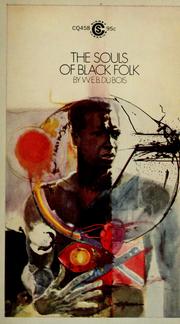
The indispensable starting point: Du Bois's masterwork introduces double consciousness, the Veil, and the spiritual and political condition of Black Americans. Every subsequent book in this curriculum assumes familiarity with it.

Du Bois's intellectual autobiography, written in 1940, shows how his thinking evolved over decades — from integrationism to Pan-Africanism — and provides essential self-commentary on the ideas introduced in Souls.
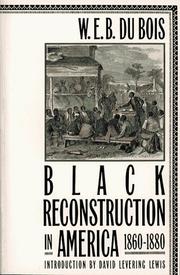
Du Bois's monumental revisionist history of Reconstruction reveals his mature historical method and his argument that Black labor and political agency were central to American democracy. Reading it third lets Souls and Dusk of Dawn frame its ambition.
Biography — The Life Behind the Ideas
IntermediateUnderstand Du Bois's full life arc — his origins, rivalries, activism, and radicalization — so his writings can be read as living documents rather than abstract texts.
▸ Study plan for this stage
Pace: 8–10 weeks, ~40–50 pages/day (Lewis's biography is dense and detailed; allow time for reflection and note-taking)
- Du Bois's early life in Great Barrington, Massachusetts and the formation of his racial consciousness in a relatively integrated New England environment
- His educational trajectory from Fisk University through Harvard and Berlin, and how these institutions shaped his intellectual framework and Pan-African vision
- The emergence of Du Bois as a public intellectual: his early sociological work, the Atlanta Studies, and his role as a race leader at the turn of the 20th century
- The ideological conflict with Booker T. Washington and the rise of the Niagara Movement, revealing Du Bois's evolving political stance on accommodation versus resistance
- The founding and early years of the NAACP (1909–1919) and Du Bois's role as editor of The Crisis, demonstrating how he used journalism as a tool for racial advocacy
- Du Bois's radicalization during and after World War I, including his complex relationship with American patriotism and his growing interest in Pan-Africanism and socialism
- The interconnection between Du Bois's personal experiences—family, health, financial struggles, and emotional life—and his intellectual and political development
- How Du Bois's concept of the 'Talented Tenth' and his emphasis on higher education and cultural production emerged from his own biography and worldview
- How did Du Bois's upbringing in Great Barrington and his early education at Fisk, Harvard, and Berlin shape his approach to understanding race and society differently from other Black leaders of his era?
- What were the key points of disagreement between Du Bois and Booker T. Washington, and how did these conflicts reflect broader debates about Black advancement and self-determination?
- How did Du Bois's work as a sociologist (particularly the Atlanta Studies) inform his later activism and his writings on race?
- What role did The Crisis magazine play in Du Bois's career, and how did his editorship allow him to shape Black political consciousness between 1910 and 1919?
- How did Du Bois's experiences during World War I—including his complex stance on Black participation in the war—contribute to his radicalization and shift toward Pan-Africanism?
- What does Lewis's biography reveal about the relationship between Du Bois's personal life (family, relationships, financial circumstances) and his public intellectual work?
- Create a detailed timeline of Du Bois's life from 1868–1919, marking key educational milestones, publications, organizational roles, and personal events; annotate how each shaped his thinking
- Read and annotate 2–3 primary source excerpts from Du Bois's own writings during this period (e.g., from The Souls of Black Folk, The Philadelphia Negro, or Crisis editorials) alongside Lewis's account to see how biography illuminates the texts
- Write a comparative character sketch of Du Bois and Booker T. Washington based on Lewis's portrayal, identifying the roots of their disagreement in their different backgrounds and philosophies
- Create a visual map or concept diagram showing the key institutions, people, and movements that influenced Du Bois during 1868–1919 (e.g., Fisk, Harvard, Berlin, the NAACP, Pan-African conferences)
- Analyze one Crisis editorial or essay from 1910–1919 (provided or self-selected) in light of Lewis's account of Du Bois's life during that period—how do biographical details explain the piece's tone, argument, and urgency?
- Write a reflective essay (1,500–2,000 words) on how understanding Du Bois's biography changes your interpretation of one of his major ideas (e.g., the Talented Tenth, double consciousness, or Pan-Africanism)
Next up: With Du Bois's life arc and intellectual formation now grounded in historical detail, you are prepared to read his major theoretical and polemical works as living interventions shaped by specific moments, conflicts, and personal stakes rather than timeless abstractions.

The first volume of Lewis's Pulitzer Prize-winning biography covers Du Bois from birth through 1919, grounding his early intellectual formation and his famous clash with Booker T. Washington in meticulous historical detail.
Context — Race, Civil Rights, and Du Bois's Rivals
IntermediatePlace Du Bois within the broader landscape of Black political thought and the civil rights struggle, understanding how he defined himself against contemporaries like Booker T. Washington and how his ideas shaped movements after him.
▸ Study plan for this stage
Pace: 4–5 weeks, ~25–30 pages/day (approximately 150–180 pages per week)
- Booker T. Washington's accommodationism: the 'Atlanta Compromise' and his philosophy of industrial education, self-help, and gradual economic advancement rather than immediate political equality
- Washington's vision of the 'talented tenth' and his emphasis on vocational training as the path to Black uplift versus intellectual and classical education
- Carter Godwin Woodson's critique of American education as a tool of cultural erasure and the systematic miseducation of Black students disconnected from their own history and agency
- Woodson's concept of 'mis-education' as internalized inferiority and the colonization of the Black mind through Eurocentric curricula
- The ideological divide between accommodation (Washington) and intellectual/cultural reclamation (Woodson) as competing responses to systemic oppression
- How both Washington and Woodson's frameworks implicitly or explicitly respond to the question of Black autonomy, self-determination, and the role of education in liberation
- The historical context of post-Reconstruction America, Jim Crow segregation, and the constraints that shaped these thinkers' strategic choices
- How Du Bois positioned himself against Washington's accommodationism and how Woodson's work extended and radicalized Du Bois's critique of miseducation
- What is the 'Atlanta Compromise' and what does Washington mean by it? How does his vision of Black progress differ from what Du Bois would likely advocate?
- How does Washington justify industrial/vocational education over classical liberal education for Black students, and what are the limitations of this argument?
- What does Woodson mean by 'mis-education' and how does he argue that American schools actively harm Black students' sense of self and agency?
- How do Washington's and Woodson's diagnoses of the 'Negro problem' differ, and what different solutions does each propose?
- What role does history—or the erasure of Black history—play in Woodson's critique, and how might this connect to Du Bois's broader intellectual project?
- How do the strategic choices made by Washington and Woodson reflect the political constraints and possibilities of their respective historical moments?
- Create a two-column comparison chart: Washington's core arguments (accommodation, industrial education, economic self-sufficiency) vs. Woodson's core arguments (intellectual reclamation, historical consciousness, critique of Eurocentric curricula). Note where they might agree and where they fundamentally diverge.
- Write a 2–3 page analytical response: 'If Du Bois were to respond to Washington's Atlanta Compromise speech, what would he say?' Ground this in specific passages from *Up from Slavery* and your understanding of Du Bois's intellectual stance.
- Annotate 3–4 key passages from each book that best encapsulate each author's philosophy. For each passage, write a 150-word reflection on why it matters and how it reveals the author's assumptions about race, education, and Black liberation.
- Create a timeline placing Washington, Woodson, and Du Bois within the same historical period (roughly 1890s–1930s). Mark major events (Plessy v. Ferguson, founding of the NAACP, etc.) and note how each thinker's work responds to or anticipates these moments.
- Debate exercise: Prepare arguments for both Washington's and Woodson's positions on education and racial progress. Then write a synthesis paragraph on what each thinker gets right and what each misses.
- Research and write a 1–2 page reflection: How do Washington's and Woodson's ideas about education and self-determination appear in later civil rights movements? (Consider Malcolm X, James Baldwin, or contemporary educational justice movements.)
Next up: Having mapped the ideological terrain of Black political thought through Washington's accommodationism and Woodson's educational critique, you are now prepared to examine Du Bois's own synthesis, evolution, and ultimate transcendence of these debates through his major theoretical works.
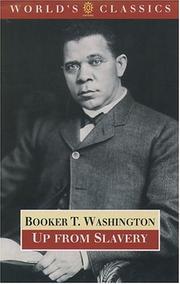
Reading Washington's autobiography directly after the Lewis biographies makes the Du Bois–Washington debate viscerally clear — you hear the opposing voice Du Bois was arguing against throughout his career.

Woodson's 1933 classic extends Du Bois's critique of racial subjugation into the domain of education and culture, showing how Du Bois's ideas rippled through the next generation of Black intellectuals.
Advanced Scholarship — Du Bois's Legacy and Critical Reception
ExpertEngage with the best modern scholarly analysis of Du Bois's thought — his philosophy of race, his feminism, his Marxism, and his relevance to contemporary debates — to achieve a genuinely expert-level understanding.
▸ Study plan for this stage
Pace: 4–5 weeks, ~40–50 pages/day (with 2–3 days per week for deep review and note-taking)
- The Racial Contract as a foundational framework: how Mills theorizes race as embedded in the social contract itself, not incidental to it
- Epistemology of ignorance: how white supremacy systematically produces false consciousness and distorted knowledge about race
- The concept of 'white ignorance' as active, willful, and structurally maintained rather than mere lack of information
- How Mills's framework illuminates Du Bois's concept of the color line as a fundamental organizing principle of modernity
- The distinction between the 'ideal' social contract (Rawls, Locke, Rousseau) and the actual racial contract that governs real-world political arrangements
- Mills's critique of liberal political philosophy for its complicity in racial domination through universalist rhetoric
- How the racial contract theory explains systemic racism as a feature, not a bug, of Western political institutions
- The implications of Mills's work for understanding Du Bois's double consciousness and the epistemological position of the racialized subject
- How does Mills define the 'racial contract' and how does it differ from the classical social contract theories of Locke, Rousseau, and Rawls?
- What is the 'epistemology of ignorance' and how does Mills argue that white supremacy systematically produces false knowledge?
- How does Mills's concept of 'white ignorance' help explain the persistence of racial inequality despite formal legal equality?
- In what ways does Mills's framework illuminate or extend Du Bois's analysis of the color line as a central feature of modernity?
- How does Mills critique liberal political philosophy, and what does this critique reveal about the historical relationship between liberalism and racial domination?
- What is the relationship between the racial contract and what Mills calls the 'Herrenvolk republic'—and how does this concept apply to understanding American political history?
- How does Mills's work suggest that racism is structural and systemic rather than merely individual or psychological?
- Create a detailed outline of Mills's argument in Part I (The Ideal Contract vs. The Racial Contract), mapping how he deconstructs classical social contract theory
- Write a 2–3 page analytical essay comparing Du Bois's color line concept with Mills's racial contract—where do they align, and where does Mills extend Du Bois's insights?
- Construct a visual diagram or concept map showing how Mills's 'epistemology of ignorance' operates: the mechanisms, beneficiaries, and consequences of white ignorance in a specific historical or contemporary context
- Identify and annotate 5–7 key passages from Mills that directly speak to understanding Du Bois's work, and write a paragraph on each explaining the connection
- Engage in a critical dialogue exercise: write out how a classical liberal political theorist (Rawls, for example) might respond to Mills's critique, then write Mills's rebuttal
- Apply Mills's framework to a contemporary racial justice debate (police violence, reparations, affirmative action, etc.)—write a 3–4 page analysis showing how the racial contract concept illuminates the structural dimensions of the issue
Next up: This stage equips you with a sophisticated theoretical framework for understanding how racial domination is embedded in Western political philosophy and institutions—a framework that will deepen your analysis of Du Bois's own critiques of liberalism, his turn toward Marxism, and his evolving understanding of race as a global, structural phenomenon rather than a merely American or individual proble
Mills's philosophical analysis of race as a political system is the ideal theoretical companion to Du Bois, showing how Du Bois's insights anticipate and inform modern critical philosophy of race.
Discussion
Keep reading
Paths that share books, cover the same subject, or open a related topic.