Friedrich Hayek is best known for one bestseller, but his real contribution is a theory about how dispersed knowledge coordinates through markets, and that is why reading him in order helps. Start with the popular warning, then the knowledge argument, then the mature political philosophy: taken this way, Hayek is far more than the caricature his fame sometimes invites.
The path below opens with his most-read book and a biography, moves into his technical economics, and ends with his broad theory of a free society. In sequence, the depth behind the slogans emerges.
The famous book and the foundations
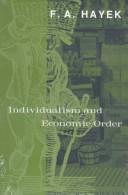
Start with The Road to Serfdom, his wartime warning that central planning threatens freedom. Pair it with Hayek by Bruce Caldwell, an authoritative intellectual biography that keeps you oriented. Then reach the heart of his thought: Individualism and economic order collects the essays, including the pivotal argument about the use of knowledge in society. Prices and production shows his earlier, more technical work on business cycles.
The mature political theory
Hayek's later project was systematic. The constitution of liberty is his grand statement of the principles of a free society, and Law, legislation and liberty extends it into a theory of law and spontaneous order.
For context and contrast, Human Action by Ludwig von Mises presents the broader Austrian framework, and Mill's On Liberty offers the classical-liberal tradition Hayek drew on and revised. The counter-revolution of science critiques the misuse of scientific method in social planning, and Why Hayek Matters, again by Caldwell, sums up his relevance today. Follow the full path to read them in order.
Follow the full reading path →
Ready to learn something deeply?
Build a reading path — free