W.E.B. Du Bois was a sociologist, historian, activist, and stylist across an extraordinarily long life, and reading him in order matters because his thought kept evolving. His concept of double consciousness, his revisionist history of Reconstruction, his shift toward Pan-Africanism: following the sequence lets you trace one of American intellectual history's great arcs.
The path below starts with his signature works, adds biography and the debate of his era, then places him in the tradition he helped found. In sequence, Du Bois emerges in full.
The essential Du Bois
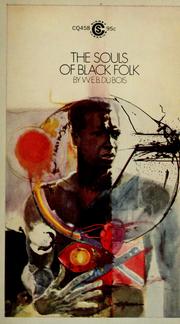
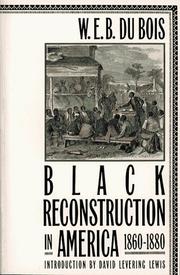
Begin with The Souls of Black Folk, the lyrical, groundbreaking 1903 collection that introduced the idea of double consciousness and the color line. Then Dusk of dawn, his reflective autobiography of an idea, and Black reconstruction in America, his monumental revisionist history that reframed the post-Civil War era around Black agency.
Two biographies by David Levering Lewis, W.E.B. Du Bois--biography of a race, 1868-1919 and W.E.B. Du Bois: The Fight for Equality and the American Century, together tell the whole life with authority.
Context and legacy
Du Bois argued within a rich tradition. Up from Slavery by Booker T. Washington presents the rival strategy he sparred with, and The mis-education of the Negro by Carter G. Woodson extends the debate over education and freedom.
For the philosophical afterlife, The racial contract by Charles Mills builds a political theory on foundations Du Bois helped lay, and W.E.B. Du Bois and the Critique of the Competitive Society recovers his economic thought. Read together, they show a thinker whose questions are still ours. Follow the full path to read them in order.
Follow the full reading path →
Ready to learn something deeply?
Build a reading path — free