Freemasonry: Best Books to Read in Order
This curriculum moves from accessible, myth-busting introductions through rigorous history and into the dense primary sources and scholarly critiques that reveal Freemasonry's real rituals, symbols, and place in Western esotericism. Each stage builds the vocabulary, historical context, and critical lens needed to tackle the next, so that by the end the reader can confidently separate documented fact from popular legend.
Foundations: What Freemasonry Actually Is
BeginnerUnderstand the basic structure, history, and purpose of Freemasonry, and learn to distinguish popular myth from documented reality.
▸ Study plan for this stage
Pace: 4–5 weeks, approximately 40–50 pages per day. Start with Hodapp's "Freemasons for Dummies" (Week 1–2, ~300 pages), then move to Ridley's "The Freemasons" (Week 3–5, ~400+ pages). Allocate 2–3 days for review and synthesis at the end.
- The three degrees of Freemasonry (Entered Apprentice, Fellowcraft, Master Mason) and their progression
- The lodge structure: how Freemasonry is organized locally, regionally, and nationally
- Historical origins in medieval stonemasons' guilds and the transition to speculative Masonry in 17th–18th century England
- The core purpose of Freemasonry: self-improvement, charitable work, and fellowship, not political or religious control
- Distinguishing documented Masonic practices from conspiracy myths (e.g., secret oaths, world domination, infiltration claims)
- The role of ritual, symbolism, and allegory in Masonic teaching and self-development
- How Freemasonry spread globally and adapted to different cultures while maintaining core principles
- The relationship between Freemasonry and other institutions (government, church, science) based on historical evidence
- What are the three degrees of Freemasonry, and what is the purpose of each?
- How did Freemasonry evolve from operative (working) stonemasons' guilds to speculative Masonry, and when did this transition occur?
- What is the basic structure of a Masonic lodge, and how are lodges organized hierarchically?
- What are the actual stated purposes of Freemasonry, and how do they differ from common conspiracy theories?
- What role do ritual and symbolism play in Masonic teaching, and why are they central to the fraternity?
- Name three documented historical facts about Freemasonry's relationship with government, religion, or science that contradict popular myths.
- Create a visual diagram or timeline showing the evolution from operative stonemasons to modern speculative Freemasonry, using specific dates and figures from both books.
- Write a 2–3 page comparison chart: list 5–6 common Masonic conspiracy theories (e.g., 'Masons control world governments') and document what Hodapp and Ridley actually say about each.
- Draw or describe the structure of a typical Masonic lodge (officers, roles, layout) and explain the function of each position using examples from the texts.
- Select one Masonic symbol (e.g., the compass and square, the letter G) and write a 1–2 page explanation of its meaning and use, citing how both authors describe it.
- Interview a Freemason (if accessible) or find a recorded interview online, and take notes comparing their account of lodge life and purpose to what Hodapp and Ridley describe.
- Create a 'myth vs. reality' poster or infographic with 4–5 pairs of false claims and documented facts about Freemasonry, using direct citations from both books.
Next up: With a solid grasp of Freemasonry's actual structure, history, and purpose, you are now prepared to explore deeper topics—such as Masonic philosophy, the symbolism and meaning of rituals, or Freemasonry's role in specific historical movements—with the critical thinking skills to separate evidence from speculation.
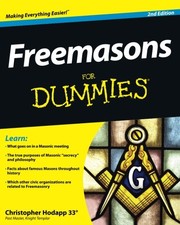
The single best starting point for a complete newcomer — written by an active Mason, it clearly explains degrees, lodges, symbols, and history while directly debunking the most common conspiracy myths. Read this first to build essential vocabulary.
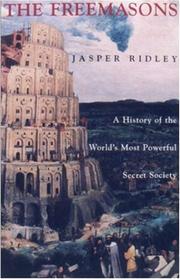
A concise, readable narrative history by a professional biographer that traces Freemasonry from its operative stonemason origins through its global spread. It grounds the reader in real chronology before deeper study.
Real History: Origins, Growth, and Political Influence
BeginnerTrace the documented historical origins of speculative Freemasonry, its Enlightenment context, and its genuine (not conspiratorial) influence on politics and society.
▸ Study plan for this stage
Pace: 8–10 weeks, ~40–50 pages/day (approximately 3–4 hours of focused reading)
- The transition from operative (stonemason) guilds to speculative Freemasonry in 17th-century Scotland and England, and the documentary evidence for this shift
- The role of Enlightenment intellectual currents—rationalism, empiricism, and scientific inquiry—in shaping Masonic philosophy and ritual
- The documented political involvement of Masons in key historical events (American Revolution, French Revolution, European liberalism) versus unfounded conspiracy theories
- How Masonic lodges functioned as spaces for social mobility, intellectual exchange, and networking across class boundaries in the 18th and 19th centuries
- The relationship between Masonic symbolism (architectural, geometric, alchemical) and Enlightenment ideas about knowledge, progress, and human perfectibility
- Regional variations in Masonic development and political engagement (British conservatism vs. Continental radicalism) and their historical causes
- The distinction between Masonic influence on individual members' political choices versus institutional Masonic control or conspiracy
- What documentary evidence does Dickie present for the transformation of operative masonry into speculative Freemasonry, and what role did the Scottish and English contexts play?
- How does Robinson's analysis in 'Born in Blood' explain the medieval and early modern roots of Masonic organizational principles, and where does his evidence come from?
- What specific Enlightenment ideas (scientific method, natural rights, reason) are reflected in Masonic ritual and philosophy as described in these texts?
- What was the actual documented involvement of Masons as individuals in the American and French Revolutions, and how do Dickie and Robinson distinguish this from conspiracy narratives?
- How did Masonic lodges serve as vehicles for social and intellectual change in their respective historical periods, according to these authors?
- What are the key differences between British and Continental European Freemasonry in terms of political orientation and social function, and what historical factors explain them?
- Create a timeline mapping the transition from operative masonry to speculative Freemasonry (1600–1750), marking key dates, locations, and figures mentioned in both texts; annotate with the types of evidence (documents, lodge records, etc.) that support each transition point
- Compile a comparative chart of Enlightenment philosophical concepts (reason, empiricism, natural law, progress) and their parallels in Masonic symbolism and ritual as described in Dickie's work; cite specific passages
- Research and write a 2–3 page case study on one historical figure (e.g., Benjamin Franklin, Lafayette, or a British statesman) who was a documented Mason, using Dickie and Robinson as primary sources, then cross-check their claims against academic biographies
- Create a 'myth vs. reality' document: list five conspiracy theories about Masonic political control, then use specific evidence from both texts to explain what actually happened versus what is unfounded
- Map the geographic spread of Freemasonry across Europe and North America (1700–1850) using information from both texts; note regional political contexts and how they shaped Masonic character in each region
- Design a mock lodge meeting agenda from the 18th century based on descriptions in both texts, incorporating Enlightenment intellectual content (scientific discussion, philosophical debate) alongside ritual; explain how this structure enabled social mobility and idea exchange
Next up: This stage grounds you in the documented historical record and Enlightenment context of Freemasonry, preparing you to critically evaluate later stages that examine Masonic symbolism, esoteric traditions, and their philosophical meanings without conflating history with speculation.

A rigorous, archive-based history by a leading secret-society scholar covering four centuries across Britain, America, Italy, and beyond — the most up-to-date scholarly narrative available. Read after Ridley to add depth and nuance.
Argues a controversial but carefully reasoned thesis linking Freemasonry to the Knights Templar; valuable here not as settled fact but as a model of how to evaluate and stress-test historical claims about Masonic origins.
Rituals and Symbols: Inside the Lodge
IntermediateUnderstand the actual content of Masonic ritual, the meaning of its symbols, and how its degree system works, using both insider exposés and scholarly analysis.
▸ Study plan for this stage
Pace: 8–10 weeks, ~40–50 pages/day, with 2–3 dedicated reflection days per week. Start with Pike (4–5 weeks), move to Mackey (2–3 weeks), finish with MacNulty (1–2 weeks).
- The three degrees of Freemasonry (Entered Apprentice, Fellowcraft, Master Mason) and their progressive philosophical content, as detailed in Pike's Morals and Dogma
- Symbolic architecture of the lodge: the temple layout, cardinal directions, and how physical space encodes ritual meaning
- The dual nature of Masonic symbols—exoteric (surface) and esoteric (hidden) meanings, particularly through Mackey's systematic symbol dictionary
- The Scottish Rite system and its 33 degrees beyond the three craft degrees, including Pike's interpretation of their spiritual and philosophical progression
- Ritual as transformation: how the candidate moves through initiation as a symbolic death-and-rebirth journey, connecting to ancient mystery traditions
- The relationship between Masonic symbolism and Western esoteric traditions (Hermeticism, Kabbalah, alchemy), as synthesized by Pike and MacNulty
- Practical lodge operations: how ritual is performed, the roles of officers, and the ceremonial structure that supports symbolic transmission
- Critical reading of Pike's controversial interpretations and MacNulty's scholarly contextualization to distinguish historical fact from speculative philosophy
- What are the three degrees of Freemasonry, and what is the central symbolic theme or transformation associated with each?
- How does Pike use the concept of 'dogma' in Morals and Dogma, and what does he claim is the relationship between Masonic ritual and ancient mystery religions?
- According to Mackey's symbolism framework, what is the difference between exoteric and esoteric interpretation of a Masonic symbol, and provide two examples?
- Describe the physical layout of a Masonic lodge and explain the symbolic significance of at least three key architectural or directional elements.
- What is the Scottish Rite, how does it extend beyond the three craft degrees, and what philosophical progression does Pike attribute to its higher degrees?
- How do MacNulty's explanations of Masonic symbolism differ from or complement Pike's approach, and what does MacNulty emphasize about the lodge as a teaching institution?
- Create a visual map of the Masonic lodge layout (using Mackey and MacNulty as guides), labeling cardinal directions, key stations, and symbolic objects; annotate each with its esoteric meaning.
- Write a 500-word comparative analysis of how Pike and Mackey interpret a single symbol (e.g., the compass and square, the letter G, or the three pillars)—note where they agree and diverge.
- Construct a three-column chart tracking the three degrees: list the degree name, the candidate's symbolic transformation, the primary ritual action, and the key symbols introduced at each level.
- Read one section from Pike's Morals and Dogma on a specific degree, then cross-reference it with Mackey's symbol definitions and MacNulty's explanations; write a synthesis paragraph clarifying what the ritual teaches.
- Diagram the 33 degrees of the Scottish Rite (using Pike's framework) and identify which degrees represent major philosophical thresholds or transitions in the candidate's journey.
- Conduct a close reading exercise: select a ritual passage from Pike or MacNulty, identify all symbols present, and decode their meanings using Mackey's symbolism reference—present your findings as an annotated text.
Next up: This stage equips you with the insider's view of Masonic ritual content and symbolic language, preparing you to evaluate Freemasonry's historical claims, its influence on Western culture and politics, and the scholarly debates about its origins and authenticity in the next stage.
The most famous — and most misquoted — Masonic text ever written, covering the philosophy behind the Scottish Rite degrees. Reading it firsthand lets the learner see how wildly it differs from its conspiratorial reputation.
The classic 19th-century reference on Masonic symbols, written by the era's foremost Masonic scholar. Pairs with Pike to give a systematic, insider explanation of every major symbol and allegory.
A beautifully illustrated, analytically rigorous study of Masonic symbolism through the lens of Hermetic and Kabbalistic philosophy — bridges the gap between ritual description and deeper esoteric meaning.
Esotericism and Secret Societies: The Wider Context
IntermediatePlace Freemasonry within the broader history of Western esotericism, Rosicrucianism, and secret societies, understanding what it shares with and borrows from other traditions.
▸ Study plan for this stage
Pace: 6–8 weeks, ~25–30 pages/day (approximately 350–400 pages total across both books)
- Rosicrucianism as a 17th-century intellectual and spiritual movement that bridged Renaissance hermeticism and early modern science
- The role of Rosicrucian manifestos in shaping esoteric thought and their influence on Freemasonry's emergence
- Hermeticism, alchemy, and Kabbalah as foundational esoteric traditions that Freemasonry inherited and adapted
- The distinction between public institutional secrecy and genuine esoteric knowledge transmission in secret societies
- How Freemasonry borrowed organizational structures, ritual frameworks, and symbolic systems from earlier esoteric and craft traditions
- The historical continuity and ruptures between medieval guild mysteries, Rosicrucianism, and 18th-century Freemasonry
- The political and religious contexts that made secret societies necessary vehicles for intellectual and spiritual exploration in early modern Europe
- Comparative analysis of initiation, degrees, and hierarchical knowledge in various secret societies versus Freemasonry
- What were the Rosicrucian manifestos, when were they published, and what core ideas did they promote about the relationship between spirituality and knowledge?
- How did Yates argue that Rosicrucianism influenced the scientific revolution and the intellectual climate that enabled Freemasonry's emergence?
- What esoteric traditions (Hermeticism, Kabbalah, alchemy) did Freemasonry draw upon, and how are these visible in Masonic symbolism and ritual?
- According to Daraul, what organizational and initiatory structures do secret societies share, and how does Freemasonry's model compare to earlier societies like the Illuminati or Martinists?
- What role did religious persecution and political instability play in the development of secret societies as containers for esoteric knowledge?
- How did the transition from medieval craft guilds to speculative Freemasonry involve both continuity and transformation of esoteric practices?
- Create a timeline mapping Rosicrucianism (1614–1620s manifestos), key Hermetic texts, and the emergence of organized Freemasonry (early 1700s), noting overlaps and influences
- Analyze one Rosicrucian manifesto excerpt (provided in Yates) and one Masonic ritual text side-by-side, identifying shared symbols, language, and philosophical themes
- Construct a comparative chart of at least four secret societies from Daraul (e.g., Rosicrucians, Illuminati, Martinists, Freemasons) showing their initiatory degrees, claimed origins, and stated purposes
- Write a 500–750 word essay: 'What did Freemasonry inherit from Rosicrucianism, and what did it transform?' using specific examples from both texts
- Create visual diagrams of the esoteric knowledge systems (Hermetic cosmology, Kabbalistic tree of life, alchemical processes) as Yates and Daraul describe them, then annotate where these appear in Masonic symbolism
- Conduct a close reading of Daraul's chapters on Freemasonry's origins, noting his claims about craft guild continuity versus Yates's emphasis on Rosicrucian intellectual influence; write a brief reflection on how these accounts complement or contradict each other
Next up: This stage establishes Freemasonry as a synthesis of earlier esoteric traditions and secret society structures, providing the historical and philosophical foundations necessary to understand Freemasonry's internal doctrines, degrees, and symbolic architecture in the next stage.

A landmark scholarly work on the Rosicrucian movement that directly fed into early speculative Masonry — essential for understanding the hermetic and alchemical ideas embedded in Masonic ritual.

Places Freemasonry alongside the Assassins, Illuminati, Carbonari, and others, giving the reader a comparative framework to understand what is genuinely unique to Masonry versus common to all initiatic brotherhoods.
Advanced Scholarship: Myth, Conspiracy, and Critical Analysis
ExpertCritically evaluate the conspiracy literature, apply academic tools to Masonic studies, and arrive at a fully evidence-based, nuanced understanding of Freemasonry's real legacy.
▸ Study plan for this stage
Pace: 8–10 weeks, ~40–50 pages/day (with 2–3 days per week for reflection and exercises)
- The historiographical relationship between Freemasonry and the Scientific Revolution: how Lomas constructs and defends the causal link
- Methodological critique: distinguishing between speculative history, circumstantial evidence, and peer-reviewed scholarship in Masonic studies
- The Illuminati myth and its genealogy: how Melanson traces the origins, distortions, and persistence of conspiracy narratives from the 18th century onward
- Perfectibilism as a historical ideology: its actual tenets, key figures (Weishaupt, Knigge), and documented activities versus popular misconceptions
- Source evaluation in Masonic scholarship: primary documents, secondary interpretations, and the problem of confirmation bias in conspiracy literature
- The role of secrecy in generating conspiracy: how institutional opacity creates epistemic vulnerability and invites unfounded speculation
- Evidence-based reconstruction: what we can and cannot reliably claim about Masonic influence on politics, science, and society based on available records
- What is Lomas's core argument about Freemasonry's role in the birth of modern science, and what are the strongest and weakest points in his evidence?
- How does Melanson trace the transformation of the Bavarian Illuminati from a historical organization into a modern conspiracy myth, and what role does source distortion play?
- What methodological problems does conspiracy literature exhibit when discussing Freemasonry, and how can these be identified and corrected?
- How do Lomas and Melanson each use primary sources differently, and what standards should scholars apply when evaluating competing historical claims about Masonic influence?
- What is the relationship between institutional secrecy and conspiracy theorizing, and how does this dynamic appear in both books?
- Based on these two works, what can we reliably say about Freemasonry's actual historical impact, and what claims remain speculative or unfounded?
- Create a detailed source map for Lomas's argument: identify his primary sources, secondary sources, and inferences; flag which claims rest on direct evidence versus circumstantial reasoning
- Trace one conspiracy claim about Freemasonry (e.g., 'Masons control world governments') through Melanson's book; document how the claim originated, mutated, and became detached from its historical context
- Construct a two-column comparison: list Lomas's claims about Masonic-scientific connections alongside the peer-reviewed historical consensus on the same topics; note agreements and divergences
- Read 3–4 primary source excerpts (Masonic rituals, Illuminati documents, or period correspondence) that both authors cite; assess whether the authors' interpretations match the source material and identify alternative readings
- Write a critical book review of either Lomas or Melanson (1,500–2,000 words) that evaluates their methodology, source use, and conclusions against academic standards in history and history of science
- Develop a 'red flags checklist' for identifying unreliable Masonic scholarship based on patterns you observe in conspiracy literature; test it against one additional popular Masonic book
Next up: This stage equips you to distinguish credible Masonic scholarship from speculation, positioning you to engage with primary sources directly and form independent judgments about Freemasonry's actual historical significance—preparing you for either specialized research, public advocacy grounded in evidence, or a deeper dive into specific Masonic traditions and their documented legacies.
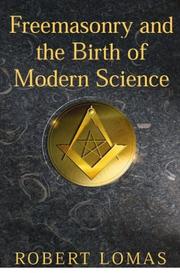
A scholarly investigation into the genuine connections between early Masonic lodges and the founding of the Royal Society — a case study in how to rigorously test a historical hypothesis about Masonic influence.
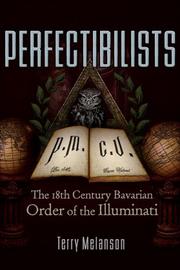
The most thoroughly sourced academic study of the Bavarian Illuminati — the secret society most often conflated with Freemasonry in conspiracy culture — allowing the reader to finally and definitively separate the two.
Discussion
Keep reading
Paths that share books, cover the same subject, or open a related topic.