American Evangelicalism: Best Books to Read in Order
This curriculum traces American evangelicalism from its historical roots through its theology, political entanglements, and cultural power — building a rigorous, multi-dimensional understanding. Starting from a solid historical foundation, each stage deepens the analysis, moving from "what happened" to "why it matters and where it's going."
Historical Foundations
IntermediateUnderstand what evangelicalism is, where it came from, and how it became a dominant force in American religious life.
▸ Study plan for this stage
Pace: 8–10 weeks, ~40–50 pages/day (approximately 2–3 weeks per book with time for reflection and note-taking)
- The Great Awakening and Pietist roots of American evangelicalism as described by FitzGerald
- The role of revivalism and emotional conversion experiences in shaping evangelical identity
- How the fundamentalist-modernist controversy (Marsden) created the evangelical movement as a distinct force
- The geographic and demographic expansion of evangelicalism across American regions, particularly the South and Midwest (Dochuk)
- The relationship between evangelicalism and American political culture, from the Cold War era through the late 20th century
- The tension between evangelical separatism and cultural engagement across different historical periods
- How economic, social, and technological changes shaped evangelical institutions and theology
- What were the theological and experiential roots of American evangelicalism, and how did the Great Awakening establish patterns that persist today?
- How did the fundamentalist-modernist controversy of the early 20th century reshape American Protestantism and create modern evangelicalism?
- What role did geography, migration, and regional identity play in evangelicalism's rise to dominance in American religious life (particularly according to Dochuk)?
- How did evangelicals navigate the relationship between cultural separation and political engagement throughout the 20th century?
- What institutional structures (churches, parachurch organizations, media) did evangelicals build to sustain and expand their movement?
- How did Cold War politics, suburbanization, and economic change intersect with evangelical growth and influence?
- Create a timeline mapping the major events, figures, and movements across all three books (Great Awakening → Fundamentalist-Modernist Controversy → Post-WWII evangelical expansion), noting how each shaped the next phase
- Write a 2–3 page synthesis comparing how FitzGerald, Dochuk, and Marsden each explain the origins of modern evangelicalism—what does each author emphasize, and where do they agree/disagree?
- Track one evangelical institution (e.g., a denomination, parachurch organization, or media outlet) mentioned across the books and document how it evolved from the 1920s through the 1980s
- Create a map or chart showing the geographic spread of evangelicalism according to Dochuk, noting which regions became strongholds and why
- Identify 3–4 key evangelical figures discussed across the books (e.g., Billy Graham, Carl Henry, or others) and write brief profiles explaining their theological positions and historical significance
- Analyze a primary source document from the fundamentalist-modernist era (referenced in Marsden) and explain how it reflects the theological tensions that defined the period
Next up: This stage establishes the historical scaffolding needed to understand evangelicalism's internal diversity and contemporary challenges—you'll be prepared to examine how different evangelical subcultures, theological movements, and institutional responses emerged from these foundational conflicts and geographic patterns.
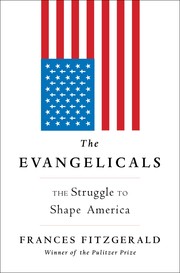
A sweeping, authoritative narrative history of American evangelicalism from the Great Awakening to the present — the single best starting point for grasping the full arc of the movement.

Marsden is the foremost scholarly historian of evangelicalism; this book precisely defines the movement's identity and inner tensions, giving you the conceptual vocabulary needed for everything that follows.
Traces the fundamentalist roots from which modern evangelicalism grew, explaining the separatist impulse and anti-modernist theology that still shape the movement today.
Theology and Identity
IntermediateGrasp the core theological commitments of evangelicalism — biblical authority, conversion, and the cross — and how they distinguish it from other Christian traditions.
▸ Study plan for this stage
Pace: 4–5 weeks, ~25–30 pages/day. Week 1–2: *The Scandal of the Evangelical Mind* (~300 pages); Week 3–4: *Evangelicalism in Modern Britain* (~250 pages); Week 5: Review and synthesis.
- Biblical authority as the foundational evangelical conviction and its historical roots in Protestant scholasticism and American revivalism
- The doctrine of conversion ('born again' experience) as central to evangelical identity and its distinction from sacramental or liturgical Christianity
- The centrality of the cross and substitutionary atonement in evangelical soteriology
- The 'scandal' of evangelical anti-intellectualism and the tension between pietistic faith and rigorous theological thinking
- Bebbington's four-point definition of evangelicalism: conversionism, activism, biblicism, and crucicentrism as a coherent theological framework
- The historical development of evangelicalism from Reformation roots through 18th-century revivals to modern expressions
- How evangelical theology distinguishes itself from mainline Protestantism, Catholicism, and other Christian traditions
- The relationship between evangelical theology and cultural engagement (activism) as a theological commitment
- What does Noll mean by 'the scandal of the evangelical mind,' and what historical factors does he identify as causing evangelical anti-intellectualism?
- How do Noll and Bebbington each explain the centrality of conversion to evangelical theology, and why is the 'born again' experience non-negotiable for evangelicals?
- What is the evangelical doctrine of the cross, and how does substitutionary atonement function as a theological distinctive?
- According to Bebbington, what are the four defining characteristics of evangelicalism, and how do they work together as a coherent theological identity?
- How does evangelical biblical authority differ from how other Christian traditions (Catholic, mainline Protestant, Orthodox) approach Scripture?
- What does Noll argue about the relationship between evangelical theology and intellectual life, and what solutions does he propose?
- Create a timeline mapping the historical development of evangelicalism from the Reformation through the 19th century, using specific examples from both books, noting key theological shifts and figures.
- Write a 2–3 page comparative analysis: explain how Bebbington's four-point definition (conversionism, activism, biblicism, crucicentrism) maps onto the theological concerns Noll raises in *The Scandal of the Evangelical Mind*.
- Select one chapter from each book that addresses the same theological theme (e.g., biblical authority or conversion). Write a dialogue between Noll and Bebbington on that theme, showing where they agree and diverge.
- Identify 3–4 evangelical statements of faith or doctrinal documents (from churches, organizations, or historical sources mentioned in the books). Annotate them to show where each of Bebbington's four characteristics appears.
- Write a critical reflection (2 pages): Do you find Noll's critique of evangelical anti-intellectualism fair? Use specific examples from both books to support your argument.
- Create a visual diagram or concept map showing how the three core theological commitments (biblical authority, conversion, the cross) relate to each other and to the broader evangelical identity as described in both texts.
Next up: This stage establishes the theological DNA of evangelicalism—its core convictions and internal logic—preparing you to examine how these commitments have played out in evangelical practice, politics, and cultural influence across different historical periods and contexts.

A landmark insider critique that examines evangelical theology's intellectual strengths and failures; essential for understanding why the movement thinks the way it does.

Introduces the famous 'Bebbington Quadrilateral' — conversionism, activism, biblicism, crucicentrism — the standard scholarly definition of evangelical identity used in virtually all serious literature.
Politics and the Culture Wars
IntermediateUnderstand how evangelicalism became a political force, forged the Religious Right, and reshaped American democracy from the 1970s onward.
▸ Study plan for this stage
Pace: 8–10 weeks, ~40–50 pages/day (Williams first: 4–5 weeks; Haidt second: 4–5 weeks)
- The rise of the Religious Right as a political coalition: how abortion, school prayer, and secular humanism mobilized evangelical voters from 1970s onward (Williams)
- The role of key figures (Jerry Falwell, Pat Robertson, James Dobson) in linking evangelical theology to Republican politics and culture-war issues (Williams)
- How evangelicals shifted from political quietism to aggressive activism, reframing politics as a moral imperative (Williams)
- Moral foundations theory: the five (or six) psychological pillars underlying political ideology—care, fairness, loyalty, authority, sanctity, and liberty (Haidt)
- Why liberals and conservatives perceive morality differently: conservatives weight loyalty, authority, and sanctity more heavily than progressives (Haidt)
- The relationship between intuition and reasoning in moral judgment: how we rationalize positions we've already emotionally adopted (Haidt)
- How understanding moral diversity can reduce political polarization and explain evangelical-secular divides on culture-war issues (Haidt)
- The intersection of evangelical theology, moral psychology, and political identity: why certain issues (abortion, sexuality, religious freedom) became non-negotiable for the Religious Right (synthesis of both books)
- What were the primary catalysts that transformed evangelicals from a politically disengaged group into a mobilized voting bloc between 1970 and 1980?
- How did figures like Jerry Falwell and Pat Robertson use media, institutions, and moral framing to connect evangelical theology to Republican politics?
- According to Haidt's moral foundations theory, why do conservatives and progressives talk past each other on culture-war issues like abortion and LGBTQ+ rights?
- What does Haidt mean by the 'intuition-first' model of moral judgment, and how does this explain why evangelicals and secular Americans reach such different political conclusions?
- How does understanding moral diversity (Haidt) help explain the evangelical political mobilization described in Williams' historical account?
- What role did issues like school prayer, secular humanism, and the sexual revolution play in evangelical political consciousness-raising (Williams), and how do these issues map onto Haidt's moral foundations?
- Timeline exercise: Create a detailed chronology of key events in evangelical political mobilization (1970–1990) using Williams, marking pivotal moments like Roe v. Wade, the rise of the Moral Majority, and the 1980 Reagan election.
- Moral foundations mapping: Read a contemporary evangelical political statement (e.g., from Focus on the Family or a church website) and identify which of Haidt's five/six moral foundations it appeals to; compare with a progressive statement on the same issue.
- Character study: Write a 2–3 page analysis of how one key figure (Falwell, Robertson, or Dobson) used moral language and media to reshape evangelical political identity, citing specific examples from Williams.
- Intuition vs. reasoning debate: Choose a culture-war issue (abortion, religious freedom, LGBTQ+ rights). Write out the 'intuitive' evangelical position, then the 'intuitive' secular progressive position, then analyze how each side uses reasoning to defend its intuition (Haidt's framework).
- Primary source analysis: Find and analyze 2–3 primary sources from the 1970s–80s (Moral Majority fundraising letters, Pat Robertson speeches, evangelical magazine articles) and explain how they mobilized voters using moral language.
- Synthesis essay: Write a 4–5 page essay explaining how Haidt's moral psychology illuminates the evangelical political shift Williams describes—why did sanctity, authority, and loyalty become such powerful organizing principles for the Religious Right?
Next up: This stage equips you to analyze how evangelical moral psychology and political identity crystallized; the next stage will likely examine the consequences of this alignment—how the Religious Right's influence reshaped policy, law, and American institutions, and where tensions within the coalition have emerged.
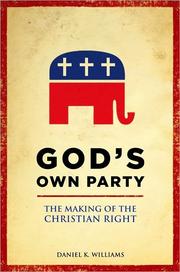
The definitive political history of the evangelical-Republican alliance, tracing how the Religious Right was built and why it proved so durable — read before more polemical accounts.

Provides the moral psychology framework for understanding why evangelical voters behave as they do politically, adding crucial analytical depth beyond partisan narrative.
Cultural Power and Internal Fractures
ExpertAnalyze evangelicalism's cultural influence — its megachurches, media, gender politics, and racial fault lines — and the crises threatening it from within.
▸ Study plan for this stage
Pace: 8–10 weeks, ~40–50 pages/day (with 2–3 days per week for reflection and exercises)
- Evangelical identity formation through class, geography, and family structures—how Appalachian working-class culture shapes religious worldview and political allegiance
- The historical entanglement of white American evangelicalism with racial hierarchy, segregation, and the failure to reckon with systemic racism
- Megachurch culture and media as mechanisms of evangelical influence—how prosperity gospel, celebrity pastors, and entertainment-driven worship reshape theology
- Gender roles and patriarchal structures within evangelical institutions—complementarianism, women's subordination, and resistance movements
- Internal fractures: generational divides, political polarization, and the crisis of institutional legitimacy within evangelical denominations
- Cult dynamics and theological boundary-drawing—how evangelicals define orthodoxy and what happens when those boundaries collapse or are weaponized
- The relationship between evangelical cultural power and moral credibility—how political entanglement undermines spiritual authority
- How does Vance's account of Appalachian family and community structures explain evangelical political behavior and cultural conservatism?
- What does Jones argue about the historical relationship between white evangelicalism and white supremacy, and how does this shape contemporary evangelical identity?
- How have megachurches and evangelical media transformed the practice and theology of American evangelicalism, and what are the consequences?
- What are the key gender politics within evangelicalism, and how do complementarian theology and patriarchal structures function in evangelical institutions?
- According to Van Baalen, what distinguishes evangelical Christianity from cultic movements, and how might contemporary evangelical practices blur these boundaries?
- What internal crises—theological, institutional, and demographic—threaten evangelical unity and cultural influence in the 21st century?
- Create a timeline mapping key moments in white evangelical political mobilization (1970s–present) using evidence from Vance and Jones; identify where cultural power peaked and where fractures emerged
- Analyze 3–4 megachurch sermons or prosperity gospel messaging (available online) against Van Baalen's criteria for cultic theology; document how institutional power shapes theological boundaries
- Interview 2–3 evangelical Christians (or review recorded testimonies) from different generations about their experience of gender roles, racial justice, and institutional trust; compare findings to Jones's and Vance's analysis
- Write a 2,000-word comparative essay: 'How does Vance's family narrative illuminate the racial and gender politics Jones identifies in white evangelicalism?'
- Map the organizational structure and theological claims of 2–3 contemporary evangelical denominations or networks; assess internal fractures using Van Baalen's framework for institutional coherence
- Create a visual argument (infographic, concept map, or annotated timeline) showing how megachurch culture, racial reckoning, and gender politics intersect to destabilize evangelical authority
Next up: This stage equips you to recognize evangelicalism not as a monolithic movement but as a fractured ecosystem of power, complicity, and resistance—preparing you to examine how individual evangelicals navigate these contradictions and what theological or institutional renewal might look like.

A ground-level cultural portrait of the white working-class world where evangelicalism is deeply embedded, illuminating the social conditions that fuel its politics and identity.

Confronts the deep entanglement of white evangelical Christianity with racial hierarchy in America — a necessary corrective lens that complicates any triumphalist account of the movement.
Examines the boundary disputes at evangelicalism's edges, showing how the movement defines orthodoxy against heterodox movements — sharpening your sense of what evangelicals believe they must defend.
Reckoning and Future
ExpertAssess the current crisis of evangelical identity — post-Trump fractures, deconstruction, and what the movement's future may hold.
▸ Study plan for this stage
Pace: 6–7 weeks, ~25–30 pages/day, with 2–3 days per week reserved for reflection and note-taking
- Hirsch's concept of 'missional DNA' and how evangelical churches have lost touch with apostolic foundations and cultural engagement
- The distinction between Christendom and post-Christendom contexts, and why traditional evangelical institutional models are failing in a secular age
- Fea's historical analysis of how evangelicals' political alignment (particularly with Trump) exposed deep fractures in evangelical identity and theology
- The role of nostalgia and defensive tribalism in evangelical decline, versus the need for honest reckoning with complicity and compromise
- Deconstruction as both symptom and response: how younger evangelicals are questioning inherited faith frameworks
- Hirsch's vision for 'organic' and 'incarnational' church movements as an alternative to institutional decline
- The tension between evangelical purity narratives and the messy reality of evangelical political and cultural choices
- What a post-evangelical future might look like: fragmentation, renewal, or reformation?
- What does Hirsch mean by 'missional DNA,' and how does he argue that modern evangelicalism has departed from it? What are the consequences?
- How does Fea use historical narrative to explain the evangelical-Republican alliance, and what does he suggest about evangelical identity before Trump?
- According to Fea, what role did nostalgia and the desire to reclaim Christian America play in evangelical political choices, and how has this affected younger evangelicals?
- What is the difference between Christendom and post-Christendom thinking, and why does Hirsch argue evangelicals must adapt their approach to mission?
- How do Hirsch's proposals for 'organic' and 'incarnational' church models address the institutional crises that Fea documents?
- What does deconstruction mean in the evangelical context, and how do both authors (implicitly or explicitly) address why it is happening?
- Create a timeline mapping evangelical political alignment from the 1970s to 2024, using Fea's historical analysis. Identify inflection points where evangelical identity shifted or fractured.
- Audit your own church or evangelical community: Does it exhibit Hirsch's 'missional DNA'? Document specific examples of where it succeeds or fails in apostolic engagement and cultural presence.
- Write a 2–3 page reflection: What aspects of evangelical identity do you find yourself deconstructing or questioning? Use Fea's and Hirsch's frameworks to analyze your own experience.
- Interview 2–3 evangelicals across different age groups (if possible: Gen X, Millennial, Gen Z) about their views on evangelical identity post-2016. Synthesize their responses against Fea's thesis.
- Develop a 'missional audit' of an evangelical institution (church, parachurch, seminary) using Hirsch's criteria. What would need to change for it to recover missional DNA?
- Read and annotate Fea's chapters on Trump and evangelicals alongside Hirsch's critique of Christendom thinking. Write a synthesis essay: How do institutional decline and political captivity reinforce each other?
Next up: This stage equips you to diagnose the evangelical crisis with historical depth and missional clarity, positioning you to explore either practical renewal strategies, theological reconstruction, or the emergence of post-evangelical alternatives in the next phase.

An influential evangelical insider's argument for recovering a missional, decentralized faith — represents the reformist wing's vision for renewal amid institutional collapse.

A historian's sober reckoning with why white evangelicals embraced Donald Trump, and what that choice reveals about the movement's deepest fears and values — the ideal capstone for the whole curriculum.
Discussion
Keep reading
Paths that share books, cover the same subject, or open a related topic.