Understanding John Stuart Mill: Best Books to Read in Order
This curriculum builds a deep, structured understanding of John Stuart Mill — starting with his most accessible and celebrated works, then layering in his broader philosophical system, and finally engaging with the best critical and scholarly literature about him. Because the learner starts at an intermediate level, we skip introductory philosophy primers and go straight to Mill's own voice, progressing from his landmark essays to his more demanding theoretical writings before turning to how scholars have interpreted, challenged, and extended his legacy.
Mill in His Own Words — The Core Essays
IntermediateRead and understand Mill's three most essential and widely-read essays: On Liberty, Utilitarianism, and On the Subjection of Women — grasping his core arguments on freedom, happiness, and equality in his own clear prose.
▸ Study plan for this stage
Pace: 8–10 weeks, ~25–30 pages/day (with reflection time). Allocate roughly 3 weeks per essay, with 1–2 weeks for synthesis and review.
- The Harm Principle: Mill's foundational rule that individual liberty can only be restricted to prevent harm to others, not to protect people from themselves
- Higher and Lower Pleasures: The distinction between intellectual/moral pleasures and bodily pleasures, and why quality of pleasure matters more than quantity in utilitarianism
- The Greatest Happiness Principle: Utilitarianism as the ethical framework that judges actions by their consequences for overall human welfare
- Individuality and Self-Development: Mill's argument that freedom to develop one's own character and experiment with different ways of living is essential to human flourishing
- The Subjection of Women as Injustice: The claim that gender inequality is a relic of force, not nature, and that women's equality is necessary for both justice and social progress
- Utility Properly Understood: Mill's claim that happiness includes virtue, personal development, and social goods, not mere pleasure-seeking
- The Competent Judge Doctrine: The idea that those who have experienced both higher and lower pleasures are best positioned to judge their relative worth
- What is the Harm Principle, and what are its limits? Can you identify cases where Mill would and would not permit legal restriction of individual liberty?
- How does Mill distinguish between higher and lower pleasures, and why does he believe this distinction is crucial to utilitarianism? What role do the 'competent judges' play?
- What is Mill's argument for why individuality and the freedom to experiment with different ways of living are essential to human happiness and social progress?
- How does Mill reconcile his commitment to utilitarianism with his strong defense of individual liberty and rights? Where might tensions arise?
- What is Mill's core argument in The Subjection of Women, and how does he use historical and logical reasoning to challenge the claim that gender hierarchy is natural?
- How do the three essays relate to each other? Can you trace connections between Mill's ideas about liberty, utility, and women's equality?
- Close-read one key passage from each essay (e.g., the opening of Chapter 1 in On Liberty, the definition of utilitarianism in Chapter 2 of Utilitarianism, the opening argument of Chapter 1 in The Subjection of Women) and annotate it, identifying Mill's main claim, evidence, and assumptions.
- Apply the Harm Principle to 3–4 contemporary policy debates (e.g., drug legalization, hate speech laws, mandatory vaccination). Write a 1-page analysis for each, explaining how Mill would likely approach the issue and where his principle might be ambiguous.
- Create a comparison chart of 'higher' vs. 'lower' pleasures with concrete examples from Mill's text and your own life. Then write a short reflection on whether you agree with Mill's hierarchy and why.
- Write a dialogue between Mill and a critic (e.g., a conservative defender of traditional gender roles, or a paternalist who believes the state should protect people from their own poor choices). Have them debate one key disagreement from the essays.
- Trace the concept of 'utility' across all three essays. How does Mill's definition evolve or remain consistent? Write a 2–3 page synthesis essay on 'Mill's Conception of Human Happiness.'
- Select one argument from The Subjection of Women and identify the historical evidence Mill uses to support it. Then research whether modern scholarship has confirmed, challenged, or refined his claim. Write a brief report.
Next up: This stage equips you with direct access to Mill's own arguments and prose, establishing the foundation for the next stage—whether that involves engaging with Mill's critics, exploring how his ideas influenced later philosophy, or examining how his principles apply to modern ethical and political problems.

The natural starting point: Mill's most famous and accessible work, laying out the harm principle and the case for free thought and expression. Reading it first gives you the central vocabulary — liberty, individuality, tyranny of the majority — that everything else builds on.
Read immediately after On Liberty to see the ethical foundation beneath it. Mill refines Bentham's crude pleasure calculus into a richer theory of higher and lower pleasures, and this short text is indispensable for understanding why Mill values liberty the way he does.
Completes the trilogy of core Mill essays by showing his principles applied to a concrete social injustice. It demonstrates how On Liberty and Utilitarianism cash out in practice, and it remains one of the earliest and most powerful arguments for gender equality.
Mill's Deeper System — Logic, Politics, and Autobiography
IntermediateUnderstand the broader intellectual architecture behind Mill's famous essays: his philosophy of science and induction, his political economy, and the personal intellectual journey that shaped his thought.
▸ Study plan for this stage
Pace: 8–10 weeks, ~40–50 pages/day (mix of primary text and close reading; expect slower pace for dense economic theory)
- Mill's intellectual formation: the influence of his father James Mill, utilitarianism, and his mental crisis as a turning point in his thinking
- The role of induction and empirical observation in Mill's philosophy of science (foundational to his method across all domains)
- Representative government as the ideal political system: how democracy balances individual liberty, competence, and collective wisdom
- The problem of tyranny of the majority and Mill's proposed safeguards (plural voting, proportional representation, educated participation)
- Political economy as applied moral science: how economic principles serve human flourishing, not mere wealth accumulation
- The distinction between production and distribution: why economic laws are universal but distribution is malleable through policy
- Socialism, communism, and alternative economic systems: Mill's nuanced, sympathetic yet critical engagement with radical alternatives
- The integration of personal experience, political theory, and economic analysis as a unified intellectual system
- How did Mill's mental crisis reshape his utilitarianism, and what role did poetry and emotion play in his intellectual recovery?
- What is Mill's argument for representative government over other forms of democracy, and what specific mechanisms does he propose to prevent the tyranny of the majority?
- How does Mill distinguish between the laws of production and the principles of distribution in political economy, and why is this distinction crucial to his political vision?
- What is Mill's position on socialism and communism? Does he endorse or reject them, and on what grounds?
- How do Mill's views on induction and empirical method (from the Autobiography and his broader philosophy) inform his approach to political economy?
- What role does individual liberty play in Mill's vision of a just political and economic order, and how does he balance it against collective welfare?
- Timeline exercise: Create a detailed chronology of Mill's intellectual development from the Autobiography, marking key influences (his father, Bentham, the Romantics, Harriet Taylor), crises, and shifts in thinking. Annotate how each shaped his later political and economic views.
- Comparative analysis: Read Mill's account of his mental crisis in the Autobiography, then identify how his revised utilitarianism (emphasizing quality of pleasure, individuality, and human development) appears in his arguments for representative government and economic freedom in the later works.
- Mechanism mapping: Diagram Mill's proposed safeguards against tyranny of the majority in Representative Government (plural voting, proportional representation, education requirements, etc.). For each, write one paragraph explaining how it addresses a specific democratic failure.
- Production vs. distribution exercise: Select three economic topics from Principles of Political Economy (e.g., wages, rent, profit). For each, identify what Mill treats as a law of production (universal) versus a matter of distribution (malleable by policy). Write a short analysis of why this distinction matters politically.
- Socialism debate: Write a 2–3 page response to Mill's treatment of socialism and communism in Principles of Political Economy. Does his critique hold up? Where is he sympathetic, and where skeptical? Use textual evidence.
- Synthesis essay: Write a 4–5 page essay arguing that Mill's Autobiography, Representative Government, and Principles of Political Economy form a coherent intellectual system. What is the unifying vision? How do personal experience, political theory, and economic analysis reinforce each other?
Next up: This stage equips you with the full architecture of Mill's thought—his method, his political ideals, and his economic reasoning—preparing you to engage critically with his most famous and controversial work, *On Liberty*, where these principles are tested against the question of individual freedom in a modern society.

Mill's own account of his extraordinary education, his mental crisis, and his intellectual evolution is essential context. Reading it here — after the essays — lets you map the biography onto the ideas you already know, making both richer.
Extends the political philosophy of On Liberty into concrete institutional design — proportional representation, the role of bureaucracy, and the conditions for good governance. It shows Mill as a practical political thinker, not just an abstract theorist.
Mill's major work in economics, which was the standard university text for decades. Reading selections (especially Books II and IV) reveals how his liberalism and utilitarianism shaped his views on property, labor, and the proper limits of laissez-faire.
Scholarly Portraits — Biography and Intellectual Context
IntermediateGain a full biographical and historical picture of Mill's life and the Victorian intellectual world he inhabited, so that his ideas can be understood as responses to real debates and real opponents.
▸ Study plan for this stage
Pace: 8–10 weeks, ~40–50 pages/day (Capaldi's biography is approximately 500 pages; allows time for note-taking and reflection on Mill's life trajectory)
- Mill's upbringing under James Mill's utilitarian education and its formative influence on his intellectual development
- The mental crisis of 1826–1827 and its role in reshaping Mill's philosophy toward the importance of feeling, culture, and individual development
- Mill's relationships with key Victorian thinkers (Bentham, Comte, Harriet Taylor) and how they challenged and refined his thinking
- The historical context of 19th-century British politics, economics, and social reform movements that shaped Mill's practical concerns
- Mill's evolution from strict Benthamite utilitarian to a more nuanced thinker who integrated Romantic and Continental influences
- The role of Mill's personal experiences (depression, marriage to Harriet Taylor, parliamentary service) in grounding his theoretical work
- Mill's engagement with feminism, colonialism, and political economy as lived intellectual commitments, not abstract positions
- How did James Mill's educational methods shape John Stuart Mill's early intellectual formation, and what were the limitations Mill later identified in this approach?
- What triggered Mill's mental crisis of 1826–1827, and how did this experience fundamentally alter his philosophical outlook?
- How did Mill's relationship with Harriet Taylor influence his thinking on feminism, individuality, and the good life?
- What were the major intellectual influences on Mill beyond Bentham (e.g., Comte, Coleridge, German philosophy), and how did he synthesize them?
- How did Mill's parliamentary service and involvement in practical politics inform or test his theoretical commitments?
- What were the key historical debates of Victorian Britain (on political reform, economics, colonialism) that Mill was responding to, and what positions did he take?
- Create a detailed timeline of Mill's life (1806–1873) with major personal events, intellectual turning points, and publications; annotate each with the historical context (e.g., Reform Act of 1832, Chartist movement)
- Write a 2–3 page character sketch of James Mill based on Capaldi's account; then write a parallel sketch of how John Stuart Mill reacted against or incorporated his father's influence
- Trace the evolution of Mill's utilitarianism across his life: identify 3–4 key moments where his thinking shifted, and explain what caused each shift
- Create a 'Mill's Intellectual Circle' map showing his relationships with Bentham, Harriet Taylor, Comte, and other major figures; note the direction of influence for each relationship
- Read one of Mill's major works mentioned in the biography (e.g., *On Liberty* or *The Subjection of Women*) and annotate it to identify which biographical facts or personal experiences illuminate specific arguments
- Write a 1–2 page reflection: 'What problems was Mill trying to solve?' Connect at least three of his theoretical positions to concrete Victorian social or political issues Capaldi describes
Next up: This biographical foundation reveals Mill not as a timeless philosopher but as a thinker shaped by and responding to specific historical crises and intellectual opponents, preparing you to engage with his major works (*On Liberty*, *Utilitarianism*, *The Subjection of Women*) as interventions in real debates rather than abstract treatises.

The most comprehensive modern scholarly biography of Mill. Capaldi situates each major work in its historical and personal context, and his interpretation of Mill as a liberal Enlightenment thinker provides a coherent through-line for the whole corpus.
Critical Engagement — Challenges, Defenses, and Legacy
ExpertEngage with the most important philosophical critiques of and responses to Mill — on liberty, utilitarianism, and free speech — developing the ability to evaluate his arguments against serious objections and understand where his legacy stands today.
▸ Study plan for this stage
Pace: 5–6 weeks, ~25–30 pages/day, with 2–3 days per week reserved for synthesis and reflection
- Smart's defense of act-utilitarianism against rule-utilitarian and deontological objections, and how it responds to Mill's own qualifications of utilitarianism
- The distinction between negative liberty (freedom from interference) and positive liberty (freedom to achieve one's potential), and why Berlin argues Mill conflates them
- Berlin's critique of Mill's harm principle as insufficiently protective of negative liberty in the face of paternalism and social pressure
- The problem of incommensurable values: how Berlin's pluralism challenges Mill's assumption that all goods can be ranked on a single utilitarian scale
- How Smart defends utilitarian justifications for individual rights and liberty against the charge that utilitarianism is inherently oppressive
- The legacy question: whether Mill's arguments survive these critiques, or whether a post-Millian framework is necessary for defending liberty and rights
- The relationship between utilitarian theory and practical politics: how abstract philosophical disagreements translate into real-world policy implications
- What is Smart's core defense of act-utilitarianism, and how does it address the objection that utilitarianism could justify rights violations?
- How does Berlin distinguish between negative and positive liberty, and what does he claim Mill gets wrong about this distinction?
- What is Berlin's main critique of the harm principle, and why does he think it fails to protect individual liberty adequately?
- According to Berlin, why is value pluralism incompatible with Mill's monistic utilitarian framework?
- How do Smart and Berlin differ in their assessment of whether utilitarianism can ground a robust defense of individual liberty and rights?
- What does it mean to say that Mill's legacy is 'contested,' and what are the main lines of disagreement among contemporary philosophers?
- Create a detailed outline comparing Smart's act-utilitarian defense of rights with Mill's own arguments in On Liberty; identify where they align and where Smart goes further or differently
- Write a 1,500-word essay: 'Can Smart's utilitarianism answer Berlin's critique of the harm principle?' Use specific passages from both texts
- Construct a three-column table: (1) Mill's claims about liberty and individuality, (2) Berlin's objections, (3) Smart's potential utilitarian response—then evaluate which side is strongest
- Debate exercise: argue both sides—first that Berlin successfully refutes Mill's framework, then that Smart's defense saves it—and identify which arguments are most difficult to counter
- Apply Berlin's distinction between negative and positive liberty to a contemporary policy case (e.g., universal basic income, mandatory education, or speech regulation); assess whether Mill's harm principle provides adequate guidance
- Write a critical review of Smart's book from Berlin's perspective: what would Berlin say Smart misses about the value pluralism problem?
Next up: This stage equips you to recognize that Mill's arguments, while powerful, face serious philosophical challenges that require either refinement or replacement—preparing you to engage with contemporary defenses of liberalism, rights theory, and pluralism that build on, revise, or reject Mill's framework.
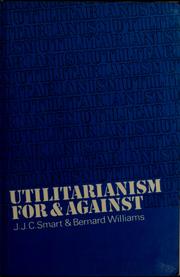
Smart defends act-utilitarianism while Bernard Williams mounts a devastating critique of the utilitarian framework in the same volume. Placed here, it crystallizes the strongest objections to Mill's ethical theory and sharpens your ability to assess his legacy.

Berlin's landmark essay — distinguishing negative from positive liberty — is the most influential philosophical response to the tradition Mill represents. Reading it last lets you see exactly where Berlin agrees with, departs from, and challenges Mill's conception of freedom.
Discussion
Keep reading
Paths that share books, cover the same subject, or open a related topic.