Understanding Max Weber: Best Books to Read in Order
This curriculum moves from Weber's most accessible and celebrated primary texts, through his foundational theoretical works, and finally into advanced secondary scholarship that situates him in the history of social thought. Because the learner starts at an intermediate level, the path skips introductory hand-holding and dives straight into Weber's own prose — building vocabulary stage by stage so that his densest theoretical writings feel earned rather than overwhelming.
Weber in His Own Words — The Famous Works
IntermediateGrasp Weber's two most celebrated arguments — the link between Protestantism and capitalism, and the nature of modern bureaucratic rationalization — in his own voice, with enough context to read critically.
▸ Study plan for this stage
Pace: 8–10 weeks, ~25–30 pages/day (with 2–3 days per week for reflection and note-taking)
- The Protestant ethic thesis: how Calvinist theology (predestination, worldly asceticism) created psychological conditions favoring capitalist accumulation without consumption
- The 'spirit' of capitalism as a unique historical phenomenon distinct from mere greed or profit-seeking, rooted in religious motivation rather than material determinism
- Rationalization as the defining process of modernity: the systematic application of means-ends calculation to all domains (economy, administration, law, science)
- Bureaucratic rationalization: the iron cage of modern organization—efficiency and predictability achieved through hierarchical, rule-bound, impersonal structures
- The disenchantment of the world: how rationalization strips away magical, religious, and traditional meanings, leaving instrumental logic as the dominant worldview
- Ideal types as Weber's methodological tool: abstract constructs (e.g., 'bureaucracy,' 'capitalism') used to compare and understand historical reality, not as blueprints
- The tension between rationalization and human meaning: how modern institutions optimize efficiency at the cost of autonomy, purpose, and charisma
- Historical contingency: Weber's rejection of inevitability—capitalism and rationalization emerged from specific cultural-religious conditions, not from universal laws
- What does Weber mean by the 'spirit' of capitalism, and how does he argue it differs from simple profit-seeking or greed?
- How does Weber connect Calvinist theology (especially predestination and the doctrine of election) to the psychological motivation for capitalist accumulation?
- What is rationalization, and how does Weber see it operating across different spheres of modern life (economy, bureaucracy, law, science)?
- What does Weber mean by the 'iron cage,' and why does he see modern bureaucratic rationalization as both liberating and imprisoning?
- How does Weber use ideal types as a methodological tool, and why does he insist they are not descriptions of reality but analytical constructs?
- What is 'disenchantment,' and what does Weber suggest are the cultural and spiritual consequences of a rationalized, disenchanted world?
- Create a two-column chart: on one side, list Calvinist theological beliefs (predestination, election, worldly asceticism); on the other, note the psychological and behavioral consequences Weber identifies. Then add a third column linking each to capitalist practices (reinvestment, frugality, systematic profit-seeking).
- Write a 2–3 page comparative analysis: describe a modern organization you know well (workplace, university, government agency) and identify which features Weber would classify as 'bureaucratic rationalization.' Use specific examples from the text to support your analysis.
- Select three passages from the book where Weber discusses rationalization or disenchantment. For each, write a one-paragraph reflection on how that concept applies to a contemporary institution or practice (e.g., social media algorithms, healthcare systems, education).
- Construct an ideal type of your own: choose a historical or contemporary phenomenon (e.g., 'the gig economy,' 'social media influencer culture') and build an ideal-typical model by isolating its defining rational features. Explain how real-world examples deviate from your ideal type.
- Debate exercise (solo or in a group): Weber argues rationalization is both necessary and spiritually costly. Write out both sides: (a) the case for rationalization as progress and efficiency, (b) the case for its cultural losses. Which does Weber seem to favor, and do you agree?
- Create a timeline or mind map showing how Weber traces the historical emergence of the 'spirit' of capitalism from medieval Catholicism through Protestantism to modern secular capitalism. Identify the key turning points and actors he emphasizes.
Next up: This stage equips you with Weber's core arguments in his own voice and methodological framework (ideal types, rationalization, disenchantment), preparing you to engage critically with secondary interpretations, debates about whether Weber was right, and applications of his ideas to contemporary problems in the next stage.

The ideal entry point: Weber's most famous and readable thesis, introducing his core concepts of rationalization, the 'iron cage,' and the relationship between ideas and economic life. Read this first to anchor everything that follows.
Core Theory — Authority, Method, and Social Action
IntermediateUnderstand Weber's systematic theoretical framework: his typology of authority (traditional, charismatic, rational-legal), his methodology of ideal types, and his foundational definition of sociology as the interpretive study of meaningful social action.
▸ Study plan for this stage
Pace: 8–10 weeks, ~40–50 pages/day (with 1–2 days/week for review and reflection)
- The three types of legitimate authority: traditional (based on custom and precedent), charismatic (based on exceptional personal qualities), and rational-legal (based on impersonal rules and procedures)
- Ideal types as a methodological tool: abstract, one-sided constructs designed to clarify reality through comparison, not to describe reality perfectly
- Verstehen (interpretive understanding): sociology's task is to understand the subjective meaning that actors attach to their actions
- Social action: behavior oriented toward other people; the foundation of sociology is explaining why people act as they do based on their interpretations and motivations
- The relationship between authority types and economic systems: how different forms of legitimacy shape organizational and economic structures
- Rationalization as a historical process: the increasing dominance of rational-legal authority and instrumental calculation in modern society
- The distinction between formal and substantive rationality: efficiency in means versus alignment with value-based ends
- Bureaucracy as the purest form of rational-legal authority: its characteristics, advantages, and the 'iron cage' problem of modern rationalization
- What are Weber's three types of legitimate authority, and what distinguishes each one from the others in terms of how subjects perceive their ruler's right to command?
- How does Weber define an ideal type, and why is it a methodological tool rather than a description of reality? Give an example from the texts.
- What does Verstehen mean, and how does it shape Weber's definition of sociology as distinct from other social sciences?
- How do the three types of authority relate to different economic systems and organizational forms discussed in the texts?
- What is rationalization, and how does Weber trace its historical development in Western society? What does he mean by the 'iron cage'?
- Distinguish between formal and substantive rationality. Why is this distinction important for understanding modern bureaucracy?
- Create a comparative table mapping the three authority types across dimensions: basis of legitimacy, typical leader characteristics, stability, succession mechanisms, and examples from contemporary institutions (government, religious organizations, corporations).
- Select a modern organization (e.g., a corporation, military unit, or religious movement) and analyze it using Weber's ideal types—identify which authority type(s) dominate and trace how it may have shifted over time.
- Write a 2–3 page analytical essay explaining a specific historical transition (e.g., feudalism to nation-state, or traditional to modern business) using Weber's framework of authority types and rationalization.
- Practice constructing an ideal type for a social phenomenon not explicitly covered in the texts (e.g., 'the ideal-type influencer' or 'the ideal-type startup'). Justify your selection of features and explain how it clarifies reality through exaggeration.
- Identify 3–5 passages from the texts where Weber uses Verstehen and explain how understanding subjective meaning is essential to his sociological explanation in each case.
- Debate or write a reflection: Is bureaucratic rationalization inevitable and desirable? Use Weber's analysis from the texts to support your position, then identify counterarguments.
Next up: This stage equips you with Weber's core theoretical apparatus—authority, methodology, and social action—which you will now apply to specific historical and institutional domains (capitalism, religion, politics, law) to understand how these abstract principles shaped the modern world.

This is Part I of Economy and Society — the most digestible entry into Weber's formal theory of social action, legitimacy, and domination. Reading it before the full Economy and Society prevents overwhelm while delivering the essential architecture.
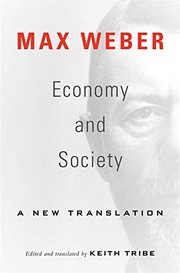
Weber's magnum opus and the foundation of modern sociology. After the Theory of Social and Economic Organization prepares you, this full work rewards careful reading with its comprehensive treatment of law, religion, the city, and political domination.
Intellectual Biography — Who Was Weber and Why Does He Matter?
IntermediateSituate Weber's ideas in his life, his historical moment, and the broader tradition of German social thought, so that his theoretical choices feel motivated rather than arbitrary.
▸ Study plan for this stage
Pace: 4–5 weeks, ~40–50 pages/day (Marianne Weber first: 2–3 weeks; Bendix second: 2 weeks)
- Weber's formative experiences: family background, education, and the intellectual currents of 19th-century Germany (Prussian liberalism, German Idealism, Historicism)
- The biographical sources of his theoretical obsessions: disenchantment, rationalization, and the 'iron cage' as responses to modernity
- Weber's positioning within German social thought: his relationship to Marx, the Historical School, and the neo-Kantian tradition
- The role of personal crisis and intellectual struggle in shaping his methodological commitments (value-freedom, ideal types, verstehen)
- How Weber's Protestant work ethic thesis emerged from his historical and philosophical concerns, not as isolated theory
- The institutional and political contexts that shaped his sociology: the German university system, Wilhelmine politics, and the First World War
- Bendix's interpretive strategy: reading Weber as a systematic thinker grappling with the problem of authority and legitimacy across all his work
- What were the major intellectual and personal influences on Weber's thinking, and how do they explain his later theoretical preoccupations?
- How did Weber's historical moment—Wilhelmine Germany, the rise of socialism, the First World War—shape his sociological questions and methods?
- What is the relationship between Weber's personal crises (his nervous breakdown, his marriage) and his intellectual development as reflected in Marianne Weber's biography?
- How does Bendix argue that Weber's work on authority, legitimacy, and rationalization forms a coherent intellectual project rather than disconnected studies?
- In what ways was Weber both indebted to and critical of the German intellectual traditions he inherited (Historicism, Idealism, Marxism)?
- Why does understanding Weber's life and context matter for interpreting his theoretical concepts like 'disenchantment' and the 'Protestant ethic'?
- Create a timeline of Weber's life (1864–1920) marking key personal events (education, marriage, illness, publications) alongside major historical events in Germany and Europe; annotate with how each might have influenced his intellectual concerns.
- Read Marianne Weber's biography with a focus on identifying 5–7 recurring themes or tensions in Max's personality and thought; write a 1-page synthesis of how these tensions shaped his sociology.
- Construct a 'genealogy map' showing Weber's intellectual debts: place Weber at the center and draw connections to Marx, Nietzsche, Kant, the Historical School, and German Idealism, noting what he adopted, rejected, or transformed from each.
- After reading Bendix, write a 2–3 page essay arguing whether Weber's work on bureaucracy, charisma, and rationalization is unified by a single problem or represents disparate interests; use Bendix's interpretation as a springboard.
- Compare Marianne Weber's portrayal of Max's motivations with Bendix's analytical interpretation of his work; identify where they agree and where they emphasize different aspects, and reflect on what each approach reveals.
- Select one of Weber's major works mentioned in both books (e.g., *The Protestant Ethic and the Spirit of Capitalism* or his sociology of religion) and write a brief analysis of how his biography and historical context illuminate its central argument.
Next up: This stage grounds Weber's theories in his lived experience and historical world, preparing you to engage with his actual methodological and substantive works—his essays on science and politics, his sociology of domination, and his comparative historical studies—with a clear sense of why these problems mattered to him and how they fit together.

Written by his wife and intellectual companion, this remains the indispensable biographical source — rich with personal detail and intellectual context that illuminates the anxieties and ambitions driving his work.

The single best secondary guide to the full sweep of Weber's comparative sociology. Bendix translates Weber's dense concepts into clear analytical summaries, making this the ideal companion after you have read the primary texts.
Critical Perspectives — Debating Weber's Legacy
ExpertEngage with the major scholarly debates Weber's work has generated — critiques of the Protestant Ethic thesis, his place in the canon alongside Marx and Durkheim, and the ongoing relevance of rationalization theory.
▸ Study plan for this stage
Pace: 5–6 weeks, ~40–50 pages/day (mix of dense scholarly argument and comparative analysis)
- The Protestant Ethic thesis: core argument, empirical challenges, and historiographical debates about causation vs. correlation
- Major critiques of Weber's thesis: Marxist, postcolonial, feminist, and economic-determinist objections
- Weber's relationship to Marx and Durkheim: theoretical convergences, divergences, and the 'holy trinity' of classical sociology
- Rationalization as a master narrative: its scope, limits, and critiques in contemporary scholarship
- The problem of Eurocentrism and universalism in Weber's comparative historical sociology
- Methodological debates: verstehen, ideal types, and the status of causal explanation in social science
- Weber's enduring influence on institutional analysis, organizational theory, and political sociology
- The distinction between formal and substantive rationality and its implications for understanding modernity
- What are the main empirical and theoretical objections scholars have raised against Weber's Protestant Ethic thesis, and how do they challenge his causal claims?
- How do Marxist and postcolonial critics reframe Weber's argument about capitalism and religion, and what alternative explanations do they propose?
- In what ways does Weber's work converge with and diverge from Marx's historical materialism and Durkheim's functionalism?
- What is rationalization as Weber understands it, and why have subsequent scholars questioned whether it is truly a universal historical process?
- How does the concept of ideal types function in Weber's methodology, and what are the limitations of this approach according to contemporary critics?
- What role does Eurocentrism play in Weber's comparative sociology, and how have scholars attempted to decolonize or revise his framework?
- Create a two-column table: list Weber's core claims about the Protestant Ethic in one column, and in the other, note the specific empirical counter-evidence or theoretical objections from Harrington's book
- Write a 2–3 page comparative analysis of how Marx, Durkheim, and Weber each explain the origins and dynamics of modern capitalism, using Ritzer's framework
- Select one major critique of the Protestant Ethic thesis (e.g., Marxist, feminist, or postcolonial) and write a 1,500-word essay defending or challenging it with evidence from both texts
- Map out the concept of 'rationalization' across Weber's work: identify where it appears, what it means in different contexts, and note scholarly disagreements about its universality
- Conduct a close reading of Harrington's discussion of one key critic (e.g., R.H. Tawney, Kurt Samuelsson, or a postcolonial scholar) and summarize their argument in a one-page memo
- Design a hypothetical research project that would test one of the major critiques of Weber's thesis—specify your research question, methodology, and expected findings
Next up: This stage equips you with the critical vocabulary and historiographical awareness to move beyond Weber as a canonical figure and engage with how contemporary scholars are revising, decolonizing, or transcending his framework in specialized domains like global history, organizational sociology, or the sociology of science and technology.

Collects the classic critiques and defenses of Weber's Protestant Ethic thesis (including responses from Brentano, Rachfahl, and Fischer), giving you direct access to the scholarly controversy rather than secondhand summaries.
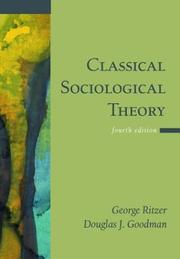
Places Weber in direct dialogue with Marx and Durkheim, clarifying what is distinctively Weberian and why his synthesis of ideas, interests, and institutions remains indispensable to modern sociology. A strong capstone for consolidating the whole curriculum.
Discussion
Keep reading
Paths that share books, cover the same subject, or open a related topic.