Modern Greece is often overshadowed by the ancient world, but its two centuries since independence form a dramatic story of their own, and it rewards reading in order. Revolution against the Ottomans, a fragile new state, occupation, a savage civil war, a colonels' dictatorship, and finally the euro crisis: the threads of foreign intervention and internal division run right through, and each chapter explains the next.
The books below start with the founding struggle, move through the traumatic mid-century, and end in the recent crisis. Reading them in sequence shows how old fault lines kept reopening.
Revolution and the making of a nation
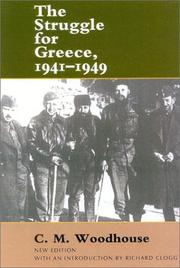
Two books by C. M. Woodhouse anchor the start. The struggle for Greece, 1941-1949 is the classic account of occupation and civil war, and A short history of modern Greece gives the compact overview of the whole span. For the founding moment, Mark Mazower's Greek Revolution is the definitive modern narrative of 1821. Eleftherios Venizelos then follows the statesman who dominated the early republic.
Occupation, dictatorship, and crisis
The mid-century is the dark heart of the story. Mazower's Salonica, City of Ghosts recovers the multi-ethnic city that was, and Inside Hitler's Greece documents the occupation. Closing the Ring and Regime Change in the Greek Dictatorship carry you through the civil war's end and the colonels' junta, while Greece and the Cold War sets it in the superpower context.
For a synthesis, Greece - Biography of a Modern Nation by Roderick Beaton spans the whole period with grace. Finally, two firsthand books on the debt crisis, Adults in the room by Yanis Varoufakis and This Is Not a Crisis, bring the story to the present. Follow the full path to read them in order.
Follow the full reading path →
Ready to learn something deeply?
Build a reading path — free