Nature writing: essential books and a craft reading order
This curriculum moves from the foundational pleasures of reading nature writing, to studying the craft behind it, to tackling more demanding and experimental voices. Each stage builds the reader's eye for observation, sense of place, and understanding of voice before asking them to grapple with more complex structures and ideas. By the end, the learner will have both a rich literary inheritance and a practical toolkit for putting the wild on the page.
First Steps into the Wild
BeginnerDevelop a love of the genre and an instinct for close observation by reading two of its most beloved and accessible classics — understanding how a writer's attention to a single place or creature can carry an entire book.
▸ Study plan for this stage
Pace: 8–10 weeks, ~25–30 pages/day (alternating between both books to build comparative perspective)
- Sustained attention to a single place as a path to deeper understanding and wonder
- The practice of close observation: how to notice small details that reveal larger truths about nature
- The personal essay as a vehicle for philosophical reflection on the natural world
- How writers use vivid sensory language and metaphor to make the reader *see* what they see
- The ethical dimension of nature writing: how attention breeds care and responsibility for the living world
- The role of patience and receptiveness in encountering nature—surrendering control to observation
- How a writer's individual voice and personality shape their relationship with nature
- What does Dillard mean by 'seeing' in *Pilgrim at Tinker Creek*, and how does her practice of attention change what she notices?
- How does Leopold's concept of a 'land ethic' emerge from his detailed observations in *A Sand County Almanac*?
- Compare the two writers' approaches to describing a single place: what does Tinker Creek reveal that the Sand County landscape reveals differently?
- How do Dillard and Leopold use personal anecdotes and small moments to build larger arguments about our relationship with nature?
- What role does wonder or awe play in each writer's work, and how do they cultivate it in the reader?
- How does the structure of each book (Dillard's daily meditations vs. Leopold's monthly essays) shape the reader's experience of time and attention?
- Keep a 'Tinker Creek journal' for 2–3 weeks: visit one outdoor location repeatedly (a park, garden, or waterside) and write 2–3 pages of close observation each visit, mimicking Dillard's attention to light, movement, and small details
- Select one passage from *Pilgrim at Tinker Creek* and one from *A Sand County Almanac* that moved you; annotate them to identify the specific sensory details, metaphors, and sentence rhythms that make them powerful
- Write a 3–4 page personal nature essay focused on a single creature or small place you know well, using Leopold's monthly-essay structure and Dillard's practice of sustained looking
- Create a visual map or sketch of either Tinker Creek or the Sand County landscape based on the writers' descriptions, then compare it to images online—what did you notice that photographs miss?
- Interview someone in your life about a place in nature they return to repeatedly; record their observations and compare their 'attention practice' to Dillard's and Leopold's
- Read one chapter from each book aloud and listen for the rhythm and voice of each writer; write a short reflection on how their prose style shapes your sense of their personality and philosophy
Next up: This stage builds the foundational skills of observation and voice that will allow you to engage with more challenging, diverse voices in nature writing—writers who bring different perspectives, geographies, and ethical frameworks to the same practice of attentive looking.
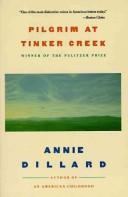
The ideal entry point: Dillard models obsessive, joyful attention to the natural world in prose that is vivid but never technical. Reading it first trains the eye to slow down and truly look.

Leopold's month-by-month structure shows how a single piece of land can be a lifetime's subject, and introduces the ethical dimension — the 'land ethic' — that underlies much serious nature writing.
Voice, Place, and the Personal Essay
BeginnerUnderstand how a distinctive personal voice and a deep sense of place work together, and begin to see how the nature essay is also always a meditation on the self and on time.
▸ Study plan for this stage
Pace: 8–10 weeks, ~25–35 pages/day, with 1–2 weeks per book plus reflection time
- Thoreau's deliberate retreat and introspective method: how withdrawal from society enables deep observation of nature and self
- Distinctive authorial voice as a lens: how Thoreau's philosophical tone, Ehrlich's spare lyricism, and Kimmerer's indigenous perspective each shape what we see in nature
- Place as character: how specific locations (Walden Pond, Wyoming ranches, the forest) become inseparable from the writer's identity and meditation
- The personal essay as self-examination: recognizing that nature writing is always also about time, mortality, solitude, and what it means to be human
- Attention and presence: the practice of sustained observation as both a writing technique and a spiritual or ecological discipline
- Layered time: how writers weave past, present, and cyclical natural time to deepen meaning and create resonance
- How does Thoreau use his retreat to Walden Pond as a method for both self-discovery and nature observation? What does his voice reveal about his values?
- Compare the distinctive voices of Thoreau, Ehrlich, and Kimmerer. How does each writer's tone and perspective shape what they notice about the natural world?
- What role does a specific place play in each essay or essay collection? How does the writer's relationship to that place deepen over time?
- How is each of these works a meditation on time—whether seasonal cycles, personal mortality, historical change, or deep time? What does this reveal about the writer's self?
- What is the connection between sustained attention (or close observation) and the writer's sense of self in these texts?
- How do these writers use the personal essay form to make claims about larger ecological, philosophical, or cultural truths?
- Close-read one chapter from each book, annotating for voice: underline phrases that reveal the writer's personality, values, and perspective. Note how voice shapes meaning.
- Write a 2–3 page personal essay about a place you know well, deliberately imitating the observational style of one of the three authors. Then revise it to develop your own voice.
- Create a 'place map' for each book: sketch or list the key locations, their features, and what the writer discovers or meditates on there. Note how place changes the writer's self-understanding.
- Track one recurring theme across all three books (e.g., solitude, time, interdependence, attention). Write a comparative analysis (3–4 pages) showing how each author explores it differently.
- Practice 'slow observation': spend 30 minutes in a natural setting, writing continuously about what you notice. Then reread your notes and identify moments where observation becomes self-reflection—the pattern these authors use.
- Write a reflective response (2–3 pages) to this prompt: 'Which writer's voice and approach to place most resonates with you, and why? What does their work teach you about your own relationship to nature and self?'
Next up: This stage grounds you in the foundational relationship between voice, place, and self-reflection, preparing you to explore how nature writers use these tools to address larger ecological and cultural arguments in the next stage.
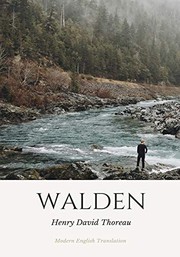
The ur-text of the genre: Thoreau establishes the template of the solitary observer in a specific place, and his voice — ironic, philosophical, precise — is the ancestor of nearly every nature writer who follows.
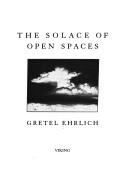
Ehrlich's essays on Wyoming ranching life show how place can reshape identity, and her lyrical, fragmented style offers a modern contrast to Thoreau's more discursive voice.
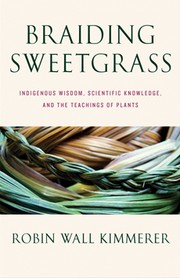
Kimmerer weaves Indigenous plant knowledge with Western botany, demonstrating how a writer's cultural and scientific lens can enrich observation — expanding the reader's sense of what 'nature writing' can hold.
Craft and the Writer's Toolkit
IntermediateMove from reading as a fan to reading as a writer — studying how professional nature writers think about observation, language, structure, and the ethics of representing wild places.
▸ Study plan for this stage
Pace: 6–7 weeks, ~25–30 pages/day. Week 1–2: Lopate's introduction and foundational essays (~60 pages). Week 3–4: Lopate's craft-focused selections on observation and voice (~70 pages). Week 5–6: "Writing Wild" (~80 pages). Week 7: Review, synthesis, and final exercises.
- The personal essay as a vehicle for intimate observation and philosophical inquiry, not mere memoir
- How Lopate's essayists use precise sensory detail and digression to reveal character and landscape simultaneously
- The writer's ethical responsibility when representing nature: accuracy, humility, and avoiding sentimentality
- Voice as a tool—how diction, syntax, and persona shape the reader's trust and engagement with wild subjects
- Tina Welling's practice of 'writing into' place through embodied observation and revision
- The distinction between nature writing that educates, that confesses, and that transforms the reader's perception
- Structure in personal nature essays: how to move from observation to insight without forcing conclusions
- The role of restraint and understatement in representing wild places and creatures
- What does Lopate mean by the personal essay as a form that 'turns inward and outward at once,' and how do his selected essayists achieve this balance when writing about nature?
- How do professional nature writers use sensory detail and digression differently than travel writers or naturalists, and what effect does this have on the reader?
- What ethical pitfalls does Welling warn against when writing about wild places, and how can a writer avoid projecting human emotions onto non-human subjects?
- Choose one essay from Lopate and one exercise from Welling: how do their approaches to observation and revision differ, and which resonates more with your own writing instincts?
- How does voice—the writer's distinctive way of thinking on the page—build credibility when writing about subjects the reader may know little about?
- What is the relationship between structure and discovery in a personal nature essay? How do you know when to end an essay, and what should the reader have learned or felt?
- Close-read one essay from Lopate (e.g., an essay on observation or digression) and annotate it for: (a) moments of sensory detail, (b) moments of philosophical reflection, (c) shifts in tone or voice. Write a 1-page analysis of how these elements work together.
- Conduct a 'Welling-style' observation session: spend 30–45 minutes in a natural setting (park, garden, waterfront) and write raw field notes without judgment. Then revise once, focusing on precise verbs and cutting clichés. Compare your first and second drafts.
- Write a 2–3 page personal essay about a specific animal, plant, or landscape you know well. Deliberately avoid sentimentality: use Lopate's model of digression and Welling's emphasis on embodied detail. Have a peer identify moments where emotion creeps in unearned.
- Rewrite a passage from one of your own earlier nature writing pieces using Lopate's technique of the personal essay—introduce yourself as a character, include a digression, and let the landscape reveal something about your thinking process.
- Read one essay from Lopate and one chapter from Welling on the same theme (e.g., attention, revision, or ethical representation). Write a comparative 1-page reflection on their different philosophies and which approach you'd like to test in your own work.
- Revision exercise: take a nature observation you've written and revise it three times, each time removing one layer of sentimentality or explanation. What remains? What did you learn by cutting?
Next up: This stage equips you with the craft vocabulary and ethical awareness to move into sustained, book-length nature writing projects where you'll apply these principles of voice, observation, and structure to longer narratives and deeper investigations of place.
This essential anthology and its long craft introduction give the learner a framework for understanding the personal essay as a form, providing critical vocabulary to apply to all the nature writing read so far.

A practical, nature-specific writing guide that links outdoor observation exercises directly to the page, bridging the gap between reading great nature writing and beginning to produce it.
Masters of the Form
IntermediateStudy three canonical writers at the height of their powers, analyzing how each solves the central problem of nature writing — making the non-human world matter urgently to a human reader — in a completely different way.
▸ Study plan for this stage
Pace: 8–10 weeks, ~40–50 pages/day, with 1–2 weeks per book plus reflection time
- Obsessive attention as a tool for making the non-human world urgent: how Baker's peregrine-tracking creates intimacy through relentless focus
- Polemic and personal voice as resistance: how Abbey uses anger, humor, and direct address to make the reader care about desert preservation
- Spiritual quest and the limits of language: how Matthiessen uses pilgrimage structure and Buddhist philosophy to convey what cannot be directly observed or said
- The problem of the observer: how each writer positions themselves differently in relation to nature (detached scientist, embedded activist, spiritual seeker)
- Sentence-level craft: how each writer's syntax, rhythm, and imagery reflect their philosophical approach to the non-human world
- The role of failure and absence: how Baker's missed sightings, Abbey's political defeats, and Matthiessen's snow leopard non-appearance become central to meaning
- Genre hybridity: how each work blends field notes, memoir, philosophy, and polemic to solve the urgency problem
- How does J. A. Baker use repetition, obsessive detail, and the structure of daily tracking to make a single bird matter as much as a human character would in a novel?
- What is Abbey's central argument about the relationship between wilderness preservation and human freedom, and how does his personal voice make that argument more persuasive than a conventional environmental essay would be?
- How does Matthiessen use the structure of a failed quest (the snow leopard is never seen) to explore spiritual transformation, and what does this suggest about the limits of nature writing as a form?
- Compare the three writers' treatment of solitude: is solitude a method, a goal, or a problem in each work?
- How does each writer handle the tension between scientific/observational accuracy and subjective interpretation? Where does each one come down?
- What role does anger, frustration, or longing play in each text, and how does emotional intensity serve the writer's larger purpose?
- Track a single non-human subject (animal, plant, weather pattern, or landscape feature) for 2–3 weeks, recording observations daily in a notebook. Then write a 3–5 page passage imitating Baker's obsessive style—focus on what repetition and minute detail can reveal that a single observation cannot.
- Write a polemic essay (800–1000 words) on a specific environmental or land-use issue you care about, deliberately adopting Abbey's voice: direct address to the reader, humor, anger, and personal anecdote. Identify which of Abbey's rhetorical strategies you borrowed and why they worked.
- Read the opening and closing sections of *The Snow Leopard* side by side. Write a reflection (500–750 words) on how Matthiessen's spiritual understanding has or hasn't changed, and what the non-appearance of the snow leopard contributes to that arc.
- Choose one striking passage from each of the three books (one paragraph each). Analyze the syntax, sentence length, imagery, and rhythm of each. Write a short comparative analysis (750–1000 words) explaining how each writer's sentence-level choices reflect their philosophical stance toward nature.
- Rewrite a scene from one of the three books from a different writer's perspective. For example: rewrite a moment from *The Peregrine* in Abbey's polemical voice, or a passage from *Desert Solitaire* in Matthiessen's meditative, spiritual tone. Reflect on what changes and what that reveals about each writer's method.
- Create a visual map or diagram showing how each writer positions themselves in relation to the non-human world they're writing about (observer, activist, seeker, etc.). Include quotations that support each positioning, and write a brief explanation of how that position shapes what each writer can and cannot say.
Next up: Having internalized three distinct solutions to the central problem of nature writing, you are now ready to either trace how these approaches influenced subsequent writers, or to attempt your own nature writing project informed by the formal and philosophical insights you've gained from these masters.
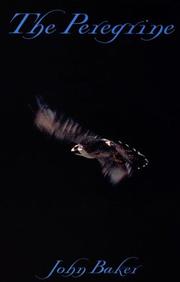
Baker's obsessive, almost hallucinatory pursuit of a hawk is a masterclass in sustained attention and radical prose style — it shows how far the genre can be pushed toward pure sensation.
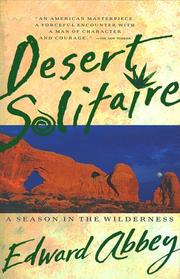
Abbey's fierce, polemical voice demonstrates how nature writing can carry political anger without losing lyric beauty, and his structure — a single season in Arches — echoes Thoreau at a higher temperature.
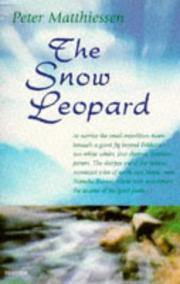
Matthiessen fuses travel, natural history, and Zen philosophy into a quest narrative, showing how the nature writer can work at book length with a spiritual and psychological depth rarely attempted in the essay form.
The Expanding Edge
ExpertEncounter writers who push the boundaries of the genre — blending science, elegy, activism, and experimental form — and develop a critical understanding of where nature writing is going in the 21st century.
▸ Study plan for this stage
Pace: 8–10 weeks, ~40–50 pages/day. "Refuge" (first 3–4 weeks, ~350 pages); "The Sixth Extinction" (remaining 5–6 weeks, ~480 pages). Include weekly reflection sessions.
- Lyric memoir as a vehicle for environmental urgency: how Williams interweaves personal loss (her mother's cancer) with ecological crisis (the Great Salt Lake's rising waters) to collapse the distance between private and public grief
- Scientific narrative and accessibility: Kolbert's technique of embedding complex extinction science within narrative reportage and first-person investigation across multiple continents
- Elegy as activism: understanding how both writers use mourning and witness as forms of political and ecological argument rather than mere documentation
- Experimental form in nature writing: how Williams' fragmented, poetic structure and Kolbert's layered historical-scientific approach challenge traditional genre boundaries
- The Anthropocene as a unifying crisis: recognizing how both texts grapple with human-caused environmental collapse and humanity's role as a geological force
- Witness and testimony: the ethical stance of the nature writer as observer, recorder, and advocate in the face of irreversible loss
- Blending disciplines: how both texts integrate biology, geology, history, memoir, and journalism to create a more capacious understanding of nature writing
- How does Williams use the parallel structure of her mother's illness and the Great Salt Lake's transformation to argue that environmental and personal crises are inseparable?
- What is Kolbert's method for making scientific extinction data emotionally resonant and narratively compelling? How does she move beyond mere reportage?
- How do both 'Refuge' and 'The Sixth Extinction' function as elegies, and what makes elegy a more powerful tool for environmental activism than straightforward advocacy?
- In what ways do the formal and structural choices of these two books (Williams' fragmentation, Kolbert's layered narrative) reflect their thematic concerns about fragmentation and interconnection in the natural world?
- How does each writer position the reader as a witness to ecological loss, and what responsibility does that witnessing create?
- What is the relationship between personal/local observation and global/scientific perspective in each text, and how do the authors navigate between scales?
- Close-read 3–4 passages from 'Refuge' that blend personal and ecological narrative (e.g., the opening sections on the lake and the mother's diagnosis). Annotate how Williams achieves emotional simultaneity and what effect this has on the reader's sense of scale.
- Track Kolbert's investigative journey across 'The Sixth Extinction': map the locations she visits (Panamanian rainforests, Arctic, etc.) and note how each site functions as a case study. Write a 2–3 page analysis of how geographic movement structures her argument.
- Write a comparative elegy (500–750 words) mourning a specific species or ecosystem mentioned in either book. Experiment with blending personal memory, scientific fact, and emotional language to mirror the authors' techniques.
- Create an annotated timeline showing the historical and scientific events referenced in 'The Sixth Extinction' (from past mass extinctions to contemporary species loss). Reflect on how Kolbert uses deep time to contextualize present-day crisis.
- Conduct a formal analysis of Williams' use of white space, fragmentation, and lyric interruption in 'Refuge'. How does the book's structure on the page mirror its themes of rupture and simultaneity?
- Research one species mentioned in 'The Sixth Extinction' (e.g., the Panamanian golden frog, the Sumatran rhino) and write a 3–4 page 'case study' that combines Kolbert's investigative approach with your own primary research, blending journalism and personal reflection.
Next up: This stage establishes that contemporary nature writing is fundamentally a hybrid form—part memoir, science, history, and activism—that demands readers engage with ecological crisis as both intellectual and emotional reality, preparing you to encounter even more formally experimental and politically urgent voices that further challenge the genre's boundaries.
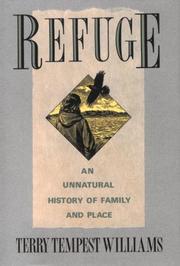
Williams interweaves a dying mother and a flooding bird refuge to show how nature writing can hold grief, politics, and the body simultaneously — a model of structural ambition and emotional courage.
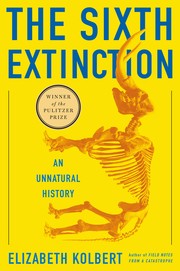
Kolbert demonstrates how rigorous science journalism can achieve the moral urgency of the best nature essays, and challenges the learner to think about how the genre must evolve in an age of ecological crisis.
Discussion
Keep reading
Paths that share books, cover the same subject, or open a related topic.