Augustine of Hippo stands at the hinge between the ancient and medieval worlds, and his fingerprints are on Western ideas of the inner self, memory, sin, grace, and history. He is also a fifth-century North African bishop whose world is genuinely foreign, so reading him cold can be disorienting. A good order fixes this: meet him first through a modern biography, then read his own two masterpieces, then let scholars deepen and complicate the picture.
This path approaches Augustine respectfully as one of the most influential thinkers in the Christian and Western traditions.
The life
Begin with AUGUSTINE OF HIPPO, A BIOGRAPHY, Peter Brown's classic and beautifully written life, still the standard portrait of the man and his age. Pair it with AUGUSTINE, SINNER & SAINT: A NEW BIOGRAPHY, James J. O'Donnell's more skeptical modern reconsideration, so you meet both the traditional and the revisionist Augustine before reading a word he wrote.
Augustine in his own words
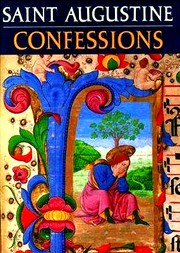
Now the masterpieces. Confessions, Augustine's spiritual autobiography and prayer, invented a genre and remains astonishingly intimate across sixteen centuries. Read it with The Confessions of Augustine: An Electronic Edition, O'Donnell's richly annotated scholarly version, if you want the guided experience.
Then the other pillar, Concerning the city of God against the pagans, his vast defense of Christianity and philosophy of history written as Rome fell. It is long, but it founded a whole tradition of thinking about the sacred and the political.
The scholarly deepening
Augustine's ideas repay careful study. Augustine and the limits of virtue, James Wetzel's examination of his moral psychology, probes his hard questions about will and grace. Political Augustinianism, Michael Bruno's survey, traces how his political thought was received and used. For reference, The Cambridge Companion to Augustine, edited by David Meconi, and Augustinian Traditions, Gareth Matthews' study of his long influence, map the terrain, while Augustine and his critics gathers the debates his thought still provokes.
Read in order, Augustine becomes approachable rather than intimidating. Follow the full path to take the books in sequence.
Follow the full reading path →
Ready to learn something deeply?
Build a reading path — free