Postmodernism is one of the most cited and least understood movements in modern thought, partly because its key texts are genuinely difficult and partly because the label lumps together thinkers who disagreed with one another. Reading in order helps enormously: you want the defining statements first, then the major thinkers one at a time, then the critics who pushed back, so the whole becomes a debate rather than a fog of terms.
This is an honest map of a difficult terrain, presented so you can judge the ideas for yourself.
The defining statements
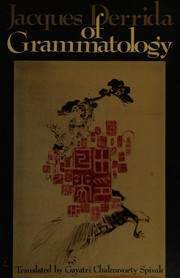
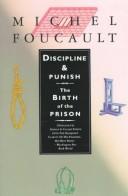
Begin with The Postmodern Condition, Jean-Francois Lyotard's short report that gave the movement its slogan, incredulity toward grand narratives. It is the clearest single entry point. Then approach the two thinkers most associated with the turn. Of grammatology, Jacques Derrida's dense founding work of deconstruction, is hard but central, and Discipline and Punish, Michel Foucault's history of power and the modern prison, is the more readable and influential of the pair.
The wider field
From there the field fans out. Simulacra and Simulation, Jean Baudrillard's meditation on images that replace reality, and Deleuze and Guattari's Anti Oedipus, Eugene Holland's guide to a notoriously difficult text, extend the critique into media and desire. Postmodernism, or, the cultural logic of late capitalism, Fredric Jameson's Marxist analysis, ties the aesthetic to the economic, and Gender Trouble, Judith Butler's influential work on the performance of gender, shows postmodern method applied to identity.
Extensions and critics
The tradition reached beyond the West and drew sharp responses. The location of culture, Homi Bhabha's postcolonial theory, applies these tools to empire and hybridity. Then the pushback: The philosophical discourse of modernity, Jurgen Habermas' defense of the Enlightenment project against its postmodern critics, and Contingency, irony, and solidarity, Richard Rorty's more sympathetic but independent take, close the loop by arguing back.
Read in order, postmodernism becomes an argument you can follow and contest. Follow the full path to take the books in sequence.
Follow the full reading path →
Ready to learn something deeply?
Build a reading path — free