African history: the continent's real past
This curriculum moves from a panoramic, pre-colonial view of Africa's greatness, through the trauma of the slave trade and colonialism, to the struggles and triumphs of independence and the continent's modern realities. Each stage builds the conceptual vocabulary and historical confidence needed for the denser, more analytical works that follow — so that by the end, the reader can engage Africa's past and present on its own terms, free of the colonial lens.
Foundations: Seeing Africa Whole
BeginnerDismantle Eurocentric myths and establish a confident, continent-wide mental map of African civilizations before and beyond colonialism.
▸ Study plan for this stage
Pace: 8–10 weeks total: Week 1–3 — "The Africans" by David Lamb (~20–25 pages/day, including note-taking pauses); Week 4–7 — "African History" by Parker & Rathbone (~15–20 pages/day, slower pace for academic density); Week 8–10 — "Sundiata" by Niane (read the epic once quickly in 2–3 days, then re-read sl
- Dismantling the 'Dark Continent' myth: Africa as a continent with deep, complex, self-directed histories long before European contact
- The diversity problem: Africa is not a monolith — Lamb's journalistic survey reveals vast geographic, cultural, linguistic, and political variation across 54+ nations
- Periodization beyond colonialism: Parker & Rathbone's framework shows African history as having meaningful eras (ancient, medieval, early modern) that do not revolve around European arrival
- Oral tradition as historical evidence: Niane's 'Sundiata' demonstrates that griots (jeli) are legitimate historians and that oral epic is a primary source, not mere folklore
- State formation and empire: The Mali Empire in 'Sundiata' illustrates how sophisticated political structures, economies, and military systems emerged organically in sub-Saharan Africa
- The historiographical challenge: Parker & Rathbone introduce how African history as an academic discipline had to fight for legitimacy and what methodological tools (archaeology, linguistics, oral history) it uses
- Colonial legacy as lens distortion: Lamb's on-the-ground reporting shows how colonial borders, institutions, and narratives continue to shape — and warp — how Africa is perceived and governed today
- Agency and resistance: Across all three books, African peoples appear as active agents making choices, not passive recipients of outside forces
- After reading Lamb, can you name at least five distinct African regions or cultures and explain one way each defies a common Western stereotype?
- How do Parker and Rathbone argue that African history should be studied, and what sources do historians use when written records are absent?
- What does the story of Sundiata Keita reveal about the political, spiritual, and social values of the Mali Empire, and why does Niane present it through a griot's voice rather than a scholarly narrator?
- What is the difference between a primary source and a secondary source in the context of African history, and which of the three books in this stage fits each category?
- How did colonialism, as described by Lamb and contextualized by Parker & Rathbone, create artificial borders and narratives that still affect how Africa is understood today?
- In what ways do all three books collectively challenge the idea that African civilizations were isolated, static, or historically insignificant before European contact?
- Mental Map Exercise (after Lamb): Draw a blank outline map of Africa from memory, then fill in every country, region, geographic feature, and cultural group mentioned by Lamb. Compare to an atlas and annotate gaps — repeat weekly until the map feels natural.
- Myth-Busting Journal: Keep a running two-column log throughout all three books — Column A: a Eurocentric myth or assumption you held (or have encountered); Column B: the specific evidence from Lamb, Parker & Rathbone, or Niane that dismantles it. Aim for at least 15 entries by the end of the stage.
- Griot Simulation (after Sundiata): Choose one event from Sundiata's story and retell it aloud — without notes — as if you are a griot performing for an audience. Record yourself, then reflect: What did you emphasize? What did you forget? What does this reveal about oral tradition as a historical method?
- Source Comparison Essay (500–700 words): Select one historical event or theme that appears in both Parker & Rathbone and Sundiata (e.g., the rise of the Mali Empire). Write a short essay comparing how each book treats it — what does the academic history offer that the epic does not, and vice versa?
- Timeline Construction: Build a single master timeline spanning from 3000 BCE to 1900 CE, populated exclusively with African civilizations, empires, and events drawn from all three books. Use color-coding by region. The goal is to viscerally see how much was happening across the continent across millennia.
- Discussion or Reflection Prompt: After finishing all three books, write a one-page personal statement answering: 'How has your mental image of Africa changed since page one of The Africans, and what single idea from this stage will most change how you read history going forward?'
Next up: By establishing a continent-wide mental map, a toolkit for evaluating African sources, and a visceral sense of pre-colonial African agency through the Mali Empire, the reader is now equipped to zoom in — moving from panoramic orientation to the deeper study of specific civilizations, trade networks, and historical periods that more advanced stages will demand.
A readable, journalistic sweep across the modern continent that immediately humanizes Africa's diversity — a gentle on-ramp that builds geographic and cultural intuition before diving into deep history.

A concise, scholarly overview of the full arc of African history — from early humans to the post-colonial era — giving the reader a reliable skeleton on which all later reading hangs.
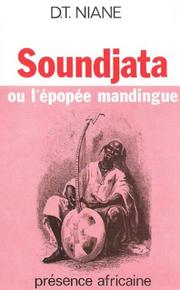
The foundational oral epic of the Mali Empire, retold from the griot tradition. Reading it early instills the importance of African oral history and the grandeur of pre-colonial statecraft.
Great Kingdoms & Empires
BeginnerUnderstand the sophistication, scale, and legacy of Africa's major pre-colonial civilizations — from Egypt and Nubia to Mali, Songhai, Great Zimbabwe, and beyond.
▸ Study plan for this stage
Pace: 10–12 weeks total. Book 1 — "The Destruction of Black Civilisation" (Chancellor Williams): ~6 weeks, roughly 25–30 pages/day, 5 days/week (the dense argumentation rewards slow, annotated reading). Book 2 — "Africa" (John Reader): ~5–6 weeks, roughly 30–35 pages/day, 5 days/week (narrative-driven but
- The original sophistication and continental scale of African civilizations before European colonization — Egypt, Nubia/Kush, Axum, Mali, Songhai, Great Zimbabwe, and others — as documented across both books.
- Chancellor Williams's central thesis: that Black African civilizations were systematically dismantled through a long sequence of invasions, internal divisions, and deliberate cultural erasure — not through any inherent deficiency.
- The concept of 'Asiatic infiltration' and internal fragmentation as dual engines of civilizational decline, as argued by Williams — and how to read this thesis critically.
- John Reader's deep-time framework: African history as inseparable from geography, ecology, and human evolutionary origins — the continent as the cradle of humanity and of complex social organization.
- The role of trans-Saharan and Indian Ocean trade networks in building the wealth and cosmopolitanism of empires like Mali and Songhai (Reader's ecological and economic lens).
- Great Zimbabwe as a case study in how African architectural and political achievement has been systematically misattributed or denied by colonial historiography — addressed pointedly in Williams and contextualized by Reader.
- The distinction between oral tradition and written record as historical sources, and why the absence of European-style written archives does not equal the absence of history or civilization.
- Legacy and continuity: how the ruins, oral histories, and material cultures of these kingdoms form the foundation of modern African identity and pan-African thought.
- According to Chancellor Williams, what were the primary internal and external forces responsible for the destruction of Black civilizations, and how does he use specific empires (e.g., Kush, Mali) as evidence?
- How does John Reader's ecological and geographical approach to African history complement or challenge Williams's more politically driven narrative?
- What does the history of Great Zimbabwe reveal about the politics of archaeological interpretation, and how do both authors address the colonial denial of its African origins?
- How did the empires of Mali and Songhai sustain their power economically and politically, and what ultimately led to their decline according to each author?
- Why do both Williams and Reader emphasize that Africa must be understood on its own historical terms rather than measured against European or Asian civilizational models?
- What is the relationship between geography (the Sahara, river systems, coastal access) and the rise and fall of specific African kingdoms, as illustrated in Reader's 'Africa'?
- Annotated Timeline: As you read both books, build a single master timeline (paper or digital) placing every kingdom, empire, and major event mentioned by Williams and Reader in chronological order. Note where the two authors' accounts overlap, diverge, or contradict each other.
- Argument Mapping for Williams: After finishing 'The Destruction of Black Civilisation,' write a one-page summary of Williams's core thesis, then list two pieces of evidence he provides that you find most compelling and one claim you think deserves more scrutiny. This trains critical reading alongside empathy for the argument.
- Comparative Case Study — Pick One Empire: Choose one civilization covered by both books (e.g., Mali, Kush/Nubia, or Great Zimbabwe). Write 400–600 words comparing how Williams and Reader each describe it — their tone, evidence, and conclusions. What does each author's lens reveal that the other's misses?
- Map Work: Using Reader's geographical descriptions, hand-draw or annotate a blank map of Africa marking the approximate territories of at least six kingdoms/empires discussed, their major trade routes, and key geographical features (Niger River, Nile, Sahara, Zimbabwe Plateau). Label the approximate dates of peak power.
- Vocabulary & Concept Glossary: Maintain a running glossary of 20–30 key terms encountered across both books (e.g., 'Mansa,' 'Griot,' 'trans-Saharan trade,' 'Axum,' 'Bantu expansion,' 'oral tradition'). Write a 1–2 sentence definition in your own words for each.
- Reflection Journal Entry — 'What Was Destroyed?': After completing both books, write a 1-page personal reflection answering: 'What is the most significant thing — culturally, politically, or intellectually — that was lost in the decline of these civilizations, and why does it matter today?' Ground every claim in specific evidence from the texts.
Next up: By establishing the grandeur, internal logic, and eventual vulnerabilities of Africa's great pre-colonial civilizations, this stage creates the essential baseline against which the next stage — the era of the transatlantic slave trade and European colonization — can be understood not as Africa's 'natural state' but as a violent rupture of sophisticated, ongoing histories.
A landmark Afrocentric work that traces African civilizations from antiquity and argues forcefully for their centrality to world history — essential for understanding the intellectual tradition of reclaiming African greatness.

A sweeping, deeply researched narrative from the continent's geological origins through its great kingdoms, providing the richest single-volume account of how African societies rose and flourished on their own terms.
The Slave Trade & Its Wounds
IntermediateGrasp the full scale, mechanics, and devastating long-term consequences of both the transatlantic and Arab slave trades on African peoples and societies.
▸ Study plan for this stage
Pace: 10–12 weeks total. Weeks 1–8: "The Slave Trade" by Hugh Thomas (~50 pages/day, 4–5 days/week — the book is ~900 pages, so pace yourself with short thematic breaks every 150 pages). Weeks 9–12: "Lose Your Mother" by Saidiya Hartman (~20–25 pages/day — slower, more reflective reading; journal after ev
- Scale and logistics of the transatlantic slave trade: volume of captives, trade routes, ports, and the triangular trade system as documented by Thomas
- The Arab/trans-Saharan slave trade as a parallel and older system — its mechanics, duration, and African societies affected
- The role of African kingdoms, European crowns, and merchant capitalism in sustaining and profiting from the trade — complicity, coercion, and agency
- The Middle Passage as a physical and psychological rupture — conditions aboard ships, mortality rates, and the deliberate erasure of identity
- Kinship severance and social death: Orlando Patterson's concept (engaged through Hartman's lens) — how enslavement destroyed lineage, community, and selfhood
- The 'afterlife of slavery': Hartman's central argument that the wounds of the slave trade persist structurally and personally in contemporary African and diasporic life
- Memory, archive, and silence — Hartman's method of 'critical fabulation' and what it reveals about whose stories survive and whose are lost
- Long-term demographic, economic, and political consequences for African societies: depopulation, state fragmentation, and the distortion of internal African economies
- According to Hugh Thomas, what were the peak decades of the transatlantic slave trade, which European nations dominated each era, and approximately how many Africans were forcibly transported in total?
- How did the Arab slave trade differ from the transatlantic trade in terms of geography, duration, gender composition of captives, and long-term demographic impact on the African interior?
- What does Saidiya Hartman mean by the 'afterlife of slavery,' and how does her journey through Ghana force her — and the reader — to confront the limits of return and reconciliation?
- How did Thomas's documentary history and Hartman's personal narrative approach each illuminate different truths about the slave trade — and what does each method leave out?
- In what ways did the slave trade distort African political economies — both by removing labor and by incentivizing African elites to wage wars of capture — and what evidence do Thomas and Hartman offer for these structural wounds?
- What is 'critical fabulation' as practiced by Hartman, and why does she argue it is a necessary — not merely literary — historical method when the archive itself is built on erasure?
- Timeline construction: After finishing Thomas, build a detailed visual timeline (poster or digital tool like Canva/Miro) mapping the transatlantic and Arab slave trades side by side — mark peak periods, dominant powers, key African regions affected, and approximate numbers. Pin it somewhere visible for the rest of the stage.
- Comparative reading journal: For each major section of Thomas, write one paragraph summarizing the 'macro' (statistics, politics, economics) — then, when you reach Hartman, write a paired paragraph showing how her personal narrative either confirms, complicates, or humanizes that same macro fact. Aim for 8–10 paired entries.
- Map the routes: Using a blank map of Africa, the Atlantic, and the Americas, hand-draw the major transatlantic slave trade routes documented by Thomas (including port cities on all three continents) AND the trans-Saharan/Arab routes. Annotate with 3–5 facts per route.
- Perspective essay: Write a 600–800 word first-person essay from the viewpoint of a captive at the moment of embarkation on a slave ship, drawing only on details Thomas provides (ship names, port conditions, mortality data). Then re-read Hartman's chapter on the slave fort at Cape Coast and annotate where her emotional and archival insights would enrich or challenge your essay.
- Concept deep-dive — 'social death': Research Orlando Patterson's concept of social death (a 20-minute read via a summary or encyclopedia entry), then write a one-page reflection on how both Thomas (implicitly) and Hartman (explicitly) engage with this idea. How does each author show — or fail to show — the humanity that persisted despite it?
- Discussion or written debate: Frame the following question and argue both sides in writing (or with a study partner): 'Is it possible to write a complete history of the slave trade using only archival/statistical methods? What is gained and lost compared to Hartman's approach?' Use specific passages from both books as evidence.
Next up: By internalizing both the hard data of Thomas and the lived, inherited trauma of Hartman, the reader is now equipped to examine how the wounds of the slave trade fed directly into the era of formal European colonization — understanding that colonialism did not begin on a blank slate but on societies already fractured, depopulated, and economically distorted by centuries of forced extraction.
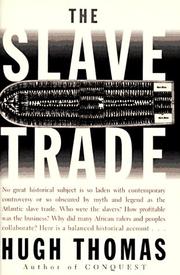
The definitive, comprehensive history of the transatlantic slave trade — its economics, politics, and human cost. Reading it here, after understanding African civilizations, makes the rupture viscerally clear.

A deeply personal and scholarly journey retracing the slave trade's routes through Ghana. It bridges the gap between historical fact and lived memory, making the human cost impossible to abstract away.
Colonialism, Resistance & Independence
IntermediateUnderstand how European powers carved up and dominated Africa, how Africans resisted, and how the independence movements of the 20th century unfolded and were often undermined.
▸ Study plan for this stage
Pace: 8–10 weeks total: Weeks 1–4 for "Wretched of the Earth" (~20–25 pages/day, allowing time to re-read dense philosophical passages); Weeks 5–10 for "Africa's World War" (~25–30 pages/day, with slower pacing around the detailed military and political chapters).
- The psychology of colonialism and decolonization: how colonial domination dehumanizes both the colonized and the colonizer, as analyzed in 'Wretched of the Earth'
- The role of violence in anti-colonial struggle: Fanon's argument (as presented in 'Wretched of the Earth') that violence can be a cleansing, agency-restoring force for the oppressed
- The pitfalls of the national bourgeoisie: how post-independence African elites replicated colonial structures and betrayed the peasant and working classes, a central warning in 'Wretched of the Earth'
- National consciousness vs. genuine liberation: the distinction between flag independence and true socioeconomic transformation
- The Congo/Great Lakes crisis as a microcosm of post-colonial failure: how the legacies of colonial borders, Cold War proxy politics, and elite corruption converged into catastrophic regional war, as charted in 'Africa's World War'
- The internationalization of African conflicts: the role of Rwanda, Uganda, Zimbabwe, Angola, and external powers in the DRC wars, per Prunier's analysis in 'Africa's World War'
- Resource extraction and war economies: how minerals (coltan, gold, diamonds) fueled and prolonged the conflicts described in 'Africa's World War', echoing colonial-era extraction logics
- The humanitarian and demographic catastrophe of the Congo Wars: millions of deaths, mass displacement, and the collapse of state institutions as documented in 'Africa's World War'
- According to 'Wretched of the Earth', why does Fanon argue that the colonized peasantry — rather than the urban working class — is the true revolutionary force, and what are the implications of this for post-independence governance?
- How does 'Wretched of the Earth' explain the psychological damage inflicted by colonialism, and what does it prescribe as the path to restoring dignity and selfhood for colonized peoples?
- What does 'Wretched of the Earth' mean by the 'pitfalls of national consciousness', and can you identify at least two concrete historical examples from 'Africa's World War' that illustrate this warning coming true?
- According to Prunier in 'Africa's World War', how did the Rwandan genocide and its aftermath directly ignite the wider Congo conflict, and why was the regional spillover so difficult to contain?
- How does 'Africa's World War' demonstrate that the Congo Wars were simultaneously a local, regional, and global phenomenon — and which external actors does Prunier hold most responsible for prolonging the violence?
- Taken together, what do these two books suggest about the relationship between the form of independence achieved in the mid-20th century and the conflicts that erupted by the century's end?
- Dialectical journal: While reading 'Wretched of the Earth', keep a two-column journal — left column for Fanon's core claims, right column for evidence that supports or complicates each claim drawn from 'Africa's World War'. This forces active dialogue between the two books.
- Concept mapping: After finishing 'Wretched of the Earth', draw a concept map linking its key ideas (colonial psychology, national bourgeoisie, peasant revolution, violence, national consciousness) and then, after finishing 'Africa's World War', annotate the map with specific events, actors, or outcomes from Prunier that confirm or challenge Fanon's predictions.
- Timeline construction: Build a detailed annotated timeline of the Congo/Great Lakes crisis (1990–2003) using 'Africa's World War'. For each major event, add a one-sentence note on which colonial or post-colonial structural factor (per 'Wretched of the Earth') it reflects — e.g., artificial borders, elite capture, resource extraction.
- Stakeholder analysis: Choose three key actors from 'Africa's World War' (e.g., Kabila, Kagame, Museveni) and write a one-page profile of each through a Fanonian lens: Are they representatives of the liberating peasant movement or the predatory national bourgeoisie? Use direct evidence from both books.
- Comparative essay (500–800 words): Write a response to the prompt — 'Fanon warned that independence without transformation would betray the revolution. Using 'Africa's World War' as your case study, assess how accurate this prediction proved to be in Central Africa.'
- Socratic discussion or reflective memo: After completing both books, write a one-page memo (or discuss with a study partner) addressing: 'What would a genuinely liberating post-colonial state have needed to look like, and was it ever realistically achievable given the forces Prunier describes?'
Next up: By internalizing how colonialism was imposed, how resistance was co-opted, and how post-independence states collapsed under structural and elite pressures, the reader is now equipped to examine the contemporary economic, political, and social systems that emerged from these ruins — setting the stage for a stage focused on modern African political economy and development.
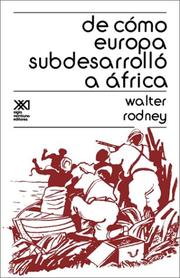
The essential analytical text on colonialism's economic logic — Rodney systematically shows how European exploitation actively impoverished Africa. A must-read before studying independence movements.

The defining philosophical and political text of African decolonization, written during the Algerian revolution. It gives the reader the ideological framework that animated independence leaders across the continent.
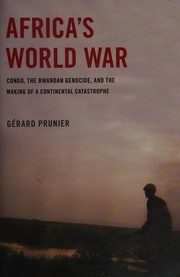
A rigorous account of the Congo conflicts — rooted in colonial border-drawing and Cold War interference — showing how the promises of independence were betrayed and what the colonial legacy truly cost.
Africa Today: Challenges, Agency & Renaissance
ExpertEngage critically with contemporary Africa — its governance struggles, economic potential, diaspora connections, and the Africans themselves shaping its future narrative.
▸ Study plan for this stage
Pace: 8–10 weeks total. Weeks 1–7: "The Fate of Africa" (~700 pages) at roughly 25–30 pages/day — read thematically by era/region, pausing at major turning points (independence movements, Cold War proxy conflicts, structural adjustment). Weeks 8–10: "We Should All Be Feminists" (~65 pages) in 1–2 sittings
- Post-colonial state fragility: how the borders, institutions, and power structures inherited from colonialism shaped governance failures across the continent (Meredith)
- The 'Big Man' syndrome: the recurring pattern of authoritarian consolidation, patronage networks, and the erosion of democratic norms in post-independence Africa (Meredith)
- Cold War proxy dynamics: how superpower rivalry fueled civil wars, propped up dictators, and distorted African political economies from Angola to Ethiopia (Meredith)
- Structural adjustment and economic dependency: the role of the IMF, World Bank, and debt cycles in constraining African agency and deepening poverty (Meredith)
- African agency and resistance: the individuals, movements, and moments within Meredith's narrative where Africans actively shaped — not merely suffered — their own history
- Intersectionality of gender and power in Africa: how patriarchal norms are culturally constructed, socially enforced, and politically consequential, as argued by Adichie
- The personal as political: Adichie's use of autobiography and lived experience as a legitimate and rigorous form of social critique and knowledge production
- Renaissance and narrative reclamation: synthesizing both books to understand how Africans — scholars, activists, writers, feminists — are reauthoring the continent's story on their own terms
- According to Meredith, what structural and political factors most consistently explain governance failure in post-independence African states — and can a single explanatory framework account for the continent's diversity?
- How does Meredith's treatment of African leaders balance individual moral accountability with the systemic pressures of colonialism, Cold War interference, and economic dependency? Is his framing fair?
- Where does African agency appear — or get obscured — in 'The Fate of Africa'? What does the book's own narrative voice reveal about whose perspective shapes the story of the continent?
- How does Adichie define feminism, and why does she argue it is urgently relevant to contemporary African societies specifically — not just as a Western import?
- In what ways do Adichie's arguments in 'We Should All Be Feminists' challenge, complicate, or enrich the political and economic analysis offered by Meredith in 'The Fate of Africa'?
- Taking both books together: what does genuine African renaissance look like, who are its agents, and what obstacles — political, economic, and cultural — must be dismantled for it to succeed?
- Governance case-study journal: As you read Meredith, select four countries from different regions (e.g., Ghana, Congo, Somalia, Zimbabwe). For each, write a 1-page structured note tracking: the promise at independence, the turning point(s), the role of external actors, and the human cost — then compare patterns across all four at the end.
- 'Whose story is this?' annotation exercise: While reading 'The Fate of Africa', flag every passage where an African voice (leader, citizen, activist) is quoted directly versus paraphrased or described by Meredith. Reflect in writing on what this ratio reveals about authorship, positionality, and the politics of who narrates African history.
- Adichie close-reading and response essay: After finishing 'We Should All Be Feminists', write a 600–800 word personal essay responding to her central argument. Where do you agree, push back, or find her argument incomplete? Use at least two specific examples from your own cultural context.
- Cross-book synthesis map: Create a visual concept map (on paper or digitally) connecting at least six themes across both books — e.g., link Meredith's 'Big Man politics' to Adichie's critique of how masculinity is socially constructed and enforced. Annotate each connection with a direct quote from each book.
- Contemporary update research task: Choose one country covered extensively by Meredith and research its current status using recent journalism or reports (post-2015). Write a 1-page 'epilogue' to Meredith's chapter on that country — what has changed, what has not, and what does that tell you about the durability of the structural forces he identifies?
- Curated discussion or debate: Organize or simulate a structured discussion around the prompt: 'Is Meredith's 'The Fate of Africa' a work of African history or a work about Africa?' Use Adichie's ideas about narrative, voice, and representation as your critical framework for the debate.
Next up: By wrestling with the structural legacies, gendered power dynamics, and contested narratives that define contemporary Africa, the reader is now equipped to move from diagnosis to vision — ready to engage with African-led thought, Afrofuturism, or diaspora literature that imagines and actively builds the continent's next chapter.
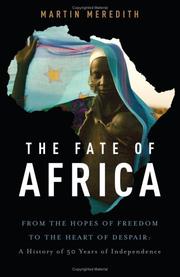
A sweeping, country-by-country account of post-independence Africa from the 1950s to the 2000s — essential for understanding why some nations thrived and others collapsed, without resorting to simplistic explanations.
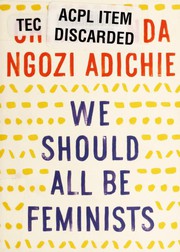
A short, powerful essay by one of Africa's foremost contemporary voices — it closes the curriculum by centering an African perspective on identity, gender, and modernity, reminding the reader that Africa's story is still being written.
Discussion
Keep reading
Paths that share books, cover the same subject, or open a related topic.