The British Empire: rise, rule & reckoning
This curriculum moves from accessible narrative overviews to structural and economic analysis, then to colonised perspectives and finally to the Empire's contested legacy in the modern world. Each stage builds the historical vocabulary, geographic scope, and critical framework needed to engage honestly with the harder, more challenging texts that follow.
Foundations: The Shape of the Empire
BeginnerGain a clear chronological and geographic overview of how the British Empire rose, expanded, and eventually fell — building the basic mental map needed for everything that follows.
▸ Study plan for this stage
Pace: 8–10 weeks total: Weeks 1–5 cover Ferguson's "Empire" (~25–30 pages/day, including time to study maps and footnotes); Weeks 6–10 cover Schama's "A History of Britain" (~20–25 pages/day, with slower reading around key turning-point chapters). Set aside one full review session at the end of each book
- The Empire's chronological arc — from Elizabethan privateering and early colonial ventures through Victorian high imperialism to 20th-century decolonisation, as traced by Ferguson
- The economic engines of Empire: trade monopolies, plantation agriculture, the slave trade, and the role of private companies (especially the East India Company) as Ferguson presents them
- Ferguson's core thesis: that British imperialism, for all its violence and exploitation, also transmitted institutions, rule of law, and free-market capitalism — and how to hold that argument critically
- The geographic shape of Empire: how Britain came to control territories across the Caribbean, North America, South Asia, Africa, and the Pacific, and why that spread was uneven
- Schama's 'bottom-up' perspective — how ordinary British people, political culture, and domestic upheaval (Civil War, the Glorious Revolution, industrialisation) shaped and were shaped by imperial expansion
- The relationship between British national identity and Empire: how Protestantism, 'liberty', and ideas of racial and civilisational hierarchy were used to justify and celebrate imperial rule
- Key turning points: the loss of the American colonies, the abolition of the slave trade, the Indian Rebellion of 1857, and the World Wars as accelerants of imperial decline
- Decolonisation as a process, not a single event — and the legacies (economic, cultural, institutional) that Ferguson and Schama both grapple with in their conclusions
- According to Ferguson in 'Empire', what were the original commercial and piratical roots of British overseas expansion, and how did they evolve into formal colonial governance?
- How does Ferguson characterise the role of the East India Company — is it an embarrassment to his pro-Empire thesis or a central piece of it, and why?
- In what ways does Schama's narrative in 'A History of Britain' complicate or enrich Ferguson's top-down account of imperial growth?
- What domestic British events and ideological shifts (as described by Schama) most directly accelerated or constrained imperial expansion?
- By the end of both books, can you sketch — without notes — a rough timeline of the Empire's five major phases of expansion and contraction, with at least two key events per phase?
- Both authors write with a strong authorial voice and an implicit argument. What is each author's underlying attitude toward the Empire, and what evidence from the texts supports your reading?
- Blank-map exercise: After finishing Ferguson's geographic chapters, print a blank world map and shade every territory Ferguson mentions as part of the Empire, annotating each with the approximate date of acquisition and the primary economic motive (trade, settlement, resource extraction, etc.).
- Timeline wall chart: Create a single A3 (or poster-sized) timeline spanning 1500–1997 (Hong Kong handover). As you read each book, add events, colour-coded by source — Ferguson in one colour, Schama in another — to visually see where their narratives overlap, diverge, or leave gaps.
- Argument stress-test journal: After completing Ferguson's 'Empire', write a one-page summary of his central thesis, then write a one-page rebuttal using only evidence he himself provides. This trains critical reading before Schama offers his own counter-pressures.
- Chapter dialogue exercise: Choose one major event covered by both books (e.g., the abolition of the slave trade or the loss of the American colonies). Write a structured comparison — one paragraph on Ferguson's framing, one on Schama's — then a third paragraph on what the two accounts together reveal that neither does alone.
- Vocabulary and concept glossary: Maintain a running glossary of at least 20 terms encountered across both books (e.g., mercantilism, charter company, indentured labour, the 'civilising mission', Whig history). Write each definition in your own words and note the page where you first encountered it.
- End-of-stage essay: Write a 600–800 word response to the question 'Was the British Empire primarily a commercial project, a political project, or a cultural project?' drawing evidence from both Ferguson and Schama. This synthesises the stage and doubles as a diagnostic for the next level of reading.
Next up: Having built a solid chronological skeleton and geographic mental map from Ferguson and Schama, the reader is now ready to zoom into specific regions, peoples, and thematic controversies — moving from the Empire's broad shape to its lived textures and contested legacies.
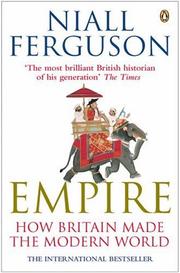
A sweeping, readable narrative that covers the Empire's full arc from trade to decolonisation. Starting here gives the beginner a confident chronological skeleton, even as later books will challenge its optimistic framing.
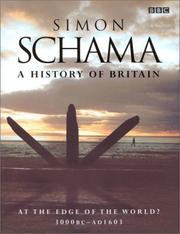
Schama's vivid prose grounds the Empire in its domestic British context, showing how imperial ambition was shaped by politics, religion, and class at home — essential background before diving into the colonies themselves.
How It Worked: Power, Trade, and Violence
BeginnerUnderstand the machinery of empire — how it was administered, how it extracted wealth, and how violence and law were used as tools of control across very different territories.
▸ Study plan for this stage
Pace: 6–8 weeks total: Weeks 1–4 for "The Anarchy" (~25–30 pages/day, reading in thematic chunks — the rise of the EIC, the Bengal crisis, and the military campaigns); Weeks 5–7 for "Empireland" (~20–25 pages/day, pausing after each chapter to journal reactions); Week 8 reserved for review, cross-book com
- The East India Company (EIC) as a proto-state: how a private corporation raised armies, levied taxes, and exercised sovereign power without being a government
- Extraction and deindustrialisation: how trade was structured to drain wealth from India to Britain, including the role of the Bengal Diwani (revenue rights) granted in 1765
- The role of violence and military superiority: how the EIC used mercenary sepoy armies, battlefield shock tactics, and punitive campaigns to enforce compliance across the subcontinent
- Law as a tool of control: how legal frameworks were selectively applied or withheld to protect British commercial interests and suppress resistance
- Collaboration and complicity: how local rulers, merchants, and elites were co-opted — and how that co-option made empire possible — as shown through figures like the Nawabs in Dalrymple
- Selective memory and cultural amnesia: Sanghera's argument in Empireland that British society has systematically forgotten or distorted the realities of empire
- The personal is imperial: Sanghera's method of tracing empire's legacy through his own British-Indian family history, showing how empire shaped everyday British life and identity
- Continuity of imperial logic: how attitudes, institutions, and economic structures established during the EIC era persisted long after formal decolonisation
- According to Dalrymple in The Anarchy, what specific mechanisms allowed the East India Company — a commercial enterprise — to effectively replace the Mughal Empire as the dominant power in India? What were the key turning points?
- How did the EIC's control of Bengal's tax revenues (the Diwani) function as an engine of wealth extraction, and what were the human consequences — including the 1770 famine — that Dalrymple documents?
- Sanghera argues in Empireland that most British people are ignorant of empire's scale and legacy. What evidence and personal experiences does he use to make this case, and do you find it convincing?
- Both books deal with violence — Dalrymple through battlefield and corporate violence, Sanghera through structural and cultural violence. How do the two authors' approaches to documenting violence differ, and what does each method reveal that the other cannot?
- How does Sanghera connect the history described in books like The Anarchy to present-day British culture, politics, and identity? What specific institutions or attitudes does he trace back to the imperial period?
- What role did law play in the machinery of empire as described across both books — was it a restraint on power, a tool of power, or both? Use specific examples from the texts.
- Timeline construction: As you read The Anarchy, build a running timeline of the EIC's key power grabs (Plassey 1757, Diwani 1765, etc.). After finishing Empireland, annotate the same timeline with Sanghera's observations about how each event echoes in modern Britain — making the two books literally speak to each other on the page.
- Wealth-flow diagram: Draw a simple diagram mapping how money, goods, and resources moved between India and Britain during the EIC era based on Dalrymple's account. Label who gained, who lost, and at what stage violence or law was used to enforce the flow. Keep it to one page — clarity matters more than completeness.
- Vocabulary log: Both books introduce specialised terms (Diwani, sepoy, nabob, Orientalism, etc.). Keep a running glossary of 15–20 terms with a one-sentence definition and a note on which book introduced it and in what context.
- Perspective flip exercise: Choose one episode from The Anarchy told from a British or EIC vantage point. Write a 200-word re-narration of the same event from the perspective of an Indian ruler, merchant, or soldier involved. Then read Sanghera's relevant passages in Empireland to see how he handles similar perspective shifts.
- Sanghera's 'ignorance audit': Sanghera lists things about empire that most Britons don't know. Make your own honest list before starting Empireland of what you knew and didn't know about the British Empire. After finishing the book, revisit your list — what surprised you most, and why had those gaps existed?
- Cross-book essay (300–400 words): Answer the question — 'Was the British Empire in India primarily a commercial project, a political project, or a violent project?' — using specific evidence from both The Anarchy and Empireland. Force yourself to cite at least two passages from each book.
Next up: By understanding the concrete machinery of empire — its corporate origins, extractive economics, legal structures, and violence — through Dalrymple's granular history and Sanghera's reflective lens, the reader is now equipped to move from *how* empire worked to the deeper questions of *who it shaped and how it was experienced*, which the next stage will explore through the lives of colonised peopl

Dalrymple's gripping account of the East India Company's conquest of India is the perfect case study in how private corporate power became imperial rule — and introduces the reader to the brutal realities behind the ledger books.
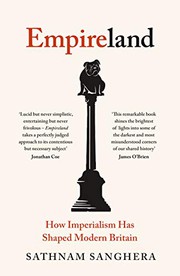
Written for a general audience, this book forensically examines how empire was normalised and how its economic and cultural mechanisms still shape Britain today — a bridge between historical fact and present consequence.
The View from Below: Colonised Voices
IntermediateRead the Empire through the eyes of those who lived under it — encountering resistance, identity, and survival from African, Caribbean, South Asian, and Irish perspectives.
▸ Study plan for this stage
Pace: 6–8 weeks total: Week 1 — Césaire's "Discourse on Colonialism" (~50 pages; read in 2–3 sittings, re-reading key passages); Weeks 2–4 — "Wretched of the Earth" (~30 pages/day, pausing after each major chapter to reflect); Weeks 5–8 — "Homegoing" (~25–30 pages/day across its generational chapters, jou
- Thingification: Césaire's concept of how colonialism dehumanises both the colonised and the coloniser, reducing people to objects and resources
- Colonial boomerang: Césaire's argument that the violence and barbarism of colonialism ultimately rebounds onto Europe itself
- Internalized oppression vs. revolutionary consciousness: the psychological journey from colonial subject to liberated self, as traced across both Césaire and Wretched of the Earth
- The role of violence in decolonisation: the controversial argument in Wretched of the Earth that colonial violence can only be undone through counter-violence, and its ethical implications
- Generational trauma and inheritance: how Homegoing dramatises the way colonial systems — slavery, land dispossession, racial capitalism — echo across generations of a single family
- Identity under empire: how colonised peoples construct, lose, and reclaim cultural and personal identity across African, Caribbean, and diasporic contexts
- Resistance as a spectrum: from Césaire's rhetorical and poetic defiance, to the political theory of Wretched of the Earth, to the everyday survival strategies depicted in Homegoing
- The silenced archive: whose stories get recorded, whose are erased, and how fiction (Homegoing) can recover voices that history omits
- According to Césaire in 'Discourse on Colonialism,' in what specific ways does colonialism corrupt and brutalise the colonising society — not just the colonised — and what evidence does he marshal for this claim?
- How does 'Wretched of the Earth' characterise the psychological damage inflicted by colonial rule, and what does it propose as the path toward mental and political liberation for colonised peoples?
- Trace one family line across at least three generations in 'Homegoing': how do the specific mechanisms of British colonial power (the slave trade, colonial governance, racial hierarchy) shape each character's choices, identity, and fate?
- Where do Césaire and the arguments in 'Wretched of the Earth' agree, and where do they diverge — particularly on the question of violence, culture, and the role of the intellectual?
- How does Yaa Gyasi use the novel form — dual family lines, the recurring symbol of the black stone, chapter-by-chapter jumps in time — to make an argument about colonialism that a historical essay could not?
- What does this stage's three texts collectively suggest about the relationship between colonial economic exploitation and the destruction of colonised peoples' inner lives, families, and cultures?
- Close-reading annotation sprint: Re-read Césaire's opening 10 pages and highlight every metaphor he uses for Europe and for the colonies. Write a one-paragraph analysis of how his imagery does political work that plain argument cannot.
- Concept-mapping session: After finishing 'Wretched of the Earth,' draw a diagram connecting its key stages of colonial psychology (alienation → false consciousness → awakening → liberation). Annotate each node with a direct quote from the text.
- Character dossier for Homegoing: Choose one character from each of the two family lines (Effia's and Esi's). Write a one-page 'colonial biography' for each — documenting the specific imperial structures that shaped their life, using both the novel's details and your broader knowledge from earlier stages.
- Dialogue exercise: Write a 400–600 word imagined conversation between Césaire and a character of your choice from 'Homegoing.' What would Césaire say to them about their suffering? How might they respond from lived experience versus his theoretical framework?
- Resistance taxonomy: Compile a list of every act of resistance — large or small, successful or failed — across all three books. Categorise them (e.g. cultural, physical, intellectual, spiritual). Reflect in writing: what patterns emerge about how the colonised push back?
- Comparative essay outline: Draft a structured outline (introduction, 3 body sections, conclusion) for the essay question: 'How do Césaire, Wretched of the Earth, and Homegoing together redefine who counts as a historical subject of the British Empire?' Use at least one specific quote or scene from each book.
Next up: By internalising the colonised perspective — its traumas, resistances, and counter-narratives — the reader is now equipped to critically interrogate the institutional and administrative machinery of empire in the next stage, holding the human cost visible while examining how power was organised and justified from above.

This short, fierce essay by the Martinican poet is the foundational anti-colonial text — it reframes colonialism as a civilisational crime and gives the reader the critical vocabulary to interrogate every pro-empire argument encountered so far.

Fanon's landmark work analyses the psychological and social damage of colonial rule on colonised peoples. Reading it after Césaire deepens the framework with a clinical, political, and deeply human account of what empire actually does to people.
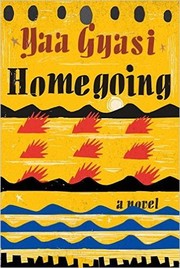
This novel traces two family lines across 300 years from Ghana through slavery and colonialism to the present day. Fiction here does what history sometimes cannot — it makes the human cost visceral and unforgettable.
Structural Reckoning: Economics, Race, and Extraction
IntermediateAnalyse the Empire's economic architecture — how it systematically transferred wealth from the periphery to Britain — and understand how race was constructed as an ideology to justify it all.
▸ Study plan for this stage
Pace: 3–4 weeks, ~25–30 pages/day — Tharoor's chapters are dense with statistics and historical argument, so allow time to pause, annotate, and cross-check his claims before moving on.
- Deindustrialisation as imperial policy: how Britain deliberately dismantled India's textile, shipbuilding, and manufacturing sectors to create a captive export market
- Drain of Wealth thesis: Dadabhai Naoroji's framework (cited extensively by Tharoor) quantifying the systematic transfer of Indian surplus to Britain through taxes, salaries, 'Home Charges', and trade surpluses that were never repatriated
- The 'Home Charges' mechanism: how India was forced to pay for its own colonial administration, the British army's imperial adventures, and even the costs of suppressing Indian resistance
- Famine as structural outcome: the argument that British land revenue systems, export priorities, and laissez-faire ideology converted food shortages into mass death events (e.g., the Bengal famines)
- Race as constructed ideology: how racial hierarchy was retrofitted as a post-hoc justification for economic exploitation rather than being its original cause — the 'civilising mission' as ideological cover
- The balance-of-trade fiction: how India ran consistent trade surpluses with the world yet remained impoverished, because the surplus was appropriated by Britain rather than retained
- Infrastructure as extraction: the railways argument — built with Indian capital, at inflated British contractor rates, primarily to move raw materials to ports and troops to flashpoints, not to develop India
- Selective use of 'rule of law': how British legal and administrative institutions served imperial economic interests while being presented as gifts of civilisation
- According to Tharoor, what was the approximate share of global GDP that India held at the start of British rule versus at the end, and what mechanisms does he identify as responsible for that collapse?
- How did the 'Home Charges' system function as a drain mechanism, and why does Tharoor argue it was structurally different from ordinary taxation?
- What is Tharoor's core critique of the railways, and how does it challenge the standard 'gift of infrastructure' defence of empire?
- How does Tharoor connect the recurring famines of the 18th and 19th centuries to deliberate policy choices rather than natural disaster or Indian agricultural failure?
- In what ways does Tharoor argue that racial ideology served the economic project of empire — and which came first in his account, the economics or the racism?
- What counter-arguments does Tharoor anticipate from defenders of empire, and how effectively does he rebut them? Where, if anywhere, do you find his rebuttals incomplete?
- Data mapping exercise: Build a simple two-column table tracking each economic mechanism Tharoor describes (e.g., Home Charges, tariff policy, land revenue) against its specific human or material consequence. This forces you to move from abstract argument to concrete cause-and-effect chains.
- Steel-man the opposition: After finishing each chapter, write a 150-word paragraph defending the imperial position Tharoor is attacking — then write a 150-word rebuttal using only evidence from the text. This sharpens your ability to distinguish rhetoric from historical argument.
- Trace the Drain: Using the figures Tharoor cites (GDP share, famine death tolls, railway financing terms), construct a simple annotated timeline from 1757 to 1947 marking the key moments of economic extraction. Visualising the chronology reveals the systemic, not incidental, nature of the drain.
- Ideology audit: Re-read Tharoor's passages on the 'civilising mission' and highlight every instance where a moral or racial justification is offered for an economic policy. Write a one-page reflection on the relationship between the two — does the ideology precede, follow, or co-evolve with the extraction?
- Comparative GDP research: Look up one independent historical estimate of India's share of world GDP in 1700 and 1950 (e.g., Angus Maddison's data) and compare it with Tharoor's figures. Note where they align and where they diverge — this builds the habit of triangulating a single author's claims.
- Structured debate prep: Formulate three specific questions you would put to Tharoor if you could challenge him — areas where his argument feels overstated, under-evidenced, or where correlation and causation blur. Write out the questions and your best guess at how he might respond.
Next up: Tharoor establishes the economic and ideological skeleton of empire from a colonised subject's perspective; the next stage can now build outward — examining how these same structures of extraction and racial justification operated across other territories, or how they were resisted, dismantled, and in some forms perpetuated into the post-colonial world.
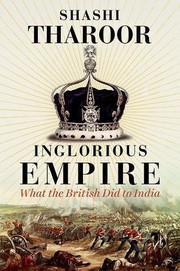
A rigorous, data-driven dismantling of the myth that empire was a gift to India. Tharoor quantifies the extraction of wealth and directly rebuts the civilising-mission narrative, making it the ideal counterweight to Ferguson's opening volume.
Legacy and Reckoning: Empire in the Present
ExpertSynthesise everything into a nuanced understanding of how the British Empire's structures, ideologies, and wounds persist in contemporary politics, migration, racism, and global inequality.
▸ Study plan for this stage
Pace: 6–8 weeks total: Weeks 1–4 on "Legacies of British Slave-Ownership" (~25–30 pages/day, including the dense statistical appendices — budget extra time for the UCL database case studies); Weeks 5–8 on "Decolonising the Mind" (~15–20 pages/day, but treat each essay as a standalone seminar text — re-rea
- Slave-ownership as respectable capital: Hall's argument that compensation payments to slave-owners (not the enslaved) seeded British banking, industry, and aristocratic wealth that persists today
- The UCL Legacies of British Slave-Ownership database as a methodology — how tracing financial genealogies makes empire's economic afterlife visible and quantifiable
- Entangled histories: Hall's insistence that British domestic identity (class, gender, philanthropy, religion) was co-constituted with colonial slavery, not merely adjacent to it
- Structural racism as inheritance: how slave-owner compensation created intergenerational wealth gaps whose contours map onto contemporary racial and economic inequality in Britain
- Ngũgĩ's concept of 'the language of African literature' — the argument that colonial languages (English, French) are not neutral tools but carry embedded epistemologies that displace African self-understanding
- Decolonising the mind as a material and political act: Ngũgĩ's decision to write in Gĩkũyũ as praxis, not merely symbolism
- The 'cultural bomb': Ngũgĩ's framework for how colonialism destroys a people's belief in their own names, languages, environments, heritage, and ultimately themselves
- Convergence of Hall and Ngũgĩ: economic dispossession (Hall) and epistemic/cultural dispossession (Ngũgĩ) as two faces of the same imperial legacy, requiring reckoning at both the material and the ideological level
- According to Hall, why is the 1833 Slavery Abolition Act's compensation scheme a better lens for understanding contemporary British wealth inequality than the act of abolition itself?
- How does Hall use individual slave-owner family genealogies to challenge the idea that empire was something that happened 'over there' and had little bearing on British domestic society?
- What does Ngũgĩ mean when he says that language is not just a means of communication but 'a carrier of culture' — and what are the political stakes of that claim for post-colonial African writers?
- How does Ngũgĩ's critique of Afro-European literature (written by Africans in European languages) complicate straightforward celebrations of African literary achievement in the post-independence era?
- In what ways do Hall's economic genealogies and Ngũgĩ's cultural genealogies reinforce each other as tools for understanding how empire reproduces itself in the present?
- What concrete forms of 'reckoning' do Hall and Ngũgĩ respectively advocate, and how do their prescriptions differ in method while converging in moral urgency?
- Database deep-dive: Use the publicly available UCL Legacies of British Slave-Ownership database (the companion to Hall's book) to trace one slave-owning family mentioned in the text forward in time — identify any institutions, estates, or public figures connected to their compensation wealth and write a one-page 'genealogy of capital' report.
- Comparative wealth mapping: After reading Hall, research one contemporary British institution (a bank, university, or landed estate) and write a 500-word memo assessing what Hall's methodology would reveal about its possible slave-ownership connections — practise her archival logic even without full archival access.
- Close-reading journal on Ngũgĩ: For each of the four essays in 'Decolonising the Mind', write a single paragraph identifying (a) the central claim, (b) the key evidence or example Ngũgĩ uses, and (c) one point of tension or question the essay leaves unresolved for you.
- Language autobiography: Ngũgĩ asks readers to interrogate their relationship to language and power. Write a 400-word personal reflection: What language(s) did you learn to think, dream, and be educated in? Whose knowledge systems did that language carry — and whose did it exclude?
- Synthesis essay: Write a 1,000-word argumentative essay responding to this prompt: 'Hall and Ngũgĩ together suggest that decolonisation requires both financial reckoning and epistemic reckoning. Can one succeed without the other?' Use specific evidence from both books.
- Contemporary reckoning audit: Identify one current political debate in Britain or a former British colony (e.g., reparations discussions, curriculum reform, immigration policy, statue removal) and write a structured one-page analysis applying at least one concept from Hall and one from Ngũgĩ to illuminate what is really at stake in that debate.
Next up: By fusing Hall's forensic economic history with Ngũgĩ's theory of cultural dispossession, the reader now holds a dual-register framework — material and ideological — that is essential preparation for engaging with any further study of post-colonial politics, reparations movements, or contemporary global inequality, where both registers must be argued simultaneously.

Based on meticulous archival research, this book traces how slave-owner compensation money flowed into British institutions, families, and infrastructure — making the abstract economic arguments of earlier stages concrete and personal.
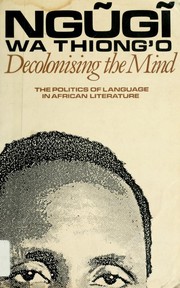
Ngũgĩ's essays on language and cultural imperialism are the perfect capstone: they ask the deepest question of all — how does colonialism reshape the very way people think, speak, and imagine themselves — and challenge the reader to apply that question everywhere.
Discussion
Keep reading
Paths that share books, cover the same subject, or open a related topic.