Ancient Persia: the best books on the Achaemenid Empire and beyond
This curriculum takes the reader from a vivid narrative introduction to ancient Persia all the way through specialist scholarship on Achaemenid civilization, the Greco-Persian Wars, and the broader Iranian world. Each stage builds the chronological backbone, cultural vocabulary, and historiographical sophistication needed to tackle the next, turning a curious beginner into a well-rounded, critically informed student of ancient Iran.
First Footsteps: Narrative Foundations
BeginnerGain a vivid, story-driven orientation to ancient Persia — its kings, geography, and place in the ancient world — before encountering any scholarly apparatus.
▸ Study plan for this stage
Pace: 8–10 weeks, ~40–50 pages/day (Persian Fire: 3–4 weeks; Herodotus Histories: 4–6 weeks, focusing on Books I–IV and key battle narratives)
- The rise of the Achaemenid Empire under Cyrus the Great and the consolidation of Persian power across three continents
- The character and ambitions of Xerxes I, and the Persian Wars as a clash between imperial expansion and Greek resistance
- The geography and logistics of the Persian Empire: the Royal Road, satrapies, and the scale of Persian military organization
- Herodotus as a primary source: understanding his narrative voice, his accounts of Persian customs and governance, and the tension between Persian and Greek perspectives
- Key figures and their legacies: Cyrus, Darius, Xerxes, and how ancient sources portray Persian leadership
- The role of religion, culture, and administration in holding together a vast, multi-ethnic empire
- How narrative and anecdote in ancient sources shape our understanding of historical events
- How did Cyrus the Great establish the Achaemenid Empire, and what made Persian rule distinctive compared to earlier Near Eastern empires?
- What were Xerxes' strategic goals in invading Greece, and why did the invasion ultimately fail according to both Holland and Herodotus?
- How does Herodotus characterize Persian society, customs, and governance? Where does his account align with or diverge from Holland's interpretation?
- What role did geography and the Royal Road play in maintaining Persian imperial control?
- How do Holland's narrative choices and Herodotus' anecdotes shape the reader's perception of Persian kings and their decisions?
- What evidence do these texts provide about the scale, organization, and logistics of the Persian military and administration?
- Create a timeline of major Persian rulers and events (Cyrus to Xerxes) using both texts, noting where Holland and Herodotus agree or differ in dating and significance
- Map the Persian Empire at its height: identify major satrapies, the Royal Road, and key battle sites mentioned in both texts; annotate with distances and strategic importance
- Write character sketches (1–2 pages each) of Cyrus, Darius, and Xerxes based on Holland's narrative and Herodotus' accounts; note which details come from which source
- Identify and analyze 3–4 key anecdotes from Herodotus (e.g., Croesus and Cyrus, the bridge of boats, Xerxes' whipping of the sea) and discuss what they reveal about Persian values and how Herodotus frames them
- Create a visual or written comparison chart: Persian imperial ideology and practice (religion, law, administration) as portrayed in both texts
- Write a short reflection (500–750 words) on a moment where Holland's narrative interpretation illuminates or complicates Herodotus' account—e.g., Xerxes' decision-making, the causes of the invasion, or Persian military strategy
Next up: This stage establishes a vivid, emotionally engaging foundation in Persian history and key personalities, preparing you to engage critically with scholarly debates about sources, reliability, and interpretation in the next stage.

A gripping, accessible narrative of the Achaemenid Empire and the Greco-Persian Wars written for general readers. It establishes the key figures (Cyrus, Darius, Xerxes) and the central conflict that will recur throughout the curriculum.
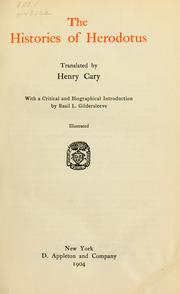
The foundational primary source for the Persian Wars and Achaemenid court life. Reading it after Holland gives the beginner the context to appreciate Herodotus's perspective and biases rather than being lost in unfamiliar names and places.
Building the Framework: Core Histories
BeginnerConstruct a solid chronological and political framework of the Achaemenid Empire from Cyrus the Great through Alexander, grounded in modern historical synthesis.
▸ Study plan for this stage
Pace: 8–10 weeks, ~40–50 pages/day (accounting for dense historical material and note-taking)
- Cyrus the Great's founding vision and administrative innovations that established the Achaemenid Empire's structure
- The chronological sequence of major Achaemenid rulers (Cyrus II, Darius I, Xerxes, Artaxerxes) and their key military/political achievements
- The tension between imperial ideology (as presented in Xenophon's idealized portrait) and historical reality (as analyzed by Cook and Briant)
- Darius I's consolidation of power, legal reforms, and the empire's territorial expansion to its greatest extent
- The mechanisms of Persian imperial administration: satrapies, roads, communication systems, and multi-ethnic governance
- The Greco-Persian Wars as a pivotal moment revealing both Persian military strength and strategic vulnerabilities
- Alexander's conquest as the culmination of Achaemenid decline, and how Briant reframes this through Darius III's perspective rather than Alexander's triumph
- What were Cyrus the Great's most significant administrative and military innovations, and how did they differ from earlier Near Eastern empires?
- How does Xenophon's portrayal of Cyrus in the Cyropaedia compare to the historical Cyrus reconstructed by modern scholars like Cook and Briant?
- What role did Darius I play in transforming the Achaemenid Empire, and what were his major achievements in consolidation and expansion?
- How did the Achaemenid system of satrapies and imperial communication enable control over such vast and diverse territories?
- What were the causes and consequences of the Greco-Persian Wars for the Achaemenid Empire's stability and prestige?
- How does Briant's analysis of Darius III and the final decades of the empire challenge traditional narratives centered on Alexander's genius?
- Create a detailed chronological timeline of all major Achaemenid rulers and their reigns, noting key military campaigns, administrative reforms, and succession crises
- Construct a map of the empire at three key moments: under Cyrus II, under Darius I at maximum extent, and at the eve of Alexander's invasion; annotate with satrapy names and major cities
- Write a comparative character study (2–3 pages) of Cyrus as portrayed in Xenophon's Cyropaedia versus the historical Cyrus described in Cook and Briant, noting specific textual examples
- Create a visual diagram or written explanation of how the satrapy system functioned, including the roles of satraps, the Royal Road, and mechanisms for preventing rebellion
- Compile a 'crisis analysis' document identifying three major internal or external threats to Achaemenid stability (succession disputes, revolts, Greek conflicts) and how rulers responded
- Write a short analytical essay (4–5 pages) comparing Briant's reframing of Alexander's conquest through Darius III's perspective to traditional accounts, using specific evidence from all three texts
Next up: This stage establishes the political, military, and administrative foundations of the Achaemenid Empire, preparing you to examine in the next stage how Persian culture, religion, art, and daily life both sustained and reflected this imperial structure.
A concise, authoritative survey of the Achaemenid Empire from its rise to its fall, ideal for cementing the political timeline and administrative structure established narratively in Stage 1.
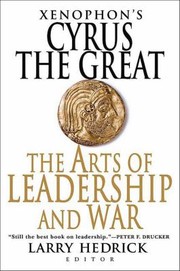
Focuses specifically on the founder of the empire, deepening understanding of the ideological and political genius behind Achaemenid expansion before moving to the empire at its height.

Briant, the leading modern authority on the Achaemenids, rehabilitates Darius III and challenges Greek-centric distortions — a crucial corrective that prepares the reader for more critical scholarship ahead.
Going Deeper: Civilization and Culture
IntermediateMove beyond political history to understand Achaemenid art, religion, administration, and the lived experience of the Iranian world, including Zoroastrianism and imperial ideology.
▸ Study plan for this stage
Pace: 8–10 weeks, ~40–50 pages/day (with 2–3 reading days per week for deep engagement)
- The Achaemenid administrative system: satraps, tribute networks, and centralized control across diverse territories
- Zoroastrianism as the ideological and religious foundation of imperial legitimacy and Persian worldview
- Achaemenid art and architecture as expressions of imperial power, cultural synthesis, and cosmological order (Persepolis, Susa, reliefs)
- The concept of the 'King of Kings' and divine right: how Persian rulers legitimized authority over multiple ethnic and cultural groups
- Economic structures: taxation, trade routes, land tenure, and resource management under Achaemenid rule
- The lived experience of the empire: daily life, social hierarchies, gender roles, and the integration of conquered peoples
- Briant's methodological approach: using material culture, inscriptions, and administrative documents alongside classical sources
- The relationship between Persian imperial ideology and the actual governance of a multicultural, multilingual empire
- How did the Achaemenid administrative system (satrapies, tribute collection, communication networks) maintain control over such a vast, ethnically diverse empire?
- What role did Zoroastrianism play in legitimizing Achaemenid rule, and how did it shape imperial ideology and the concept of the 'King of Kings'?
- How do Achaemenid art, architecture, and monumental inscriptions (such as those at Persepolis and Bisotun) reflect and reinforce imperial power and cosmological worldview?
- What can we learn about daily life, social structures, and the integration of conquered peoples from non-literary sources such as administrative documents, seals, and archaeological evidence?
- How did the Achaemenid economic system—including taxation, trade, and land management—sustain the empire's military and administrative apparatus?
- How does Briant's approach to Persian history differ from earlier scholarship, and what new insights does it provide about Achaemenid civilization?
- Create a detailed map of the Achaemenid satrapies and annotate it with information about tribute amounts, major cities, and ethnic composition from Dandamaev's political history.
- Analyze a selection of Achaemenid inscriptions (e.g., Darius I's Bisotun inscription, Xerxes' inscriptions) and identify the recurring themes of legitimacy, divine favor, and imperial ideology discussed in Briant.
- Compile a comparative chart of Zoroastrian religious concepts (dualism, the role of Ahura Mazda, eschatology) and trace how these appear in royal inscriptions and imperial art.
- Write a 2,000-word essay on a specific Achaemenid city (Persepolis, Susa, Babylon, or Ecbatana) using both Briant and Dandamaev to discuss its administrative, religious, and cultural significance.
- Create a visual timeline or infographic showing the evolution of Achaemenid art and architecture across reigns, linking stylistic changes to political and ideological shifts.
- Analyze primary source excerpts (administrative documents, Greek accounts, inscriptions) and evaluate how Briant uses them to reconstruct the lived experience of the empire beyond political narratives.
Next up: This stage equips you with a nuanced understanding of how Achaemenid civilization functioned internally—its ideology, administration, and culture—preparing you to examine how this empire encountered, influenced, and ultimately fell to Hellenistic powers, and how Persian cultural legacies persisted afterward.
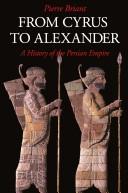
The definitive modern scholarly history of the Achaemenid Empire — comprehensive, richly sourced, and covering economy, society, religion, and administration. The prior stages make this dense masterwork fully accessible.
Provides a complementary focus on social and economic history, drawing on Babylonian and Elamite cuneiform sources that Greek-focused accounts ignore, broadening the reader's source base.
The Greco-Persian Wars in Depth
IntermediateExamine the Greco-Persian Wars with full critical and military rigor, understanding both the Greek and Persian perspectives and the long-term consequences for both civilizations.
▸ Study plan for this stage
Pace: 8–10 weeks, ~40–50 pages/day (Green first: ~3–4 weeks; Cartledge second: ~4–5 weeks). Allocate 1–2 weeks for synthesis and review between books.
- The political, economic, and military structures of the Persian Empire under Darius and Xerxes, and how they enabled imperial expansion
- Greek city-state fragmentation and the strategic reasons for the Ionian Revolt (499–494 BCE) as a catalyst for Persian invasion
- The naval strategy and significance of the Battle of Marathon (490 BCE) in shifting Greek confidence and Persian calculations
- Thermopylae as both a military bottleneck and a symbolic turning point: the tactical choices, the role of Spartan leadership, and the broader strategic context of the 480 BCE invasion
- The interconnected campaigns of 480 BCE: Thermopylae, Salamis, and Plataea as a unified strategic narrative rather than isolated battles
- Persian military organization, logistics, and command structure versus Greek hoplite tactics and the advantages of fighting in constrained terrain
- The long-term consequences for both empires: Greek political consolidation and cultural confidence versus Persian imperial overreach and eventual decline
- How the wars reshaped Mediterranean geopolitics, enabling Greek city-states to dominate and setting the stage for later Macedonian and Hellenistic expansion
- What were the primary causes of the Greco-Persian Wars, and how did the Ionian Revolt and Marathon influence Persian strategy for the 480 BCE invasion?
- Analyze the tactical and strategic significance of Thermopylae: Why did the Greeks choose to fight there, what were Xerxes' options, and how did the battle's outcome affect subsequent campaigns?
- Compare the military organization and fighting methods of the Persian Empire with those of the Greek city-states. What advantages and disadvantages did each possess in different types of terrain?
- How did the Greco-Persian Wars reshape the political landscape of the Mediterranean, and what were the long-term consequences for both Persian imperial power and Greek civilization?
- Evaluate the role of leadership and decision-making (Leonidas, Themistocles, Xerxes) in determining the course and outcome of the wars. How much was determined by individual choices versus structural factors?
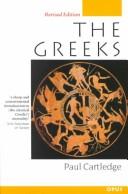
- What does Green's and Cartledge's treatment of these wars reveal about how modern historians balance Persian and Greek sources, and what gaps or biases remain in our understanding?
- Create a detailed timeline of the Greco-Persian Wars (546–479 BCE) marking key events, battles, and diplomatic moments. Annotate each entry with the strategic significance and which side benefited.
- Draw and annotate a map of the 480 BCE invasion route, marking Thermopylae, Salamis, Plataea, and key Persian supply lines. Use this to explain why terrain and logistics were decisive factors.
- Write a comparative military analysis (2–3 pages) of Persian versus Greek forces at Thermopylae: troop composition, tactics, command structure, and how each side's strengths and weaknesses played out.
- Construct a debate outline: argue the Persian perspective on why the invasion was strategically rational, then argue the Greek perspective on why resistance was possible despite apparent Persian superiority.
- Read Green's and Cartledge's treatments of a single battle (e.g., Marathon or Thermopylae) side-by-side and write a 2–3 page analysis comparing their interpretations, use of sources, and conclusions.
- Create a 'decision tree' for Xerxes at three critical moments (before invasion, after Thermopylae, after Salamis), mapping out his options and the consequences of each choice based on the texts.
Next up: This stage equips you with a rigorous, dual-perspective understanding of how the Greco-Persian Wars transformed both civilizations militarily, politically, and culturally—providing the foundation to examine the subsequent rise of Athens, the Delian League, and the eventual Peloponnesian War that fractured Greek unity.
A detailed, critically acclaimed military and political history of the wars that balances Greek sources with modern archaeology and Persian evidence, building directly on the Herodotus reading from Stage 1.

A focused deep-dive into the most iconic engagement of the wars, exploring its military realities and its extraordinary afterlife in Western memory — connecting ancient history to modern myth-making.
Advanced Horizons: The Broader Iranian World
ExpertSituate the Achaemenids within the longer arc of Iranian civilization, engage with historiographical debates, and understand Persia's legacy through the Hellenistic period and beyond.
▸ Study plan for this stage
Pace: 4–5 weeks, ~40–50 pages/day (with re-reading of dense theoretical sections)
- Orientalism as a system of representation and power, not merely a scholarly discipline
- The relationship between Western knowledge production and imperial domination
- How Orientalist discourse constructed 'the Orient' as exotic, timeless, and inferior
- The role of textual authority and canonical texts in establishing Orientalist frameworks
- How Orientalism shaped European (and later American) engagement with the Middle East and Asia
- The distinction between latent and manifest Orientalism
- How to recognize Orientalist assumptions in historical narratives about Persia and the broader Iranian world
- The implications of Said's critique for reassessing Achaemenid historiography
- What does Said mean by Orientalism as a 'system of representation' rather than simply a field of study?
- How did Western imperial powers use Orientalist discourse to justify and facilitate colonial domination?
- What is the difference between latent and manifest Orientalism, and how do both operate in historical writing?
- How have Orientalist frameworks distorted our understanding of Achaemenid Persia and its place in world history?
- What role did canonical texts (literary, scholarly, and political) play in constructing and perpetuating Orientalist knowledge?
- How can we read against the grain of Orientalist historiography to recover more accurate understandings of Persian civilization?
- Close-read 3–4 passages from *Orientalism* that exemplify Said's argument; annotate how he traces the genealogy of Orientalist thought from the 18th century onward
- Collect and analyze 5–6 historical or scholarly texts on Achaemenid Persia (from different eras); identify Orientalist assumptions, language, and framings in each
- Write a 2–3 page historiographical essay: 'How has Orientalism shaped Western interpretations of Achaemenid imperial ideology and statecraft?'
- Create a visual timeline or concept map showing how Orientalist discourse evolved from the Enlightenment through the 19th and 20th centuries, as traced in Said's work
- Conduct a comparative reading exercise: take one passage about Persia from a pre-Said text and one from a post-Said text; analyze how (or whether) the later work avoids Orientalist pitfalls
- Engage in peer discussion or written reflection: identify Orientalist assumptions in contemporary media, scholarship, or political discourse about the Middle East and Iran
Next up: This stage equips you with a critical lens to interrogate how Achaemenid Persia has been represented and misrepresented in Western scholarship, preparing you to engage with more specialized historiographical works and primary sources in subsequent stages with greater epistemological awareness.
The authoritative multi-author reference on Iranian history and culture from prehistory onward; at this stage the reader has the foundation to use it selectively and critically as a capstone reference.
Essential for understanding how Western scholarship — including much of what the reader has just studied — has framed and distorted the 'East.' Reading it last allows the learner to critically re-examine the entire curriculum.
Discussion
Keep reading
Paths that share books, cover the same subject, or open a related topic.