Crochet from first chain to finished pieces
This curriculum takes a complete beginner from holding a hook for the first time all the way to confidently reading complex patterns and executing skill-building projects. Each stage builds on the last — first establishing core technique and vocabulary, then expanding the stitch library and pattern literacy, and finally tackling structured projects and design thinking that cement true mastery.
Foundations: Hook, Yarn & First Stitches
BeginnerHold a hook correctly, understand yarn weights and hook sizes, and execute the essential stitches (chain, slip stitch, single crochet, double crochet) with consistent tension.
▸ Study plan for this stage
Pace: 3–4 weeks, ~20–30 pages/day; spend the first week on chapters covering tools, yarn, and setup; the second week on chain and slip stitches with daily practice swatches; the third week on single and double crochet; reserve the final days for tension review and a small finishing project from the book
- Hook anatomy and how to hold a crochet hook (pencil vs. knife grip) as demonstrated in Teach Yourself Visually Crocheting's photo sequences
- Yarn weight categories (lace through jumbo) and how they pair with the correct hook size, using the book's visual yarn-weight charts
- Reading a yarn label: fiber content, weight symbol, recommended hook size, and gauge information
- The slip knot and foundation chain — understanding how chain length sets up every subsequent row
- Slip stitch technique and its role in joining rounds and finishing edges
- Single crochet (sc): inserting the hook, yarn-over, pulling through loops, and maintaining even row height
- Double crochet (dc): the turning chain, two yarn-overs, and how stitch height changes fabric drape and density
- Tension control: keeping consistent loop size by regulating yarn feed through the non-hook hand, as shown in the book's step-by-step photos
- How do you form a slip knot and a foundation chain, and why does chain tension affect every row that follows?
- What is the difference between yarn weights (e.g., worsted vs. bulky) and how do you choose the matching hook size according to the book's guidelines?
- Walk through each step of a single crochet stitch — where does the hook go, how many loops are on the hook at each stage, and how many yarn-overs are needed?
- How does a double crochet differ from a single crochet in terms of starting chain height and the number of yarn-overs?
- What is the purpose of a turning chain, and how many chains are typically needed for single crochet versus double crochet?
- How can you diagnose and correct uneven tension — what physical adjustments to your grip or yarn feed does the book recommend?
- Slip-knot & chain drill: make five separate foundation chains of 20 stitches each using the same yarn and hook, aiming for identical loop size across all five; compare them side by side and note any inconsistencies
- Yarn-weight exploration: gather three different yarn weights (e.g., fingering, worsted, bulky) and the corresponding hooks recommended on their labels; make a 10-stitch, 5-row swatch in single crochet with each to feel how weight and hook size affect fabric hand
- Single crochet tension swatch: work a 15-stitch × 15-row sc rectangle; measure it, then work a second identical swatch consciously relaxing or tightening your grip — compare dimensions to understand how tension shifts gauge
- Stitch-height sampler: on one foundation chain of 30 stitches, work two rows of sc, two rows of dc, and two rows of sc again; this visual 'ladder' makes stitch height differences tangible
- Slip-stitch join practice: crochet two small squares and use a slip stitch to join them together, following the book's photo sequence for seaming
- Mini dishcloth project: using worsted-weight yarn and the recommended hook, complete the simplest beginner project in Teach Yourself Visually Crocheting (or a 20 sc × 20 row square) from start to a fastened-off, woven-in finish — treating it as a full end-to-end rehearsal of every foundational skill
Next up: Mastering consistent tension and the four core stitches gives you the stable, predictable fabric you'll need to follow pattern instructions, count rows accurately, and confidently tackle increases, decreases, and new stitch variations in the next stage.
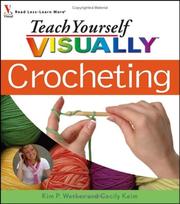
A photo-dense, step-by-step primer that shows every hand position and stitch formation visually — ideal as the very first book because it removes guesswork for a brand-new learner.
Expands on the visual foundation with a comprehensive stitch dictionary and clear pattern notation explanations, bridging the gap between 'doing stitches' and 'reading instructions.'
Stitch Library & Pattern Literacy
BeginnerRead and decode written crochet patterns and symbol charts, and execute a wide range of stitches including shells, clusters, bobbles, and basic colorwork.
▸ Study plan for this stage
Pace: 8–10 weeks total. Weeks 1–4: "The Crochet Answer Book" (~20–25 pages/day, reading Q&A sections thematically — start with abbreviations/pattern reading, then stitch chapters, then colorwork and finishing). Weeks 5–10: "Beyond-the-Square Crochet Motifs" (~2–3 motifs per session, 4–5 sessions/week, wor
- Decoding written crochet patterns: abbreviations, asterisks, brackets, repeat notation, and stitch counts per row/round
- Reading crochet symbol charts: understanding standard symbols for chains, slip stitches, single/double/treble crochets, and how chart orientation maps to physical work
- Executing foundational stitch families: shells (fan stitches worked into one stitch/space), clusters (multiple stitches joined at the top), and bobbles/popcorns (3D texture stitches)
- Understanding stitch multiples and how pattern repeats dictate starting chain counts
- Basic colorwork techniques: changing yarn color cleanly at the correct moment, carrying and cutting yarn, and managing yarn tails in motifs
- Motif construction logic from 'Beyond-the-Square': starting rings, working in rounds, joining rounds, and how non-square shapes (hexagons, triangles, circles) are engineered
- Gauge awareness: how stitch height and yarn weight affect motif dimensions and overall fabric
- Finishing and joining motifs: whipstitch, slip-stitch join, and flat join methods introduced in the motif book
- Given a written pattern excerpt with asterisks, brackets, and repeat instructions, can you identify exactly which stitches are repeated and how many times?
- What is the difference between a shell, a cluster, and a bobble — how does each one look structurally, and at what point in the stitch do they diverge in execution?
- When reading a symbol chart in 'Beyond-the-Square,' how do you determine the starting point and the direction of work for a given round?
- How do you calculate the correct foundation chain for a stitch pattern with a multiple of 6 + 2, and why does the '+2' exist?
- What must happen to the working yarn at the exact moment of a color change, and why does doing it one step early (on the last pull-through of the previous stitch) matter?
- How does the construction of a non-square motif (e.g., a hexagon from 'Beyond-the-Square') differ from a granny square in terms of increase placement and round structure?
- Pattern decoding drill: Photocopy or write out 3–4 pattern excerpts from 'The Crochet Answer Book' stitch chapters. Before picking up yarn, annotate every abbreviation, circle every repeat, and write out the plain-English translation stitch by stitch.
- Stitch sampler swatch: Using worsted weight yarn and an appropriate hook, crochet a labeled sampler with at least one example each of a shell, a 3-stitch cluster, a bobble, and a popcorn — all sourced from stitch descriptions in 'The Crochet Answer Book.' Block and keep it as a reference card.
- Chart-reading exercise: Choose any symbol chart from 'Beyond-the-Square Crochet Motifs' and, before crocheting, trace the chart with a pencil round by round, writing the written-pattern equivalent alongside each round to confirm you can translate between formats.
- Color-change practice swatch: Work a small 20-row swatch in two colors, practicing the color change on the last yarn-over of each row as described in 'The Crochet Answer Book' colorwork section. Examine the back and front to evaluate the cleanliness of the color joins.
- Motif marathon: Complete at least 6 different motifs from 'Beyond-the-Square Crochet Motifs' spanning at least 3 different shapes (e.g., circle, hexagon, triangle). For each, note which stitch techniques from 'The Crochet Answer Book' you applied.
- Join-as-you-go mini project: Select a simple motif from 'Beyond-the-Square' and make 4 repeats, joining them using one of the seaming methods cross-referenced in 'The Crochet Answer Book,' to produce a small coaster set or pocket — reinforcing both motif construction and finishing skills simultaneously.
Next up: Mastering stitch vocabulary, pattern literacy, and motif construction here gives the reader the technical fluency and confidence to tackle more complex, project-length patterns — such as garments or large blankets — where shaping, sizing, and advanced construction techniques become the central challenges of the next stage.

Structured as a Q&A reference, this book directly addresses the confusing terminology and abbreviations beginners encounter in real patterns — read it alongside your first pattern attempts.
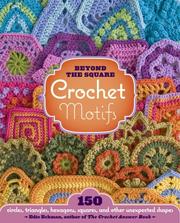
Introduces 144 motifs with graded difficulty, training the learner to read modular pattern repeats and understand how shapes are constructed — a critical step toward independent pattern reading.
Skill-Building Projects
IntermediateComplete increasingly complex projects (garments, accessories, home goods) that require shaping, gauge swatching, seaming, and following multi-page patterns from start to finish.

Small, satisfying projects using a single skein keep momentum high while introducing real pattern structures — shaping, finishing, and gauge — without overwhelming commitment.
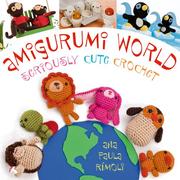
Working in the round with tight tension to create 3-D amigurumi figures sharpens stitch counting, invisible decreases, and spatial construction — skills that transfer directly to garment shaping.
Advanced Techniques & Design Thinking
ExpertUnderstand garment construction, advanced stitch textures (Tunisian, broomstick lace, tapestry crochet), and begin adapting or designing your own patterns.
▸ Study plan for this stage
Pace: 4–5 weeks, ~20–25 pages/day; Silverman's book is richly illustrated, so budget extra time to swatch every stitch pattern introduced before moving to the next chapter
- The Tunisian hook (Afghan hook): anatomy, sizing, and why the extended length and stopper matter for holding live loops
- The two-pass system: Forward Pass (picking up loops) and Return Pass (working them off), and how this creates the distinctive woven fabric
- Foundation row vs. standard Tunisian rows, and how the selvedge edge is managed to prevent curling
- Core Tunisian stitches and their textures: Tunisian Simple Stitch (TSS), Tunisian Knit Stitch (TKS), Tunisian Purl Stitch (TPS), Tunisian Full Stitch, and Tunisian Smock Stitch
- Color work in Tunisian crochet: intarsia-style color changes on the Forward Pass and how to carry or drop yarn cleanly
- Shaping within the Tunisian framework: increases and decreases on the Forward Pass and how they affect stitch count and silhouette
- Reading and adapting Tunisian-specific charts and written patterns, including stitch notation unique to this technique
- Finishing and blocking Tunisian fabric: why blocking is non-negotiable, seaming Tunisian panels, and adding crochet borders to stabilize edges
- What structural difference between the Forward Pass and Return Pass produces Tunisian fabric's characteristic density and drape, and how does that affect yarn and hook selection?
- How do you execute a Tunisian Knit Stitch versus a Tunisian Simple Stitch, and what visual/textural difference results in the finished fabric?
- What causes Tunisian fabric to curl, and what are at least two techniques Silverman recommends to counteract it?
- How are color changes handled mid-row in Tunisian crochet, and how does this differ from color-change methods in standard crochet?
- How do you work a decrease on the Forward Pass, and what effect does its placement (edge vs. interior) have on shaping a garment piece?
- After completing a Tunisian swatch, what blocking and finishing steps are necessary before it can be seamed into a garment?
- Swatch every core stitch (TSS, TKS, TPS, Full Stitch, Smock Stitch) in a consistent yarn/hook combo — at least 20 rows each — then label, block, and keep them as a personal reference library
- Work a deliberate 'curl study': make a TSS swatch without any corrective measures, then make an identical one using Silverman's recommended edge treatments; photograph both and note the difference
- Complete a two-color Tunisian intarsia swatch (at least 3 color blocks wide) practicing clean yarn changes on the Forward Pass and tidy float management on the Return Pass
- Design and execute a small shaped piece (e.g., a triangle or trapezoid) using increases and decreases from the book, writing out your own row-by-row instructions as you go — this is your first pattern-drafting exercise
- Seam two blocked Tunisian panels together using the method described by Silverman, then add a single-crochet border; evaluate the edge stability before and after
- Select one project pattern from the book, re-chart it on graph paper (or digitally) translating written instructions into a visual stitch diagram, then use that self-made chart to work the project
Next up: Mastering Tunisian's two-pass logic, color work, and shaping lays the structural and design-thinking groundwork needed to tackle broomstick lace, tapestry crochet, and full garment construction — the remaining pillars of this advanced stage.
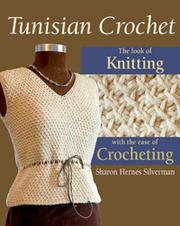
Tunisian crochet is a distinct and rewarding technique that deepens understanding of fabric structure and hook mechanics — this is the definitive beginner-to-advanced guide for the method.
Discussion
Keep reading
Paths that share books, cover the same subject, or open a related topic.