Thomas Pynchon Reading Order: Where to Start
This curriculum is designed for an expert-level reader ready to engage Pynchon's full range — from his tightly controlled early work through the sprawling, encyclopedic masterpiece of Gravity's Rainbow and into his later, more playful yet still demanding novels. Each stage builds thematic and stylistic fluency, so that by the end the reader can navigate Pynchon's paranoid systems, baroque prose, and postmodern historiography with confidence and pleasure.
The Short Entry Point
ExpertEstablish Pynchon's core obsessions — entropy, paranoia, systems, and dark comedy — in a compact, controlled form before tackling the longer works.
▸ Study plan for this stage
Pace: 2–3 weeks, ~20–25 pages/day — The Crying of Lot 49 is short (~160 pages) but dense; plan for at least two full read-throughs: one for plot orientation, one for thematic and structural analysis.
- Entropy as metaphor: Pynchon uses thermodynamic entropy (the tendency of systems toward disorder) and informational entropy (signal vs. noise) as twin lenses through which Oedipa Maas interprets — and misinterprets — the world around her.
- Paranoia as epistemology: Oedipa's growing suspicion that the Tristero postal conspiracy is real dramatizes how paranoia functions not as madness but as a hyper-rational meaning-making system — one that may be indistinguishable from genuine pattern recognition.
- Systems and counter-systems: The novel obsessively contrasts official, sanctioned systems (the U.S. Postal Service, corporate America, Inverarity's estate) against hidden, subversive alternatives (W.A.S.T.E., the Tristero), asking whether any system can be trusted or escaped.
- Dark comedy and satirical absurdism: Pynchon deploys outrageous names (Oedipa Maas, Mike Fallopian, Dr. Hilarius), a mock-Jacobean play-within-the-novel (The Courier's Tragedy), and farcical set pieces to simultaneously entertain and destabilize the reader's interpretive confidence.
- The unreliable quest narrative: The novel is structured as a detective story in which the detective — and the reader — never receives a resolution, forcing a confrontation with the limits of narrative closure and rational inquiry.
- Maxwell's Demon as central symbol: The thought experiment of a demon sorting molecules (defying entropy by creating order from chaos) mirrors Oedipa's own impossible task of sorting signal from noise, and raises questions about whether information itself can do work in a closed system.
- California as cultural wasteland: The novel's Southern California setting — tract housing, freeways, strip malls, and the aerospace industry — is not mere backdrop but a symbol of postwar American homogenization, against which the Tristero's underground community appears as a desperate alternative.
- Ambiguity as formal strategy: Pynchon refuses to confirm or deny the Tristero's existence, making interpretive uncertainty the novel's ultimate subject — the reader's discomfort mirrors Oedipa's own suspended state at the novel's final, unresolved 'crying.'
- By the novel's end, what are the four possibilities Oedipa herself enumerates for what the Tristero might be — and what does the fact that she can hold all four simultaneously reveal about Pynchon's epistemological stance?
- How does Pynchon use the second law of thermodynamics and Maxwell's Demon to comment on Oedipa's quest for meaning? In what sense is Oedipa herself acting as a 'demon' trying to impose order on an entropic system?
- The Courier's Tragedy (the play Oedipa watches) is a parody of Jacobean revenge drama embedded inside the novel. What thematic work does this meta-fictional layer perform, and how does it advance or complicate the Tristero plotline?
- Paranoia in the novel functions as both a symptom and a method. Trace at least three moments where Oedipa's paranoid reasoning leads her to a conclusion that is simultaneously plausible and absurd — what does this double quality suggest about the nature of interpretation itself?
- How does Pynchon use dark comedy — specifically the absurd character names, the farcical subplot involving Dr. Hilarius, and the satirical portrayal of California consumer culture — to reinforce rather than undercut the novel's serious philosophical concerns?
- The novel ends just before 'the crying of Lot 49' — the auction that might reveal the truth. Why does Pynchon deny the reader this resolution, and what is the reader meant to take away from that structural choice?
- Double-read with annotation: On your first read, mark every instance of a 'system' (postal, corporate, legal, social). On your second read, mark every instance where a system breaks down or is subverted. Compare the two sets of annotations and write a one-page reflection on what the pattern reveals.
- Entropy log: Keep a running list of every explicit or implicit reference to entropy, disorder, or information theory as you read. After finishing, categorize each entry as 'thermodynamic,' 'informational,' or 'social/cultural' entropy. Write a short paragraph explaining how Pynchon conflates these three registers.
- Map the Tristero: Draw a visual diagram of every piece of evidence Oedipa collects about the Tristero — characters, symbols (the muted post horn), locations, and texts. Then annotate each node with a question mark or exclamation point depending on whether the evidence is ambiguous or seemingly concrete. Reflect on what the finished map looks like.
- Rewrite a scene straight: Choose one of the novel's most farcical scenes (e.g., the Paranoids, Dr. Hilarius's breakdown, the Inamorati Anonymous meeting) and rewrite it in a flat, realist style with no comedy. Then write a paragraph analyzing what is lost — what does the comedy accomplish that realism cannot?
- The four possibilities essay: Locate the passage where Oedipa lists her four explanations for the Tristero. Write a structured 500-word argument defending one of the four as the most textually supported reading, then write a second 500-word argument dismantling your own case. Sit with the discomfort of having no winner.
- Research connection: Read a brief, accessible summary of Maxwell's Demon (the thought experiment by James Clerk Maxwell, 1867). Write a one-page close reading of any single passage in the novel where this concept is most powerfully at work, citing specific language from the text.
Next up: Mastering The Crying of Lot 49's compressed grammar of entropy, paranoia, and systemic conspiracy equips the reader with the exact interpretive toolkit needed to navigate the vastly larger and more labyrinthine architectures of Pynchon's longer novels, where these same obsessions are expanded to operatic, encyclopedic scale.
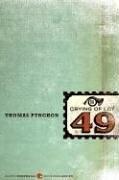
The ideal starting novel: short, structurally tight, and a perfect introduction to Pynchon's themes of conspiracy, communication, and meaning-making. Its contained scope lets the expert reader absorb his voice and method without being overwhelmed.
The Masterpiece
ExpertFully engage with Gravity's Rainbow — Pynchon's central achievement — armed with the thematic vocabulary built in Stage 1.
▸ Study plan for this stage
Pace: 10–12 weeks, ~25–30 pages/day (the novel is ~760 pages); treat each of the four Parts as a discrete reading unit with a pause for reflection before moving on — roughly 2–3 weeks per Part
- The Rocket (V-2) as organizing symbol — technology, death, and transcendence collapsed into a single object
- Preterition vs. Election — Calvinist predestination recast as a structural principle governing which characters (and peoples) are chosen for survival or annihilation
- The Zone — post-WWII Europe as a liminal, entropic space where national, psychological, and narrative order dissolves
- Paranoia as epistemology — the tension between a universe of meaningful conspiracies and one of meaningless randomness (anti-paranoia)
- Entropy and the Second Law of Thermodynamics — borrowed from physics and applied to information, history, culture, and desire
- The Counterforce — collective resistance to 'Them,' and Pynchon's ambivalence about whether genuine opposition is possible
- Behaviorism and conditioning (Pavlov/Pointsman) vs. Poisson statistics (Roger Mexico) — two incompatible models of causality and human freedom
- Colonialism and racial capitalism — the Herero genocide as a historical template for the Holocaust and Cold War systems of control
- How does the parabolic arc of the V-2 rocket function simultaneously as a plot structure, a symbol of fate, and a critique of technological modernity?
- What does Pynchon mean by 'preterition,' and how does the novel distribute that condition across characters like Tyrone Slothrop, the Hereros, and the novel's readers?
- How do Pointsman's Pavlovian determinism and Roger Mexico's probabilistic thinking represent opposing philosophies of causality — and what are the political stakes of each?
- In what ways does 'the Zone' (Part 3) function as both a historical setting and a metaphysical condition, and how does narrative coherence itself break down within it?
- How does Gravity's Rainbow use entropy — thermodynamic, informational, and cultural — to argue about the direction of Western civilization?
- What is the Counterforce, why does Pynchon treat it with irony, and what does that irony suggest about the possibility of resistance to systemic power?
- Rocket arc mapping: Draw or diagram the V-2's parabolic trajectory and annotate it with the novel's key plot events and characters that correspond to the ascent, apogee, and descent — then write a one-page reflection on what the shape 'means' narratively.
- Character web: Build a visual map of at least 20 characters, color-coding them as Elect vs. Preterite; note which characters shift categories and speculate in writing about why Pynchon makes those moves.
- Close-read a single episode (e.g., the 'Byron the Bulb' digression or the Hereros' Schwarzkommando sections) and write a 500-word analysis of how it encapsulates one of the stage's key concepts without being reducible to allegory.
- Entropy log: Keep a running reading journal in which, at the end of each Part, you record three examples of entropy (thermodynamic, informational, or social) and trace how they connect to each other across the novel.
- Paranoia vs. anti-paranoia debate: Write two short paragraphs — one arguing that the novel's conspiracy is real and meaningful, one arguing it is a projection — then a third paragraph explaining why Pynchon refuses to resolve the tension.
- Contextual research sprint: Read a short external source on either the Herero genocide or the historical V-2 program (Mittelwerk/Dora), then write a one-page note on how that historical reality changes your reading of a specific passage in Gravity's Rainbow.
Next up: Mastering Gravity's Rainbow's dense symbolic architecture and its critique of Western techno-imperial systems equips the reader to trace how Pynchon refracted, extended, and sometimes parodied those same obsessions across his later and earlier works in subsequent stages.
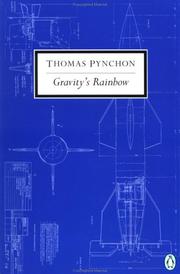
The summit of Pynchon's work and one of the most demanding novels in the American canon. Having read Lot 49 and V., the reader arrives here with fluency in his paranoid logic, encyclopedic digressions, and dark humor, making the rocket's arc navigable rather than impenetrable.
The Transitional Novel
ExpertUnderstand how Pynchon recalibrated his ambitions in the decades after Gravity's Rainbow, producing a quieter but still intricate historical novel.
▸ Study plan for this stage
Pace: 10–13 weeks total: ~3–4 weeks for Vineland (~30 pages/day, 385 pages), then ~7–9 weeks for Mason & Dixon (~25 pages/day, 773 pages). Allow buffer weeks after each book for reflection, re-reading dense passages, and completing exercises. Ideal pace: 5 days reading, 2 days review per week.
- Tonal recalibration — how Vineland trades Gravity's Rainbow's apocalyptic maximalism for elegiac, TV-saturated melancholy, signaling a deliberate 'quieter' Pynchon
- The surveillance state and co-optation of the counterculture — Vineland's central argument that the 1960s were not just defeated but absorbed and neutralized by Reagan-era capitalism and federal power (the PREP camps, Brock Vond's apparatus)
- Memory, nostalgia, and political forgetting — both novels use the past as a contested site: Vineland mourns a lost radical present, Mason & Dixon reconstructs an 18th-century world to interrogate the founding myths of America
- Historiographic metafiction — Mason & Dixon's deployment of an invented narrator (the Reverend Cherrycoke) and period-pastiche prose to foreground the constructed, unreliable nature of historical narrative
- The Line as ideological instrument — in Mason & Dixon, the surveyed boundary is not a neutral geometric fact but an act of colonial violence, enclosure, and Enlightenment rationalism imposed on a living, storied landscape
- Pynchon's engagement with genre — Vineland works through the conventions of California noir and the family melodrama; Mason & Dixon inhabits the 18th-century picaresque and the tall tale, each genre being simultaneously used and ironized
- Animate and supernatural geography — both novels people their landscapes with ghosts, spirits, and impossible entities (the Thanatoids in Vineland; the Learned English Dog, the mechanical duck, and spectral presences in Mason & Dixon) as a counter-rationalist critique
- Character as historical symptom — Zoyd Wheeler, Prairie, Frenesi, Mason, and Dixon are less psychological individuals than figures whose personal trajectories map larger historical and ideological forces
- How does Vineland diagnose the fate of 1960s radicalism, and what formal and tonal choices — compared to Gravity's Rainbow — does Pynchon use to embody that diagnosis?
- What is the function of television and media in Vineland? How does the 'Tube' operate as both a thematic subject and a structural principle shaping the novel's episodic, channel-surfing narrative rhythm?
- In Mason & Dixon, how does the Reverend Cherrycoke's framing device complicate the reader's access to 'what really happened,' and what does this narrative architecture say about the writing of history?
- What does the Mason–Dixon Line represent beyond its literal cartographic meaning, and how does the novel use the act of surveying to explore Enlightenment rationalism, colonial power, and the erasure of indigenous and natural worlds?
- How do the two novels' treatments of the family — Frenesi/Prairie/Zoyd in Vineland; Mason's domestic grief and Dixon's bachelor restlessness — serve as microcosms of larger social and historical ruptures?
- In what ways do the supernatural and fantastical elements in each novel (the Thanatoids, the animate mechanical duck, the Ghastly Fop) function as political or epistemological arguments rather than mere whimsy?
- Prose pastiche journal: After finishing Mason & Dixon, write 1–2 pages in Cherrycoke's 18th-century voice narrating a mundane contemporary event (a commute, a meal). This forces active internalization of Pynchon's period-register and reveals how style itself carries ideological weight.
- Surveillance map for Vineland: Draw or diagram the network of surveillance, informants, and federal power that connects Brock Vond, Frenesi, the PREP camps, and the other characters. Annotate each node with the chapter or scene that reveals it. This makes the novel's paranoid architecture visible and navigable.
- The Line as argument: Write a 500-word close reading of any single passage in Mason & Dixon where the surveyors actually run the Line. Focus on diction, imagery, and what the prose implies about what is being done to the land and its inhabitants — do not summarize, only analyze.
- Genre autopsy: Identify one scene in Vineland that clearly invokes California noir conventions and one that invokes family melodrama. Write a paragraph on each explaining how Pynchon fulfills and then undercuts the genre's expectations.
- Comparative grief essay: Both novels are suffused with loss — of the 1960s, of Mason's wife Rebekah, of a pre-colonial America. Write a 700–1,000-word comparative essay arguing for a specific relationship between the two novels' modes of mourning. Use at least three textual citations from each book.
- Reading log with 'density flags': Keep a running log while reading Mason & Dixon. Each day, mark any passage you had to re-read more than twice and write one sentence explaining what made it difficult (syntax, allusion, historical reference, tonal ambiguity). At the end, review the log to identify your personal interpretive blind spots and research those areas.
Next up: Mastering Pynchon's historical imagination and his use of framing narrators in these two novels directly equips the reader for the even more sprawling, multi-era conspiracies and nested storytelling of his later maximalist return in Against the Day and Inherent Vice, where those same tools are deployed at greater scale and with greater generic promiscuity.
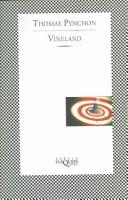
Often underrated, Vineland is Pynchon's most accessible post-GR novel and a crucial bridge: it trades some of the earlier maximalism for a warmer, more elegiac tone while still dissecting American surveillance culture and the death of the 1960s.

A return to full-scale ambition, written in an 18th-century pastiche voice. Reading it after Vineland shows Pynchon's range — from California pop culture to colonial America — and deepens the reader's sense of his engagement with empire, cartography, and lost possibility.
The Later Pynchon
ExpertTrace Pynchon's late-career evolution: the mega-novel of the 20th century and his surprising genre experiments, rounding out a complete picture of his oeuvre.
▸ Study plan for this stage
Pace: 14–16 weeks total: ~6 weeks for Against the Day (~30–35 pages/day for its ~1,085 pages), ~3 weeks for Inherent Vice (~20–25 pages/day for its ~369 pages), and ~4–5 weeks for Bleeding Edge (~20–25 pages/day for its ~477 pages), with 1 buffer week for review and synthesis across all three.
- The mega-novel as historical panorama: Against the Day's sprawling multi-strand narrative spanning the 1893 Chicago World's Fair through WWI as Pynchon's most ambitious attempt to map the contradictions of early 20th-century capitalism, anarchism, and empire
- Entropy and alternative physics: Against the Day's sustained engagement with light, time, and mathematics (quaternions, Riemann surfaces, bilocations) as both literal plot elements and metaphors for historical possibility and foreclosed utopias
- Genre pastiche and the detective novel: Inherent Vice's deployment of Raymond Chandler-esque noir — the stoned, bumbling PI Doc Sportello — as a vehicle for elegizing the death of 1960s counterculture and the rise of the surveillance/corporate state
- Paranoia recalibrated: how Inherent Vice scales Pynchon's signature conspiratorial worldview down to the intimate and comedic, trading cosmic dread for melancholy and weed smoke
- The internet and digital capitalism: Bleeding Edge's post-dot-com-bust New York as a new kind of Pynchonian labyrinth, where DeepArcher and the deep web replace the Tristero and Tube as the novel's central paranoid infrastructure
- 9/11 and historical trauma: Bleeding Edge's positioning of the September 11 attacks as a rupture that reorganizes the novel's conspiracy, grief, and surveillance themes — Pynchon's most direct engagement with a contemporary historical catastrophe
- Pynchon's evolving prose register: tracing the shift from Against the Day's maximalist, encyclopedic voice to Inherent Vice's breezy, vernacular SoCal idiom to Bleeding Edge's wired, pop-culture-saturated New York narration
- Oeuvre synthesis — late style and legacy: how these three novels collectively revisit and reframe the obsessions of the early and middle work (entropy, counterculture, systems, paranoia) while staking out new formal and tonal territory
- How does Against the Day use its multiple narrative strands and its engagement with early 20th-century physics and mathematics to construct an argument about historical possibility — what was lost, and why?
- In what ways does Inherent Vice both honor and subvert the hard-boiled detective genre, and how does that generic tension serve Pynchon's thematic purposes around the end of the 1960s?
- How does Bleeding Edge use the architecture of the early internet — DeepArcher, the deep web, dot-com culture — as a structural and thematic analogue to the paranoid systems (the Tristero, the Rocket) of Pynchon's earlier novels?
- Compare the treatment of historical catastrophe across all three novels: the anarchist/labor struggles and WWI in Against the Day, the Nixon-era crackdown in Inherent Vice, and 9/11 in Bleeding Edge. What is Pynchon's consistent argument, if any, about how power exploits crisis?
- How do the three novels' protagonists — the Traverse family and their orbits, Doc Sportello, and Maxine Tarnow — reflect Pynchon's evolving thinking about individual agency within vast, indifferent systems?
- Having now read across Pynchon's full career, how would you characterize his 'late style'? Does it represent continuity, evolution, or departure from the concerns of V., The Crying of Lot 49, and Gravity's Rainbow?
- Strand mapping for Against the Day: create a visual diagram of the novel's major narrative strands (the Chums of Chance, the Traverse family, Yashmeen Halfcourt, etc.), annotating where they intersect and what historical or thematic event each strand 'covers' — use this map to write a one-page argument about why Pynchon structured the novel this way rather than as a single linear narrative
- Genre autopsy for Inherent Vice: select three scenes that most closely follow hard-boiled detective conventions and three that most flagrantly violate them; write a comparative close-reading (500–700 words) analyzing what the violations reveal about Pynchon's satirical or elegiac intent
- Close reading of light and physics in Against the Day: track the novel's recurring motifs of light (Iceland spar, the Tunguska event, photography, the Chums' airship) and write a short essay (600–800 words) arguing how Pynchon uses these as a unified symbolic system
- Deep web as labyrinth: after finishing Bleeding Edge, re-read the DeepArcher sequences and write a 400–500 word comparison between DeepArcher/the internet and one paranoid infrastructure from an earlier Pynchon novel you have read (e.g., the Tristero, the Rocket), identifying what is structurally similar and what is genuinely new
- Tonal spectrum exercise: select one passage (~1 page) each from Against the Day, Inherent Vice, and Bleeding Edge that you feel best exemplifies each novel's distinctive prose voice; annotate each for diction, sentence rhythm, humor, and narrative distance, then write a one-paragraph synthesis on how Pynchon's style evolved across these three books
- Oeuvre retrospective essay: write a 1,000–1,200 word critical essay titled 'Pynchon's Obsessions, Revisited' that traces one theme of your choosing (e.g., entropy, counterculture, surveillance, paranoia) across all three novels in this stage, arguing whether the late Pynchon deepens, complicates, or resolves that theme relative to his earlier career
Next up: Completing this stage gives the reader a panoramic command of Pynchon's full arc — from early experimentalism through maximalist ambition to late genre play — providing the critical vocabulary and comparative framework needed to engage with secondary scholarship, theoretical approaches, and Pynchon's place within the broader canon of postmodern and contemporary American literature.
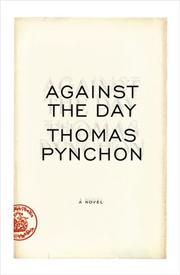
His longest novel and a kind of companion-piece to Gravity's Rainbow in scope, spanning the Gilded Age through WWI. By this stage the reader is fully equipped to enjoy its anarchist politics, multiple genres (adventure, Western, spy fiction), and mathematical mysticism.
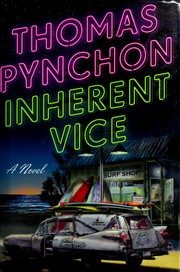
A deliberately lighter, Chandleresque noir set in 1970 Los Angeles — a perfect palate-cleanser after Against the Day and proof of Pynchon's range. Its surface accessibility conceals the same melancholy about lost utopias that runs through all his work.
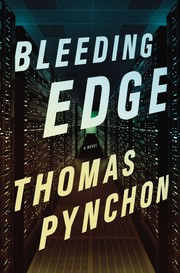
His most recent novel, set in post-dot-com, pre-9/11 New York, and the natural endpoint of the curriculum: it applies every Pynchonian tool — paranoia, grief, dark comedy, systemic critique — to the digital age, showing how his vision remains urgently contemporary.
Discussion
Keep reading
Paths that share books, cover the same subject, or open a related topic.