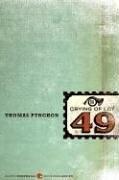
Start with The Crying of Lot 49. It is a hundred and fifty pages, it contains a compressed version of every Pynchon obsession — paranoia, conspiracies that may or may not exist, entropy, absurd names, a heroine who cannot tell revelation from breakdown — and you can finish it in an evening. It is the standard on-ramp for good reason.
If you want something even friendlier, Inherent Vice is the alternative first book: a 1970 Los Angeles stoner-detective novel that is genuinely funny, has an actual plot you can follow, and hides its melancholy well. Between the two, The Crying of Lot 49 is the better introduction to the technique and Inherent Vice is the better introduction to the pleasure. Pick by temperament. What you should not do is start with Gravity's Rainbow, which is where the overwhelming majority of abandoned Pynchon happens.
The order after that
Pynchon's novels are independent — no shared plot, a few recurring names and organisations — so this is a difficulty order, not a chronology.
- The Crying of Lot 49 or Inherent Vice — the entry.
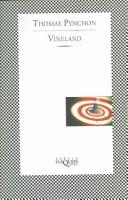
- Vineland — 1980s northern California, the hangover of the Sixties. Mid-length, warmer than his reputation, and the most emotionally direct thing he wrote. Frequently underrated.
- Bleeding Edge — New York in 2001, the dot-com collapse and the early internet. Recent, accessible and unusually well-plotted.
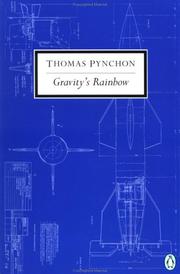
- Gravity's Rainbow — the big one. Read it fourth or later, not first.
- Mason & Dixon — written entirely in an invented eighteenth-century English, capitalised Nouns and all. Some readers find the voice enchanting within twenty pages and others never adjust. It is also, once you do adjust, the warmest and most humane novel he wrote.
- Against the Day — over a thousand pages spanning 1893 to the 1920s across several continents and at least four genres. The most sprawling and the least disciplined; for committed readers only.
About Gravity's Rainbow
It deserves its reputation in both directions. It is one of the major novels of the twentieth century and it is genuinely hard: four hundred named characters, no stable protagonist after the first third, abrupt shifts between slapstick and atrocity, unmarked transitions between reality, hallucination and film. There is also a small amount of deliberately transgressive content that some readers will not want to continue past.
Practical advice, offered without embarrassment: read it with a companion guide open, accept that you will not follow everything on a first pass, and do not stop to look things up more than once a chapter. The book is designed to exceed a single reading. Treating incomprehension as failure is the fastest way to abandon it around page two hundred.
Honest warnings
The plots often do not resolve. The Crying of Lot 49 ends the instant before its answer, permanently. This is a settled feature of the work and readers who need closure should know it now rather than at the last page.
The songs are real. Pynchon interrupts his novels with full lyrics to invented comic songs, and they are not skippable jokes so much as a permanent tonal setting.
Where to stop
The Crying of Lot 49, Inherent Vice and Vineland make a complete and enjoyable Pynchon for a reader who wants the sensibility without the endurance test. Gravity's Rainbow is the one book worth attempting even if you fail; Against the Day is the one it is entirely reasonable never to open.
For another difficult-author reading order, see Thomas Mann.
Follow the full ordered path here: Thomas Pynchon Reading Order: Where to Start.
Ready to learn something deeply?
Build a reading path — free