What to Read Before Gravity's Rainbow: The Pynchon On-Ramp, in Order
Gravity's Rainbow has around four hundred named characters, no chapter numbers, and a habit of switching narrator, tense and continent inside a paragraph. It is the wrong place to start Pynchon and the wrong place to start postmodern fiction. This is not a survey of his novels; it is the specific preparation — two earlier books, the rocket history the novel assumes you know, and the companion volumes that are the difference between finishing and abandoning it — with the novel itself last. If you are unwilling to read with a reference book open, do not attempt it.
Learn how his sentences work first
IntermediateAcquire Pynchon's voice, paranoia and structural jokes on books short enough to finish
▸ Study plan for this stage
Pace: Three weeks for both. Slow Learner is 190-odd pages of early stories with a long autobiographical introduction — read the introduction twice, once now and once after the stories, because it is a commentary on them. The Crying of Lot 49 is under 200 pages and should be read fast, in three or four sit
- Pynchon's introduction to Slow Learner is the only sustained plain-speech Pynchon in print — he names his own apprentice faults, and those faults become the mature style's deliberate features
- The conspiratorial structure: a protagonist finds a pattern, pursues it, and the novel refuses to confirm whether the pattern exists or is being projected
- Songs, doggerel and silly names as tonal control — Pynchon interrupts dread with vaudeville, and the reader who treats the jokes as noise will misread the whole
- Oedipa Maas as the reader's proxy: her problem in Lot 49 (too much signal, no way to verify it) is about to become your problem across 800 pages
- Entropy as Pynchon's recurring organising metaphor, present as an early story title in Slow Learner and never fully abandoned afterwards
- The unresolved ending as design rather than failure — Lot 49 stops before the auction concludes, and learning to accept that here is cheap insurance
- Paragraph-level tense and person shifts, already visible in the stories, which is the technique that makes Gravity's Rainbow hard to track
- What does Pynchon say is wrong with his own early stories in the Slow Learner introduction, and can you find an instance of each fault in the stories themselves?
- By the last page of The Crying of Lot 49, is the Trystero real? State what evidence exists on each side rather than picking.
- Where does Lot 49 make you laugh, and what is happening in the plot at that moment? The pairing is not accidental.
- Which of the Slow Learner stories most resembles the Lot 49 voice, and what specifically did Pynchon keep from it?
- If Lot 49 frustrated rather than delighted you, what exactly frustrated you — the withholding, the tone, or the density? The answer predicts how the rest of this path will go.
- Read The Crying of Lot 49 in under a week without looking anything up. Resisting annotation here builds the tolerance the last stage requires.
- Copy out one Pynchon sentence from Lot 49 that changes direction mid-clause, and diagram where the subject and tense shift. One sentence is enough to see the mechanism.
- After the stories, reread the Slow Learner introduction and mark every place Pynchon predicts a habit you have just watched him perform.
- List the named organisations, acronyms and companies in Lot 49 on a single page. That list, and its incompleteness, is the exercise the big novel will run at ten times the scale.
Next up: You now recognise Pynchon's voice and have accepted an unresolved ending on a short book, which frees the next stage to supply the one thing the on-ramp novels do not — the historical material Gravity's Rainbow treats as common knowledge.
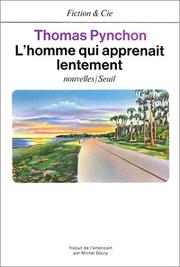
Early stories with a long introduction in which Pynchon criticises his own apprentice work — the only sustained plain-speech Pynchon in print. Start here because it shows the machinery being assembled before it gets hidden.
Under two hundred pages and the standard on-ramp: the same conspiratorial structure, songs, silly names and unresolved ending as Gravity's Rainbow, at one fifth the length. If this frustrates rather than delights you, the big book will not convert you.
The history the novel refuses to explain
IntermediateKnow the V-2 programme, Peenemünde and the postwar scramble for German rocket scientists, all of which the novel treats as common knowledge
▸ Study plan for this stage
Pace: Six to eight weeks, and this is the stage most people skip and then regret. The Rocket and the Reich is a scholarly history of around 370 pages — read it first and slowly, thirty pages a sitting. Operation Paperclip is 600 pages of journalism and reads much faster; three weeks is comfortable. Rilke'
- Peenemünde as an institution — who ran it, who funded it, and how the programme survived internal Nazi politics, all of which the novel assumes
- The concentration-camp labour that assembled the rockets, which is the historical fact underneath the novel's refusal to treat the V-2 as a marvel of engineering
- The 00000 and the Schwarzgerät are inventions, but they sit inside a real engineering programme; knowing where the documented record stops is what lets you see the invention
- Operation Paperclip as the actual postwar recruitment of German engineers by the United States, which is the event the novel's Zone chapters satirise rather than imagine
- The Zone itself — occupied, partitioned, ungoverned postwar Germany — as a real administrative vacuum before it is a literary conceit
- Rilke's angels, and the elegies' argument that beauty is the beginning of terror, which is the source of Captain Blicero's worldview almost verbatim
- Why Pynchon quotes Rilke rather than paraphrasing him: the elegies supply the novel's transcendent register, against which the rocket bureaucracy is measured
- Who actually built the V-2, and under what conditions? Answer from Neufeld, in a paragraph, without using the word engineers.
- What did the American government know about the Paperclip scientists' wartime conduct, and what did it do with that knowledge?
- Which Duino Elegy does the most work for Blicero's position, and what is its argument stated in prose?
- Where does Neufeld's documented history end and Pynchon's invention begin — name two specific things in the novel's premise that have no historical counterpart?
- Both histories are about a weapon that was strategically ineffective and morally catastrophic. How does knowing that change what you expect the novel to be about?
- Build a one-page timeline from Neufeld: Peenemünde founded, first successful launch, first operational firing, Mittelbau-Dora, the end of the programme. Keep it beside you for the last stage.
- Write 200 words on the Mittelbau-Dora labour system from Neufeld's account. Gravity's Rainbow gives you the Dora material in fragments and expects the shape to be already in your head.
- Read Duino Elegies once through in an evening, then reread the first and the tenth. Mark three images you would recognise if they appeared in a novel.
- From Jacobsen, list five named scientists and where each ended up after 1945. The novel's postwar satire is aimed at a real roster of people.
- Compare Neufeld's and Jacobsen's accounts of the same 1945 handover moment. Where they differ in emphasis is where the historiography is contested, and Pynchon is writing in that gap.
Next up: With the rocket programme, the Zone and Rilke in place, the remaining preparation is critical rather than factual: knowing what kind of book Gravity's Rainbow is trying to be before its refusals start arriving.
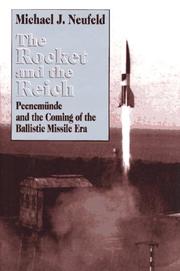
The standard scholarly history of the V-2 and the slave labour that built it. Gravity's Rainbow assumes you know what Peenemünde was and what the 00000 refers to; this is where that knowledge comes from.

The American recruitment of Nazi rocket engineers, which is the historical event the novel's second half satirises. Reading it makes the Zone sections read as documentary rather than as invention.

Quoted directly and repeatedly, and Captain Blicero's entire worldview is built from it. Rilke is short, and the elegies convert some of the novel's strangest passages from noise into argument.
Know what the book is doing before you open it
BeginnerArrive with a critical map, so the absence of plot resolution reads as design rather than as your own failure to follow
▸ Study plan for this stage
Pace: Three to four weeks. The Cambridge Companion is a collection of essays and should be read selectively rather than cover to cover — the Gravity's Rainbow chapters and the general essays on entropy, history and postmodernism first, the chapters on novels you have not read last or not at all. Herman an
- Entropy, control and the Zone as the novel's three organising concerns, named and explained here before they arrive unannounced in the text
- Preterition and election — the Puritan theological distinction between the saved and the passed-over — which is the frame the novel uses for who has power and who is used
- The argument Herman and Weisenburger build from the surviving typescript, which shows what Pynchon cut and therefore what he decided the book was not going to be
- Paranoia in Pynchon as an epistemology rather than a pathology: the belief that everything is connected, which the novel neither endorses nor refutes
- The novel's structure as four unequal parts with episodes separated by a printer's mark rather than numbers, which is the unit you will actually read in
- Why plot resolution is withheld — a critical position with reasons behind it, so that its absence reads as design rather than as your failure to follow
- The scholarly disagreement about the ending, which is worth knowing exists before you get there so you can form your own reading rather than inherit one
- What do the critics mean by preterition in Pynchon, and which characters does the term describe?
- Herman and Weisenburger draw on the typescript. Name one thing Pynchon removed, and say what its removal tells you about the finished book's priorities.
- How do the Cambridge essays account for the novel's four-part structure — is the shape argued to be meaningful, or is it a convenience?
- Which critical claim about Gravity's Rainbow do you already doubt on the strength of the two short novels you have read? Write it down now so you can test it later.
- Both critical books were written by people who reread the novel many times. What in their accounts would you not have found on a first reading, and what does that tell you to expect of your own?
- Read only the Gravity's Rainbow chapters of the Cambridge Companion first, then decide from the table of contents which general essays are worth your time. Reading the whole volume is not the assignment.
- Write a one-page statement of what you expect the novel to be about, drawn from these two books. Date it and keep it; comparing it with your view at the end is the single most useful thing in this stage.
- Extract from Herman and Weisenburger a list of the six or seven episodes they treat as load-bearing. That list is your checkpoint map for the final stage.
- Summarise the entropy argument in 200 words in your own words. If you cannot, reread that essay before going further, because the term recurs constantly.
Next up: You have the concepts and the history; what remains is the physical apparatus — the two reference books that turn an 800-page wall into a sequence of survivable episodes.

Essays on the whole career with substantial coverage of Gravity's Rainbow, and the fastest way to learn the novel's concerns — entropy, control, the Zone — before they arrive unannounced.
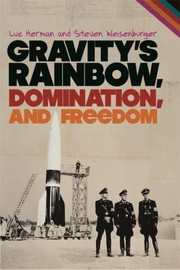
A book-length reading by two of the novel's best scholars, including Weisenburger, drawing on the surviving typescript. Read it for the argument about what the book is for; keep it for after the first read as well.
The apparatus to keep open beside the text
BeginnerAssemble the working reference kit that makes a page-by-page reading survivable
▸ Study plan for this stage
Pace: Do not read this stage. Acquire it, spend an evening learning how each book is organised, and then shelve both within arm's reach of wherever you will read the novel. Weisenburger's A Gravity's Rainbow Companion is over 400 pages keyed to the novel's episodes; Fowler's A Reader's Guide to Gravity's
- Weisenburger annotates page by page and episode by episode: German phrases, songs, chemistry, street names, wartime slang, and the historical people who appear under their own names
- Fowler does the thing Weisenburger deliberately refuses to do — narrate the plot — which is why the two are complementary rather than redundant
- The correct consultation rhythm is after each episode, not during each sentence; annotating line by line destroys the momentum the novel depends on
- Weisenburger's annotations are keyed to a specific pagination, so check which edition yours matches before you start and note the offset if it does not
- An annotation is a reference, not an instruction — the companions resolve allusions, they do not tell you what the book means, and the two critical volumes from the last stage cover that
- Fowler is older and less exhaustive, so where the two disagree, treat Weisenburger as the fuller record and Fowler as the plot summary
- Which edition of the novel does your copy of Weisenburger key to, and what is the page offset if it differs from yours?
- How is Weisenburger organised — by page, by episode, by part — and how quickly can you find an annotation from a page number?
- What does Fowler give you that Weisenburger withholds, and in what situation would you reach for Fowler first?
- Look up any three consecutive Weisenburger entries at random. What proportion is historical fact, what proportion is translation, and what proportion is literary allusion?
- What is your rule going to be for when to look something up? Decide it now, in writing, because deciding it mid-novel means deciding it badly.
- Spend one evening reading Weisenburger's introduction and the first ten pages of annotations without the novel in hand, purely to learn the format.
- Check your novel's pagination against Weisenburger's key and write the offset, if any, on the companion's flyleaf. Doing this once saves a hundred small frustrations.
- Write your consultation rule on a card and put it in the novel as a bookmark. A workable one: finish the episode, then look up only what actively blocked comprehension.
- Read Fowler's summary of Part One only, then stop. Any further and you will spoil a plot the novel is deliberately metering out.
Next up: With the apparatus shelved, the reference rule written and the history in place, everything the novel assumes is now something you have — which is the only condition under which the last stage is finishable.
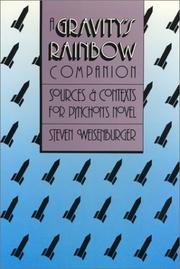
The essential one: page-by-page annotations of the allusions, German, songs, science and history, organised to the novel's episodes. Look up what stops you rather than reading it through, and consult it after each episode, not during every sentence.

Older and less exhaustive than Weisenburger, but it does the thing Weisenburger deliberately does not: narrate what is actually happening. Use the two together — Fowler for the plot, Weisenburger for the references.
Gravity's Rainbow
BeginnerRead the novel episode by episode with the companions in reach, and finish it
▸ Study plan for this stage
Pace: Three to six months, and plan it by episode rather than by page. The novel runs past 800 pages in four unequal parts, and its natural unit is the episode marked by a row of small squares rather than a chapter number. Read one to three episodes per sitting, then consult Weisenburger for that episode,
- The episode as the reading unit — Pynchon supplies no chapter numbers, so the printer's marks are the structure and page targets will defeat you
- Slothrop's map and the rocket strikes: the novel's founding conceit, which it establishes early, exploits for hundreds of pages, and never resolves
- Character dispersal as a formal event — the cast does not conclude, it dissipates, and Slothrop's fate is the clearest instance
- Blicero as the completion of the Rilke material you read two stages ago, so his sections should now read as argument rather than as raving
- The Zone as the postwar administrative vacuum documented by Neufeld and Jacobsen, rendered as a picaresque, which is why the second half changes genre
- Preterition delivered rather than described: by the end you can say who the novel counts among the passed-over and why that is its moral position
- The final pages as a deliberate collapse of frame — the reader is addressed, the film breaks, and the ending arrives as an interruption rather than a resolution
- Songs, slapstick and set-piece disgust used to prevent the war material settling into solemnity, a technique visible in miniature in The Crying of Lot 49
- What is the relationship between Slothrop's map and the rocket strikes, and what does the novel eventually decide about causality — if anything?
- At what point does Slothrop stop being a character, and is that an event in the plot or a decision about the form?
- How does Blicero's language track the Duino Elegies, and where does he depart from Rilke rather than quote him?
- Where did you lose the thread, and did looking it up in Fowler restore it or confirm that it was never there to be followed?
- Return to the one-page statement of expectations you wrote two stages ago. Which of the critics' claims does your reading support, and which would you now argue against?
- Was the historical preparation necessary, or would you have got through without it? Answer specifically, naming a passage that would have been opaque.
- Keep a running episode log: one line per episode giving location, who is present, and one thing that happened. At 800 pages this is the difference between finishing and restarting.
- Follow the consultation rule you wrote on your bookmark. If you break it twice in a week, stop and reset for a few days rather than abandoning the book.
- At the end of each of the four parts, read Fowler's summary of that part only, to confirm what you think happened before moving on.
- When Part Three loses you, do not go back. Read forward for fifty pages and then decide; the disorientation is engineered and usually resolves from the front.
- When you finish, write 500 words on what the novel is for, then read Herman and Weisenburger's final chapters again. Doing it in that order is the whole point of having read them first.
Next up: This is the end of the path. The natural next move is not Mason and Dixon but a reread of The Crying of Lot 49, which takes an afternoon and is a completely different book once you have seen the same machinery run at full scale.
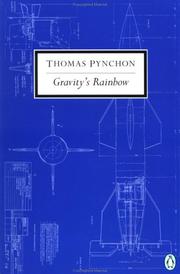
The destination. Read by the squiggle-separated episodes rather than by page target, expect to lose the thread in part three, and keep going — the disorientation is the intended experience and the companions exist because even careful readers need them.
Discussion
Keep reading
Paths that share books, cover the same subject, or open a related topic.