Thomas Hardy Reading Order: Where to Start
This curriculum moves from Hardy's most accessible and beloved Wessex novel through his great tragedies, then into his poetry and finally his critical reception — building emotional familiarity with his world before tackling his darkest and most complex work. Each stage deepens your understanding of Wessex, fate, and Hardy's unique voice so that by the end you can read him as both novelist and poet with full appreciation.
First Steps into Wessex
BeginnerGet comfortable with Hardy's prose style, his rural Wessex world, and his recurring themes of love, class, and fate — without yet facing his most tragic material.
▸ Study plan for this stage
Pace: 6–8 weeks total: Weeks 1–2 for "Under the Greenwood Tree" (~20–25 pages/day, ~180 pages); Weeks 3–7 for "Far from the Madding Crowd" (~25–30 pages/day, ~400 pages); Week 8 reserved for review, re-reading key passages, and completing exercises.
- Wessex as a living world: Hardy's fictional county is rooted in real Dorset geography and functions almost as a character itself — notice how landscape shapes mood, community, and fate in both novels.
- Hardy's prose rhythm and narrative voice: his sentences blend pastoral lyricism with ironic detachment; pay attention to how his narrator steps back to comment on characters with gentle (or sharp) wit.
- Rural community and social ritual: 'Under the Greenwood Tree' centres the Mellstock choir and village customs as the fabric of life — Hardy mourns the passing of tradition even while depicting it warmly.
- Love as comedy and as complication: Dick Dewy's courtship of Fancy Day introduces Hardy's pattern of romantic triangles and female ambivalence; 'Far from the Madding Crowd' scales this up with Bathsheba's three suitors (Oak, Boldwood, Troy).
- Class, aspiration, and social mobility: Fancy Day's education places her above Dick socially; Bathsheba's independent farm ownership challenges Victorian gender norms — both novels probe how class and ambition strain relationships.
- Fate, coincidence, and character flaw: Hardy begins to show how small decisions (Fancy's vanity, Bathsheba's impulsive valentine) set off chains of consequence — a preview of his darker determinism.
- The role of women and agency: both Fancy Day and Bathsheba Everdene are more complex than passive heroines; track how each exercises — and loses — control over her own story.
- Gabriel Oak as Hardy's moral compass: Oak's steadfast, patient love and practical competence make him a template for Hardy's 'good man' archetype — understanding him is key to reading Hardy's ethics of character.
- How does Hardy use the Mellstock choir's displacement in 'Under the Greenwood Tree' to comment on modernisation and the loss of rural tradition, and why does he frame this loss with comedy rather than tragedy?
- What does Fancy Day's final secret (her near-elopement with Shiner) reveal about Hardy's view of women's inner lives, and how does it complicate the novel's apparently happy ending?
- Trace the three suitors of Bathsheba Everdene in 'Far from the Madding Crowd': in what ways does each man represent a different relationship to class, passion, and stability, and what does Bathsheba's ultimate choice say about Hardy's values?
- How does the Wessex landscape function in both novels — find at least one scene in each book where setting directly foreshadows or influences a plot outcome.
- Hardy is often called a 'fatalist': using specific plot moments from 'Far from the Madding Crowd' (e.g., the valentine, the sword-exercise scene, the storm), explain how character flaws and coincidence collaborate to drive events.
- In what ways is 'Far from the Madding Crowd' both a continuation of and a departure from the lighter tone of 'Under the Greenwood Tree'? What darker elements appear that signal the direction Hardy's later fiction will take?
- Wessex mapping exercise: As you read each novel, sketch a simple hand-drawn map marking key locations (Mellstock, Weatherbury, Norcombe Hill, the malthouse, Boldwood's farm). Annotate each with the emotional or plot significance of scenes set there — this trains you to read Hardy's landscape actively.
- Character relationship diagram: After finishing each novel, draw a web of all major characters with labelled arrows showing the nature of each relationship (love, rivalry, dependence, class tension). Update it chapter by chapter for 'Far from the Madding Crowd' to watch the web tighten.
- Prose imitation journal: Choose one short Hardy descriptive passage from each novel (e.g., the opening description of the Mellstock lane, or the night storm over the ricks) and write a 150-word imitation in Hardy's style about a landscape you know. Focus on matching his layering of physical detail with emotional undertone.
- Suitor comparison essay (500–700 words): Write an informal essay comparing Gabriel Oak, Sergeant Troy, and William Boldwood as romantic figures. Argue which of the three Hardy presents most sympathetically and why, using at least three specific scenes as evidence.
- Theme tracking log: Keep a running notebook (physical or digital) with three columns — Love, Class, Fate. Each reading session, jot one quote or scene per column. At the end of each novel, review your log and write a 3-sentence synthesis of how the three themes interweave.
- Re-read and annotate the ending of each novel: Hardy's endings are famously ambivalent. Re-read the final two chapters of each book and annotate: What is resolved? What is left uneasy? Write a paragraph for each novel arguing whether Hardy intends the reader to feel satisfied or unsettled — and why that ambiguity matters.
Next up: By finishing these two novels the reader has internalised Hardy's Wessex world, his narrative voice, and his pattern of romantic complication driven by class and fate — the essential toolkit for confronting the fully tragic register of his major works, where the same forces no longer permit even a qualified happy ending.
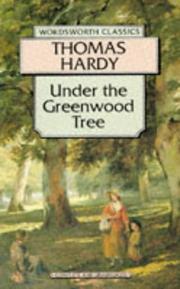
Hardy's shortest and most cheerful novel, it introduces Wessex village life, rustic characters, and his lyrical prose with none of the crushing tragedy — the perfect gentle entry point.
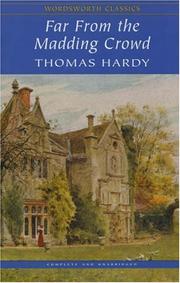
Hardy's first major success and the novel that established Wessex as a literary landscape; its relatively hopeful ending and vivid characters make it the ideal second step before the darker works.
The Major Tragedies
IntermediateEngage with Hardy's three greatest and most celebrated novels, understanding his tragic vision, his critique of Victorian society, and his deepening fatalism.
▸ Study plan for this stage
Pace: 12–16 weeks total (~4 weeks per novel); aim for 20–25 pages per day on weekdays with weekends reserved for reflection, re-reading key passages, and completing exercises. Suggested pacing: "The Return of the Native" (weeks 1–4), "The Mayor of Casterbridge" (weeks 5–8), "Tess of the d'Urbervilles" (we
- Hardy's Tragic Vision: how each protagonist is destroyed by the collision between personal desire and an indifferent or hostile universe, tracing the darkening arc from Clym Yeobright through Jude Fawley
- The Egdon Heath Principle: landscape as fate — the way Egdon Heath in 'The Return of the Native' functions as a living, deterministic force, and how analogous environments (Casterbridge's market town, the Wessex farmlands of Tess, Christminster's spires) perform similar fatalistic roles in the later
- Social Entrapment and Class Mobility: the cruel irony of ambition in Victorian society — Henchard's rise and fall through economic power, Tess's destruction by a rigid sexual double standard, and Jude's systematic exclusion from education and respectability
- Hardy's Critique of Marriage and Sexual Morality: the institution of marriage as a trap rather than a fulfillment, examined through Eustacia and Wildeve's doomed passion, Henchard's wife-selling, the seduction/rape of Tess, and the radical anti-marriage arguments of Sue Bridehead and Jude
- Fatalism and the Immanent Will: Hardy's quasi-philosophical determinism — the sense that characters are puppets of an unconscious, non-benevolent cosmic force, deepening from the relatively contained tragedy of Henchard to the cosmic despair of Jude
- The 'Fallen Woman' and Victorian Gender Ideology: how Hardy systematically exposes and attacks the hypocrisy of Victorian purity culture, most fully in Tess but prefigured in Eustacia Vye and echoed in Sue Bridehead's unconventional sexuality
- Character as Self-Undoing: the role of fatal character flaws (Eustacia's romantic restlessness, Henchard's pride and impulsiveness, Tess's passivity and misplaced trust, Jude's idealism) alongside external forces — Hardy's complex negotiation between free will and determinism
- Wessex as a Mythic World: how Hardy constructs a semi-fictional regional geography that is simultaneously a realistic Victorian England and a timeless tragic stage, giving the novels their distinctive blend of the local and the universal
- In 'The Return of the Native,' how does Egdon Heath function as more than a setting — what does it represent philosophically, and how does it shape the fates of Eustacia, Clym, and Mrs. Yeobright?
- Michael Henchard in 'The Mayor of Casterbridge' is often described as a self-made and self-destroyed man. How does Hardy balance Henchard's personal flaws (pride, impulsiveness, superstition) against the social and economic forces working against him — and where does the novel place ultimate responsibility for his ruin?
- How does Hardy use the subtitle 'A Pure Woman' in 'Tess of the d'Urbervilles' as a deliberate provocation? What argument is he making about Victorian definitions of purity, guilt, and female agency, and how does the novel's structure (its 'phases') reinforce that argument?
- Trace the darkening of Hardy's tragic vision across all four novels: in what specific ways is the tragedy of Jude Fawley in 'Jude the Obscure' qualitatively different from — and more radical than — the tragedies of Eustacia, Henchard, and Tess?
- How does Hardy treat the institution of marriage across these four novels? Compare at least two couples from different novels to show how marriage functions as a social mechanism of entrapment, punishment, or irony.
- Sue Bridehead in 'Jude the Obscure' is one of the most complex female characters in Victorian fiction. How does her intellectual radicalism and emotional contradictions both challenge and ultimately succumb to the social pressures Hardy is critiquing?
- Landscape Annotation Exercise: As you read 'The Return of the Native,' keep a running log of every significant description of Egdon Heath. After finishing the novel, write a 400-word analysis arguing for one consistent symbolic meaning the Heath carries — then revisit this method with the Casterbridge market, the Wessex dairy farms in Tess, and Christminster in Jude, noting how each landscape enco
- Character Fate Chart: For each of the four novels, create a two-column chart listing the 'internal causes' (character flaws, choices) and 'external causes' (society, chance, economics, other characters) that contribute to the protagonist's downfall. After completing all four charts, write a one-page synthesis: does Hardy's balance between internal and external causation shift across the novels, an
- Close Reading of a Turning-Point Scene: Select one pivotal scene from each novel — e.g., Mrs. Yeobright's death on the heath, Henchard's reading of his own obituary-like will, the scene of Tess's confession to Angel Clare, or little Father Time's note in Jude — and write a 300-word close reading of each, focusing on Hardy's narrative voice, free indirect discourse, and the way irony operates in th
- Victorian Context Research Sprint: After finishing 'Tess of the d'Urbervilles,' spend one focused session (90 min) reading about the real-world Victorian debates around the 'New Woman,' the Contagious Diseases Acts, and the sexual double standard. Write a one-page reflection on how this context changes or deepens your reading of Tess's fate and Angel Clare's behavior.
- Comparative Essay Draft — The Tragic Hero: Write a 600–800 word comparative essay answering the question: 'Is Hardy's tragic protagonist better understood as a classical tragic hero (undone by a fatal flaw) or as a modern victim (crushed by systemic forces)?' Use specific evidence from at least three of the four novels. Focus on building an argument rather than summarizing plot.
- Reader-Response Journal: After finishing each novel, write a one-page personal response before reading any criticism. Record your emotional reaction, the moment that struck you most, and one question the novel left unanswered for you. After completing all four novels, re-read all four entries and write a short reflection on how your engagement with Hardy's tragic vision evolved across the stage.
Next up: Completing these four major tragedies gives the reader a firm command of Hardy's mature worldview and novelistic craft, providing the thematic and stylistic foundation needed to explore his poetry, short fiction, or the critical and biographical literature that contextualizes why these works scandalized Victorian England and shaped literary Modernism.
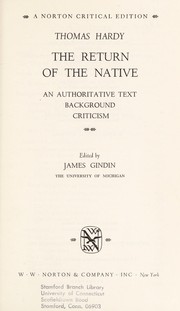
A bridge between the pastoral warmth of the earlier novels and full-blown tragedy; Egdon Heath becomes a brooding presence and Hardy's deterministic worldview comes sharply into focus.
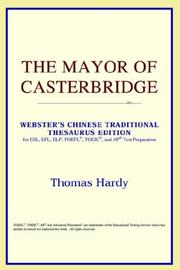
Hardy's most classical tragedy — a single flawed man destroyed by his own character — and the most tightly plotted of his novels, making it essential before tackling his more sprawling late masterpieces.
Hardy's most passionate and socially radical novel; having read the earlier tragedies, you are now equipped to feel the full force of Tess's fate and Hardy's fury at Victorian hypocrisy.
Hardy's final and most devastating novel, best read last among the fiction; it synthesises all his themes — class, marriage, religion, and crushed aspiration — at their most unsparing.
Hardy the Poet
IntermediateDiscover Hardy as one of the greatest English poets, reading his verse in the order that reveals his emotional range — from personal grief to philosophical reflection.
▸ Study plan for this stage
Pace: 4–5 weeks, reading roughly 8–12 poems per session (3–4 sessions per week), allowing time for re-reading, annotation, and reflection between sessions. Hardy's poems are short but dense — resist the urge to rush; slow, repeated reading is essential at this stage.
- Hardy's poetic voice: the 'self-unseeing' narrator who revisits the past with ironic detachment and tender regret
- The Emma poems ('Poems of 1912–13' / 'Veteris vestigia flammae'): how personal grief is transformed into a sustained elegiac sequence of extraordinary power
- Hardy's philosophical pessimism — influenced by Schopenhauer and Darwin — expressed through the concept of the 'Immanent Will' and an indifferent universe
- Dramatic monologue and persona poems: Hardy's use of invented speakers (soldiers, ghosts, animals) to universalise private feeling
- Hardy's distinctive prosody: his deliberate roughness, archaic diction, irregular metres, and compound coinages as expressive tools rather than technical failures
- The intersection of landscape and memory: how Dorset/Wessex topography becomes an emotional and psychological map in the poems
- Hardy's treatment of time: the past perpetually haunting the present, and the impossibility of recovery or return
- War poetry and social observation: Hardy's response to the Boer War and World War I as extensions of his broader vision of human suffering
- How does Hardy use the Emma elegies in 'Poems of 1912–13' to move between guilt, grief, and transcendence — and what makes the sequence feel both intensely personal and universally human?
- What specific metrical and linguistic choices does Hardy make that distinguish his poetic voice from his Victorian and Georgian contemporaries, and what emotional effects do these choices create?
- How does Hardy's philosophical pessimism — his sense of an indifferent or unconsciously cruel universe — manifest in the imagery, tone, and conclusions of individual poems?
- In what ways does the Wessex landscape function as more than a setting in Hardy's verse — what psychological or thematic work does it perform?
- How do Hardy's dramatic monologues and persona poems (e.g. voices of soldiers, the dead, or animals) extend his emotional range beyond what a purely autobiographical lyric could achieve?
- Tracing the arc of the Selected Poems as a whole, how would you describe Hardy's emotional journey — does the collection move toward acceptance, deeper despair, or something more ambiguous?
- **Close-reading journal:** For each reading session, choose one poem and write a 200–300 word annotation covering: a notable metrical irregularity, one piece of unusual diction, and the emotional effect of the final stanza or line. Accumulate these into a personal Hardy glossary.
- **Map the Emma sequence:** Read the 'Poems of 1912–13' group in the Selected Poems in a single sitting. Afterwards, draw a simple timeline or emotional arc charting Hardy's shifting feelings across the sequence — guilt, longing, vision, resignation — noting which specific poems mark each turn.
- **Imitation exercise:** Write a short poem (12–20 lines) in Hardy's manner on the theme of revisiting a place from your own past. Deliberately attempt one of his techniques: an archaic or compound word, an irregular stanza, or an abrupt final reversal of tone.
- **Comparative reading:** Select three poems that span Hardy's range — one elegy, one philosophical lyric, one dramatic monologue or war poem. Write a one-page comparison showing how the same core preoccupations (time, loss, indifference of fate) are handled differently across the three modes.
- **Read aloud sessions:** Choose five poems whose rhythms feel awkward on the page and read them aloud slowly. Record yourself if possible. Write a brief note on how the spoken rhythm changes your interpretation — does the 'roughness' become expressive rather than clumsy?
- **Thematic index:** As you finish the Selected Poems, build a simple two-column index: on the left, list Hardy's recurring images (the thrush, the clock, the churchyard, the returning traveller, snow/frost, etc.); on the right, note what emotional or philosophical idea each image tends to carry. Use this as a revision tool at the end of the stage.
Next up: Mastering Hardy's poetic voice — his irony, his fatalism, and his compression of vast feeling into small forms — gives the reader the emotional and philosophical vocabulary needed to return to the novels and late prose with a far richer understanding of the unified imaginative world Hardy built across his entire career.
A curated selection across Hardy's eight poetry collections gives breadth — his ballads, philosophical lyrics, and war poems — showing the full range that the Emma poems alone cannot.
Critical Depth and Context
ExpertUnderstand Hardy's place in literary history, the critical debates around his work, and the biographical forces that shaped his fiction and poetry.
▸ Study plan for this stage
Pace: 8–10 weeks total: Weeks 1–4 cover "The Life and Work of Thomas Hardy" (~25–30 pages/day, treating it as both primary source and literary artifact); Weeks 5–9 cover "Thomas Hardy: A Biography Revisited" (~20–25 pages/day, reading analytically against the first book); Week 10 is reserved for comparati
- Hardy's autobiographical self-fashioning: 'The Life and Work' was ghost-written by Hardy himself under his wife Florence's name, making it a carefully constructed self-myth rather than a transparent record — the reader must interrogate every claim as an act of authorial self-presentation.
- Millgate's revisionary biography as critical corrective: Millgate systematically cross-references Hardy's self-account against letters, notebooks, and external records, modeling how scholarly biography dismantles authorized narratives.
- Hardy's position at the Victorian–Modernist threshold: both books illuminate how Hardy's career bridges late-Victorian realism and proto-Modernist pessimism, situating him between George Eliot and D.H. Lawrence in literary history.
- The biographical roots of Hardy's philosophical outlook: the influence of Schopenhauer, Darwin, and Comte — traceable through both texts — on Hardy's determinism, his 'Immanent Will,' and his tragic worldview.
- Class, ambition, and social mobility as biographical engines: Hardy's origins as a stonemason's son in rural Dorset, his architectural training, and his anxious negotiation of class identity directly shape the social tensions in his fiction and poetry.
- The critical reception arc — from scandal to canonization: both books document the hostile reception of 'Jude the Obscure' and 'Tess,' Hardy's retreat into poetry, and the gradual critical rehabilitation that secured his canonical status.
- Hardy's two marriages and their creative consequences: the relationship with Emma Gifford (and her death, which triggered the 'Poems of 1912–13') and the later marriage to Florence Dugdale are treated very differently in each book, revealing how biography shapes literary interpretation.
- The Wessex construct as biographical and literary geography: both texts show how Hardy transformed his native Dorset into a mythologized fictional landscape, and how that act of transformation was itself a form of self-definition.
- In what specific ways does Hardy's authorship of 'The Life and Work' compromise its reliability as biography, and what textual strategies does he use to manage his public image — as revealed by Millgate's corrections?
- How does Millgate's 'Biography Revisited' differ methodologically from Hardy's self-account, and what new archival evidence does Millgate bring to bear that most significantly alters our understanding of Hardy's life?
- What biographical experiences — class origins, failed social aspirations, the breakdown of his first marriage — can be traced as direct shaping forces on specific works discussed across both books?
- How do both books together explain Hardy's decision to abandon novel-writing after 'Jude the Obscure,' and what do they reveal about the relationship between critical hostility and his turn to poetry?
- What picture of Hardy's intellectual formation emerges from the two biographies combined — which thinkers, friendships, and reading experiences were most formative, and how are these presented differently in each account?
- How does the tension between Hardy's rural origins and his metropolitan literary ambitions, as documented in both books, illuminate the recurring themes of displacement and belonging in his fiction?
- Parallel-passage annotation: Select five major life events covered in both books (e.g., the writing of 'Tess,' Emma's death, the reception of 'Jude'). Write a side-by-side comparison of how Hardy's self-account and Millgate's version differ, noting what each omits, emphasizes, or distorts.
- Reliability audit: As you read 'The Life and Work,' keep a running log of at least ten claims that seem self-serving, evasive, or contradicted by Millgate. For each, write two sentences: what Hardy says, and what Millgate's evidence suggests instead.
- Intellectual genealogy map: Using both books, construct a visual diagram of Hardy's intellectual influences (Darwin, Schopenhauer, Mill, Comte, etc.), noting which were self-reported by Hardy and which were identified or qualified by Millgate.
- Biographical-to-textual trace essay: Choose one Hardy novel or poetry sequence referenced in both books and write a 600–800 word essay arguing how a specific biographical fact uncovered or clarified by Millgate changes or deepens a reading of that work.
- Critical reception timeline: Build a chronological timeline of Hardy's critical reception as documented across both books — from early reviews through the 'Jude' scandal to posthumous canonization — annotating each entry with how the biographical context shaped the critical response.
- Methodological reflection journal: After finishing both books, write a 400–500 word reflection on the ethics and epistemology of literary biography: What are the limits of Hardy's self-biography? What are the limits of Millgate's scholarly correction? What can neither approach fully recover?
Next up: Mastering the biographical and critical scaffolding provided by these two books equips the reader to return to Hardy's primary texts — fiction and poetry — with the analytical depth needed to engage advanced close reading and thematic criticism, the natural focus of any subsequent stage.

Ostensibly written by his second wife Florence but actually Hardy's own disguised autobiography — a fascinating primary source that reframes everything you have read in his own carefully constructed voice.

The definitive scholarly biography, correcting Hardy's self-mythologising and placing the novels and poems in their full biographical and historical context for a complete, authoritative understanding.
Discussion
Keep reading
Paths that share books, cover the same subject, or open a related topic.