The New York Trilogy Reading Order and Guide
This curriculum guides an intermediate reader into a deep understanding of Paul Auster's New York Trilogy by first grounding them in the detective fiction and existentialist traditions Auster subverts, then reading the Trilogy itself with full context, and finally exploring the postmodern and metafictional frameworks that reveal how the three novellas speak to each other and to literature at large. Each stage builds the conceptual vocabulary needed for the next, turning a single reading experience into a rich intellectual journey.
Foundations: The Traditions Auster Subverts
IntermediateUnderstand the hard-boiled detective genre and existentialist fiction that Auster deliberately deconstructs, so that every departure in the Trilogy registers as intentional and meaningful.
▸ Study plan for this stage
Pace: 5–6 weeks total: Weeks 1–3 cover The Maltese Falcon (~25–30 pages/day, including re-reading key scenes); Weeks 4–6 cover The Stranger and The Plague via the Coles Notes (~20–25 pages/day of primary text with parallel note-reading, allowing time for reflection and journaling).
- Hard-boiled detective conventions: the lone, morally ambiguous detective (Sam Spade) who imposes order on a chaotic, corrupt world through cynical pragmatism and physical action
- The detective as a figure of stable identity: Spade's self-definition through his role, his code, and his refusal to be manipulated — a coherent self that Auster will later dissolve
- The MacGuffin and the logic of the case: in The Maltese Falcon, the plot is driven by a concrete object whose pursuit structures meaning — a mechanism Auster will hollow out
- Hard-boiled language and style: clipped, declarative prose, distrust of interiority, meaning communicated through surfaces and behavior rather than inner monologue
- Camusian Absurdism: the universe is indifferent, human beings crave meaning, and the collision of these two facts produces 'the Absurd' — the central engine of both The Stranger and The Plague
- Meursault as the alienated anti-hero: a man whose detachment from social scripts (grief, love, guilt) exposes the arbitrary nature of the meaning society projects onto events
- The Plague as collective existential crisis: Rieux and the citizens of Oran must act ethically and persist in the face of a meaningless catastrophe — absurdist endurance as a moral stance
- Language, silence, and the failure of communication: Camus's narrators struggle to make words match experience, prefiguring Auster's obsession with the unreliability of language and narrative
- How does Sam Spade's handling of the Brigid O'Shaughnessy case illustrate the hard-boiled detective's relationship between personal feeling and professional code — and why is that relationship stable in Hammett but not in Auster?
- What function does the Maltese Falcon (the object itself) serve in the novel's plot and thematic structure, and what happens to the reader when the object turns out to be a fake?
- How does Meursault's narrative voice in The Stranger create emotional distance, and what does Camus achieve philosophically by making his protagonist 'unreachable' by conventional moral judgment?
- In what ways does the Plague function as a symbol of the Absurd, and how do the characters' varied responses (resistance, collaboration, escape, indifference) map onto different philosophical stances toward meaninglessness?
- What do the hard-boiled and absurdist traditions share in their treatment of a corrupt or indifferent world — and where do they fundamentally diverge in the solutions they offer their protagonists?
- How do both Hammett and Camus use spare, surface-level prose styles to philosophical ends, and what does each style imply about the relationship between language and truth?
- 'Spade vs. Meursault' character comparison: Write a one-page side-by-side analysis of how each protagonist responds to a moment of crisis (Spade turning in Brigid; Meursault at his mother's funeral). Focus specifically on identity, emotion, and agency — these are the exact fault lines Auster will crack open.
- Genre autopsy of The Maltese Falcon: List every classic hard-boiled convention you can identify (the femme fatale, the corrupt client, the cynical monologue, the physical confrontation) and annotate each with a sentence explaining what narrative or philosophical work it performs. Keep this list — you will use it as a checklist when reading the Trilogy.
- Absurdist vocabulary flashcards: Using the Coles Notes as a guide, create a set of 10–12 flashcards for key Camusian terms (the Absurd, revolt, indifference, solidarity, the plague as metaphor). Write each definition in your own words and add a concrete page reference from the primary text.
- Close-reading journal — prose style: Choose one paragraph from The Maltese Falcon and one from The Stranger. Annotate both for sentence structure, what is omitted, and what the narrator refuses to explain. Write a short paragraph (150–200 words) on what each author's silence communicates.
- The 'MacGuffin log': Track every object, goal, or piece of information that characters in The Maltese Falcon pursue. Note when the pursuit of each item drives the plot and when it turns out to be hollow or deceptive. This log will become directly useful when analyzing the cases in the Trilogy.
- Synthesis essay (300–400 words): Answer the prompt — 'Both Hammett and Camus place their protagonists in worlds where conventional meaning has broken down. How does each author propose their protagonist cope, and what does each coping mechanism reveal about the genre's assumptions?' This essay will serve as your personal reference document entering the next stage.
Next up: By internalizing the conventions of hard-boiled detection and absurdist alienation as coherent, functioning systems, the reader is now equipped to recognize — with precision and genuine surprise — every moment in The New York Trilogy where Auster deliberately breaks, inverts, or empties out those systems to force a deeper crisis of identity, language, and meaning.
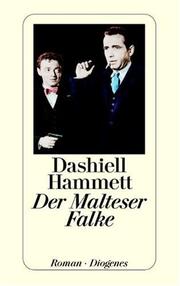
The archetypal hard-boiled detective novel — City of Glass's protagonist Quinn is a direct, ironic echo of Sam Spade. Reading this first makes Auster's genre inversions immediately legible.
Introduces the existentialist themes of alienation, identity, and meaningless action that permeate all three novellas. Auster's detectives share Meursault's disconnection from cause and consequence.
The Text Itself: Reading the Trilogy in Order
IntermediateRead the three novellas in their published sequence, tracking how characters, motifs (surveillance, naming, disappearance), and narrative frames echo and complicate one another across the book.
▸ Study plan for this stage
Pace: 3–4 weeks, reading roughly 20–25 pages per day; aim to finish "City of Glass" in week 1, "Ghosts" in the first half of week 2, and "The Locked Room" across weeks 3–4, leaving the final 2–3 days for re-reading key passages and synthesis notes
- Metafiction and self-referentiality: Auster embeds his own name and the detective genre's conventions only to expose and destabilize them
- Surveillance and the watcher/watched dynamic: each novella stages a scenario in which observing another person gradually erases the observer's own identity
- Naming and identity: the instability of proper names (Quinn/Wilson/Work/Daniel Quinn; Blue/Black/White; the narrator/Fanshawe) signals that selfhood is not fixed but constructed and transferable
- Disappearance as structural principle: characters, meanings, and narrative threads vanish without resolution, mirroring the postmodern refusal of closure
- The detective genre as false promise: the trilogy borrows hard-boiled conventions (the case, the client, the investigation) and systematically frustrates the reader's expectation of solution
- Narrative frames and embedded narrators: each novella adds another layer of mediation (a notebook, a report, a biography), so the 'truth' of events recedes further with each story
- Intertextuality: explicit references to Don Quixote, Poe's Dupin stories, and Hawthorne's work function as mirrors that reflect the trilogy's own themes of obsession and authorship
- The city as labyrinth: New York is not a backdrop but an active force — its grid, anonymity, and randomness shape the characters' psychological disintegration
- In 'City of Glass,' how does Quinn's progressive adoption of the name 'Paul Auster' and his role as 'detective' ultimately affect his sense of self, and what does Auster suggest about the relationship between a name and an identity?
- How does the watcher/watched relationship in 'Ghosts' differ structurally from the surveillance plot in 'City of Glass,' and what does the reversal of roles imply about the nature of identity and obsession?
- Across all three novellas, disappearance functions both literally (characters vanish) and formally (narrative threads are dropped). Identify one example of each type in each novella and explain how they reinforce each other.
- The red notebook in 'City of Glass' and the manuscript in 'The Locked Room' are both physical objects that mediate between author, character, and reader. How does each object function as a narrative frame, and what does it suggest about the reliability of the stories we are reading?
- How does 'The Locked Room' recontextualize the events and themes of the first two novellas, and in what sense can the trilogy be read as a single, unified work rather than three separate stories?
- Auster draws heavily on Poe and Cervantes within 'The New York Trilogy.' Choose one intertextual reference and explain how it both illuminates and complicates the novella in which it appears.
- Motif tracking log: Create a three-column table (one column per novella) and, as you read, record every instance of surveillance, naming/renaming, and disappearance. After finishing the trilogy, write a one-page synthesis identifying the single most significant shift in how each motif is handled across the three stories.
- Character identity map: Draw a diagram for each novella showing all the names, aliases, and roles each major character assumes. Connect overlapping names across novellas (e.g., 'Paul Auster' appearing in 'City of Glass' and 'The Locked Room') with annotated arrows explaining what the overlap implies.
- Narrative frame analysis: For each novella, write a brief paragraph (150–200 words) identifying who is narrating, what physical or textual object mediates the story, and what information the narrator admits they do not know. Compare the three paragraphs to map how certainty erodes across the trilogy.
- Genre expectation journal: Before starting each novella, write down three things you expect a detective story to deliver (a solution, a reliable detective, a clear crime, etc.). After finishing each novella, return to your list and note which expectations were met, which were denied, and how Auster's refusal felt emotionally and intellectually.
- Close-reading passage comparison: Select the scene in 'City of Glass' where Quinn first walks the city following Stillman, and the parallel scene in 'Ghosts' where Blue watches Black from his window. Write a 300-word comparative analysis focusing on prose style, point of view, and what each scene suggests about the act of observation.
- Synthesis essay (500–700 words): Argue for or against the following claim — 'The New York Trilogy is best understood as a single novel about the impossibility of authorship rather than three separate detective stories.' Use specific textual evidence from all three novellas to support your position.
Next up: Completing the trilogy with close attention to its formal strategies — metafiction, unreliable narration, and genre subversion — equips the reader to engage productively with secondary critical and theoretical literature that names and debates those very strategies in broader literary and philosophical contexts.
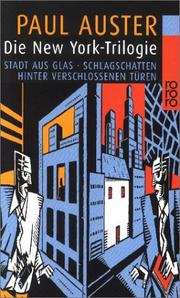
The core text — City of Glass, Ghosts, and The Locked Room must be read in order, as each novella refracts the same obsessions (identity, authorship, the act of watching) through a progressively stranger lens, culminating in the most autobiographically charged story.
Metafiction and Postmodern Context
IntermediateAcquire the critical vocabulary of metafiction and postmodernism to articulate precisely what Auster is doing when narrators become characters, authors appear in their own stories, and genre conventions collapse.
▸ Study plan for this stage
Pace: 5–6 weeks total: Weeks 1–3 cover "If on a Winter's Night a Traveler" (~25–30 pages/day, including re-reading the second-person opening chapter twice); Weeks 4–6 cover "Pale Fire" (~20–25 pages/day — read the poem in full first, then the Commentary and Index linearly, then re-read the poem a second t
- Metafiction: fiction that self-consciously draws attention to its own status as an artifact, foregrounding the act of writing and reading rather than concealing it
- The second-person narrator and the 'Reader' as character: how Calvino's 'you' collapses the boundary between implied reader and fictional protagonist, making the act of reading the plot
- Embedded / nested narratives (mise en abyme): stories within stories that mirror or ironize the frame narrative, as seen in Calvino's ten interrupted incipit novels
- Unreliable narration and the gap between narrator and author: how Nabokov's Kinbote systematically distorts Shade's poem to project his own Zemblan fantasy, teaching us to read against a narrator
- The paratext as fictional space: how Nabokov weaponizes scholarly apparatus — foreword, commentary, index — as narrative devices that are themselves unreliable and character-revealing
- Postmodern destabilization of authorship: both books interrogate who 'owns' a text — the author, the editor, the reader — anticipating Barthes's 'death of the author' in practice
- Genre parody and collapse: Calvino dismantles the adventure/thriller novel; Nabokov dismantles the scholarly edition; both expose the conventions of their borrowed genres by hyperbolically performing them
- The reader as co-creator: postmodern texts demand active, suspicious, constructive reading — meaning is not deposited by the author but assembled (or misassembled) by the reader
- In 'If on a Winter's Night a Traveler,' what narrative effect does the second-person address produce, and how does it turn the mechanics of reading into the novel's central subject matter?
- Each of the ten embedded novels in Calvino's book is interrupted before resolution. What does this structural choice argue about narrative desire, and how does frustration become a formal meaning-making device?
- In 'Pale Fire,' how does Kinbote's Commentary relate to Shade's poem — does it illuminate, distort, or replace it? What does this relationship reveal about the nature of interpretation and critical authority?
- Both books use unreliable narrators, but in very different ways. Compare Calvino's 'you' (the Reader) with Nabokov's Kinbote: how does each book signal to the reader that the narrator's account cannot be fully trusted?
- How do both Calvino and Nabokov use parody of a specific genre or textual form (the popular novel; the scholarly edition) to make a philosophical point about fiction, authorship, or meaning?
- After reading both books, how would you define 'metafiction' in your own words, and what distinguishes it from simply a story that mentions books or writers?
- Close-reading journal: After finishing the opening chapter of 'If on a Winter's Night a Traveler,' write one page analyzing every moment where Calvino directly addresses 'you.' Mark which sentences describe a fictional Reader-character and which seem to address you, the actual reader — then reflect on whether that distinction holds.
- Interrupted narrative map: Create a one-page diagram or chart of all ten embedded incipit novels in Calvino's book. For each, note: genre, the point of interruption, and the in-story reason given for the break. Look for patterns — what does the map reveal about Calvino's design?
- Kinbote vs. the poem: Read Canto Two of Shade's poem ('Pale Fire') and then read all Commentary notes that correspond to it. In a two-column document, record what the poem actually says alongside what Kinbote claims it means or connects to. Write a paragraph on the gap you find.
- Unreliable narrator detection log: As you read 'Pale Fire,' keep a running list of at least ten specific moments where Kinbote's account contradicts itself, strains credulity, or reveals more about Kinbote than about Shade. For each, write one sentence explaining the tell.
- Imitation exercise: Write a one-page passage of metafiction in the style of Calvino's second-person opening — but set it in the world of a genre of your choice (a detective novel, a romance, a horror story). Then annotate your own passage: where did you consciously deploy metafictional devices, and why?
- Synthesis essay (500–700 words): Argue for or against the following claim — 'In both books, the true subject is not any story being told, but the act of reading itself.' Use at least two specific textual examples from each book to support your position.
Next up: Mastering the vocabulary of metafiction and unreliable narration through Calvino and Nabokov gives the reader the precise critical tools needed to dissect Paul Auster's New York Trilogy, where these same devices — collapsing author/narrator/character boundaries, genre parody of the detective novel, and the reader implicated in the text's instability — operate at the heart of every page.
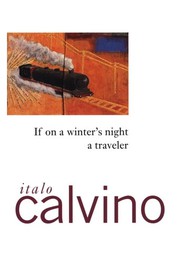
The landmark metafictional novel that makes the reader a character and foregrounds the act of reading itself — a direct structural parallel to the Trilogy's self-referential games with authorship and identity.
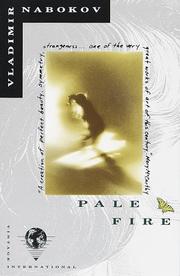
A masterclass in unreliable narration and obsessive surveillance of another person's text, mirroring the Trilogy's themes of one man watching — and ultimately erasing — another.
Deeper Auster: Autobiography, Language, and the Self
IntermediateUnderstand how Auster's own life, his philosophy of language, and his broader body of work feed into the Trilogy, revealing the personal stakes beneath the postmodern surface.
▸ Study plan for this stage
Pace: 4–5 weeks total: Week 1–2 — Read "The Invention of Solitude" (~180 pages) at roughly 20–25 pages/day, pausing between "Portrait of an Invisible Man" and "The Book of Memory" to reflect on the structural shift. Week 3–4 — Read "Hand to Mouth" (~180 pages, including the appendix works) at 20–25 pages/
- Autobiography as construction: both books treat the self not as a stable entity to be recorded but as something assembled — and perpetually lost — through the act of writing
- The absent/invisible father: 'The Invention of Solitude' opens with Auster confronting a father who was emotionally unknowable in life and becomes a ghost-text in death, prefiguring the detective-as-son figures in the Trilogy
- Memory as unreliable archive: 'The Book of Memory' section of 'The Invention of Solitude' frames remembering as an act of fiction-making, directly seeding the Trilogy's obsession with false trails and unverifiable pasts
- Language as failure and necessity: Auster explores how words perpetually fall short of capturing experience or identity, yet writing remains the only tool available — a tension that drives the Trilogy's meta-fictional games
- Solitude as creative condition: both books frame isolation not merely as suffering but as the precondition for artistic work, explaining why Quinn, Blue, and the nameless narrator of 'The Locked Room' retreat into obsessive, solitary tasks
- Financial precarity and artistic identity: 'Hand to Mouth' documents Auster's years of poverty, odd jobs, and near-abandonment of writing, showing how material desperation shaped his themes of failure, chance, and survival
- Chance and contingency: 'Hand to Mouth' reveals how random accidents (an unexpected inheritance, a lucky manuscript sale) determined Auster's career, mirroring the Trilogy's insistence that identity and fate hinge on arbitrary coincidence
- The writer as detective of the self: across both books, Auster investigates his own origins, motives, and failures with the same obsessive, inconclusive methodology his fictional detectives apply to their cases
- In 'The Invention of Solitude,' how does Auster's investigation of his father in 'Portrait of an Invisible Man' model the kind of detection that appears in the Trilogy — and what does it reveal about what detection can and cannot achieve?
- How does 'The Book of Memory' use the third-person 'A.' to narrate Auster's own experience, and what does this grammatical distancing say about the relationship between the self and language?
- What specific financial and professional crises does 'Hand to Mouth' describe, and how do they illuminate the themes of failure, desperation, and chance that pervade the Trilogy's protagonists?
- Both books treat solitude as simultaneously destructive and generative. How does each book frame this paradox differently, and how does it manifest in the Trilogy's characters?
- How does Auster's account of his own linguistic philosophy in 'The Invention of Solitude' — the idea that words and things are irrevocably separated — connect to the crisis of identity experienced by Quinn in 'City of Glass'?
- What does 'Hand to Mouth' reveal about Auster's relationship to literary failure and anonymity, and how might this autobiographical experience explain the Trilogy's repeated motif of writers who disappear or cease to exist?
- Parallel passage mapping: Select three passages from 'The Invention of Solitude' that describe the father's absence or the failure of language, then find a corresponding scene in the Trilogy (from memory or notes) that echoes the same idea. Write a one-paragraph analysis of each pair.
- Third-person experiment: Following Auster's technique in 'The Book of Memory,' rewrite a brief autobiographical memory of your own in the third person using only your initial. Reflect in writing on what the distancing gains and loses — then connect your observations to Auster's stated reasons for the technique.
- Chance autobiography: 'Hand to Mouth' is structured around pivotal accidents and coincidences. Create a timeline of the key contingent events Auster describes and annotate each one with the Trilogy theme it most directly feeds (e.g., 'the baseball card scheme → the absurdity of Quinn's detective work').
- Detective-of-the-self journal: After finishing 'The Invention of Solitude,' spend 20 minutes writing as if you are a detective investigating your own origins — using only the 'evidence' you actually have. Then write a short reflection on where the investigation breaks down, connecting that breakdown to Auster's conclusions about his father.
- Vocabulary of failure: Compile a running list of words and phrases Auster uses across both books to describe inadequacy, incompleteness, and linguistic failure. Group them thematically and write a short essay arguing how this personal vocabulary becomes the stylistic DNA of the Trilogy.
- Comparative memoir analysis: Write a 400–600 word essay comparing how 'The Invention of Solitude' and 'Hand to Mouth' each define what it means to be a writer — focusing on the tension between inner necessity and outer circumstance — and predict, based only on these two books, what kind of fiction their author would write.
Next up: Having grounded the Trilogy in Auster's lived experience and philosophy of language, the reader is now equipped to engage with the Trilogy's postmodern architecture on its own formal terms — understanding not just what it does, but why it had to be built that way.

Auster's memoir about his father's death and his own identity as a writer — written just before the Trilogy, it is the direct biographical source for the themes of absent fathers, surveillance, and the fragility of selfhood in all three novellas.
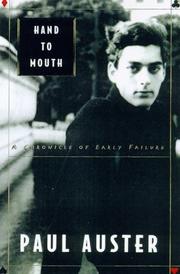
Auster's account of his early literary struggles illuminates why the Trilogy's writers and detectives are so desperate and marginal, adding a layer of lived authenticity to what might otherwise seem purely theoretical.
Critical Synthesis: Postmodern American Fiction
ExpertPlace the Trilogy within the wider landscape of American postmodern fiction and engage with serious critical thinking about what it achieves and where it fits in literary history.
▸ Study plan for this stage
Pace: 6–8 weeks total: Weeks 1–3 read "The Crying of Lot 49" (~20–25 pages/day, re-reading key passages); Weeks 4–7 read "Postmodernist Fiction" (~15–20 pages/day, taking structured notes); Week 8 reserved for synthesis, essay drafting, and exercises.
- The ontological dominant: McHale's central argument that postmodernist fiction shifts from epistemological questions ('How can we know?') to ontological ones ('What world is this?'), and how Oedipa Maas's quest in Lot 49 straddles exactly that boundary
- Paranoia as an epistemological and narrative structure: how Oedipa's inability to determine whether the Tristero is real or a hoax enacts the reader's own interpretive instability
- Stenciling and world-construction: Pynchon's use of signs, codes, and systems (WASTE, the muted post horn) as devices that simultaneously build and undermine fictional worlds
- McHale's concept of 'heterotopia' and the postmodern zone: how Lot 49's California landscape functions as a space where multiple, incompatible realities coexist
- Metafiction and self-reflexivity: how both texts foreground their own status as constructed artifacts — Pynchon through narrative unreliability, McHale through his critical meta-commentary on the novels he analyzes
- The role of the reader as detective/co-constructor: postmodern fiction's deliberate recruitment of the reader into meaning-making that is never resolved
- Canon formation and literary history: McHale's project of defining a postmodernist 'tradition' and the ideological choices embedded in which American authors and texts get included
- Entropy, information theory, and meaning: Pynchon's use of thermodynamic and communicative entropy as metaphors for the breakdown of stable signification in postmodern culture
- According to McHale, what distinguishes the ontological dominant of postmodernist fiction from the epistemological dominant of modernism — and can you locate specific scenes in The Crying of Lot 49 that illustrate each side of that boundary?
- How does Pynchon use the Tristero conspiracy to keep the novel suspended between paranoid meaning-making and meaninglessness, and what does McHale's framework reveal about why that suspension is structurally postmodern?
- McHale identifies several formal strategies of postmodernist fiction (ontological plurality, mise en abyme, the 'zone'). Which of these strategies does The Crying of Lot 49 deploy most forcefully, and which does it resist or complicate?
- What is the significance of the novel's ending — the unanswered 'crying of lot 49' — when read through McHale's argument about postmodern fiction's refusal of epistemological closure?
- How does McHale's critical methodology itself perform postmodern self-awareness, and does that strengthen or undermine his analytical authority as a guide to reading Pynchon?
- Where would you position The Crying of Lot 49 in the literary-historical argument McHale constructs — is it a transitional text, a paradigm case, or an outlier, and what evidence from both books supports your view?
- Close-reading annotation pass: Re-read Chapter 3 of Lot 49 (the Jacobean play-within-the-novel, 'The Courier's Tragedy') and annotate every moment where ontological levels blur; then map each annotation onto a specific term or concept from McHale's taxonomy.
- Concept-application essay (800–1,000 words): Argue whether The Crying of Lot 49 is better classified under McHale's 'epistemological' or 'ontological' dominant — use at least three direct quotations from each book and acknowledge the strongest counterargument.
- World-inventory exercise: Draw a diagram of all the competing 'worlds' or realities Oedipa entertains by the novel's end (conspiracy, hoax, madness, revelation, etc.). Annotate each node with a McHale concept (heterotopia, possible worlds, etc.) and draw arrows showing how the novel moves between them.
- Critical dialogue journal: After every 30 pages of McHale, write a half-page entry in which McHale 'speaks to' a specific passage from Lot 49 you have already read — practice ventriloquizing his critical voice before arguing back against it.
- Comparative positioning exercise: Write a one-page 'literary history placement memo' situating Lot 49 in the postmodern tradition as McHale defines it — identify two authors McHale discusses whose work illuminates Pynchon by contrast, even though those authors' books are not on your reading list.
- Socratic self-examination: Record yourself (audio or written) answering the question 'What does The Crying of Lot 49 achieve that a realist novel cannot?' for five uninterrupted minutes using only evidence from the two books in this stage; then review and identify gaps in your argument.
Next up: Mastering McHale's critical vocabulary and stress-testing it against Pynchon's novel equips the reader with a rigorous analytical lens that can now be turned back onto the New York Trilogy itself — enabling a fully informed, evidence-based judgment of where Auster's work sits within, extends, or quietly subverts the postmodern tradition both books have defined.
The closest American cousin to the Trilogy — a protagonist pursues a mystery that may be entirely self-generated, in a paranoid world where signs refuse to resolve into meaning, deepening your reading of Auster's similar epistemological anxiety.
The standard academic framework for postmodern narrative — reading this gives you the precise critical language (ontological instability, embedded narrative, world-construction) to write or speak about the Trilogy with real analytical depth.
Discussion
Keep reading
Paths that share books, cover the same subject, or open a related topic.