Thomas Mann Reading Order: Where to Start
This curriculum is designed for an expert reader who wants to move through Thomas Mann's entire arc with depth and intention — beginning with the short fiction that seeds his major themes, ascending through the great novels in compositional order, and culminating in the late mythic and confessional works. Each stage builds interpretive vocabulary (irony, Leitmotiv, the artist-bourgeois tension, disease as symbol, myth as psychology) that the next stage demands at a higher register.
The Short Fiction: Seeds of the Whole
ExpertMaster Mann's core obsessions — the artist's alienation, Eros and death, bourgeois decay, and the Wagnerian Leitmotiv technique — in concentrated, formally perfect form before scaling to the novels.
▸ Study plan for this stage
Pace: 6–8 weeks total: Weeks 1–4 on "Death in Venice and Other Tales" (~20–25 pages/day, allowing time for re-reading key passages); Weeks 5–8 on "Mario and the Magician and Other Stories" (~15–20 pages/day, with slower pacing to track political allegory and technique).
- The artist-outsider dialectic: Mann's recurring figure of the artist (Aschenbach, Tonio Kröger) who is simultaneously drawn to and destroyed by beauty, passion, and 'life' — contrasted with the disciplined, bourgeois world he cannot fully inhabit.
- Eros and Thanatos intertwined: In 'Death in Venice,' erotic obsession and physical death are not sequential but structurally fused — desire is already a form of dying; track how cholera, Tadzio, and Venice operate as a single symbolic organism.
- Bourgeois decay and the Thomas Buddenbrook shadow: Even in short form, Mann's Lübeck merchant-class world haunts his characters — respectability as a mask over spiritual and biological exhaustion (see 'Tonio Kröger,' 'Little Herr Friedemann').
- The Wagnerian Leitmotiv technique: Mann borrows Wagner's device of the recurring musical phrase and translates it into prose — specific words, images, and sensory details (Tadzio's hair, the strawberries, the stranger-figure) return transformed to accumulate meaning across a text.
- Myth and archetype as structural scaffolding: 'Death in Venice' is saturated with Greek mythology (Apollo/Dionysus, Hermes Psychopomp, Socratic Eros) — these are not decorations but load-bearing architecture; the reader must track mythic allusion as a second narrative layer.
- Political allegory and the fascist seduction in 'Mario and the Magician': Cipolla is Mann's most explicit pre-exile warning — the hypnotist-demagogue dramatizes how mass audiences surrender will to charisma; read alongside the narrator's complicity and self-deception.
- The unreliable or complicit narrator: From the third-person narrator who rationalizes Aschenbach's obsession to the vacationing father in 'Mario' who stays too long at the show, Mann embeds moral failure inside the narrative voice itself.
- Formal compression as amplification: The novella and short story form forces Mann's themes into high concentration — study how he achieves the density of a novel (symbolic systems, character psychology, historical sweep) within 30–100 pages.
- In 'Death in Venice,' how does Mann use the series of uncanny stranger-figures (the traveler at the cemetery, the gondolier, the street musician) to build a single symbolic argument about fate and Hermes — and what does their recurrence reveal about his Leitmotiv technique?
- Aschenbach is introduced as a figure of Apollonian discipline and artistic achievement. Trace the precise stages by which this discipline collapses. At what point, if any, does Mann suggest the collapse was inevitable rather than contingent?
- How does the setting of Venice function as more than backdrop in 'Death in Venice'? Identify at least three ways the city's physical and social reality (the sirocco, the labyrinthine streets, the concealed cholera epidemic) mirrors or drives Aschenbach's interior state.
- In 'Tonio Kröger' and other tales within the first volume, how does Mann vary and complicate the artist-bourgeois opposition? Is the opposition ever resolved, or does Mann insist on its permanent irresolvability?
- In 'Mario and the Magician,' the narrator repeatedly acknowledges discomfort yet fails to leave the performance. What does Mann achieve by making the narrator complicit rather than simply a horrified witness — and how does this complicity function as political allegory for the rise of fascism?
- Across both books, identify three to five Leitmotiv images or phrases that recur within a single story. How does the meaning of each motif shift, deepen, or invert with each recurrence — and what would be lost if Mann had used varied synonyms instead?
- Leitmotiv mapping: Choose 'Death in Venice' and create a two-column log — left column records every recurrence of a chosen motif (e.g., 'the stranger,' 'the strawberries/overripe fruit,' 'Tadzio's hair'), right column notes the context and any shift in connotation. At the end, write a one-paragraph argument about what the motif's arc reveals thematically.
- Mythological annotation: Re-read the opening and closing sections of 'Death in Venice' with a classical mythology reference at hand. Annotate every mythological allusion (Apollo, Dionysus, Hermes, Socratic dialogues on beauty). Then write a 300-word analysis of how the Greek framework either elevates or ironizes Aschenbach's experience.
- Narrator reliability audit: In 'Mario and the Magician,' highlight every moment where the narrator offers a rationalization for not leaving the show. Compile these into a list and write a brief character sketch of the narrator as if he were the subject of psychological analysis — what does his self-justification reveal about Mann's political argument?
- Comparative character sketch: Write a 400-word comparison of Aschenbach ('Death in Venice') and the narrator-father ('Mario and the Magician') as two versions of Mann's 'respectable man undone.' Focus on what each character most fears to admit about himself, and how that fear drives the plot.
- Prose imitation exercise: Select one paragraph from 'Death in Venice' that you identify as a strong example of Leitmotiv technique or mythological layering. Write an imitation paragraph (200 words) set in a contemporary context, consciously deploying a recurring image and at least one mythological or archetypal reference. Reflect briefly on what the exercise reveals about Mann's craft.
- Thematic timeline: Across both books, list every story in reading order and assign each a one-sentence 'thesis' about which of Mann's core obsessions dominates it. Then look at the list as a whole — write a short paragraph arguing whether the two books together form a coherent thematic arc or deliberately resist resolution.
Next up: By mastering Mann's symbolic grammar, Leitmotiv architecture, and thematic obsessions in their most concentrated form here, the reader is fully equipped to track these same techniques operating across hundreds of pages in the major novels — where the short fiction's seeds bloom into the vast, interwoven structures of works like "Buddenbrooks" or "The Magic Mountain."
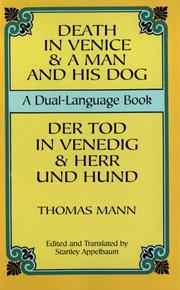
The novella collection (including Tonio Kröger, Tristan, and Der kleine Herr Friedemann) is the essential primer: every major Mann theme appears here in miniature, and the prose style — ironic, incantatory, densely symbolic — must be internalized before tackling the longer works.

This late novella introduces Mann's political allegory and the figure of the demonic manipulator; reading it after the earlier stories shows how his irony darkened under fascism, bridging the aesthetic concerns of the early work to the moral urgency of the late novels.
Buddenbrooks: The Naturalist Foundation
ExpertEngage with Mann's first and most novelistically traditional major work — a multigenerational family saga in the European realist mode — understanding how Schopenhauerian pessimism and Wagnerian motif-weaving operate at epic scale.
▸ Study plan for this stage
Pace: 6–8 weeks; roughly 25–35 pages per day. The novel runs ~730 pages (Fischer/Vintage editions), so aim to complete one of the eleven "parts" per 4–5 days, reserving the final week for re-reading key passages, annotation review, and synthesis work.
- Schopenhauerian pessimism and the will-to-live: how each Buddenbrook generation progressively loses the biological drive that sustains bourgeois ambition, tracing a metaphysical arc from vitality to renunciation
- Wagnerian Leitmotif technique applied to prose: Mann's systematic use of recurring physical descriptors (the Buddenbrook lip, the blue-veined hands, Tony's laugh) as musical motifs that accumulate meaning across hundreds of pages
- Naturalist determinism vs. Decadent inwardness: the novel straddles the late-19th-century tension between Zola-esque hereditary decline and an emerging aestheticist interiority, especially in Hanno's chapters
- The bourgeois merchant ethos as moral world: how 'Tüchtigkeit' (competence/industriousness) functions as the family's secular religion, and how its erosion signals civilizational as well as personal collapse
- Irony as narrative stance: Mann's cool, free-indirect-discourse irony that simultaneously sympathizes with and distances itself from the Buddenbrook world — the foundational technique of his entire career
- Generational structure and the saga form: how Mann organizes time across four generations to dramatize entropy, using the family chronicle as a container for philosophical argument
- Music, illness, and artistic sensitivity as symptoms of decline: Hanno's musicality and tuberculosis as the terminal expression of a family whose aesthetic refinement has consumed its practical will
- The social-historical panorama: Lübeck's merchant class, the 1848 revolutions, German unification, and the rise of industrial capitalism as the external pressures that accelerate the Buddenbrook decline
- How does Mann deploy Schopenhauer's concept of the will — its affirmation and its denial — across the four generations of Buddenbrooks, and which specific characters most clearly embody each pole?
- Identify three to five recurring Leitmotifs in Buddenbrooks and trace how their meaning shifts or intensifies each time they reappear; what does this technique owe to Wagner's use of the Leitmotiv in music drama?
- In what ways does the novel operate within the European Naturalist tradition (heredity, milieu, determinism), and where does it depart from or complicate that tradition through its Decadent and proto-Modernist elements?
- How does Mann use free indirect discourse and irony to construct a narrative voice that is neither fully inside nor fully outside the bourgeois world it depicts? Provide specific textual examples.
- What is the relationship between artistic or musical sensitivity and biological/commercial decline in the novel? Is Mann presenting this relationship as tragic, inevitable, or ambivalent?
- How does the novel's epic scale — its panoramic social detail, its long historical sweep — serve Mann's philosophical argument about the nature of bourgeois civilization and its discontents?
- Leitmotif mapping: Create a running log as you read, noting every recurrence of a physical or verbal motif (e.g., the Buddenbrook lip, 'it is my will,' the smell of the Mengstraße house). At the end, chart each motif's appearances by page and generation, then write a one-paragraph analysis of how one motif's emotional register changes over time.
- Generational character matrix: Build a table with one row per major character and columns for: dominant Schopenhauerian stance (will-affirmation vs. will-denial), commercial competence, capacity for love/feeling, and relationship to art/music. Use this matrix to write a 500-word argument about whether decline is linear or more complex.
- Close-reading passage drill: Select the scene of Hanno's final typhus delirium (Part XI) and the opening inventory scene (Part I). Write a 600-word comparative analysis of Mann's prose style in each — sentence rhythm, free indirect discourse, symbolic detail — to show how the novel's style itself enacts the family's arc.
- Philosophical source dialogue: After finishing the novel, read the brief passage in Part X where Thomas Buddenbrook reads Schopenhauer's essay 'On Death' (from The World as Will and Representation). Annotate it line by line against the novel's plot: which characters and events does each Schopenhauerian idea illuminate? Write marginal notes and then a one-page synthesis.
- Realist tradition comparison essay: Write a 700-word essay placing Buddenbrooks in conversation with the European family-saga tradition (think Zola's Rougon-Macquart or Galsworthy's Forsyte Saga, which you may know from prior reading). Focus on what Mann borrows from and what he transforms in the realist/naturalist mode — without introducing new primary texts, ground your argument in specific scen
- Irony voice exercise: Choose any scene of social performance — a dinner party, a business negotiation, Tony's courtship — and rewrite two paragraphs of it in a purely earnest, non-ironic register. Then write a short reflection on what Mann's irony adds: what does it protect, reveal, or conceal about the characters and their world?
Next up: Buddenbrooks establishes Mann's core philosophical and technical toolkit — Schopenhauerian decline, Wagnerian motif-weaving, bourgeois irony — in the relatively stable container of the realist novel, making it the essential baseline against which the formal and psychological intensifications of his subsequent, more experimental works can be measured and understood.
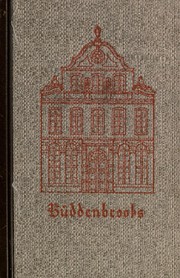
Mann's debut novel and Nobel Prize centerpiece must be read as a sustained exercise in ironic elegy: the reader should track the Leitmotiv system (physical details, musical phrases) across four generations, building the close-reading stamina the later, more experimental novels require.
The Magic Mountain: The Ironic Summit
ExpertNavigate Mann's most intellectually demanding novel — a Bildungsroman, a novel of ideas, and a time-experiment — with full command of its philosophical debates, its parodic encyclopedism, and its diagnosis of pre-war European civilization.
▸ Study plan for this stage
Pace: 12–14 weeks total. Weeks 1–9: Read *The Magic Mountain* at ~35–40 pages/day (the novel runs ~700 pages in most translations); read in named chapter blocks rather than by page count to respect Mann's own structural logic (e.g., finish "Arrival," then "Breakfast," etc.). Weeks 10–12: Read Reed's *Thom
- The Zauberberg as symbolic space: the sanatorium as a hermetically sealed world set apart from 'flatland' bourgeois time, functioning as a laboratory for European ideology
- Bildungsroman inversion: Hans Castorp as an ironic, passive hero whose 'education' leads not to social integration but to dissolution — Reed's concept of Mann's 'uses of tradition' illuminates how Mann simultaneously inherits and subverts the genre
- The Settembrini–Naphta dialectic: the novel's central philosophical agon between Enlightenment liberal humanism (Settembrini) and reactionary, Jesuit-inflected nihilism (Naphta) as a diagnosis of the ideological contradictions tearing pre-war Europe apart
- Irony as structural principle: Mann's narrator maintains an ironic double-distance from every position espoused in the novel — no character, including Mynheer Peeperkorn, is allowed an uncontested worldview
- Time as theme and form: the novel enacts its own argument about time — early chapters are dense and slow, later chapters accelerate, mirroring Hans's subjective experience and theorizing 'hermetic' vs. 'clock' time
- Parodic encyclopedism: Mann's sustained parody of Wilhelmine Bildung — medicine, music, botany, psychoanalysis, X-ray technology, spiritualism — as both satirical inventory and elegy for a civilization about to destroy itself
- Disease and the body politic: illness (tuberculosis) as metaphor for spiritual heightening, erotic intensity, and civilizational decadence — Reed traces this through Mann's notebooks and sources including Schopenhauer and Nietzsche
- Reed's genetic-critical method: how Reed reconstructs the novel's long composition history (1912–1924) to show how the original 'humorous counterpart' to *Death in Venice* expanded into a world-novel under the pressure of World War I
- How does Mann use the spatial opposition of Berghof/flatland to structure Hans Castorp's moral and intellectual development, and why does Reed argue this constitutes a critical transformation of the Bildungsroman tradition?
- What are the precise philosophical positions of Settembrini and Naphta, where do they genuinely contradict each other, and how does Mann's ironic narration prevent the reader from simply siding with either — and what does this refusal diagnose about pre-war European thought?
- How does the novel's treatment of time shift between the early and late chapters, and how does the 'Excursus on the Sense of Time' chapter function as both a philosophical essay and a formal self-commentary on the novel's own structure?
- Using Reed's account of the novel's compositional history, explain how the outbreak of World War I transformed Mann's original satirical sketch into the encyclopedic 'novel of the age' — what thematic material was added and why?
- In what ways does Mynheer Peeperkorn represent a deliberate disruption of the Settembrini–Naphta dialectic, and what does his inarticulate vitalism suggest about the limits of purely intellectual debate as a response to civilizational crisis?
- How does Mann's use of Leitmotiv — a technique Reed connects to Wagner and to Mann's own earlier fiction — operate differently in *The Magic Mountain* than in a shorter work, and what does its encyclopedic scale add to its ironic effect?
- Dialectical mapping: Draw a two-column ideological ledger for Settembrini and Naphta. After each major debate scene, add bullet points of new positions, contradictions, and concessions. At the novel's end, write a one-page verdict: does either 'win,' and what does the ironic narrator's silence on this tell us?
- Time-log experiment: Keep a reading journal that records, for each chapter, (a) approximate fictional time elapsed in the narrative and (b) the number of pages Mann devotes to it. Graph the ratio. Write a paragraph connecting your graph to the novel's explicit theorizing about subjective vs. clock time.
- Reed cross-reference drill: Each time Reed cites a specific passage, chapter, or character from *The Magic Mountain*, locate and re-read that passage before continuing. Annotate the novel margin (or a notebook) with Reed's interpretive gloss and your own agreement or pushback.
- Parody inventory: Select any one of Mann's extended encyclopedic set-pieces (e.g., the X-ray scene, the botany meditation, the spiritualist séance). Write a 400-word close reading that identifies (a) the specific discourse being parodied, (b) the ironic distance the narrator maintains, and (c) what the parody reveals about Hans Castorp's 'education.'
- Bildungsroman comparison essay: Using Reed's chapter on Mann's relationship to the German literary tradition, write a 600-word comparative note arguing whether *The Magic Mountain* ultimately affirms, subverts, or transcends the Bildungsroman form — cite at least three specific moments from the novel and two passages from Reed.
- Snow-chapter close reading: Re-read the 'Snow' chapter in isolation after finishing the novel. Annotate every philosophical claim Hans makes in his vision. Then write a short response: does the novel validate or ironize Hans's conclusion that 'love, not death, shall be lord over my thoughts'? Use Reed's analysis of Mann's irony to support your answer.
Next up: Mastering the philosophical dialectics, ironic encyclopedism, and civilizational self-diagnosis of *The Magic Mountain* — anchored by Reed's genetic and tradition-based criticism — equips the reader to engage Mann's later, explicitly mythological and political works, where the same ironic method is applied to fascism, exile, and the Biblical past on an even grander scale.

The central masterpiece of the curriculum: Hans Castorp's seven years on the mountain synthesize everything from the earlier fiction (disease, time, the artist-citizen tension) into a vast ironic panorama; reading it after Buddenbrooks makes the shift from realism to symbolic modernism fully legible.

Reed's authoritative study of Mann's intellectual and artistic development is the ideal companion after finishing The Magic Mountain, illuminating how Mann deploys and subverts German cultural tradition — essential preparation for reading the Joseph tetralogy's mythic method.
The Joseph Tetralogy: Myth and Irony at Full Scale
ExpertExperience Mann's most ambitious project — a four-volume retelling of the biblical Joseph story — as a humanistic counter-myth to fascism, understanding how irony, psychology, and comedy transform ancient archetype into modern wisdom.
▸ Study plan for this stage
Pace: 16–20 weeks, ~25–30 pages/day — the tetralogy runs roughly 1,500 pages in a single-volume edition; treat each of the four constituent novels (The Tales of Jacob, Young Joseph, Joseph in Egypt, Joseph the Provider) as its own reading unit of 3–5 weeks, pausing between volumes for reflection and note-
- The 'rolling sphere' of myth — Mann's idea that mythic figures consciously 'live into' archetypal roles inherited from ancestors, collapsing past and present into a single recurring pattern
- Irony as humanistic weapon — how Mann's narrative voice simultaneously inhabits and gently mocks the mythic frame, undercutting fanaticism and literalism with humor and self-awareness
- The counter-myth against fascism — the tetralogy as a deliberate ideological counter-narrative to Nazi blood-and-soil mythology, reclaiming myth for cosmopolitan, humane ends
- Psychology as theology — the Freudian and Jungian dimensions of the Joseph story, where dreams, the unconscious, and self-knowledge replace dogma as the path to the divine
- The 'descent and ascent' pattern — the structural and symbolic importance of the pit, the well, the prison, and the palace as stations of a repeated katabasis (descent into darkness) followed by triumphant return
- Comedy and lightness — Mann's deliberate choice to make the tetralogy ultimately comic in the classical sense: reconciliatory, life-affirming, and resistant to tragic rigidity
- The narrator as mediating consciousness — the intrusive, essayistic narrator who digresses, speculates, and philosophizes, turning storytelling itself into an act of humanistic reflection
- Intertextuality and source layering — how Mann weaves together the Hebrew Bible, Mesopotamian myth (Gilgamesh, Tammuz), Egyptian religion, Goethe, and Freud into a single synthetic tapestry
- How does Mann's concept of 'living in the footsteps' of mythic predecessors differ from simple allegory, and what does it imply about the relationship between individual identity and collective archetype?
- In what specific ways does the tetralogy function as a political and philosophical rebuttal to National Socialist mythology, and how does Mann encode this argument within the narrative itself rather than stating it didactically?
- How does the narrator's ironic, digressive voice shape the reader's relationship to the sacred source material — does it undermine reverence, or create a new, more sophisticated form of it?
- Trace the descent-and-ascent pattern across all four volumes: what does each 'pit' episode reveal about Joseph's psychological and spiritual development, and how does the pattern accumulate meaning by its final repetition?
- How does Mann use the figure of Joseph — charming, self-aware, theatrically pious — to embody a specifically modern, psychological conception of the 'chosen' individual, distinct from traditional religious election?
- What role does comedy — in the classical, structural sense — play in the tetralogy's humanistic argument, and how does the reconciliation of Joseph and his brothers in the final volume function as a philosophical statement about forgiveness, irony, and the uses of suffering?
- Keep a 'myth log': each time a character consciously references or imitates an ancestral archetype (Jacob as Isaac, Joseph as Tammuz, etc.), record the passage, the archetype invoked, and a one-sentence note on what ironic distance — if any — Mann's narrator maintains between the character and the role
- After finishing each of the four constituent novels, write a 300–400 word 'descent map' tracing the specific katabasis of that volume — identify the pit, the nadir, the agent of rescue, and the form of the subsequent ascent — then compare all four maps at the end to see how the pattern evolves
- Select three extended narrator digressions (the prelude 'Descent into Hell,' the meditation on time in Tales of Jacob, and any one passage of your choice from Joseph the Provider) and annotate them as essays: what argument is Mann making, what sources does he draw on, and how does the digression reframe the narrative action around it?
- Write a 500-word comparative note on Mann's Joseph and the Genesis source text (chapters 37–50): catalogue three moments where Mann psychologizes, expands, or ironizes the biblical account, and articulate what each departure reveals about his humanistic agenda
- Construct a one-page 'intertextual web' diagram mapping the mythological sources Mann layers onto Joseph — at minimum include: Hebrew Bible, Osiris/Tammuz dying-and-rising god traditions, Freudian dream theory, and Goethean Bildung — drawing lines between sources where Mann explicitly fuses them
- Draft a short (600–800 word) argumentative essay responding to this prompt: 'Mann's tetralogy does not retell the Joseph story — it rescues myth itself from its own worst tendencies.' Use at least three specific textual moments to support or complicate the claim
Next up: Mastering the tetralogy's synthesis of myth, irony, and humanistic comedy at epic scale equips the reader to recognize how Mann distills these same preoccupations into concentrated, allegorical form in his later and shorter works — making the next stage's focus on the novellas and essays a study in compression rather than expansion of the same artistic vision.

The complete tetralogy (The Stories of Jacob, Young Joseph, Joseph in Egypt, Joseph the Provider) is Mann's most sustained and joyful achievement; reading it after The Magic Mountain reveals how his irony evolved from diagnosis into affirmation, and the mythic method here directly informs Doctor Faustus.
The Late Novels: Confession, Catastrophe, and Comedy
ExpertComplete the arc with Mann's three final major novels, each a distinct late-style experiment — tragic allegory, autobiographical irony, and picaresque comedy — and situate them within his life's work and twentieth-century history.
▸ Study plan for this stage
Pace: 12–14 weeks total: ~5 weeks for Doctor Faustus (~30 pages/day; it is long, dense, and demands slow reading), ~3 weeks for The Holy Sinner (~25 pages/day; shorter but stylistically intricate), ~4 weeks for Confessions of Felix Krull (~25 pages/day), plus 1–2 weeks at the end for review, comparative r
- Late style as artistic self-reckoning: how Mann uses each of these three novels to settle accounts — with Germany, with his own biography, and with the novel form itself
- The Faustian pact as national allegory: in Doctor Faustus, Adrian Leverkühn's diabolical bargain maps onto Germany's cultural and political catastrophe, making the novel simultaneously a biography, a confession, and a historical indictment
- The unreliable narrator and the double confession: Serenus Zeitblom in Doctor Faustus is both Mann's ironic surrogate and a study in bourgeois complicity; his narration is itself part of the novel's meaning
- Montage of discourses in Doctor Faustus: Mann weaves musicology (twelve-tone theory), theology, Renaissance demonology, and Weimar-era politics into a single polyphonic structure — understanding how these layers interact is essential
- Medieval parody and the comedy of grace in The Holy Sinner: Mann adapts the Gregorius legend (via Hartmann von Aue) to explore sin, penance, and redemption through an ostentatiously artificial, self-aware narrative voice that mocks and celebrates its own archaism
- The picaresque tradition and the artist-as-trickster in Confessions of Felix Krull: Krull's charm, shapeshifting identity, and erotic self-invention reframe the Künstlerroman as comic imposture, asking whether the artist is fundamentally a confidence man
- Irony as ethical stance: across all three novels Mann deploys irony not as detachment but as a moral instrument — the reader must learn to read what the irony is doing in each distinct register (tragic, parodic, comic)
- Autobiography, myth, and self-quotation: the late novels are in constant dialogue with Mann's earlier work (Buddenbrooks, The Magic Mountain, Joseph tetralogy); recognizing these internal echoes reveals how Mann constructs a unified, retrospective mythology of his own career
- In Doctor Faustus, how does the temporal split between Leverkühn's life (narrated) and Zeitblom's act of writing (1943–45) create a second, parallel narrative about Germany's collapse — and what does this structure say about the possibility of witnessing catastrophe from inside it?
- Mann described Doctor Faustus as his most personal book. Where and how does autobiographical material (his own artistic anxieties, his exile, his relationship to German culture) surface in the novel, and how is it transformed by being displaced onto Leverkühn and Zeitblom?
- The Holy Sinner is narrated by the spirit of a monastery bell and written in a deliberately archaic, polyglot pastiche. What is the effect of this extreme narrative artifice on the novel's treatment of sin and redemption — does the comedy undercut or deepen the theological content?
- Felix Krull is an unfinished novel Mann worked on across five decades. How does the picaresque form — episodic, digressive, identity-fluid — serve Mann's late meditation on art, performance, and the self? In what ways is Krull a comic mirror-image of Leverkühn?
- How do all three novels engage with the idea of the 'pact' or bargain — with the devil, with God, with society — and what does each novel's resolution (or refusal of resolution) suggest about Mann's final view of human agency and historical guilt?
- Situating these three novels together as a triptych: what does the sequence tragic allegory → medieval parody → picaresque comedy suggest about the arc of Mann's late style, and how does each book revise or answer the one before it?
- Zeitblom's Voice Workshop: Write 400–600 words narrating a contemporary catastrophe (personal or historical) in the style of Serenus Zeitblom — pedantic, self-interrupting, emotionally overwhelmed but formally composed. Then annotate your own passage: where does the narrator's irony reveal more than he intends? This trains close attention to Doctor Faustus's central narrative mechanism.
- Musical Structure Mapping: Doctor Faustus is built around the idea of twelve-tone composition. Choose one chapter (e.g., the description of Leverkühn's Apocalipsis cum figuris or the Lamentation of Dr. Faustus) and map its thematic 'rows': identify the recurring motifs (the cold, the laughter, the sea-shell, the hetaera esmeralda butterfly) and trace how Mann permutes and inverts them across the c
- Source Comparison — The Gregorius Legend: Read a short synopsis or excerpt of Hartmann von Aue's Gregorius (widely available in translation) and compare it directly with The Holy Sinner. Make a two-column chart noting what Mann keeps, what he exaggerates, what he parodies, and what he adds. Write a paragraph arguing whether the result is reverent, subversive, or both.
- The Confidence Man Genealogy: Place Felix Krull in a lineage of literary tricksters and picaresque heroes (e.g., Lazarillo de Tormes, Melville's Confidence-Man, or Gide's Lafcadio). Write a 500-word comparative note on one specific scene in Krull — his military examination, his hotel work, or the Diane Philibert episode — arguing what Mann's version adds to or departs from the tradition.
- Triptych Essay: After finishing all three novels, write a 700–1,000-word comparative essay responding to this prompt: 'Doctor Faustus, The Holy Sinner, and Confessions of Felix Krull each stage a different relationship between the artist and guilt. Trace this relationship across the three books, using specific textual evidence from each.' This synthesizes the stage's central arc.
- Timeline and Context Chart: Build a two-track timeline. Track 1: the composition and publication dates of all three novels alongside key biographical events (Mann's American exile, his return to Europe, the postwar debates about German guilt, his death in 1955). Track 2: the historical settings of each novel (Weimar/Nazi Germany; medieval Europe; Belle Époque Europe). Annotate points where the two
Next up: Mastering these three late novels — with their dense intertextuality, self-referential irony, and engagement with twentieth-century catastrophe — equips the reader to move into critical and scholarly literature on Mann, where the same texts are the primary battleground for debates about modernism, the German tradition, exile writing, and the ethics of aesthetic form.
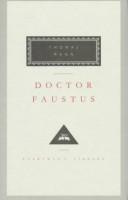
Mann's darkest novel — a fictional composer's pact with the devil as allegory for Germany's catastrophe — demands everything the curriculum has built: the musical Leitmotiv technique, the ironic narrator, the mythic method, and the political conscience forged in the Joseph years.
This medieval legend retelling, written immediately after Doctor Faustus, shows Mann's late style at its most playfully parodic and formally self-conscious; it acts as a tonal counterweight to Faustus and prepares the reader for the comic register of Felix Krull.
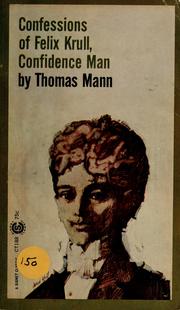
Mann's final, unfinished novel — a picaresque comedy of the artist as con man — brings the entire curriculum full circle: the artist-outsider of Tonio Kröger returns transformed into a joyful ironist, and reading it last reveals how Mann's lifelong themes resolve into laughter and self-parody.
Discussion
Keep reading
Paths that share books, cover the same subject, or open a related topic.