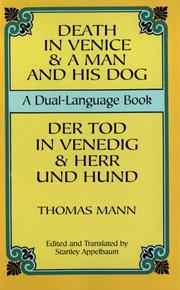
Start with Death in Venice and Other Tales. Mann's reputation rests on three enormous novels, and readers who begin with one of them frequently do not finish. The novellas are the honest entry: they run to fifty or sixty pages each, they are structurally identical to the big books in miniature, and they teach you the thing you actually need to learn, which is that Mann's irony is always doing two things at once and that his surfaces are never the whole meaning.
Read Death in Venice itself, then Tonio Kröger and Tristan from the same volume. If the ironic distance and the sentence rhythm work for you, you are equipped for anything he wrote. If they do not, you have lost an afternoon rather than a season. Mario and the magician and other stories is the natural follow-on, and its title story is Mann's most direct short treatment of fascist coercion.
The three novels, in order of difficulty
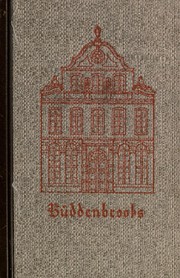
- Buddenbrooks — written when Mann was twenty-five, and the most conventionally readable thing he did. Four generations of a Lübeck merchant family declining into art and illness. It is long but it is a family saga, and it moves. This is the right first novel.
- The Magic Mountain — a young engineer visits a Swiss sanatorium for three weeks and stays seven years. The central book of Mann's career and one of the great European novels, and it is slow on purpose: time itself is the subject, and the middle third dilates deliberately until the reader loses track of the calendar along with the protagonist. The long philosophical debates between Settembrini and Naphta are where most abandonments happen. They are also the point.
- Doctor Faustus — the late masterpiece, a composer's pact with the devil written as an allegory of Germany's catastrophe. The most difficult of the three, and it assumes serious musical vocabulary; the chapters on twelve-tone technique are hard going without some music theory. Read it last of the three.
The tetralogy most readers never finish
Joseph and his brothers is Mann's longest work by a wide margin — four novels retelling the Genesis story across roughly fifteen hundred pages, written over sixteen years in exile. Mann himself considered it his greatest achievement. Very few readers agree, mostly because very few readers get through it. It is genuinely magnificent in stretches and genuinely becalmed in others.
The honest advice: do not attempt it until you have read at least two of the major novels and know you want more. If you do attempt it, the first volume is the hardest, and the Joseph in Egypt sections are the reward.
The late, lighter work
The Holy Sinner, a mock-medieval legend, and Confessions of Felix Krull, confidence man, an unfinished picaresque about a charming fraud, are the two late books worth knowing. Both are much funnier than Mann's reputation suggests, and Confessions of Felix Krull, confidence man in particular is a delight — the last thing he worked on and the least burdened. Read either at any point as relief.
For the criticism
Thomas Mann; the uses of tradition by T. J. Reed is the standard English study and is excellent on the political turn: Mann began as a conservative nationalist, spent the 1920s changing his mind in public, and ended as the most prominent German voice against Hitler. That trajectory is the key to almost everything after 1918 and is not obvious from the novels alone.
Where to stop
Buddenbrooks plus The Magic Mountain plus the novellas is a complete and satisfying Mann. Doctor Faustus is for readers who want the whole argument. Joseph and his brothers is for completists, and there is no shame in never opening it.
For a parallel author path, see Thomas Hardy.
Follow the full ordered path here: Thomas Mann Reading Order: Where to Start.
Ready to learn something deeply?
Build a reading path — free