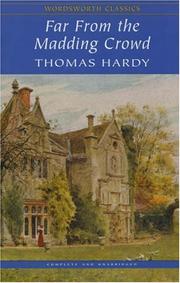
Start with Far from the Madding Crowd. It is the first of the major Wessex novels, it has the most engaging heroine Hardy wrote in Bathsheba Everdene, and — this matters more than it should — it is the only major Hardy novel that ends in something like happiness. Beginning here gives you the pastoral Wessex, the rural economy, the fatalism and the extraordinary landscape writing, without the crushing conclusion that puts so many first-time readers off him permanently.
The alternative most people default to is Tess of the d'Urbervilles, because it is the famous one. Do not start there. It is a great novel and it is relentless, and readers who meet Hardy through it often conclude that he is simply a machine for punishing women. Meet him first where he is warm, then let him get darker; that is roughly the shape of his career anyway.
The sequence
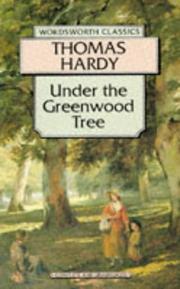
- Under the Greenwood Tree — a short, genuinely light rural comedy about a village choir. Optional, and a pleasant fifteen-thousand-word test of whether you like the prose.
- Far from the Madding Crowd — the entry point. Bathsheba, three suitors, and the best sheep-farming in English fiction.
- The Return of the Native — Egdon Heath as a character, and Eustacia Vye. The most formally ambitious of the middle novels and the slowest to start; the opening chapter is a description of a heath and nothing else.
- The Mayor of Casterbridge — Michael Henchard sells his wife at a fair and spends the rest of his life paying for it. The most tightly constructed Hardy novel and the best single argument for him as a tragedian.
- Tess of the d'Urbervilles — the great one. Enormously controversial when published, and its subtitle alone provoked a decade of argument.
- Jude the Obscure — the last and the bleakest. The reviews were savage enough that Hardy stopped writing novels altogether and spent his final thirty years on poetry.
Honest warnings
Hardy is slow to start, novel by novel. He habitually opens with a long descriptive set-piece before anyone does anything, and The Return of the Native is the extreme case. Give each book fifty pages.
The coincidences are relentless. Letters go under doors, characters miss each other by minutes, and the machinery of fate is entirely visible. This is either the point or an irritation depending on your temperament, and readers who need plausibility will struggle.
Jude the Obscure contains a plot event, roughly two-thirds through, that a significant number of readers find genuinely unbearable. It is not gratuitous but it is extreme, and it is worth knowing that it is coming.
Do not skip the poetry
Hardy considered himself a poet who wrote novels for money, and a meaningful body of opinion holds that the poems are the greater achievement. The Selected poems are the place to go after Jude the Obscure — particularly the 1912 to 1913 elegies for his first wife, written after a marriage he had largely wasted, which are among the finest poems in the language.
The life
The life and work of Thomas Hardy is nominally by his second wife and was in fact written by Hardy himself in the third person, which tells you a good deal about him; read it as a self-portrait rather than a biography. Michael Millgate's THOMAS HARDY: A BIOGRAPHY REVISITED is the standard scholarly life and is honest about the gap between the two.
Where to stop
After Tess of the d'Urbervilles is a legitimate stopping point if you want the achievement without the despair. If you continue to Jude the Obscure, follow it with the poems rather than leaving Hardy there.
For another author-by-phase reading order, see Thomas Mann.
Follow the full ordered path here: Thomas Hardy Reading Order: Where to Start.
Ready to learn something deeply?
Build a reading path — free