Tuberculosis: The Best Books on the White Plague, in Order
Tuberculosis has probably killed more human beings than any other single cause, it was for a century the defining disease of Western culture, and it is still the world's deadliest infection — a sentence that surprises most readers, which is roughly the point of reading about it. This path is a history-of-disease path, not a clinical one: it moves from a modern introduction, through the bacteriology revolution and the strange institution of the sanatorium, into the literature that made consumption romantic, and out to the question the whole subject turns on — why a curable disease with a century-old cure still kills over a million people a year. The single argument that runs through it, made first by René Dubos in 1952 and made again by Paul Farmer half a century later, is that TB is a social disease that happens to have a bacterial cause. Everything here is written for general readers; no medical background is needed.
Where to Start
BeginnerGet the whole arc of the disease — what it does to a body, why it spread when it did, and why it is still here — from three general-audience histories. By the end you should be able to explain what makes TB epidemiologically unusual (latency, slow course, airborne spread) and why that shaped everything from architecture to drug regimens. Read all three before the specialist chapters below; they set up every argument that follows.
▸ Study plan for this stage
Pace: Five to six weeks for 1,028 pages across three general-audience histories, none of which needs medical background. Green's Everything Is Tuberculosis is only 208 pages and reads in a weekend - it is built around a single patient in Sierra Leone and is the newest book on the path, the only one writte
- What tuberculosis does to a body, and why the slow course rather than the acute one shaped every institution built around it
- The three epidemiological features that make TB unusual - latency, a long course, and airborne person-to-person spread - and how each of them shows up later in architecture, in public health policy and in drug regimen length
- Why TB spread when and where it did: crowding, indoor work, malnutrition and the movement of people
- Combination therapy and why a single drug was never enough, which is the fact the whole modern resistance problem rests on
- The gap between having a cure and delivering one, which Green states at the outset and the final stage returns to
- Reading the scale honestly: TB as the world's deadliest infection, still, and what that claim is measured against
- What are the three features of TB's natural history that make it epidemiologically unusual, and what practical consequence does each have?
- Why did combination therapy work where single-drug treatment failed, and what does that imply about a patient who stops a course early?
- Ryan tells the story of a scientific victory. On his account, what exactly was won, and when did it become clear that the win was partial?
- Bynum covers antiquity to the modern resurgence in one volume. What is the shape of her arc - where does the disease decline, and does she attribute the decline to medicine?
- Green uses one patient to carry an argument about a global disease. What does that method establish, and what does it not?
- Build a one-page timeline from Bynum, marking the points where the medical understanding changed and the points where the death rate changed. Leave the two as separate rows. Whether they line up is the question the last stage of this path exists to answer, and drawing it yourself is worth more than being told.
- Read Ryan's account of the streptomycin trials and write down what made them convincing as evidence - who was compared with whom, and what was controlled. This is the point at which TB treatment became a matter of trial evidence rather than of regime and climate.
- Take Green's central claim about why a curable disease still kills at scale and write it in one sentence. Keep it; you will test it against Dubos, Farmer and Krishnan in the final stage, and the interesting thing is how little the claim has changed.
- List every treatment mentioned across the three books that was believed to work and did not. It is a long list, and it is the best preparation for reading the sanatorium chapters without hindsight.
Next up: With the arc of the disease in place, the next stage slows down on the two transformations that shaped it most - the identification of the bacillus and the century of the sanatorium - and reads them from the patient's side as well as the profession's.

The most recent and by some distance the most readable entry point: a short book built around one patient in Sierra Leone that uses him to explain why a curable disease is still a mass killer. Published in 2025, so it is the only book here written with the current drug-resistance and funding picture in view.

The best single-volume scholarly history, and the one to read second — Bynum is a historian of medicine and covers the disease from antiquity through the sanatorium era to the modern resurgence with an even hand. This is the reference narrative the rest of the path hangs off.

Ryan is a physician, and his subject is the hunt for the cure: the search for streptomycin, the personalities involved, and the trials that established combination therapy. Placed third because it is the story of the scientific victory, which you need before the last stage can explain why the victory did not hold.
Bacteriology and the Sanatorium Century
BeginnerUnderstand the two great transformations of the nineteenth and early twentieth centuries — Koch's identification of the bacillus in 1882, and the rise of the sanatorium as a medical, architectural and social institution. By the end you should be able to say what the sanatorium regime actually consisted of, what evidence there ever was that it worked, and how a diagnosis reorganised a patient's entire life. These are academic histories written accessibly; Rothman and Ott in particular are built o
▸ Study plan for this stage
Pace: Ten to twelve weeks for 1,327 pages, and the four books split cleanly into two pairs. Goetz's The Remedy is 298 pages of narrative science - Koch's identification of the tubercle bacillus in 1882, his disastrous tuberculin cure, and Arthur Conan Doyle reporting on it - and it is the enjoyable way in
- Koch's identification of the bacillus, and the crucial fact that establishing a cause did not produce a treatment - tuberculin failed, and germ theory bought forty years of diagnosis before it bought any cure
- What the sanatorium regime actually consisted of: rest, graduated exercise, feeding, open air, and the surgical interventions that accompanied it
- What evidence there ever was that the regime worked, and how selection of patients flattered the results
- The sanatorium as an architectural and social institution as much as a medical one, and what it removed a patient from
- How a diagnosis reorganised a life - work, marriage, migration, residence - which is Rothman's subject and the thing the medical histories leave out
- The shifting professional meaning of the diagnosis over the period Ott covers, and how classification followed treatment rather than preceding it
- Reading a history built from patient letters against one built from doctors' records, and noticing where the two accounts of the same regime disagree
- Koch identified the organism, and treatment did not follow for decades. Why not? What did germ theory make possible immediately, and what did it not?
- Describe the sanatorium regime in specific terms. What was the reasoning behind each element, and which elements plausibly did anything?
- What would you need to know about a sanatorium's admissions policy before believing its published recovery rates?
- Using Rothman, describe what a diagnosis did to a nineteenth-century patient's life beyond the medical. Which consequence surprised you most?
- Rothman works from patients and Ott from the profession over roughly the same ground. Name a point on which the two sources give different pictures.
- Goetz makes the tuberculin episode central. What does a famous failure teach that the eventual success does not?
- Reconstruct one patient's full course from Rothman's letters and diaries - diagnosis, the decisions that followed, the moves, the outcome - as a single narrative. Then check what Ott's professional sources would have said about that patient's category and prognosis. Putting the two together is the exercise both books were assembled for.
- Write out the sanatorium regime as a daily schedule, element by element, from Dormandy and Ott. Beside each element write the stated rationale and then your assessment of the evidence for it. Doing this before you know how the story ends is the closest you can get to reading it as a contemporary would.
- Trace the tuberculin episode through Goetz and then find how Dormandy handles the same events. Note where a narrative account and a reference account differ in emphasis, and which one you would cite for a fact.
- Take three treatments described in Dormandy - a surgical one, a regimen one, a pharmacological one - and for each write down what would have counted as proof that it worked, by the standards of its own time and by ours.
- Keep a running list of the ways the sanatorium sorted patients: by class, by ability to pay, by stage of disease, by race and by nationality. Rothman and Ott both supply material for it, and the list is the bridge to the final stage's argument about distribution.
Next up: The sanatorium century produced not only an institution but an image of the consumptive patient, and the next stage turns to that image - how the culture made the disease mean something, and what the meaning cost the people who had it.

The bacteriological revolution as narrative: Robert Koch's identification of the tubercle bacillus, his disastrous tuberculin cure, and Arthur Conan Doyle's role reporting on it. The most enjoyable way into the science, and it explains why germ theory did not immediately produce a treatment.
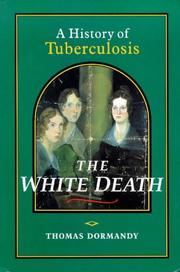
The fullest cultural and medical history of TB in English, long and anecdotal, moving through the sanatoria, the surgical treatments, the famous patients and the eventual antibiotics. Read it as the deep reference for this period rather than at a sitting.
The best book on what having tuberculosis meant to the person who had it, reconstructed from the letters and diaries of nineteenth-century American sufferers. It shows the disease reorganising work, marriage, migration and identity — the social history the medical accounts above leave out.
A historian's account of how tuberculosis was understood, classified and treated in America from 1870 onward, and of how the meaning of the diagnosis changed as the medicine did. Pairs directly with Rothman: she gives you the patients, Ott gives you the profession.
The Disease as Metaphor
IntermediateSee why tuberculosis is the most heavily symbolised disease in Western culture, and why that symbolism had real consequences for patients. By the end you should be able to explain the consumptive ideal — the association of TB with beauty, sensitivity and genius — and Sontag's argument about what such metaphors cost the sick. This stage is literary and critical rather than medical, and it is the one stage that is optional if your interest is purely epidemiological; skip to the final stage if so.
▸ Study plan for this stage
Pace: Six to ten weeks, and this stage is the one place on the path where reading time is dominated by a single optional book. Sontag's Illness as Metaphor is only 88 pages and is an essay rather than a study - read it in two sittings, then reread it, because everything else here is read through it. Byrne
- The consumptive ideal: the association of tuberculosis with beauty, sensitivity, refinement and genius, and the specific period in which it took hold
- Sontag's argument that a metaphor of illness punishes the patient by making the disease mean something about their character
- How literary convention and medical understanding fed each other rather than running in parallel, which is Byrne's contribution
- Why TB in particular attracted this treatment - the slow course, the young sufferers, the appearance the disease produced - where other diseases attracted the opposite
- The real consequences of the symbolism for patients: what it made expected of them, and what it made unsayable
- Mann's sanatorium as a self-contained world with its own time, and what a novel can show about the institution that a history cannot
- State Sontag's argument in one sentence. What does she say a metaphor of illness does to a sick person, and does the argument depend on the metaphor being flattering or unflattering?
- What features of tuberculosis made it available for romanticisation, and why did the same culture not romanticise other common killers of the period?
- Byrne argues that literary convention and medical understanding influenced each other. Give a specific example from her book of influence running from fiction toward medicine rather than the other way.
- Read Rothman's patients from the previous stage against the consumptive ideal. Where does the lived record contradict the image most sharply?
- If you read The Magic Mountain: what does Mann's treatment of time in the sanatorium convey about the institution that Dormandy's history does not?
- Reread Sontag once you have finished Byrne and mark every claim of Sontag's for which Byrne supplies evidence, and every claim for which she does not. Sontag is an essayist making assertions; seeing which ones a scholar can substantiate is the point of reading them in this order.
- Take three consumptive characters from the fiction Byrne discusses and, for each, write down what the disease is being used to say about the character. Then set those against a real patient from Rothman and note what the fiction has no room for.
- Track one metaphor across the stage - the disease as a refining fire, or as a debt, or as a form of sensitivity - from Byrne's Victorian sources to Sontag's critique of it. Write down where the metaphor stopped being available and why.
- If you take on The Magic Mountain, keep a note of every point at which a character's illness is treated as a fact about who they are rather than about their lungs, and read the collection back against Sontag at the end.
Next up: The symbolism belongs to a period when there was no cure; the final stage takes up the harder question of a disease that has had a cure for seventy years and still kills over a million people a year.
The essay that named the problem: Sontag's argument that the myths attached to tuberculosis, and later to cancer, punish the patient by making the disease mean something about them. Short, and the necessary lens for everything else in this stage.

The scholarly companion to Sontag: how the consumptive figure worked in nineteenth-century British fiction, and how literary convention and medical understanding fed each other. Read after Sontag, whose case it substantiates.

The great sanatorium novel, set in a Davos institution before the First World War, and the place to end this stage because it is the culture's own account of the experience the historians reconstruct. A long and demanding book — treat it as the optional capstone rather than a requirement.
Why It Never Went Away
IntermediateConfront the central question: TB has been curable since the 1950s and still kills over a million people a year. The books here argue that this is a distributional failure rather than a biological one, and that drug resistance is largely manufactured by interrupted treatment. That argument is well evidenced but it is an argument — Farmer in particular is an advocate as well as a physician-anthropologist, and reading him as one is part of reading him well. By the end you should be able to explain
▸ Study plan for this stage
Pace: Twelve to fourteen weeks for 1,302 pages, and the order matters more here than anywhere else on the path. Dubos's The White Plague is 277 pages and is the oldest book on the path; it comes first so that you can see how much of today's argument was already made three-quarters of a century ago - that
- The central claim, made by Dubos and remade by Farmer: TB is a social disease that happens to have a bacterial cause, and its historic decline preceded effective drugs
- MDR-TB and XDR-TB: what resistance to which drugs each denotes, and what treating them costs in time, money and toxicity relative to drug-sensitive disease
- How resistance is largely manufactured by interrupted or partial treatment rather than arising spontaneously, and why that makes it a delivery failure
- DOTS as a strategy: what directly observed therapy asks of a patient and of a health system, and what it was and was not designed to handle
- Cost-effectiveness reasoning as the central political fight in global TB control - the assumptions on which treating MDR-TB in poor countries was written off, and how Farmer's programmes tested them
- The distinction between the argument being well evidenced and the argument being neutral: Farmer is an advocate and Kidder's book is a sympathetic profile
- Krishnan's addition to the older argument: drug regulation, unregulated private prescribing and a market in diagnosis as mechanisms Dubos could not have anticipated
- What would count as evidence against the social-cause thesis, which is the question that keeps the stage from being a sermon
- Dubos argued that TB declined before effective treatment existed. What evidence did he have, and what does the claim imply about the credit usually given to antibiotics?
- Explain how drug resistance in TB is generated. Why does that mechanism make the resistance problem a statement about health systems rather than about the organism?
- What were the assumptions behind writing off MDR-TB treatment in poor countries as not cost-effective, and which of them turned out to be wrong?
- Kidder writes a sympathetic profile and Farmer writes his own scholarly case. Reading them consecutively, what does Farmer establish that Kidder only asserts, and what does Kidder show that Farmer's own book cannot?
- Krishnan reports from India. What mechanism does she identify that is absent from Dubos and only partly present in Farmer?
- The books in this stage agree with each other. State the strongest objection to their shared thesis that you can construct, and say what evidence would settle it.
- Read Dubos's core argument and Farmer's side by side, writing each as a numbered chain of claims. Mark which links are identical across three-quarters of a century, which Farmer has evidence for that Dubos did not, and which remain assertions in both. The overlap is the most striking thing on this path and you should see it in your own handwriting.
- Return to the timeline you built in stage one from Bynum, with medical change on one row and mortality on the other, and read it against Dubos's thesis. Say whether your own timeline supports him, and where it does not.
- For one of Farmer's programmes as described by Kidder and then by Farmer, list what it actually cost and what it actually achieved. Then reconstruct the cost-effectiveness argument that said it should not be attempted, and identify the specific assumption the programme falsified.
- Take Krishnan's account of the private diagnostic and prescribing market and map it onto the resistance mechanism you set out earlier. Write the sequence from a single unsupervised prescription to a resistant strain - this is the clearest available answer to why a curable disease persists.
- Go back to the one-sentence claim you wrote down from Green in stage one and rewrite it now, with the evidence from this stage behind it. Note what changed and what did not; if nothing changed, say why the older books were needed anyway.
- Write a page arguing the case against this stage's shared thesis, using only facts drawn from these four books. Every author here is arguing a position, and the discipline of stating the objection they under-weight is the last thing this path can teach you.
Next up: This closes the path: the history, the culture and the present-day argument are all in place, and further reading now means current epidemiological reporting and the studies these authors cite rather than another narrative history.

The 1952 classic that made the case first, and the intellectual root of everything else in this stage: Dubos argued that TB's rise and fall tracked living and working conditions rather than medical intervention. Read it before the modern books so you can see how much of the current argument is seventy years old.
Kidder's portrait of Paul Farmer treating drug-resistant TB in rural Haiti and then in Peru, and the most humane way into the modern politics of the disease. It is a sympathetic profile rather than a neutral assessment, which is worth knowing while you read it.

Farmer making his own case, in his own scholarly voice: that the distribution of TB and drug resistance follows poverty and political violence, and that treating MDR-TB in poor countries was written off as cost-ineffective on assumptions that turned out to be wrong. Read directly after Kidder.

The most current account of why TB persists, reported largely from India, where the disease burden is heaviest. Krishnan's subject is the interaction of poverty, drug regulation and a private health market, and it brings the argument that Dubos began up to the present day.
Discussion
Keep reading
Paths that share books, cover the same subject, or open a related topic.