The Six-Day War: books to read, in order
Six days in June 1967 redrew the map of the Middle East and created an occupation that has now lasted more than half a century. There is no consensus account of why the war happened, so this path is built to be read across positions rather than within one: a shared factual foundation, then the same six days narrated by an Israeli official historian, an Israeli revisionist and a British correspondent, then the competing explanations of causation, and finally the occupation the war produced. Every book's standpoint is named, because on this subject the standpoint is part of the information.
The Conflict Before June 1967
BeginnerBuild the shared factual base — 1948, the armistice lines, the reprisal raids, Nasser's regional position — so the war's causes are arguable from evidence rather than from slogans
▸ Study plan for this stage
Pace: 6 weeks for about 1,440 pages. Smith's Palestine and the Arab-Israeli Conflict (358pp) in two weeks, and read the reprinted documents rather than skipping to the narrative — they are why the book is here. Morris's Israel's Border Wars, 1949-1956 (471pp) in two weeks. Rogan's The Arabs (608pp) in two
- The 1949 armistice lines were armistice lines and not agreed borders, and the distinction is the origin of almost every later territorial argument. Learn the map: the West Bank under Jordan, Gaza under Egyptian administration, Jerusalem divided.
- Morris's archival finding is that most infiltration across the lines in the early 1950s was by refugees returning to land, property and crops rather than by organised fighters, and that Israeli reprisal policy escalated regardless. He is an Israeli historian and his work has angered people on both s
- The 1956 Suez war — Israel acting with Britain and France against Nasser — is the immediate precedent, and it left UN forces in Sinai whose withdrawal in May 1967 is the trigger sequence for the June war.
- Nasser's position after 1956 was regional and pan-Arab, and it constrained him: he had commitments to Syria, a rivalry with Jordan and Saudi Arabia, and an army in Yemen. Rogan's account gives him constraints instead of intentions.
- The May 1967 crisis sequence is what everything in the next two stages argues about: Soviet warnings to Egypt of an Israeli buildup, the Egyptian remilitarisation of Sinai, the request for UNEF's withdrawal, and the closure of the Straits of Tiran.
- Smith's textbook prints the primary documents alongside the narrative, which is the specific reason to start with a textbook on this subject: it gives you a chronology you can check against the sources rather than one you have to take on trust.
- Rogan writes the modern Middle East from Arab sources and Arab vantage points, which is the half of the story the Israeli-focused literature necessarily thins out. Read him before the war narratives, not after.
- Draw the 1949 armistice lines from memory and name what lay on each side. If you cannot, do it with an atlas until you can.
- What does Morris establish about the composition and motivation of cross-border infiltration in the early 1950s, and what does he establish about Israeli reprisal policy?
- What did the 1956 war change, and what did it leave in place that mattered in 1967?
- List the May 1967 crisis events in order with dates. Which of them, on the accounts you have so far, were reversible?
- What does Rogan's use of Arab sources let him say about Nasser that an Israeli-sourced account cannot?
- Read three of the primary documents Smith reprints in full, then read his commentary on each. Note where the commentary adds an interpretation the document does not compel.
- Build a dated chronology of May 1967, from the Soviet warning to the eve of 5 June. You will hold this against three narratives in the next stage and four causal arguments in the one after.
- Trace one claim across two authors: Morris on the origins of infiltration against the standard account of the fedayeen as an organised campaign from the start. Find where Morris states his finding, what archives he cites, and write down what would have to be true for the older account to hold.
- For each of these three books, write one sentence naming the author's standpoint and the sources it rests on. On this subject the standpoint is part of the information, and you should be in the habit before the next stage.
Next up: You have a chronology you can check; now watch three writers with visibly different positions narrate the same six days from it.

The standard university survey, notable for printing the primary documents alongside the narrative so you can check the interpretation against the text. Start here precisely because it is a textbook: it gives you the chronology everyone else argues over.
Morris's archival study of infiltration and reprisal along the armistice lines, and of how routine violence hardened into war. It explains the mechanism that made 1956 and then 1967 possible, from an Israeli historian who angered both camps.

Rogan writes the modern Middle East from Arab sources and Arab vantage points, which is the half of the story the Israeli-focused literature necessarily thins out. Read it before the war narratives so Nasser is a politician with constraints rather than a stock villain.
The Six Days, Told Three Ways
IntermediateFollow the war itself — the opening air strike, Sinai, the West Bank and Jerusalem, the Golan — through three accounts written from visibly different positions, and notice where they diverge
▸ Study plan for this stage
Pace: 6 weeks for about 1,600 pages. Oren's Six Days of War (464pp) in two weeks, Segev's 1967 (707pp) in two and a half — it is the longest and the most digressive — and Bowen's Six Days (432pp) in a week and a half. All three cover the fighting; Bowen gives substantial space to Palestinian and Egyptian
- Oren's Six Days of War is the fullest operational and diplomatic narrative in English, built on Israeli, American, Soviet and Arab sources. Oren later served as Israel's ambassador to the United States, and his framing of the war as defensive is the position the other books on this path contest.
- Segev turns the camera onto Israeli society: the anxiety of the waiting weeks, the euphoria after, and the decisions taken inside that mood. He works substantially from Israeli private papers, press and diaries rather than from the cabinet record alone.
- Bowen is the BBC's Middle East editor and worked from interviews on all sides. His account is the one that carries the week's cost for civilians and for the Egyptian and Jordanian soldiers on the receiving end of it.
- The military sequence to hold: Operation Focus destroys the Egyptian air force on the morning of 5 June, Sinai collapses within days, Jordan enters after Egyptian claims of victory, the West Bank and East Jerusalem are taken by 7 June, and the Golan is taken from Syria on 9 and 10 June.
- The attack on the USS Liberty on 8 June and the disputed accounts of it are covered differently by all three, and the differences are a compact demonstration of how each author handles a contested incident.
- The events differ far less between these three books than the causal story does. Where they narrate the same hour and reach different conclusions, the difference is interpretive and you should be able to say so precisely.
- The Palestinian displacement of 1967 — roughly 300,000 people — and the treatment of Egyptian prisoners are subjects on which the three accounts allocate very different amounts of space. Space is itself an argument.
- Reconstruct the six days by front, with dates and outcomes.
- State Oren's account of why the war happened in three sentences, then Segev's, then Bowen's. Where do the three actually conflict on facts, and where only on framing?
- What does Segev's focus on Israeli public mood explain that a diplomatic history cannot?
- Who does Bowen give a voice to that Oren does not, and what does that change about the account of the week?
- Take the Jordanian decision to enter the war. What does each of the three say drove it?
- Which of the three would you hand to a reader who already holds a firm view, and why that one?
- Take a single day — 5 June is the obvious choice — and read all three accounts of it consecutively. Write out, in three columns, what each includes, what each omits and what each treats as decisive.
- Trace one claim across two authors who disagree: Oren's framing of the opening strike as pre-emptive against a genuine and imminent threat, and Segev's account of what the Israeli general staff actually believed about Egyptian intentions. Find both passages, list the sources each cites, and write down what evidence would move you. Do not settle it.
- Check a claim against the record: take the closure of the Straits of Tiran and find what each author says about its practical effect on Israeli shipping. Then find a source giving the actual traffic figures. Note how much of the argument survives.
- Count the pages each book gives to the West Bank displacement and to the Egyptian dead in Sinai. Then write a paragraph on what that allocation tells you about each book's subject.
- For each author, write down one thing they clearly want the reader to conclude, and one place where the evidence they themselves present makes it harder.
Next up: You have the week from three positions; the next stage takes the causal question directly and offers four incompatible answers to it.
The fullest operational and diplomatic narrative in English, built on Israeli, American, Soviet and Arab sources. Oren went on to be Israel's ambassador to the United States, and his framing of the war as defensive is the position the later books contest.
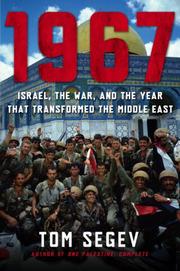
Segev turns the camera around onto Israeli society — the anxiety before, the euphoria after, the decisions taken in that mood. Read directly after Oren: the events are the same and the causal story is not.
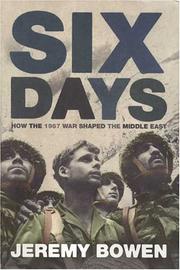
The BBC's Middle East editor, working from interviews on all sides and giving substantial space to Palestinian and Egyptian experience of the week. The third angle, and the one that carries the war's cost for civilians.
Why It Happened — The Contested Causation
IntermediateWeigh the competing explanations: unintended escalation, Israeli preventive war, Egyptian miscalculation, and Soviet instigation — and learn to judge which rest on documents and which on inference
▸ Study plan for this stage
Pace: 7 weeks for about 1,810 pages. Laron's The Six-Day War (376pp) in two weeks, Ferris's Nasser's Gamble (352pp) in ten days, Ginor and Remez's Foxbats over Dimona (296pp) in a week, Shlaim's The Iron Wall (784pp) in two and a half weeks — it covers the whole period, not just 1967, and should be read a
- Laron argues from multiple archives that the war was neither an accident nor purely defensive, but the product of military establishments in several countries — Israeli, Egyptian and Syrian — pushing their civilian governments toward confrontation. It is the most serious recent challenge to the stan
- Ferris's subject is Egypt's war in Yemen, which had committed a large part of the army and distorted Nasser's calculations in May 1967. It supplies the Egyptian-side constraint that most accounts of the crisis simply assert without evidence.
- Ginor and Remez argue that the Soviet Union deliberately provoked the crisis in order to justify striking Israel's nuclear programme at Dimona. This thesis is rejected by most specialists in the field. It is on the path as a contested argument to be read and assessed, not as a finding.
- Reading a rejected argument carefully is a specific skill: identify what evidence it rests on, what it infers, and what its critics say it cannot account for. Do that here rather than dismissing it on reputation.
- Shlaim writes as a leading revisionist historian of Israeli foreign policy, and The Iron Wall is his synthesis of Israeli strategy toward the Arab world across the whole period. It lets you situate 1967 in a pattern rather than treating it as a singular event.
- The four candidate explanations — unintended escalation, Israeli preventive war, Egyptian miscalculation under Yemeni strain, and Soviet instigation — are not all mutually exclusive, and part of the work is saying which combinations are coherent.
- The decisive discipline for this stage is separating documented claims from inferential ones. Archives have opened unevenly: Israeli and Soviet material far more than Egyptian and Syrian, which structurally advantages certain arguments.
- Whose archives are open is itself a cause of what the literature concludes, and no book on this path is exempt from that.
- State each of the four explanations in one sentence, and name the book that makes each.
- What is Laron's evidence that military establishments drove their governments, and which country's case is strongest in his account?
- How did the Yemen commitment change what Nasser could and could not do in May 1967, on Ferris's evidence?
- What does the Foxbats thesis rest on, and what are the specific objections to it?
- What is the iron wall in Shlaim's title, and how does he apply it to 1967?
- Which explanation is best supported by documents rather than by inference, and which would be strengthened most by an Egyptian or Syrian archive opening?
- Trace one claim across two authors who disagree: Oren's account of the war as defensive against Laron's account of it as the product of military pressure. Find where each states the claim, list the sources each cites, and write out what would settle it. Then leave it unsettled.
- Check a claim against the source it cites: take one of Ginor and Remez's central pieces of evidence, follow the citation, and then find a published critique of that specific item. Write 200 words on what you conclude and how confident you are.
- Take your May 1967 chronology from stage one and annotate every entry with which of the four explanations it best supports. Entries that support more than one are where the argument actually is.
- Write the strongest one-page case for the explanation you find least convincing. Do not caricature it. If you cannot write it well, you do not yet understand the disagreement.
- For each of these four books, write one sentence naming the author's standpoint and the archives they had access to. Then note which arguments would look different if a different archive were open.
Next up: The causation is contested and stays contested; the last stage is about the consequence, which is not contested at all in outline and fiercely so in interpretation.
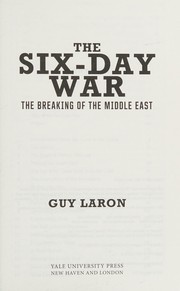
Laron's argument, from multi-archive research, is that the war was neither an accident nor purely defensive but the product of military establishments in several countries pushing their governments. The most serious recent challenge to the standard account.

On how Egypt's war in Yemen drained its army and distorted Nasser's calculations in May 1967. It supplies the Egyptian-side constraint that most accounts of the crisis simply assert.

Argues the Soviet Union deliberately provoked the crisis to justify striking Israel's nuclear programme. Included as a contested thesis, not a settled finding — most specialists reject it, and reading a rejected argument well is part of the skill.
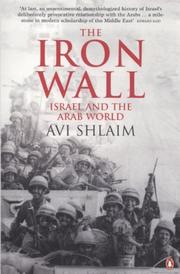
Shlaim's synthesis of Israeli strategy towards the Arab world across the whole period, from a leading revisionist historian. Placed last in this stage because it lets you situate 1967 in a pattern rather than treat it as a singular event.
The Occupation the War Created
IntermediateUnderstand what happened after the ceasefire — the diplomacy that failed, the settlement project that began within weeks, and why 1967 is a live subject rather than a closed one
▸ Study plan for this stage
Pace: 7 weeks for about 1,820 pages. Raz's The Bride and the Dowry (457pp) in two weeks, Gorenberg's The Accidental Empire (454pp) in two weeks, Zertal and Eldar's Lords of the Land (554pp) in two weeks, Khalidi's The Hundred Years' War on Palestine (352pp) in ten days. Khalidi and Raz both deal with the
- Raz's archival study of Israeli, Jordanian, American and Palestinian diplomacy in the two years after the war argues that the territories were never seriously offered back, and that the diplomatic record does not support the standard account of an Israeli offer met by Arab refusal.
- The Khartoum resolution of September 1967 and the 'three noes' are the standard counter-evidence, and Raz addresses them directly. Read what he says about them and then read the resolution itself.
- UN Security Council Resolution 242 of November 1967 is deliberately ambiguous in its English and French texts about withdrawal from 'territories' versus 'the territories'. That ambiguity has carried the entire diplomatic argument for nearly sixty years.
- Gorenberg's argument is that the settlement enterprise began within weeks of the ceasefire, without a decision anyone would own, and was accommodated by successive Israeli governments of both major parties. He writes as a religiously observant Israeli journalist.
- Zertal and Eldar cover the same subject as Gorenberg with a sharper indictment: the settlements as a political project with its own power, capable of setting policy rather than merely receiving it. Reading the two in sequence is the exercise.
- Khalidi writes explicitly as a Palestinian historian, using his own family's papers and diplomatic records, and frames 1967 as one episode in a longer settler-colonial war rather than as a discrete event. The path ends here because that is the standpoint the Israeli-sourced literature structurally c
- The military government of the occupied territories, established in June 1967 as a temporary measure, is still the legal framework. Its temporariness is the durable fact of the subject.
- 1967 is a live subject rather than a closed one, which is why a path about six days in June needed four stages and ends in the present.
- What does Raz's archival evidence show about Israeli diplomacy in 1967 and 1968, and how does he handle Khartoum?
- What exactly does Resolution 242 say about withdrawal, in both authoritative texts, and how has each side read it?
- How did the first settlements get established, on Gorenberg's account, and who decided?
- Where do Zertal and Eldar go further than Gorenberg, and is the difference in evidence or in judgement?
- How does Khalidi's framing change what counts as the beginning of the story, and what does that framing make visible?
- After the whole path: can you state four accounts of why the Six-Day War happened, attribute each to a named author, and say what each one's standpoint and sources are? That, rather than a verdict, is what this path was for.
- Read Resolution 242 in full — it is one page — then read what Raz, Gorenberg and Khalidi each say about it. Write out how three careful readers get three readings from one page.
- Trace one claim across two authors who disagree: Gorenberg's accidental empire, in which nobody quite decided, against Zertal and Eldar's account of a deliberate project. Set the passages side by side and write down which parts of the disagreement are about the documents and which are about how to characterise them.
- Check a claim against the source cited: take one settlement's founding as described by Gorenberg, find the government decision or absence of one that he cites, and see what the record actually contains.
- Take the chapter of Khalidi covering 1967 and the corresponding chapter of Oren from stage two. Read them back to back and write 300 words on what each treats as the event's subject.
- Write a one-page account of the Six-Day War as each of four authors on this path would write it — Oren, Segev, Laron, Khalidi — one paragraph each. Then write a final paragraph on which you found hardest to write and why.
- List, for every book on this path, the author's nationality, professional position and declared standpoint. On this subject that list is not an ad hominem exercise; it is the apparatus you need to read the next book published on it.
Next up: The path closes on a war that has not finished producing consequences, with the standpoints named rather than adjudicated, because there is no consensus account to hand a reader.

An archival study of Israeli, Jordanian and Palestinian diplomacy in the two years after the war, arguing the territories were never seriously offered back. The bridge from the war to the occupation.
How the settlement enterprise started in 1967 and how Israeli governments accommodated it, by a religiously observant Israeli journalist. The best account of the decisions no one admits to having made.
Written with Akiva Eldar, a harder-edged Israeli account of the settlements as a political project with its own power. Read after Gorenberg: same subject, sharper indictment, and the contrast is instructive.

Khalidi writes explicitly as a Palestinian historian using his own family's papers, framing 1967 as one episode in a longer settler-colonial war. The path ends here so the final voice is the one the Israeli-sourced literature cannot supply.
Discussion
Keep reading
Paths that share books, cover the same subject, or open a related topic.