The Louisiana Purchase: books to read, in order
In 1803 the United States bought roughly 828,000 square miles from France for about fifteen million dollars and doubled in size overnight. The transaction is usually told as a bargain and a stroke of luck, which is true and almost entirely beside the point. It happened because the Haitian Revolution destroyed Napoleon's army in the Caribbean and made Louisiana worthless to him; it required Jefferson, a strict constructionist, to do something the Constitution plainly did not authorise; it transferred tens of thousands of people who had never been consulted, including free people of colour whose legal standing under Spanish and French rule was better than what American law would give them; and it created the territory over which the fight about slavery's expansion would be fought for sixty years. This path builds in that order — the deal, then Haiti, then the constitutional problem, then what the purchase actually did to the people and the country it made.
The Transaction
BeginnerGet the diplomacy and the chronology right. By the end you should be able to explain the retrocession from Spain to France, the closure of the New Orleans deposit, what Livingston and Monroe were actually sent to buy, and why the American negotiators were offered far more than they asked for.
▸ Study plan for this stage
Pace: Three books, 1,002 pages, and they narrow as you go. Jon Kukla's A wilderness so immense is 430 pages and covers a longer run-up than the others — it takes the Mississippi navigation crisis seriously as the thing actually driving American policy, so start here and you will not need to re-establish t
- The retrocession from Spain to France under San Ildefonso, and the secrecy around it
- The right of deposit at New Orleans and what its closure did to western American commerce
- The Mississippi as the only outlet for the American interior, and therefore as a matter of survival rather than trade policy
- What Livingston and Monroe were instructed to buy, and the ceiling they were given
- Talleyrand, Barbé-Marbois and the French decision to sell everything
- The Quasi-War and the residue of Franco-American hostility it left
- The purchase price and the mechanism by which it was actually financed
- The boundaries left undefined by the treaty, and the disputes they produced
- Explain the retrocession from Spain to France and why the United States found out about it when it did.
- What did the closure of the New Orleans deposit threaten, concretely, for Americans west of the Appalachians?
- What were Livingston and Monroe authorised to buy, and for how much?
- Why were they offered far more than they asked for? Locate the decision on the French side rather than the American.
- What did the treaty leave undefined, and which of those ambiguities caused trouble later?
- Draw the Mississippi system on a map and mark every point at which Spanish or French control could have closed American commerce. Kukla's argument becomes obvious once it is spatial.
- Write a one-page chronology of the negotiation from Cerami with the French and American decisions in separate columns, then mark which column moved first at each step.
- From Hill, list the outstanding grievances between the two governments before 1803 and note which the treaty settled.
- State the purchase price and work out what it came to per square mile against the roughly 828,000 square miles transferred. Then ask what that figure conceals about who was already living there.
Next up: The narratives all agree that Napoleon's decision drove the sale and none of them explains it fully; the next stage is where that explanation actually lives.

The best single-volume account, and the one that takes the Mississippi navigation crisis seriously as the thing that drove American policy. Start here; it covers a longer run-up than the other narratives and you will not need to re-establish the background later.
A tighter, faster narrative of the negotiation itself, strong on Livingston in Paris and on Talleyrand. Read it second as the close-up after Kukla's wide shot.

The Franco-American relationship in the years immediately before the sale, including the undeclared naval Quasi-War. It explains why the two governments were in the strange position they were in by 1803, which the narratives above largely assume.
Why Napoleon Sold: the Haitian Revolution
IntermediateUnderstand the event that made the purchase possible. You should be able to explain how the revolution in Saint-Domingue destroyed Leclerc's expedition, why Louisiana was conceived as the granary for a Caribbean empire, and why this causal chain is missing from most American tellings.
▸ Study plan for this stage
Pace: Two books, 772 pages. Laurent Dubois's Avengers of the New World is 374 pages, the best modern history of the Haitian Revolution and the most efficient route to the part of the story the American accounts omit; read the chapters on the Leclerc expedition closely, because that is the hinge on which t
- Saint-Domingue as the most profitable colony in the world, and what made it so
- The revolt of 1791 and the successive phases of the revolution
- Toussaint Louverture's rise, his governance, and his capture
- The Leclerc expedition: its size, its purpose, and what destroyed it
- Yellow fever as a strategic factor rather than a footnote
- Louisiana's intended role as the food supply for a Caribbean empire
- Dessalines, independence, and the reaction of the slaveholding powers to a black republic
- Why the causal link from Haiti to the Louisiana Purchase is absent from most American tellings
- Reconstruct the chain from the revolt in Saint-Domingue to Napoleon's decision to sell Louisiana.
- What was Louisiana for, in the French plan? Answer in terms of the Caribbean rather than of North America.
- What destroyed the Leclerc expedition, and in what proportion?
- Where do Dubois and James differ about Toussaint — as a leader, and as a symbol?
- Why would an American account of 1803 have reason to omit Haiti?
- Write the causal chain from the 1791 revolt to the 1803 treaty as a numbered list, with the source for each link. Any link you cannot source is one to go back for.
- Read Dubois on the Leclerc expedition and tabulate the losses by cause. Set that table beside what Kukla or Cerami say about why France sold.
- Compare Dubois's and James's treatment of Toussaint's arrest and death. Note where James is arguing and where he is narrating.
- Go back to your stage-one chronology and insert the Saint-Domingue events in their correct places. The purchase should stop looking like luck.
Next up: With the cause established, the question becomes what the United States had to do to itself in order to accept the offer — which is a constitutional problem, not a diplomatic one.

The best modern history of the Haitian Revolution and the most efficient way to acquire the piece of the story the American accounts omit. Read the chapters on the Leclerc expedition closely — that is the hinge.
James's 1938 classic on Toussaint Louverture, and still the book that shapes the argument. Our catalogue dates it 1935, which is wrong; the work is the same. Read it after Dubois, as interpretation rather than as a first narrative.
The Constitutional Problem
IntermediateTake up what Jefferson had to swallow. You should be able to state the objection he himself made to the purchase, the case for and against a constitutional amendment, and the Federalist opposition's argument that the acquisition would destroy the balance of the union.
▸ Study plan for this stage
Pace: Three books, 829 pages, and one of them is a document collection rather than a narrative. Peter J. Kastor's The Louisiana Purchase is 299 pages assembling the treaty, the congressional debate, the diplomatic correspondence and the contemporary press — read it in sections and read the debates in full
- Jefferson's own objection: that the Constitution nowhere authorised acquiring territory or admitting its inhabitants
- The draft amendment he prepared and then abandoned, and the reasons given for abandoning it
- Strict construction as a doctrine and what its most prominent advocate did when it was inconvenient
- The Federalist objection that the acquisition would destroy the balance of the union
- The treaty's promise that the inhabitants would be incorporated as citizens, and the delay in honouring it
- The empire of liberty as an idea in which expansion secures rather than threatens a republic
- Governing people who never consented, and the precedent that established
- The line from 1803 to 1898, and whether the constitutional question was answered or merely outrun
- State Jefferson's own constitutional objection to the purchase in his terms, and say why he proceeded anyway.
- What was the case for an amendment, and what was the case against waiting for one?
- What did the Federalists fear, specifically, and were they wrong?
- How did Jefferson reconcile empire with republicanism, on Onuf's reading?
- What did the treaty promise the inhabitants of Louisiana, and how long did it take to deliver?
- Were the questions raised in 1803 about governing acquired peoples ever settled, or were they simply superseded?
- Read the congressional debate in Kastor's collection and make a two-column list of the arguments for and against, attributing each to a speaker.
- Copy out Jefferson's own statement of the constitutional problem and, beneath it, the reasoning he used to set it aside. Judge the distance between them yourself.
- Take one essay from the Levinson collection and trace its argument back to a specific 1803 document in Kastor. Note what the essayist adds.
- Write a paragraph applying Onuf's empire of liberty to the transferred population of Louisiana. Notice which parts of the idea will not extend to them.
Next up: The constitutional argument was conducted almost entirely without reference to the people being transferred, which is exactly where the next stage begins.
A documentary collection assembling the treaty, the congressional debate, the diplomatic correspondence and the contemporary press. The fastest route to the actual arguments rather than to summaries of them.

Onuf on what Jefferson meant by an empire of liberty, and how expansion and republicanism were supposed to reinforce rather than contradict each other in his thinking. The best short account of the ideology the purchase was rationalised through.

A collection of essays reading 1803 forward to 1898 and asking whether the constitutional questions it raised about governing acquired peoples were ever really answered. Catalogued with its date range, 1803-1898.
What the Purchase Did
IntermediateFollow the consequences: the incorporation of Louisiana's existing population, the exploration and mapping of the territory, and the way it set up the sectional crisis. You should be able to explain why territorial expansion and the extension of slavery became the same question.
▸ Study plan for this stage
Pace: Five books and the longest stage on the path: 1,842 pages across the four we hold lengths for, plus Gordon S. Wood's Empire of liberty, for which our record carries no page count — it is the Oxford History volume covering the early republic and it is long, so plan it as a commitment rather than arou
- The existing population of Louisiana — Creole, French, Spanish, African and Native — and their legal standing before the transfer
- Free people of colour whose position under Spanish and French law was better than what American law would give them
- Incorporation as a promise, a process and a failure, depending on which group you follow
- The Native nations of the purchase territory, who were neither consulted nor party to the sale
- Lewis and Clark as a government reconnaissance of land already inhabited and already mapped by others
- DeVoto's long view: two centuries of European movement of which 1803 is a late episode
- Kennedy's thesis that the purchase handed the continent to cotton and slavery
- Why territorial expansion and the extension of slavery became a single question, and stayed one for sixty years
- Who was living in Louisiana in 1803, and what happened to each group's legal standing under American rule?
- Why did free people of colour in New Orleans lose ground after the transfer?
- What did Jefferson send Lewis and Clark to find out, and what did the expedition actually establish?
- State Kennedy's argument against the bargain-of-the-century reading, and the strongest objection to it.
- How does DeVoto's framing change the meaning of 1803 as a date?
- Explain why expansion and slavery became the same question, using the territory this purchase created.
- From Kastor's monograph, list the groups living in Louisiana and, for each, what changed legally between Spanish, French and American rule. The rows that get worse are the argument.
- Follow the Lewis and Clark route on a map alongside DeVoto's account of earlier French and Spanish traverses, and mark what was genuinely unknown to Europeans.
- Take Kennedy's central claim and test it against the sequence of states admitted from the purchase territory, noting which entered slave and which free.
- Find where Wood passes judgement on the purchase in a sentence or two, and write the paragraph he did not write, using Kennedy and Kastor.
- Return to the price-per-square-mile figure from stage one and rewrite it as a sentence that includes the people transferred and the nations never consulted.
Next up: This closes the path: the purchase now reads as a consequence of a slave revolution, a constitutional evasion, a transfer of people who were never asked, and the ground on which the American civil war would eventually be fought.
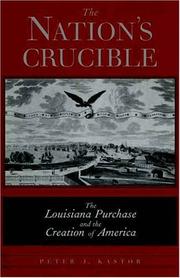
Kastor's monograph, distinct from his documentary collection above, on how Louisiana's Creole, French, Spanish, African and Native inhabitants were made — or not made — into Americans. The most important book here on the human consequence of the transfer.

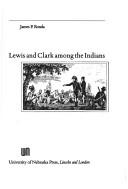
Lewis and Clark, the expedition Jefferson dispatched to see what he had bought. Popular narrative rather than scholarship, and included because the expedition is inseparable from the purchase in American memory.

DeVoto's 1952 account of the continent's exploration, which places Lewis and Clark inside two centuries of European movement across North America. Old, superbly written, and the right corrective to reading 1803 as a beginning.
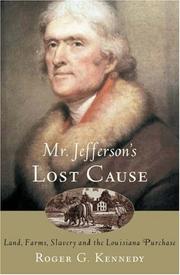
The argument that the purchase, whatever Jefferson intended, delivered a vast new territory to cotton and to slavery, and destroyed the yeoman republic it was meant to secure. The sharpest counterweight to the bargain-of-the-century framing.

The Oxford History volume covering 1789 to 1815, which puts the purchase inside the whole early republic. Read it last: it is long, it is the standard synthesis, and it is most useful once you know which of its passing judgements you want to argue with.
Discussion
Keep reading
Paths that share books, cover the same subject, or open a related topic.