The Troubles: The Best Books to Understand Northern Ireland, in Order
This curriculum moves from essential historical context and personal narrative through to granular analysis of key events and the mechanics of the peace process. Because the learner starts at an intermediate level, the path skips basic primers and opens instead with authoritative single-volume histories before drilling into the IRA, Bloody Sunday, and the diplomatic endgame — each stage building the political vocabulary and emotional texture needed for the next.
The Landscape of Conflict
IntermediateEstablish a firm chronological and political framework — who the key actors were, how sectarian divisions hardened, and how the Troubles erupted and evolved across three decades.
▸ Study plan for this stage
Pace: 8–10 weeks, ~40–50 pages/day (alternating between both books to build chronological and thematic depth)
- The historical roots of sectarian division: Protestant-Catholic antagonism from Plantation through Partition (1921) and the creation of Northern Ireland as a contested state
- Key political actors and organizations: the IRA (Official and Provisional), Sinn Féin, the UUP, the DUP, loyalist paramilitaries (UVF, UDA), and the British security forces
- The civil rights movement (1960s) and its suppression: how peaceful Catholic demands for equality were met with state violence, radicalizing the nationalist community
- The eruption of the Troubles (1969 onwards): the role of Bloody Sunday, internment, and the shift from political to armed struggle
- The evolution of violence across three decades: how the conflict hardened into cycles of retaliation, sectarian killing, and state counterinsurgency
- The human cost and moral ambiguity: individual stories of victims, perpetrators, and those caught in between—how ordinary people became entangled in extraordinary violence
- The role of secrecy and information control: how both state and non-state actors used violence and silence to maintain power and suppress accountability
- What were the main historical grievances that divided Protestant and Catholic communities in Northern Ireland, and how did Partition (1921) institutionalize these divisions?
- How did the civil rights movement of the 1960s escalate into armed conflict, and what role did state violence (particularly Bloody Sunday) play in radicalizing the IRA?
- Who were the major political and paramilitary actors in the Troubles, and how did their strategies and ideologies differ (e.g., Official IRA vs. Provisional IRA, or nationalist vs. loyalist paramilitaries)?
- How did the conflict evolve across the 1970s, 1980s, and 1990s—what were the turning points, and how did violence become normalized in Northern Irish society?
- What does 'Say Nothing' reveal about the relationship between individual moral agency and structural violence—how did ordinary people become killers?
- How do Keefe and Coogan each explain the role of secrecy, denial, and silence in perpetuating the Troubles, and what does this suggest about accountability and truth?
- Create a detailed timeline (1921–1998) marking major events: Partition, the civil rights movement, Bloody Sunday, internment, key bombings, and hunger strikes. Annotate each with the actors involved and the shift in violence levels.
- Build an organizational chart mapping the major political parties (UUP, DUP, Sinn Féin) and paramilitary groups (Official IRA, Provisional IRA, UVF, UDA) across decades—note splits, mergers, and shifts in ideology or tactics.
- Write character sketches of 4–5 key individuals featured in 'Say Nothing' (e.g., Jean McConville, Dolours Price, Gerry Adams) that capture their motivations, moral choices, and how they were shaped by the conflict.
- Analyze a specific incident from both books (e.g., Bloody Sunday or a particular killing): compare how Keefe and Coogan narrate it, what details each emphasizes, and what this reveals about narrative perspective and historical interpretation.
- Create a map of Northern Ireland marking key locations mentioned in the books (Belfast neighborhoods, Derry, border areas) and annotate with major events, sectarian divisions, and paramilitary strongholds.
- Write a 2–3 page reflection on one moral dilemma presented in the books (e.g., the killing of an informant, the targeting of civilians, state collusion) and argue what you think justified or unjustified about the actors' choices.
Next up: This stage equips you with the chronological scaffolding and cast of characters necessary to understand the political negotiations, peace process, and ongoing legacies of the Troubles—you will now be ready to examine how and why the conflict was resolved (or suspended) and what unresolved trauma remains.
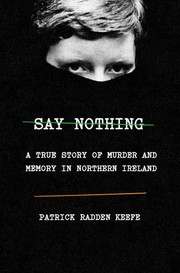
A gripping, rigorously researched narrative built around the Jean McConville murder that doubles as a panoramic history of the Troubles. Its storytelling style makes complex loyalties and violence viscerally comprehensible — the ideal entry point for an intermediate reader.
Coogan's comprehensive single-volume history provides the political and chronological backbone — from partition through the ceasefires — that gives context to every subsequent book on this list.
Sectarianism and Community
IntermediateUnderstand how sectarian identity was lived on the ground — in streets, families, and neighbourhoods — and how ordinary people were shaped by and complicit in the conflict.
▸ Study plan for this stage
Pace: 6–7 weeks: ~2 weeks for "Milkman" (40–50 pages/week, accounting for dense prose and rereading), then 3–4 weeks for "North" (20–30 pages/week of poetry, with substantial time for close reading and annotation)
- Sectarian identity as embedded in everyday life: how religion, geography, and family define belonging in Burns's unnamed city
- The unreliable narrator and fragmented perspective: how Burns's protagonist's limited understanding mirrors the reader's disorientation in a sectarian landscape
- Complicity through silence and normalcy: how ordinary people maintain sectarian structures through small acts and avoidance
- Language as a marker of sectarian identity: accent, vocabulary, and speech patterns as coded signals in both Burns and Heaney
- Historical trauma layered into domestic spaces: how Heaney's 'bog poems' and Burns's streets carry the weight of sectarian violence
- The female/domestic perspective on sectarian conflict: Burns's female narrator and Heaney's interrogation of masculine violence and tribal loyalty
- Ambiguity and refusal of easy answers: both texts resist simple moral clarity about sectarian identity and complicity
- How does Anna Burns use the protagonist's limited perspective and the novel's fragmented structure to convey what it feels like to live within sectarian identity rather than observing it from outside?
- What role does the 'milkman' figure play in revealing how sectarian power operates through intimidation, rumour, and control of public space in Burns's unnamed city?
- How do Heaney's bog poems ('The Grauballe Man,' 'The Bog Queen,' 'Punishment') use archaeological metaphor to explore the relationship between ancient tribal violence and contemporary sectarian conflict?
- In what ways are the female speakers/subjects in Burns and Heaney complicit in, resistant to, or trapped by sectarian structures?
- How do both texts use language, dialect, and linguistic markers to signal sectarian identity and division?
- What does each text suggest about the possibility of stepping outside or transcending sectarian identity?
- Map the protagonist's movements in 'Milkman': identify which streets, shops, and spaces are coded as sectarian territory, and note how the narrator's awareness of these boundaries shapes her daily life. Write a 500-word reflection on how geography enforces sectarian identity.
- Track instances of rumour, gossip, and surveillance in 'Milkman': create an annotated list of moments where the community polices itself through talk. Reflect on how this differs from explicit violence.
- Close-read Heaney's 'Punishment' (from 'North'): identify the poem's central tension between historical distance and contemporary relevance. Write a 400-word analysis of how Heaney uses the bog body to examine complicity in tribal violence.
- Conduct a linguistic analysis: select 3–4 passages from 'Milkman' and 2–3 lines from Heaney's poems where language/dialect signals sectarian identity. Annotate what each reveals about how identity is performed and recognized.
- Create a character web for 'Milkman' showing the protagonist's relationships and the sectarian affiliations implied by each connection. Note where the narrator's understanding is incomplete or unreliable.
- Write a comparative essay (800–1000 words) on how Burns and Heaney each represent the entanglement of violence with domestic/intimate life. Use specific scenes from 'Milkman' and at least two poems from 'North'.
Next up: This stage grounds sectarian identity in lived experience and complicity, preparing you to examine how the conflict escalated into organized violence, institutional structures, and political movements in the next stage.

This Booker Prize-winning novel set in an unnamed Belfast captures the suffocating social pressure of a sectarian community with unmatched psychological precision — essential for feeling the texture of life inside the Troubles.
Heaney's landmark poetry collection confronts sectarian violence by linking it to ancient ritual and myth, offering a literary and moral vocabulary that deepens any analytical reading of the conflict.
The IRA — Organisation, Strategy, and Violence
IntermediateMove inside the republican paramilitary movement to understand its ideology, internal structure, campaign of violence, and the tensions between armed struggle and political strategy.
▸ Study plan for this stage
Pace: 6–7 weeks, ~40–50 pages/day. *The I.R.A* by Tim Pat Coogan (~600 pages) takes approximately 4 weeks; *Rebel Hearts* by Kevin Toolis (~400 pages) takes approximately 2–3 weeks. Build in 3–4 days for review and synthesis.
- The IRA's ideological foundations: republicanism, anti-colonialism, and the vision of a united Ireland as a driving force across different eras and factions
- Organizational structure and evolution: how the IRA transformed from a guerrilla force to a hierarchical military organization, and the tensions between centralized command and local autonomy
- The split between political and military strategy: the recurring conflict between those pursuing armed struggle and those pursuing constitutional politics, culminating in the Provisionals vs. Officials divide
- Campaign of violence and tactics: bombing, assassination, and guerrilla warfare as tools of the IRA's strategy, and how these tactics evolved in response to British counterinsurgency
- Internal dissent and factionalism: how personality clashes, ideological disagreements, and strategic disputes fractured the IRA into competing organizations (Officials, Provisionals, INLA, etc.)
- The role of individual actors: how key figures like Michael Collins, Gerry Adams, and others shaped IRA strategy, recruitment, and public perception
- Moral and strategic justifications for violence: how the IRA rationalized its campaign and how this was received by the Catholic community and international observers
- The relationship between the IRA and Sinn Féin: how political and armed wings interacted, competed, and sometimes diverged in their goals
- What were the core ideological principles that unified the IRA across different historical periods, and how did these principles justify the use of violence?
- How did the IRA's organizational structure change from the 1920s through the 1980s, and what tensions arose between centralized leadership and grassroots activists?
- What were the key differences in strategy and ideology between the Official IRA and the Provisional IRA, and why did the split occur?
- How did the IRA's campaign of violence evolve tactically and strategically in response to British security forces and changing political circumstances?
- What role did individual personalities and leadership disputes play in fragmenting the IRA into competing factions, and what were the consequences?
- How did the IRA justify its use of violence against civilians and military targets, and how did these justifications resonate (or fail to resonate) with the broader Catholic community?
- Create a detailed organizational chart of the IRA's structure at three key moments: 1921 (post-independence), 1969 (the split), and 1981 (during the hunger strikes). Annotate with key leaders and their roles.
- Construct a timeline of major IRA campaigns of violence from the 1920s to the 1980s, noting the stated objectives, tactics used, civilian casualties, and strategic outcomes for each campaign.
- Write a comparative analysis (1,500–2,000 words) of how Coogan and Toolis each portray the moral justifications for IRA violence. What do they emphasize? Where do they diverge?
- Select three key figures discussed in both books (e.g., Michael Collins, Gerry Adams, or another leader) and write a biographical sketch (500 words each) analyzing how their personal beliefs and experiences shaped their approach to armed struggle vs. political strategy.
- Map the ideological and strategic differences between the Official IRA and Provisional IRA using a Venn diagram or comparative table. Include their positions on violence, politics, socialism, and the path to Irish unity.
- Conduct a close reading of one major IRA statement or manifesto discussed in the books (e.g., a proclamation or strategic document). Analyze its rhetoric, assumptions, and intended audience in a 1,000-word essay.
Next up: This stage establishes the internal logic, structure, and justifications of the republican paramilitary movement, preparing you to examine how the IRA's violence intersected with British counterinsurgency, political negotiations, and the lived experiences of ordinary people caught in the conflict.
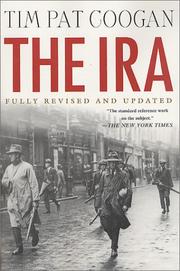
The definitive history of the IRA from its origins to the modern era, drawing on rare interviews and documents. Reading Coogan's broader Troubles history first means this deep dive into the organisation lands with full context.
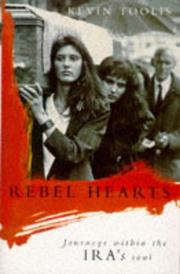
Through intimate portraits of IRA volunteers and their families, Toolis illuminates the human motivations behind paramilitarism in a way that complements Coogan's organisational analysis.
Bloody Sunday — A Pivotal Atrocity
ExpertExamine the events of 30 January 1972 in forensic detail — the military decisions, the cover-up, the Saville Inquiry, and the long shadow Bloody Sunday cast over the entire conflict.
▸ Study plan for this stage
Pace: 4–5 weeks, ~40–50 pages/day. Start with Murray's comprehensive narrative (approx. 300 pages) over 2 weeks, then move to Mullan's eyewitness accounts (approx. 200 pages) over 1.5 weeks, leaving 1 week for review, synthesis, and exercises.
- The immediate military context: why the British Army was deployed in Derry, the escalating tensions, and the decision to use the Parachute Regiment on 30 January 1972
- The sequence of events on Bloody Sunday: the march route, the barricades, the opening of fire, and the 13 civilians killed (and 1 more who died later)
- The anatomy of the cover-up: the initial military narrative, the Widgery Tribunal's whitewashing, and the suppression of evidence for 30 years
- Eyewitness testimony as historical evidence: how Mullan's interviews reconstruct the day from the ground level and challenge official accounts
- The Saville Inquiry (1998–2010): its mandate, methodology, and findings that exonerated the victims and indicted the Parachute Regiment
- The long-term consequences: how Bloody Sunday radicalized Irish republicanism, deepened sectarian divisions, and became a symbol of state violence
- The role of forensic investigation and documentary evidence in overturning a false official narrative after decades
- What were the specific military and political circumstances that led to the deployment of the Parachute Regiment in Derry on 30 January 1972, and how did they differ from the stated justification?
- Describe the sequence of events on Bloody Sunday: where did the march begin, what triggered the opening of fire, and how many civilians were killed?
- What was the Widgery Tribunal, and how did its findings differ from those of the Saville Inquiry? Why was the initial cover-up so effective?
- How do the eyewitness accounts in Mullan's book challenge or complicate the military narrative presented in official reports?
- What were the key findings of the Saville Inquiry, and what evidence did it use to reach conclusions that contradicted Widgery?
- How did Bloody Sunday reshape the course of the conflict and Irish republican politics in the decades that followed?
- Create a detailed timeline of 30 January 1972 using both Murray and Mullan, marking the march route, key decision points, and the sequence of gunfire. Identify where the two sources agree and diverge.
- Select 3–4 eyewitness accounts from Mullan and write a 500-word reconstruction of a single moment (e.g., the first shots, the panic, a specific death) that integrates their testimonies.
- Compare the Widgery Tribunal's conclusions with the Saville Inquiry's findings on a specific incident (e.g., whether soldiers were fired upon first). What evidence did Saville use that Widgery ignored?
- Write a forensic analysis (800 words) of how the cover-up was constructed and maintained: what narratives were promoted, what evidence was suppressed, and how long it took to unravel.
- Interview a peer or family member about what they know of Bloody Sunday, then compare their understanding to what you've learned from Murray and Mullan. What gaps or myths persist?
- Create a visual map or infographic showing the military chain of command, the rules of engagement, and the decision-making process that led to the deployment of the Parachute Regiment.
Next up: This stage establishes Bloody Sunday as the watershed moment that transformed the conflict from a civil rights struggle into a full-scale sectarian war, providing essential context for understanding how the IRA's radicalization and the British state's loss of legitimacy shaped the next decades of violence and negotiation.

A rigorous, evidence-based account of the Saville Inquiry process that separates established fact from decades of competing narratives — best read after the broader conflict history is firmly in place.

Compiled from survivor and witness testimonies suppressed for decades, this primary-source collection provides the human ground-level counterpoint to Murray's legal and political analysis.
The Peace Process and Its Aftermath
ExpertUnderstand how the Good Friday Agreement was negotiated, what compromises it required, and why the peace remains fragile — synthesising everything learned in earlier stages.
▸ Study plan for this stage
Pace: 4–5 weeks, ~40–50 pages/day (approximately 250–300 pages total)
- The structural role of back-channel diplomacy and secret negotiations in achieving the Good Friday Agreement, particularly Powell's insider perspective as chief negotiator
- The key compromises required to bridge unionist and nationalist positions: consent, constitutional ambiguity, and the Irish dimension
- How historical grievances and competing narratives about identity shaped negotiating positions and required creative institutional design
- The role of external actors (US, UK, Irish governments) and their leverage in moving parties toward agreement
- Why the agreement's ambiguities and deferred issues (flags, symbols, parades, victims) created ongoing tensions rather than resolving them
- The distinction between achieving a ceasefire and building sustainable peace: why signing the agreement was not the end of conflict
- Powell's analysis of what makes peace agreements stick or fail, and the fragility of consent-based settlements in divided societies
- What were the three or four core compromises that made the Good Friday Agreement possible, and why was each one necessary to bring both communities to the table?
- How did back-channel negotiations differ from public talks, and why were secret channels essential to breaking the deadlock?
- What role did the US government play in the peace process, and how did this differ from the UK and Irish governments' roles?
- Why does Powell argue that the agreement's ambiguities and deferred issues are both a strength (allowing agreement) and a weakness (creating ongoing friction)?
- What evidence does Powell provide that the peace remains fragile, and what specific post-agreement conflicts does he identify as unresolved?
- How does Powell's account of the negotiation process challenge or complicate the popular narrative of the Good Friday Agreement as a clean resolution?
- Create a negotiation map: identify the core positions of each party (Sinn Féin, SDLP, UUP, DUP, British government, Irish government) at the start of talks, and trace how Powell shows each moved toward compromise
- Write a 500-word analysis of one specific compromise (e.g., the North-South institutions, the consent principle, or the constitutional change) explaining why it was necessary and what each side had to concede
- Construct a timeline of key negotiating moments Powell describes, marking turning points where deadlock broke and identifying what changed (new actors, new proposals, external pressure)
- Compare Powell's insider account with your earlier reading on the historical context: how do the grievances and identities discussed in earlier stages manifest in the actual negotiating positions Powell describes?
- Identify three 'deferred issues' or ambiguities in the agreement that Powell suggests remain unresolved, and research how each has played out in post-1998 Northern Ireland politics
- Write a reflective essay: 'Why did the Good Friday Agreement succeed where earlier peace efforts failed?' using Powell's analysis of negotiating strategy, timing, and the role of compromise
Next up: This stage equips you to understand the Good Friday Agreement not as a finished settlement but as a fragile framework that requires ongoing management—preparing you to examine how specific post-agreement institutions, conflicts, and political developments have tested or reinforced the peace since 1998.

Tony Blair's chief negotiator gives an insider account of the talks that produced the 1998 Agreement — the essential final book, making sense of every political thread the curriculum has traced.
Discussion
Keep reading
Paths that share books, cover the same subject, or open a related topic.