The Partition of 1947 is one of history's largest and fastest human upheavals, and the writing about it splits along a fault line of its own: grand political narrative on one side, intimate survivor memory on the other. Read only the first and it becomes a story of statesmen; read only the second and you lose the machinery that produced the carnage.
The sequence below deliberately moves between the two, starting with accessible narrative, deepening into scholarship, then turning to testimony and fiction so the abstraction of borders regains its human weight.
Begin with the narrative sweep
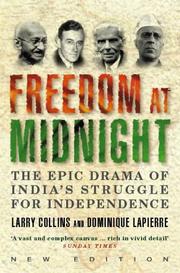
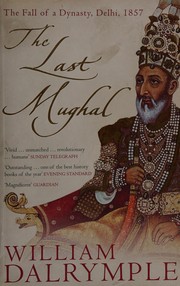
Start with Freedom at Midnight, Lapierre and Collins's dramatic bestseller, which gives a fast, character-driven account of the road to independence, best read as a compelling entry point rather than the last word. Then The last Mughal, William Dalrymple's history of 1857 Delhi, supplies the deeper backstory of how British rule and communal fracture set the stage generations earlier.
Move to the scholarship
For rigor, India's Partition: Process, Strategy and Mobilization, Mushirul Hasan's edited scholarly reader, gathers the key academic debates about how and why it happened. The Great Partition, Yasmin Khan's careful study, is the ideal modern synthesis, clear-eyed about contingency and responsibility. Jinnah India-Partition Independence, Jaswant Singh's controversial reassessment, challenges the standard Indian narrative of the founder of Pakistan and is worth reading as an argument, not a verdict. Midnight's furies, Nisid Hajari's account of the violence, traces how the leaders' choices spilled into mass bloodshed.
Hear the human voices
No political history captures Partition without testimony. The other side of silence, Urvashi Butalia's oral history, recovers the memories of women, children, and the displaced that official accounts erased. Then let fiction finish the work: Train to Pakistan, Khushwant Singh's novel of a border village, and Tamas, Bhisham Sahni's story of communal riots, dramatize how ordinary neighbors were turned against one another. Selected Stories, Saadat Hasan Manto's unflinching short fiction, closes the path with the most piercing writing the event produced.
Read in this arc, Partition becomes neither pure politics nor pure tragedy but the inseparable weave of both. Follow the full path to trace it from the halls of power to the refugee train.
Follow the full reading path →
Ready to learn something deeply?
Build a reading path — free