True crime, read critically
This curriculum moves from gripping narrative true crime — building instincts for how cases unfold — through the real science (and its alarming failures) that underlies investigations, and finally into the systemic failures of the justice system that produce wrongful convictions. Each stage assumes the vocabulary and skepticism built in the one before it, so the path rewards reading in order.
Foundations: The Art of True-Crime Narrative
BeginnerDevelop a feel for how great true-crime writing works — how investigators think, how cases are built, and how storytelling can both illuminate and distort real events.
▸ Study plan for this stage
Pace: 8–10 weeks total; ~25–35 pages/day. Week 1–3: "I'll Be Gone in the Dark" (read in two sittings per week, journaling as you go). Week 4–6: "Columbine" (alternate chapters with short reflection pauses — Cullen's non-linear structure rewards slow reading). Week 7–9: "Lost Girls" (read one victim's thre
- Narrative voice and authorial presence: McNamara writes herself into the investigation, making her obsession part of the story — recognize how first-person perspective shapes credibility and emotional pull.
- The difference between chronology and structure: Cullen deliberately dismantles the timeline of Columbine to fight myth-making; understand why a writer might choose disorder over sequence.
- Humanizing victims vs. reducing them to their deaths: Kolker's central ethical commitment in 'Lost Girls' is restoring full personhood to the Long Island victims — study how he achieves this through biography and voice.
- How evidence is interpreted, not just collected: all three books show investigators (professional and amateur) constructing narratives from incomplete data — note where inference ends and fact begins.
- Media distortion and the feedback loop of myth: Cullen meticulously deconstructs the 'Trench Coat Mafia' and 'bullied loner' myths; McNamara grapples with how true-crime fandom can both help and harm.
- The ethics of writing about real people: each author must balance the public's right to know against the privacy and dignity of victims, families, and even suspects.
- Obsession as a narrative engine: McNamara's personal fixation on the Golden State Killer drives the book's momentum — analyze how a writer's emotional investment can be a structural tool.
- Uncertainty and the open case: 'I'll Be Gone in the Dark' was published before the GSK was caught; sit with how great true-crime writing handles unresolved endings honestly.
- In 'I'll Be Gone in the Dark,' how does McNamara's self-insertion as an obsessed amateur investigator affect your trust in her reporting — and does it strengthen or weaken the book's impact?
- Cullen spent ten years reporting 'Columbine.' Identify at least three specific myths about the shooting he dismantles, and explain what narrative technique he uses to correct each one.
- How does Robert Kolker's choice to open 'Lost Girls' with the victims' own words and life stories — rather than the discovery of their bodies — change the moral weight of the book?
- All three books deal with investigators (police, journalists, or amateurs) who work from incomplete information. What does each book reveal about the gap between evidence and conclusion?
- Compare how McNamara and Kolker each handle the tension between a victim's privacy and the public interest in their story. Where do their approaches converge, and where do they differ?
- After reading all three books, how would you define 'responsible true-crime writing'? Use specific scenes or choices from the texts to support your definition.
- Myth-busting log (Columbine): Keep a two-column running list as you read — Column A: a widely believed 'fact' about Columbine that Cullen corrects; Column B: the actual evidence he presents. Aim for at least 10 entries. This trains you to read forensically.
- Voice comparison exercise: Choose one victim from 'Lost Girls' and one passage about the GSK from 'I'll Be Gone in the Dark.' Rewrite each passage in the opposite author's style. What changes? What is lost or gained? This reveals how much voice IS argument.
- Evidence vs. inference annotation: As you read any 50 consecutive pages of your choice, mark every factual claim with an 'F' and every interpretive inference with an 'I.' At the end, calculate the ratio and write a paragraph on what it tells you about that author's method.
- Structural timeline exercise (Columbine): After finishing the book, reconstruct the actual chronological timeline of April 20, 1999 using only details Cullen provides. Then write one paragraph explaining why he chose NOT to present it this way.
- Ethical review memo: Pick one scene from 'Lost Girls' where Kolker reveals a personal or painful detail about a victim's life. Write a one-page 'editorial memo' arguing both for and against including that detail, as if you were his editor.
- Synthesis essay (end of stage): Write a 500–700 word response to this prompt: 'True crime can illuminate injustice or exploit tragedy — sometimes simultaneously.' Use evidence from all three books to argue a specific, nuanced position.
Next up: Mastering how narrative shapes (and sometimes distorts) our understanding of real crimes prepares you to engage critically with the forensic science and investigative methodology that underlies those stories — moving from how cases are *told* to how they are actually *built*.
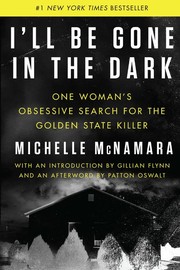
A masterclass in obsessive, literary true-crime investigation that shows how an amateur researcher thinks through evidence. It sets the tone for the whole curriculum: rigorous curiosity paired with emotional honesty.
Demonstrates how media narratives about crimes are almost always wrong, and how painstaking reconstruction of facts corrects them — a crucial early lesson before diving into forensic science.
Shifts the lens from perpetrator to victim, showing how systemic bias shapes which cases get investigated at all — a theme that will deepen throughout the curriculum.
Inside the Investigation: How Cases Are Actually Solved
BeginnerUnderstand the real mechanics of criminal investigation — forensic pathology, detective work, and the gap between TV crime-scene glamour and messy reality.
▸ Study plan for this stage
Pace: 6–8 weeks total; ~25–30 pages/day. Week 1–2: "Stiff" (roughly 300 pages — read in two sittings per week, pausing to journal after each chapter). Week 3–4: "The Feather Thief" (~300 pages — slightly faster pace, one chapter per sitting). Week 5–6: "A Death in Belmont" (~270 pages — slow down here; re
- Forensic pathology basics: how cause, manner, and mechanism of death are determined, as explored through Mary Roach's tour of cadaver science in 'Stiff'
- The gap between TV forensics and reality: 'Stiff' demystifies the unglamorous, painstaking, and often ambiguous nature of post-mortem investigation
- Chain of custody and physical evidence: 'The Feather Thief' shows how investigators trace stolen natural-history specimens through meticulous documentation, witness interviews, and digital forensics
- The role of obsession and amateur sleuthing: Kirk Wallace Johnson's own dogged investigation in 'The Feather Thief' illustrates how cases are sometimes cracked by persistent non-professionals working alongside (or around) official channels
- Circumstantial vs. direct evidence: 'A Death in Belmont' forces the reader to weigh what counts as proof when no confession or physical evidence definitively closes a case
- Memory, witness reliability, and narrative bias: Junger's personal proximity to the Boston Strangler case in 'A Death in Belmont' reveals how memory and emotional investment can distort — or sharpen — an investigation
- Institutional failure and cold cases: all three books show how bureaucratic inertia, jurisdictional gaps, and resource limits allow cases to go unsolved or wrongly solved
- The investigator's mindset: patience, skepticism, source-checking, and tolerance for ambiguity as recurring traits across Roach's scientists, Johnson's detectives, and Junger's retrospective inquiry
- After reading 'Stiff,' can you explain in plain language the difference between cause of death, manner of death, and mechanism of death — and give one example from the book of each?
- How does 'The Feather Thief' illustrate the concept of chain of custody, and what investigative missteps or gaps does Johnson identify that nearly let Edwin Rist escape accountability?
- In 'A Death in Belmont,' what specific pieces of evidence point toward Roy Smith, and what evidence — or absence of evidence — creates reasonable doubt? Can you list at least three of each?
- Across all three books, what is one moment where the 'CSI effect' (the expectation of clean, high-tech forensic resolution) is explicitly or implicitly challenged by messy reality?
- How does Sebastian Junger's personal relationship to the case in 'A Death in Belmont' affect his reliability as a narrator, and what does this teach you about evaluating any true-crime account?
- What common thread runs through the investigative failures depicted in all three books — systemic, human, or methodological — and what might have changed the outcomes?
- Death-scene vocabulary drill: After finishing 'Stiff,' create a one-page glossary of at least 10 forensic pathology terms Roach introduces (e.g., livor mortis, time-of-death estimation, blunt-force trauma). Write each definition in your own words, then find one real news article where that term appears and annotate how it's used.
- Evidence mapping for 'The Feather Thief': Draw a simple timeline/flowchart of the investigation — from the museum heist to Rist's conviction. Label each node with the type of evidence involved (physical, digital, testimonial). Identify where the chain of custody was strong and where it was weak.
- Prosecution vs. defense brief for 'A Death in Belmont': Write two short paragraphs (one per side) arguing whether Roy Smith or Albert DeSalvo is the more likely perpetrator of Bessie Goldberg's murder, using only evidence Junger presents. Then write a third paragraph on what evidence you wish existed.
- Reality-check journal: While reading all three books, keep a running two-column log — 'What I expected from TV crime shows' vs. 'What the book says actually happens.' Aim for at least 5 entries per book. Review the full log at the end of the stage.
- Narrator reliability audit: Choose one chapter from 'A Death in Belmont' and annotate it for bias indicators — places where Junger's personal stake, word choice, or selective detail might be shaping your interpretation. Compare your notes with the book's epilogue.
- Cross-book synthesis essay (300–400 words): Write a short essay answering: 'What does a real criminal investigation actually look like, based on these three books?' Use at least one specific example from each book and argue whether the truth is more or less satisfying than fictional crime narratives.
Next up: Mastering the gap between forensic reality and popular myth — and learning to interrogate evidence and narrator bias — equips the reader to tackle more complex true-crime cases where systemic injustice, wrongful convictions, and legal process take center stage.
An accessible, witty introduction to what happens to bodies and what they can tell us — essential vocabulary for understanding forensic pathology without prior science background.
A propulsive case study in how investigators actually trace evidence across institutions; it makes forensic methodology concrete and fun before the curriculum gets more serious.
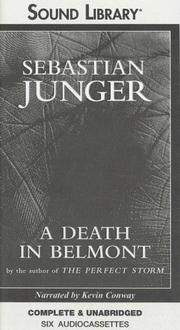
A deeply personal investigation into a cold case that shows how eyewitness accounts, circumstantial evidence, and investigator bias interact — bridging narrative and analytical thinking.
The Science and Its Cracks: Forensic Evidence Under the Microscope
IntermediateCritically evaluate the forensic disciplines used in courtrooms — fingerprints, hair analysis, bite marks, blood spatter — and understand which are scientifically validated and which are not.
▸ Study plan for this stage
Pace: 10–12 weeks total. Book 1 – "The Poisoner's Handbook" (300 pp): ~3 weeks at 15–20 pages/day. Book 2 – "Forensics" (320 pp): ~4 weeks at 15–20 pages/day. Book 3 – "The Cadaver King and the Country Dentist" (370 pp): ~4 weeks at 15–20 pages/day. Reserve 1–2 flex days per book for review and reflection
- The birth of forensic toxicology: how Blum's account of Charles Norris and Alexander Gettler shows that forensic science emerged from rigorous, evidence-based chemistry — establishing a baseline for what 'good' forensic science looks like
- The spectrum of forensic validity: McDermid's survey of disciplines (fingerprints, DNA, hair, bite marks, blood spatter, entomology) reveals that forensic fields sit on a wide spectrum from well-validated to largely subjective
- The 2009 NAS Report's core critique: the distinction between disciplines with a solid scientific foundation (DNA, toxicology) and those built on practitioner experience and pattern-matching without empirical error rates (bite marks, hair microscopy, blood spatter)
- Contextual bias and cognitive error: how forensic examiners — as shown throughout McDermid — can be unconsciously influenced by case context, leading to confirmation bias in pattern-based disciplines
- The role of the expert witness: how courts historically deferred to credentialed experts without demanding proof of reliability, and how that deference enabled junk science to reach juries
- Systemic failure and wrongful conviction: Balko's detailed case study of Steven Hayne and Michael West in Mississippi demonstrates how a single corrupt or incompetent expert embedded in a broken system can cause dozens of wrongful convictions
- Bite mark evidence as a case study in pseudoscience: 'The Cadaver King' provides the deepest examination of how bite mark analysis — with no proven uniqueness of human dentition and no validated methodology — became courtroom 'fact'
- Reform and accountability: what structural changes (blind testing, accreditation, independent review boards, post-conviction DNA testing) are needed to bring forensic practice in line with scientific standards
- After reading 'The Poisoner's Handbook,' what specific laboratory methods did Norris and Gettler pioneer, and how do those methods illustrate the difference between forensic science grounded in chemistry versus forensic science grounded in subjective interpretation?
- Based on McDermid's 'Forensics,' which forensic disciplines does she present as scientifically robust, which does she treat as contested, and what criteria does she use (explicitly or implicitly) to make that distinction?
- How did the professional and institutional relationship between Steven Hayne and Michael West, as documented by Balko, allow flawed forensic testimony to go unchallenged for decades in Mississippi courts?
- What is a 'error rate,' and why is the absence of a known error rate — a central problem Balko highlights for bite mark analysis — so damaging to a discipline's scientific credibility?
- Across all three books, what recurring structural conditions (legal, institutional, financial, cultural) allow unreliable forensic evidence to reach and persuade juries?
- If you were a defense attorney in a case relying on bite mark or hair microscopy evidence, what specific arguments drawn from these three books would you use to challenge the admissibility of that evidence?
- Validity audit chart: After finishing 'Forensics,' create a two-column table listing every forensic discipline McDermid covers. In column one, note the scientific basis she describes; in column two, rate its validity (strong / contested / discredited) and cite one piece of evidence from the book supporting your rating. Compare your chart to the NAS 2009 Report's findings (freely available online).
- Toxicology timeline: Using 'The Poisoner's Handbook' as your source, build a chronological timeline of the key poison cases Blum covers, annotating each with the specific chemical test used and whether that test would still be considered valid today. This grounds your understanding of how forensic standards evolve.
- Mock Daubert hearing: Write a 1–2 page argument either admitting or excluding bite mark evidence in a hypothetical trial, drawing exclusively on facts and cases from 'The Cadaver King.' Practice identifying the four Daubert criteria (testability, peer review, error rate, general acceptance) and apply each one to bite mark analysis.
- Expert witness cross-examination script: Choose one forensic discipline from McDermid's book and write 10 cross-examination questions a defense attorney could ask an expert witness to expose the discipline's limitations. Ground each question in a specific passage or case from the reading.
- Wrongful conviction case map: For the Mississippi cases detailed in Balko's book, create a flowchart tracing how a piece of forensic evidence moved from crime scene → lab/examiner → courtroom → conviction. Annotate each step with the failure point (e.g., no blind testing, no defense expert, judicial deference) to visualize where the system broke down.
- Comparative reflection journal: After each book, write a one-page entry answering: 'What did this book change or complicate about my understanding of forensic science's reliability?' After the third entry, write a synthesis paragraph identifying the single most important systemic reform you believe is needed, supported by evidence from all three books.
Next up: By establishing which forensic tools are scientifically sound and which are not, this stage equips the reader to move into case-level analysis — examining real investigations and trials with a critical eye toward how evidence was gathered, interpreted, and presented, and whether justice was actually served.
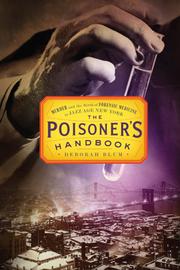
Traces the birth of forensic toxicology in early 20th-century New York, showing how forensic science was built from scratch — and how political and institutional pressures shaped it from the start.

A systematic, discipline-by-discipline tour of modern forensic science written for a general audience; it provides the broadest factual map of the field and explicitly flags which techniques are contested.

A devastating case study of two expert witnesses whose junk forensic science — including bite-mark analysis — sent innocent people to prison for decades, making the abstract critique of bad forensics viscerally real.
Wrongful Convictions and the Broken Machine
IntermediateUnderstand how wrongful convictions happen at a systemic level — false confessions, tunnel vision, prosecutorial misconduct, and the near-impossibility of exoneration — and meet the advocates fighting to fix it.
▸ Study plan for this stage
Pace: 6–8 weeks total: Weeks 1–3 for "Picking Cotton" (~25–30 pages/day, including reflection pauses after Part I and Part II); Weeks 4–8 for "Just Mercy" (~20–25 pages/day, given its denser legal and emotional weight — budget extra time after chapters on Walter McMillian's case and the death-row chapters
- Eyewitness misidentification: How Jennifer Thompson-Cannino's certainty about Ronald Cotton illustrates that confidence ≠ accuracy in eyewitness memory, and how stress, cross-race identification, and post-event information corrupt recall
- False memory formation: The way Jennifer's memory of her attacker was unconsciously reconstructed and reinforced through repeated identification procedures, photo arrays, and lineup confirmations
- Tunnel vision in investigations and prosecution: How once Ronald Cotton became the suspect, all subsequent evidence was filtered through confirmation bias by police, prosecutors, and even the victim herself
- The near-impossibility of exoneration: Ronald Cotton's experience — including a failed first appeal and a second trial — demonstrates how the legal system's finality bias makes overturning convictions structurally difficult even with compelling new evidence
- The role of DNA evidence as a corrective tool: How DNA testing in 'Picking Cotton' finally broke through institutional resistance and what that reveals about the limits of pre-DNA convictions
- Systemic racial bias and capital punishment: Bryan Stevenson's cases in 'Just Mercy' expose how race, poverty, and geography determine who receives the death penalty far more than the facts of a case
- Prosecutorial and institutional misconduct: Stevenson documents Brady violations, suppressed evidence, coerced testimony, and indifferent appellate courts as routine features — not aberrations — of the system
- The human cost of wrongful conviction and mass incarceration: Both books center the psychological, familial, and social destruction wrought on the wrongly convicted, and 'Just Mercy' extends this to children sentenced to life without parole and the mentally ill on death row
- After reading 'Picking Cotton,' can you explain the specific procedural failures — in the photo array, the live lineup, and the courtroom — that compounded Jennifer's original misidentification, and which single reform would have had the greatest preventive impact?
- Jennifer Thompson-Cannino describes absolute certainty at every stage of identification. What does this tell us about using witness confidence as a measure of witness accuracy, and how does this challenge common assumptions jurors bring into a courtroom?
- Bryan Stevenson argues in 'Just Mercy' that 'each of us is more than the worst thing we've ever done.' How does this philosophy shape his legal strategy, and where do you see it in tension with the retributive logic of the cases he describes?
- Walter McMillian's case in 'Just Mercy' involved fabricated testimony, a reversed trial venue, and a community predisposed to convict. Which of these factors do you consider most structurally dangerous, and why is it the hardest to remedy on appeal?
- Both books feature advocates — Jennifer and Ron themselves, and Stevenson's Equal Justice Initiative — working from outside or at the margins of the formal legal system. What does their necessity reveal about the system's capacity for self-correction?
- How do the two books together reframe 'wrongful conviction' from an individual tragedy into a systemic diagnosis? What specific mechanisms appear in both narratives, even though one centers on a rape case and the other on capital punishment?
- Memory reliability audit: Immediately after finishing Part I of 'Picking Cotton,' write a one-page account of a vivid personal memory (a past event, a face, a conversation). Two days later, without re-reading it, write it again. Compare the two versions for inconsistencies — this experiential exercise makes Jennifer's memory corruption viscerally understandable.
- Identification procedure reform brief: Research the difference between simultaneous and sequential lineups, and blind vs. non-blind administration. Write a one-page policy memo addressed to a fictional police chief explaining which reforms 'Picking Cotton' most strongly argues for and why.
- Case timeline reconstruction: For Walter McMillian's case in 'Just Mercy,' build a chronological timeline (index cards, a spreadsheet, or a whiteboard) from arrest to exoneration, annotating each stage with the specific misconduct or systemic failure Stevenson identifies. This makes the cumulative weight of the broken machine visible.
- Prosecutorial misconduct taxonomy: As you read 'Just Mercy,' keep a running log of every instance of misconduct Stevenson describes (Brady violations, witness coaching, suppressed evidence, etc.). At the end, categorize them and identify which type appears most frequently — then research whether any resulted in professional consequences for the prosecutors involved.
- Perspective-swap essay: Choose one chapter from 'Just Mercy' featuring a condemned client and rewrite a single key scene from the perspective of the prosecutor or judge who ruled against Stevenson. Force yourself to steelman their reasoning — this builds the critical thinking needed to understand how well-meaning actors perpetuate a broken system.
- Restorative justice comparison: Jennifer Thompson-Cannino and Ronald Cotton eventually co-wrote this book and now speak together publicly. Research the restorative justice model and write a 300-word reflection on whether their reconciliation is replicable as policy, or whether it is an exceptional personal achievement that the system cannot manufacture.
Next up: By internalizing how convictions go wrong — through flawed memory, racial bias, and institutional inertia — the reader is now primed to examine the forensic science disciplines (hair analysis, bite marks, blood spatter, arson investigation) that provided the pseudo-scientific veneer of certainty in many of these same cases, making the next stage's critique of forensic evidence feel urgent and pers
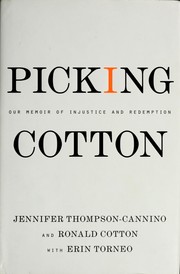
A first-person account from both the wrongly convicted man and the victim who misidentified him; it is the most humanizing possible introduction to the eyewitness-reliability problem.
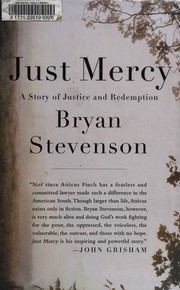
Stevenson's memoir of fighting for death-row exonerations reveals how race, poverty, and prosecutorial power combine to produce injustice — the essential systemic frame for everything the curriculum has built toward.
Advanced Synthesis: Journalism, Power, and Reform
ExpertRead at the frontier — long-form investigative journalism that synthesizes forensic failure, institutional corruption, and the reform movements trying to change the system — and develop your own critical framework.
▸ Study plan for this stage
Pace: 8–10 weeks total: Weeks 1–5 for "Say Nothing" (~30–35 pages/day, including re-reading dense narrative passages); Weeks 6–10 for "Conviction Machine" (~20–25 pages/day, with slower pacing to absorb legal arguments and case analyses). Reserve the final 3–4 days of each book for review, annotation synt
- Narrative as evidence: how Keefe reconstructs historical truth from fragmentary, contested, and politically motivated testimony — and what that reveals about the limits of 'knowing' what happened
- Institutional violence and state complicity: the IRA, the British state, and loyalist paramilitaries as overlapping systems of coercion in 'Say Nothing', and how forensic and legal truth is suppressed or weaponized by powerful actors
- Memory, trauma, and unreliable witness: how Jean McConville's disappearance and the Boston College Belfast Project tapes expose the fragility of oral history as forensic evidence
- The federalization of criminal law: Silverglate's central thesis in 'Conviction Machine' that the explosion of vague federal statutes transforms ordinary conduct into prosecutable crime, enabling selective and politically motivated prosecution
- Prosecutorial power and structural impunity: how prosecutors in 'Conviction Machine' operate with near-total discretion, immunity from accountability, and incentives misaligned with justice
- Overcriminalization as a systemic design: the argument that the sheer volume and ambiguity of federal law is not accidental but functions as a tool of institutional control
- The gap between legal guilt and moral truth: synthesizing both books' implicit argument that conviction or acquittal tells us little about actual justice, and that forensic and legal systems can simultaneously produce verdicts and obscure truth
- Reform movements and their limits: what meaningful systemic change looks like — and why both books are ultimately skeptical that internal reform alone can fix structurally corrupted institutions
- In 'Say Nothing,' how does Keefe use the Boston College tapes as a lens to examine the tension between historical truth-seeking and the legal use of forensic/testimonial evidence — and what does this reveal about who controls the narrative of atrocity?
- Keefe portrays figures like Dolours Price and Gerry Adams as simultaneously perpetrators, victims, and political actors. How does this moral complexity challenge the binary frameworks (guilty/innocent, criminal/hero) that both journalism and the legal system typically impose?
- Silverglate argues in 'Conviction Machine' that the proliferation of vague federal statutes has made it possible to prosecute almost anyone. What specific mechanisms — statutory, procedural, and cultural — enable this, and how does prosecutorial discretion amplify the problem?
- Both books deal with institutions (the IRA, the British state, the U.S. federal prosecution system) that operate with significant opacity and self-protective logic. What structural features do these institutions share, and what does that suggest about the root causes of systemic injustice?
- How do 'Say Nothing' and 'Conviction Machine' each handle the question of reform? Are their implicit prescriptions compatible, and what would a unified reform agenda drawn from both books look like?
- After reading both books, how would you define 'forensic truth' versus 'legal truth' versus 'historical truth'? Use specific examples from each book to argue whether these can ever fully converge.
- Annotated timeline (Say Nothing): Build a dual-track timeline — one track for the documented historical events (McConville's disappearance, the Troubles, the peace process), and a second track for when each piece of evidence or testimony was revealed. Analyze the gaps: what was hidden, by whom, and for how long? What does the delay itself tell you about institutional power?
- Statute audit exercise (Conviction Machine): Choose any three federal statutes Silverglate critiques for vagueness. Look up their actual text and find two real-world cases (using public court records or journalism) where the statute was applied in ways that seem to confirm or complicate his argument. Write a one-page assessment of each.
- Comparative institutional analysis: Write a 600–800 word essay comparing the IRA's internal discipline and silence culture (Say Nothing) with the prosecutorial culture Silverglate describes in Conviction Machine. Focus on the shared logic of institutional self-protection and the mechanisms that insulate both from accountability.
- Journalist-vs-lawyer lens exercise: Take one key event from 'Say Nothing' (e.g., the extraction of the Boston College tapes) and reframe it entirely through the legal framework Silverglate provides in 'Conviction Machine.' Then reverse the exercise: take one of Silverglate's case studies and rewrite it as a piece of narrative journalism in Keefe's style. Reflect on what each framing reveals and co
- Reform proposal memo: Drawing exclusively on evidence and arguments from both books, draft a 1–2 page policy memo addressed to a fictional congressional oversight committee. Identify three specific, concrete reforms — one targeting forensic evidence standards, one targeting prosecutorial accountability, and one targeting statutory clarity — and justify each with direct citations from the texts.
- Critical framework statement: Write your own 500-word 'critical framework' for evaluating true crime and forensic journalism — the intellectual lens you have developed across this entire stage. It should address: How do you assess source reliability? How do you identify institutional bias? How do you distinguish legal outcomes from just ones? This document should be personal, specific, and revisab
Next up: Having built a personal critical framework for interrogating institutional power, forensic failure, and narrative construction, the reader is now equipped to engage with primary sources, academic scholarship, and policy literature — the raw materials needed to move from critical consumer of true crime journalism to original analyst and, potentially, advocate.
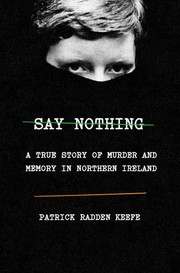
The pinnacle of literary true-crime writing: a meticulously sourced investigation into the Troubles that shows how political violence, memory, and justice interact at the highest level of complexity.

A prosecutorial-power critique that ties together everything the curriculum has covered — forensic overreach, coerced confessions, and structural incentives — into a coherent argument for systemic reform.
Discussion
Keep reading
Paths that share books, cover the same subject, or open a related topic.