Understanding Simone de Beauvoir: The Best Books, in Order
This curriculum takes an intermediate reader on a focused journey through Simone de Beauvoir's life, philosophy, and landmark works — beginning with accessible biography and existentialist context, moving through her foundational feminist masterpiece, and culminating in her own autobiographical and philosophical writings. Each stage builds the conceptual vocabulary and historical grounding needed to read the next with genuine depth.
Context & Life: Who Was de Beauvoir?
IntermediateGain a solid biographical and historical foundation — understanding de Beauvoir's life, her relationship with Sartre, her intellectual milieu, and her place in 20th-century thought — before tackling her major texts.
▸ Study plan for this stage
Pace: 6–7 weeks, ~40–50 pages/day. Read "Becoming Beauvoir" (weeks 1–3, ~450 pages), then "At the Existentialist Café" (weeks 4–7, ~400 pages). Allow 1 week buffer for review and synthesis.
- De Beauvoir's formative years: family background, education, and early intellectual development in interwar France
- Her relationship with Sartre: how it shaped her philosophy, writing, and public identity
- Existentialism as a lived philosophy: freedom, responsibility, and authenticity in de Beauvoir's thought and life
- The historical context of 20th-century Paris: the intellectual café culture, the Resistance, postwar intellectual ferment
- De Beauvoir's position within the existentialist circle: her role beyond 'Sartre's partner'—as thinker, writer, and moral voice
- The connection between biography and philosophy: how her lived experience informed her theoretical work
- Gender, ethics, and engagement: early signs of her feminist and political commitments
- What were the key influences on de Beauvoir's intellectual formation, and how did her family background shape her philosophical outlook?
- How did de Beauvoir's relationship with Sartre evolve, and what was her intellectual contribution to existentialism distinct from his?
- What role did the café culture of Paris play in the development of existentialism, and who were the key figures in this milieu?
- How did de Beauvoir's experiences during WWII and the Occupation influence her ethical and political thinking?
- What evidence from these books suggests de Beauvoir was a major philosophical voice in her own right, not merely an echo of Sartre?
- How did de Beauvoir navigate the tension between personal freedom and social responsibility in both her life and early philosophical work?
- Create a detailed timeline of de Beauvoir's life (1908–1950s) alongside major historical events (WWI, interwar period, WWII, postwar France), noting how each shaped her thinking.
- Write a 2–3 page character sketch of Sartre based on Bakewell's portrayal, then compare it to how Kirkpatrick presents him in relation to de Beauvoir—what do you learn from the differences?
- Map the existentialist circle: create a visual diagram (or written description) of the key figures mentioned in both books (Sartre, Camus, Merleau-Ponty, etc.), their relationships, and their philosophical positions.
- Select one key moment from de Beauvoir's life in Kirkpatrick's biography (e.g., her agrégation exam, meeting Sartre, the Occupation) and write a reflective essay on how it connects to a philosophical idea from Bakewell's account of existentialism.
- Compile a list of 10–15 direct quotes from both books that reveal de Beauvoir's voice, values, and intellectual independence—annotate each with why it matters.
- Write a comparative analysis (3–4 pages) of how Kirkpatrick and Bakewell each portray de Beauvoir's role in the existentialist movement; what does each author emphasize?
Next up: This stage establishes who de Beauvoir was as a person and thinker within her historical moment, providing the biographical and philosophical scaffolding necessary to engage deeply with her major theoretical works—particularly *The Second Sex* and her ethics—in the next stage.

A rigorously researched and highly readable modern biography that corrects myths about de Beauvoir's dependence on Sartre and establishes her as an original thinker in her own right. Start here to build an accurate picture of the person behind the philosophy.

A brilliant, narrative-driven introduction to existentialism and phenomenology as lived movements, covering de Beauvoir, Sartre, Merleau-Ponty, and Heidegger. Reading this second gives you the philosophical vocabulary and social context needed for de Beauvoir's own works.
Existentialist Foundations
IntermediateUnderstand the existentialist and phenomenological ideas — freedom, situation, bad faith, the Other — that de Beauvoir inherits and transforms, so that her feminist philosophy feels earned rather than abstract.
▸ Study plan for this stage
Pace: 6–7 weeks, ~25–30 pages/day (alternating between the two texts; start with *The Ethics of Ambiguity* for 3–4 weeks, then *Existentialism Is a Humanism* for 2–3 weeks)
- Ambiguity as the fundamental human condition: the tension between freedom and facticity, and why de Beauvoir sees this as inescapable rather than tragic
- Situation and facticity: how our concrete circumstances (body, history, social position) constrain but do not determine our freedom
- Bad faith (mauvaise foi): self-deception about our freedom and responsibility, and how it manifests in oppression and complicity
- The Other and intersubjectivity: how freedom depends on recognizing the freedom of others, and how oppression denies this recognition
- Existential freedom as responsibility: the burden of creating meaning and value in an absurd universe, and why we cannot escape this burden
- Authenticity and engagement: living in accordance with one's freedom rather than fleeing into roles, systems, or false certainties
- The existentialist humanist project: how existentialism grounds ethics and politics in human freedom rather than fixed essences or divine law
- What does de Beauvoir mean by 'ambiguity' as a fundamental condition, and why does she reject the idea that it should be overcome?
- How do situation and freedom relate to each other in existentialist thought? Can you give a concrete example of how facticity limits but does not eliminate freedom?
- What is bad faith, and how does de Beauvoir use this concept to explain oppression and complicity in *The Ethics of Ambiguity*?
- Why does Sartre argue that existentialism is a humanism, and what does he mean by human freedom as the foundation of values?
- How does the concept of the Other function in both texts, and why is recognizing the Other's freedom essential to ethical life?
- What is the relationship between authenticity and engagement in de Beauvoir's ethics? What does it mean to live authentically in a situation?
- Close-read the opening chapters of *The Ethics of Ambiguity* (Part One) and annotate every instance where de Beauvoir discusses the tension between freedom and facticity; write a 1-page synthesis of how she frames this tension as productive rather than paralyzing
- Identify three concrete situations from your own life or current events where bad faith operates (e.g., denying responsibility, hiding behind a role); write a 2–3 page analysis of each using de Beauvoir's framework, showing how bad faith obscures freedom
- Read Sartre's discussion of anguish and responsibility in *Existentialism Is a Humanism*; then write a dialogue between yourself and a character who denies responsibility for their choices, using Sartre's arguments to challenge their position
- Create a visual map or diagram showing how de Beauvoir's concept of the Other relates to her ethics of ambiguity—how does recognizing the Other's freedom change what we owe them ethically?
- Choose one of de Beauvoir's character types from *The Ethics of Ambiguity* (the sub-man, the serious man, the passionate man, the adventurer, the sage) and write a character sketch showing how that person embodies a particular relationship to freedom and bad faith
- Comparative exercise: find a passage from *The Ethics of Ambiguity* and one from *Existentialism Is a Humanism* that address the same concept (e.g., freedom, responsibility, the Other); write a 2-page analysis of how their arguments align and where they diverge
Next up: By mastering these foundational existentialist concepts—especially the interplay of freedom, situation, bad faith, and the Other—you will be equipped to understand how de Beauvoir applies them specifically to gender, oppression, and women's liberation in *The Second Sex*, where these abstract philosophical ideas become concrete political and ethical imperatives.

De Beauvoir's own existentialist ethics, written before The Second Sex, is her most direct philosophical argument and far more accessible than Sartre's Being and Nothingness. Reading it first in her own voice establishes her as an independent existentialist thinker.

This short lecture is the clearest entry point into Sartrean existentialism — freedom, responsibility, and the concept of 'situation' — concepts de Beauvoir directly engages and critiques in her feminist work.
The Masterpiece: The Second Sex
IntermediateRead and genuinely understand de Beauvoir's landmark text — its argument that 'woman' is a social and historical construction, not a biological destiny — armed with the biographical and philosophical context built in earlier stages.
▸ Study plan for this stage
Pace: 6–8 weeks, ~40–50 pages/day (accounting for dense philosophical prose and re-reading passages for comprehension)
- Woman as a social and historical construction rather than a biological or natural category — the distinction between 'sex' (biological) and 'gender' (social)
- The concept of 'Otherness' and how women have been systematically positioned as the 'Other' in relation to man as the universal subject
- Intersectionality and the lived experience of oppression — how race, class, and other factors shape women's experiences (from Hooks)
- The role of myth, culture, and ideology in naturalizing women's subordination and limiting their freedom
- De Beauvoir's existentialist framework: freedom, transcendence, and immanence as applied to women's condition
- Concrete material conditions and economic dependence as foundations of women's oppression, not merely psychological or cultural factors
- The possibility and necessity of women's liberation through consciousness, education, and structural change
- What does de Beauvoir mean by stating that 'one is not born, but rather becomes, a woman'? How does this challenge biological determinism?
- How does de Beauvoir use the concept of 'Otherness' to explain women's historical and social position? What are the consequences of being positioned as the 'Other'?
- According to both Hooks and de Beauvoir, what role do myth, culture, and ideology play in perpetuating women's oppression?
- How does de Beauvoir's existentialist philosophy (freedom, transcendence, immanence) apply to understanding women's condition and liberation?
- What material and economic factors does de Beauvoir identify as foundational to women's oppression, and how do these differ from purely ideological explanations?
- How do Hooks' discussions of intersectionality and lived experience complicate or deepen de Beauvoir's analysis of women's oppression?
- Create a detailed outline of de Beauvoir's argument in 'The Second Sex' (or the excerpts provided), mapping how she moves from biological arguments to social/historical construction to liberation
- Write a 2–3 page comparative analysis: identify one specific myth or cultural narrative about women that de Beauvoir critiques, then use Hooks' framework to analyze how this myth operates differently across race and class lines
- Close-read a single passage (2–3 pages) from 'The Second Sex' where de Beauvoir discusses a particular aspect of women's condition (e.g., motherhood, sexuality, work). Annotate it to identify: her argument, the evidence she uses, and how it supports her larger thesis about construction vs. nature
- Conduct a personal reflection exercise: identify one area of your own life where you've internalized the idea that something about women 'is natural' or 'biological destiny.' Use de Beauvoir's and Hooks' frameworks to analyze how this belief was constructed and what material/cultural forces reinforce it
- Create a visual map or concept diagram showing how de Beauvoir's key concepts (Otherness, transcendence/immanence, freedom, myth) interconnect and support her central argument
- Write a dialogue or debate between de Beauvoir and a biological essentialist, using specific textual evidence from 'The Second Sex' to defend de Beauvoir's position
Next up: This stage equips you with de Beauvoir's foundational argument and Hooks' intersectional lens, preparing you to examine how subsequent feminist thinkers have built upon, critiqued, or transformed these ideas in response to new historical conditions and movements.
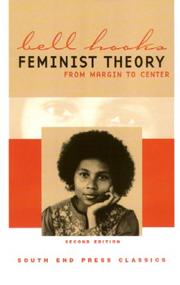
A short, sharp primer on feminist theory that introduces key debates (oppression, solidarity, intersectionality) and prepares you to read The Second Sex critically rather than uncritically. Read it immediately before de Beauvoir's text.
The central text of this entire curriculum. With biography, existentialist philosophy, and feminist theory now in place, you can engage deeply with de Beauvoir's argument that 'one is not born, but rather becomes, a woman' — one of the most consequential sentences in intellectual history.
De Beauvoir in Her Own Voice: Memoirs & Fiction
IntermediateEncounter de Beauvoir as a writer and self-analyst through her autobiography and fiction, seeing how she lived out — and sometimes contradicted — her own philosophy, which deepens and humanizes everything read so far.
▸ Study plan for this stage
Pace: 8–10 weeks, ~40–50 pages/day. *Memoirs of a Dutiful Daughter* (~400 pages, 2–3 weeks); *The Mandarins* (~600 pages, 4–5 weeks); final 1–2 weeks for synthesis and reflection.
- De Beauvoir's formation: family, Catholicism, intellectual awakening, and the role of her father's influence in shaping her philosophy of freedom
- The concept of 'bad faith' lived out: how de Beauvoir herself struggled against societal expectations for women, particularly regarding marriage, sexuality, and independence
- The intellectual and romantic relationship with Sartre as depicted in both texts: how existential partnership functioned in practice versus theory
- Women's ambivalence and complicity: through Anne Dubreuilh in *The Mandarins*, the internal conflicts women face when navigating freedom, love, and political commitment
- The writer's ethical responsibility: how de Beauvoir's fiction explores the tension between personal happiness and political/moral engagement
- Authenticity versus performance: the gap between de Beauvoir's public philosophy and her private doubts, desires, and contradictions revealed in memoir and fiction
- The political intellectual in crisis: *The Mandarins* captures post-WWII disillusionment and the question of whether committed intellectuals can effect real change
- How did de Beauvoir's family background, particularly her relationship with her father and her Catholic upbringing, shape her later philosophy of freedom and rejection of prescribed roles?
- In what ways does *Memoirs of a Dutiful Daughter* reveal de Beauvoir living in 'bad faith' before her philosophical awakening, and how does she critique her own earlier choices?
- What role does the relationship with Sartre play in both texts, and how does de Beauvoir present the reality of their partnership compared to the idealized notion of existential freedom?
- How does Anne Dubreuilh in *The Mandarins* embody the contradictions and ambivalences that de Beauvoir identified in women's lived experience, and what does her story suggest about the limits of individual freedom?
- What is de Beauvoir's critique of the political intellectual in *The Mandarins*, and how does the novel suggest that philosophy alone cannot resolve the tension between personal ethics and political action?
- Where do you see de Beauvoir contradicting her own philosophy in these texts, and what does this reveal about the gap between theory and lived experience?
- Create a timeline of de Beauvoir's intellectual and personal development in *Memoirs of a Dutiful Daughter*, marking key moments of resistance, conformity, and awakening; annotate where she later identifies her own 'bad faith'.
- Write a character analysis of Anne Dubreuilh from *The Mandarins* that traces her internal conflicts around love, freedom, and political commitment; compare her dilemmas to philosophical positions de Beauvoir articulated in earlier readings.
- Identify 3–4 scenes from *Memoirs of a Dutiful Daughter* where de Beauvoir was constrained by gender expectations, and write a brief reflection on how she later theorized these constraints in *The Second Sex* (from Stage 1).
- Create a dialogue between 'de Beauvoir the philosopher' and 'de Beauvoir the character' in *The Mandarins*: what would the author say to Anne or other characters about their choices, and where would she be challenged by their responses?
- Compile a list of contradictions between de Beauvoir's stated philosophy (from earlier readings) and her lived choices as revealed in these two texts; for each, write one sentence exploring why the gap exists.
- Write a comparative scene: rewrite a key moment from *The Mandarins* (e.g., Anne's affair, a political debate) as de Beauvoir might have described it in her memoir, noting what changes in tone, self-awareness, and judgment.
Next up: This stage grounds philosophy in flesh-and-blood reality, revealing both the power and the limits of de Beauvoir's ideas, preparing you to evaluate her legacy critically—understanding not just what she thought, but how she lived, failed, and continued to question herself.
The first volume of her autobiography traces her break from bourgeois Catholic upbringing to intellectual independence — a lived illustration of the 'becoming' she theorizes in The Second Sex. Beautifully written and emotionally immediate.
Her Prix Goncourt-winning novel fictionalizes the existentialist Left Bank circle after WWII, exploring freedom, love, and political commitment. Reading her fiction reveals dimensions of her thought that philosophy alone cannot capture.
Legacy, Critique & Deeper Scholarship
ExpertAssess de Beauvoir's lasting influence and the serious critiques of her work — from race and class blind spots to her impact on later feminist waves — arriving at a fully rounded, critical understanding of her significance.
▸ Study plan for this stage
Pace: 4–5 weeks, ~40–50 pages/day (approximately 250–300 pages total)
- Ambiguity as a central philosophical principle in de Beauvoir's ethics and politics, not a weakness but a framework for understanding freedom and responsibility
- The relationship between existential freedom and social/political constraint—how de Beauvoir navigates the tension between individual agency and structural oppression
- De Beauvoir's evolving political engagement: from abstract existentialism to concrete commitment to social movements (communism, feminism, anti-colonialism)
- Critique of de Beauvoir's blindspots: her treatment of race, class, and non-Western contexts, and how these limit her universal claims about women's liberation
- The influence of Sartre's existentialism on de Beauvoir's thought and the ways she both adopts and diverges from his framework
- De Beauvoir's legacy in second-wave and later feminist theory: what subsequent feminists accepted, rejected, and revised
- The concept of 'the Other' and its application to women, colonized peoples, and marginalized groups—and the problems with universalizing this category
- How ambiguity as method allows for both critique and reconstruction of feminist and political thought
- What does Kruks mean by 'the politics of ambiguity,' and how does this concept defend de Beauvoir against charges that her philosophy is too abstract or apolitical?
- How does de Beauvoir's existentialist framework explain the relationship between individual freedom and social structures like patriarchy and colonialism?
- What are the major blind spots in de Beauvoir's work regarding race, class, and non-Western women, and how do these limit her claims about universal women's liberation?
- How did de Beauvoir's political commitments (to communism, anti-colonialism, feminism) evolve, and what role did ambiguity play in her engagement with these movements?
- In what ways did later feminist waves (second-wave, postcolonial, intersectional feminism) both build on and critique de Beauvoir's framework?
- How does Kruks's interpretation of de Beauvoir's work help you assess her lasting significance despite her limitations?
- Create a timeline mapping de Beauvoir's major political commitments and writings (1940s–1980s), noting how her engagement with ambiguity, freedom, and social change evolved across decades
- Write a comparative analysis: select one concept from *The Second Sex* (e.g., 'the Other,' economic independence, or authentic love) and trace how Kruks shows de Beauvoir applying it to political contexts beyond gender (colonialism, communism)
- Identify and document 3–4 specific blind spots Kruks identifies in de Beauvoir's work (e.g., race, class, non-Western perspectives). For each, write a paragraph explaining the limitation and its consequences for her theory
- Debate exercise: argue both sides—(1) de Beauvoir's ambiguity is a strength that allows flexible, context-sensitive politics; (2) ambiguity is a cop-out that allows her to avoid hard commitments on race and class. Use Kruks's text to support each position
- Create a 'reception map' showing how different feminist schools (second-wave, Black feminism, postcolonial feminism, intersectional feminism) have engaged with de Beauvoir—what they adopted, what they rejected, and why
- Write a critical reflection: given de Beauvoir's limitations, what aspects of her work remain valuable for contemporary feminist and political thought, and what must be abandoned or fundamentally revised?
Next up: This stage equips you with a sophisticated, critical understanding of de Beauvoir's enduring influence and her serious limitations, preparing you to engage with contemporary feminist theory, postcolonial critique, and intersectional frameworks that both extend and challenge her legacy.

A rigorous scholarly assessment of de Beauvoir's political philosophy and its relevance to contemporary feminist and critical theory. This is the ideal capstone: it synthesizes her ethics, feminism, and politics and situates her in ongoing debates.
Discussion
Keep reading
Paths that share books, cover the same subject, or open a related topic.